17 Beadboard Backsplash Ideas We Can’t Stop Pinning
- Classic White Beadboard All the Way Up
- Beadboard Paired with a Butcher Block Counter
- Half-Wall Beadboard with Tile on Top
- Beadboard in a Soft Sage Green
- Vertical Beadboard Behind a Farmhouse Sink
- Beadboard with a Dark, Moody Paint Color
- Narrow-Groove Beadboard for a Subtler Texture
- Beadboard Behind Open Shelving
- Beadboard Wainscoting That Wraps Around the Room
- Blue and White Beadboard for a Coastal Feel
- Beadboard with Black Cabinet Hardware and Fixtures
- Beadboard Panels Installed Horizontally
- Beadboard in a Butter Yellow Shade
- Peel-and-Stick Beadboard Wallpaper for Renters
- Beadboard with a Herringbone Tile Accent Strip
- Beadboard That Matches the Ceiling
- Beadboard Framed with Simple Wood Trim
17 Beadboard Backsplash Ideas We Can’t Stop Pinning
Beadboard backsplashes have been quietly stealing the spotlight from subway tile lately, and honestly, it makes sense. That grooved, cottage-cozy texture brings a warmth to kitchens that flat tile just can’t replicate. If you’re weighing your options for a kitchen refresh, here are 17 beadboard backsplash ideas we can’t stop pinning, from full farmhouse commitment to subtle modern nods.
Classic White Beadboard All the Way Up

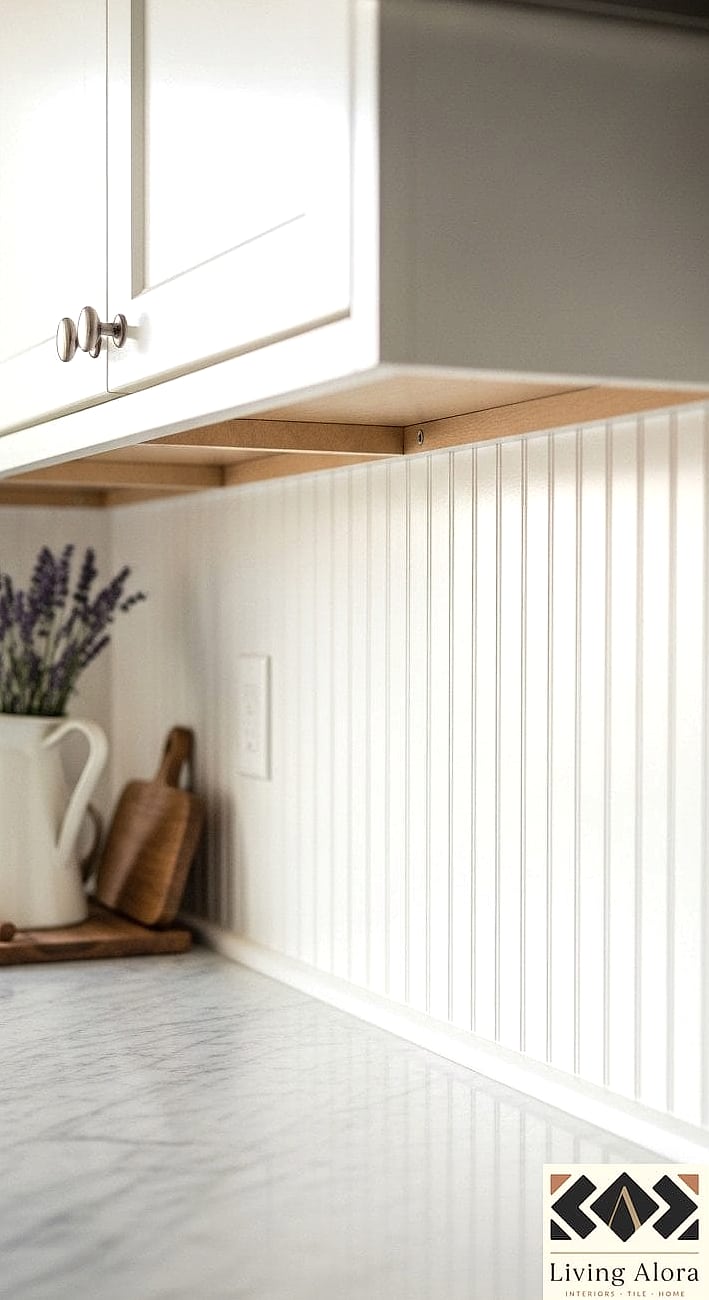
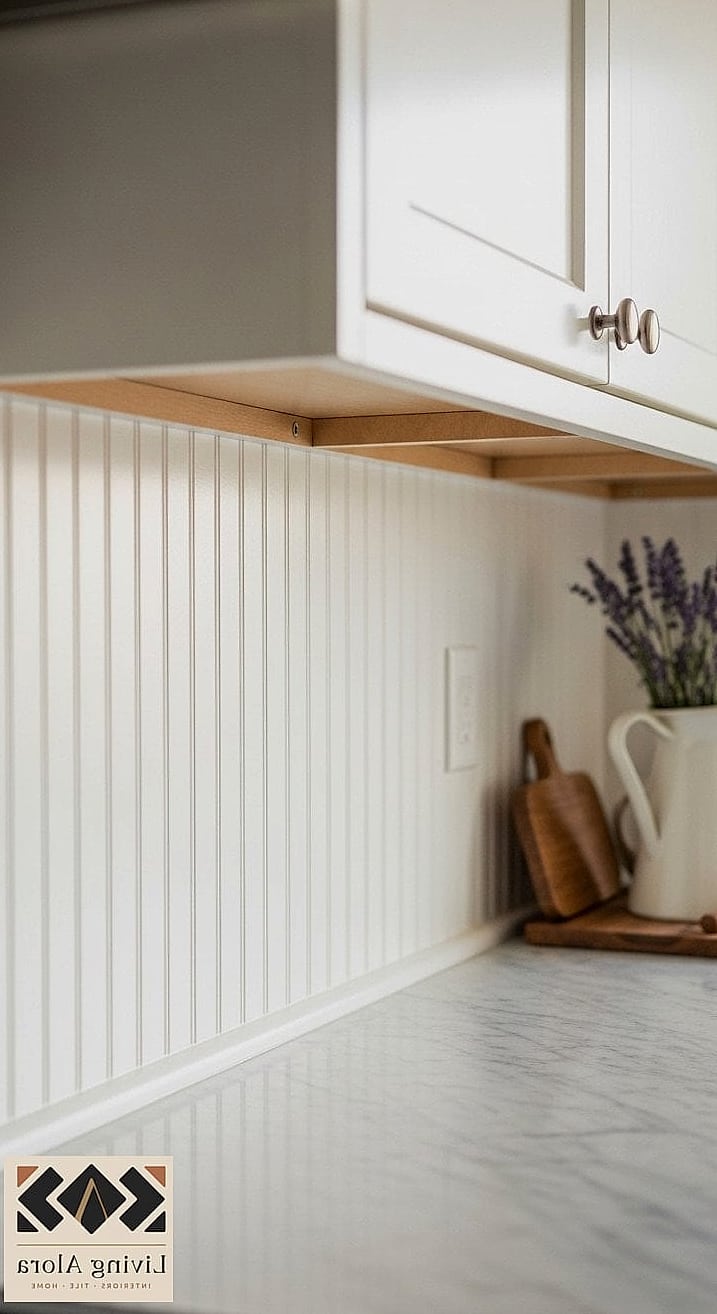
This is the look most people picture first, and for good reason. White beadboard running from the countertop straight up to the upper cabinets gives a kitchen that crisp, cottage feel without trying too hard.
It works especially well in kitchens with white or cream cabinetry, where the vertical grooves add just enough texture to keep things from looking flat. Pair it with brushed brass hardware and a farmhouse sink and you’ve basically got a Pinterest board come to life.
Maintenance is simple as long as you seal the wood properly, since beadboard near a stove or sink needs some protection from splashes.
Beadboard Paired with a Butcher Block Counter

There’s something about the combination of grooved white beadboard against warm butcher block that feels instantly inviting. The wood tones play off each other without competing.
This pairing works great in smaller kitchens where you want warmth without heaviness. It’s also a budget-friendly route since butcher block tends to cost less than stone counters, and beadboard panels are cheaper than most tile per square foot.
Just know that both materials need occasional conditioning to stay protected from moisture.
Half-Wall Beadboard with Tile on Top

If you love the texture of beadboard but want something a little more wipeable right behind the stove, this hybrid approach solves that problem. Beadboard covers the lower portion of the wall, and a small band of subway tile or mosaic tile handles the area directly behind the cooktop.
It’s a smart, practical layout for anyone who cooks a lot and worries about grease splatter damaging painted wood. You get the charm of beadboard with the easy cleanup of tile exactly where you need it most.
Beadboard in a Soft Sage Green

White gets all the attention, but painted beadboard in a muted sage green has been showing up more and more in kitchen renovations lately. It’s a nice middle ground between bold and boring.
This color works beautifully with natural wood open shelving and unlacquered brass fixtures. It also photographs incredibly well in natural light, which might explain why it’s all over kitchen inspiration accounts right now.
Just be prepared to repaint every few years in high-splash zones, since darker colors can show water spots more than white does.
Vertical Beadboard Behind a Farmhouse Sink
Sometimes you don’t need to cover an entire wall to make a statement. Installing beadboard in just the area behind and around the sink creates a focal point without a full commitment.
This is a great option for renters or anyone hesitant to redo an entire kitchen wall, since it’s a smaller, more contained project. It also tends to be more DIY-friendly, since you’re working with a smaller panel and fewer cuts.
Add a simple wood shelf above for dish soap and a small plant, and the whole area feels intentional.
Beadboard with a Dark, Moody Paint Color

Not every beadboard backsplash has to be soft and cottage-inspired. Painting the panels in a deep navy, charcoal, or even black creates a dramatic, almost moody effect that pairs surprisingly well with white cabinets.
This look tends to show up in kitchens going for a more modern farmhouse or transitional style, where the contrast does a lot of the visual work. It’s bold, but it doesn’t feel loud, if that makes sense.
Dark colors do require more frequent wiping since water spots and grease show up faster than on lighter shades.
Narrow-Groove Beadboard for a Subtler Texture

Not everyone wants the deep, chunky grooves of traditional beadboard. Narrower groove spacing gives you the same classic texture but in a more refined, understated way.
This version tends to suit kitchens with a more modern or transitional style, where you want a nod to tradition without going full farmhouse. It reads almost like a textured wallpaper from a distance.
Because the grooves are shallower, cleaning tends to be a little easier too, since there’s less space for grease and crumbs to settle into.
Beadboard Behind Open Shelving

Open shelving gets so much more visual interest when there’s beadboard behind it instead of a plain painted wall. The texture adds depth that makes even a simple styling arrangement of dishes and glassware look more curated.
This combination works particularly well in kitchens that lean cottage or coastal, where you want that layered, collected-over-time feeling. Woven baskets, ceramic pitchers, and a few trailing plants look right at home against the grooved backdrop.
Just keep in mind open shelving near a beadboard backsplash means everything is on display, so it does require a bit more upkeep to keep things tidy.
Beadboard Wainscoting That Wraps Around the Room
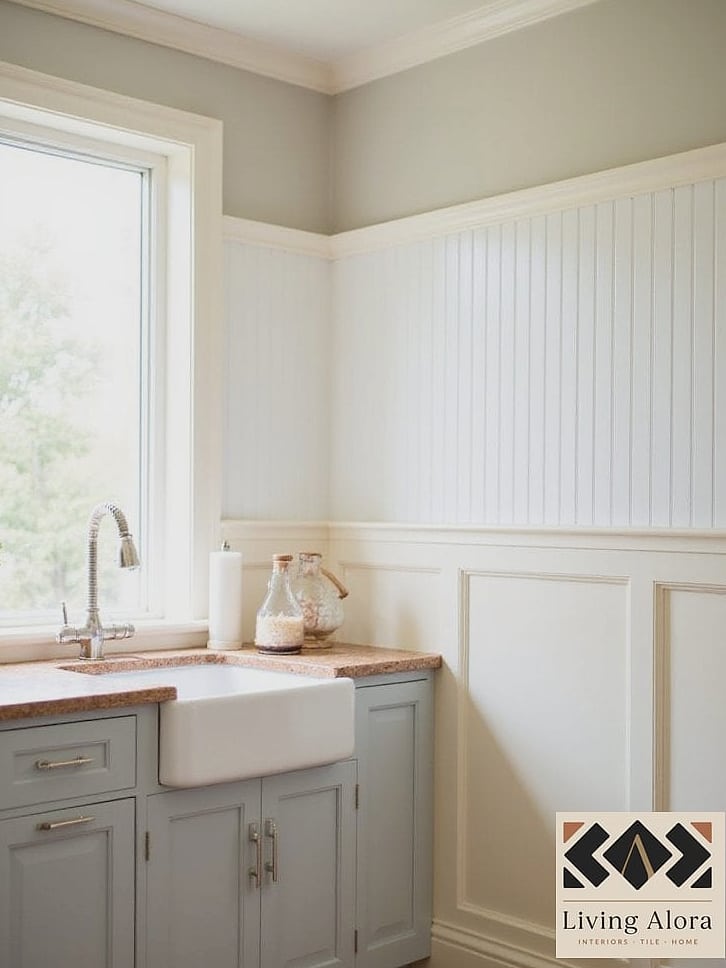
Instead of stopping at the backsplash, some kitchens extend the beadboard treatment as wainscoting around the entire lower half of the room. It creates a cohesive, architectural feel that ties the whole space together.
This is more of an investment project since it involves more materials and labor, but the payoff is a kitchen that feels custom-built rather than renovated. It works especially well in older homes or new builds designed to mimic vintage character.
If you’re not ready for a full wraparound commitment, even extending it a few feet past the sink area onto an adjacent wall gives a similar effect on a smaller scale.
Blue and White Beadboard for a Coastal Feel

A soft coastal blue beadboard backsplash brings a breezy, relaxed energy that’s hard to replicate with tile. It pairs naturally with white cabinets, natural wood accents, and woven textures like rattan pendant lights.
This palette tends to work best in kitchens that get plenty of natural light, since the blue can read a little cool in dim spaces. Add warm-toned wood bar stools or a butcher block island to keep things from feeling too cold.
It’s a popular pick for beach house kitchens, but honestly it works just as well inland if you’re craving that vacation-home feeling year-round.
Beadboard with Black Cabinet Hardware and Fixtures

White or painted beadboard against black hardware and matte black faucets creates a crisp, high-contrast look that feels current without being trendy in a way that’ll date quickly. The dark accents ground the softness of the beadboard texture.
This combination shows up a lot in modern farmhouse kitchens where homeowners want warmth but also some edge. It photographs really well too, which is probably part of why it keeps popping up on design boards.
Black fixtures also tend to hide water spots better than brass or chrome, which is a nice practical bonus.
Beadboard Panels Installed Horizontally
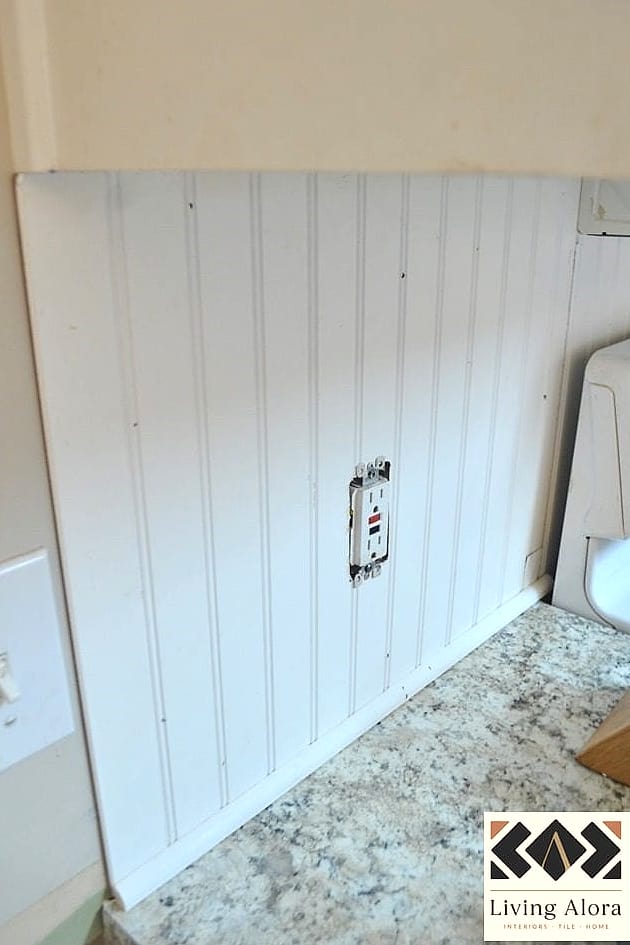
Most beadboard runs vertically, but flipping the orientation horizontally gives the backsplash a completely different personality. It can make a wall feel wider and adds a slightly more unexpected, custom touch.
This orientation tends to suit more contemporary or transitional kitchens where you want the texture of beadboard without it reading too traditional. It’s a small design choice that makes a bigger impact than you’d expect.
Installation is a little trickier since you’re working against the grain of how most panels are manufactured, so this one might be worth hiring a pro for if you’re not confident with trim work.
Beadboard in a Butter Yellow Shade

Soft, warm yellow beadboard has been popping up in kitchen renovations that lean playful and nostalgic. It’s cheerful without being overwhelming, especially in a muted, buttery tone rather than anything neon.
This works particularly well in kitchens with white countertops and natural wood floors, where the yellow adds warmth without clashing. It’s a great pick if you want your kitchen to feel a little more personality-driven than the usual neutral palette.
Since yellow can show grease spots a bit more visibly than white or gray, a matte or satin finish tends to hide imperfections better than high gloss.
Peel-and-Stick Beadboard Wallpaper for Renters

Real wood beadboard isn’t always an option if you’re renting, but peel-and-stick beadboard wallpaper has gotten remarkably convincing in the last few years. From a few feet away, most people can’t tell the difference.
This is one of the most renter-friendly ideas on this list since it removes cleanly without damaging paint or drywall underneath. It’s also budget-friendly and can usually be installed in an afternoon without any special tools.
Just avoid placing it directly behind a stove without some kind of protective barrier, since heat and grease can affect the adhesive over time.
Beadboard with a Herringbone Tile Accent Strip

For anyone who loves texture but doesn’t want to give up tile entirely, adding a narrow herringbone tile strip within a beadboard backsplash creates a really striking focal point. It’s usually placed behind the stove or sink as a small design moment.
This idea works well for kitchens that want a mix of traditional and pattern-forward elements without going overboard. The tile strip also happens to be the easiest spot to wipe down daily, which is a nice practical perk.
It does take more planning during installation since you’re working with two different materials meeting at seams, so measuring twice really does matter here.
Beadboard That Matches the Ceiling
Here’s a detail that ties a whole kitchen together in a way people don’t expect: painting the beadboard backsplash the exact same color as a beadboard or shiplap ceiling. It creates this enveloping, cohesive feel from top to bottom.
This works especially well in cottage-style or vintage-inspired kitchens where the ceiling already has architectural detail. It’s a bit of an investment since it usually means installing beadboard in two places, but the visual payoff is hard to match.
Lighter colors tend to work best for this approach since dark ceilings paired with dark backsplashes can start to feel closed in, especially in smaller kitchens.
Beadboard Framed with Simple Wood Trim

Sometimes the smallest detail makes the biggest difference. Adding a simple wood trim border around a beadboard backsplash gives it a finished, almost furniture-like quality instead of looking like a straightforward wall treatment.
This idea works particularly well in kitchens that already lean traditional, since the trim echoes cabinet detailing and window casings elsewhere in the room. It’s a nice way to make a DIY project look more custom and intentional.
If you’re doing this yourself, mitered corners on the trim make a noticeable difference in how polished the final result looks, so it’s worth taking your time on that step.
Whether you go full farmhouse with white beadboard from counter to cabinet or just add a small accent behind the sink, there’s a version of this trend that fits almost any kitchen style and budget. It’s one of those upgrades that photographs beautifully and still holds up to everyday cooking and cleaning when it’s sealed and cared for properly. Hopefully one of these 17 beadboard backsplash ideas we can’t stop pinning gave you a clearer picture of what might work in your own space.