17 White Herringbone Backsplash Ideas to Inspire Your Next Renovation
- Classic White Subway Herringbone
- Herringbone with Dark Grout Contrast
- Matte White Herringbone Tile
- Glossy Ceramic Herringbone for Extra Shine
- Herringbone Backsplash with Marble Look
- Small-Format Mini Herringbone
- Oversized Herringbone Tile Pattern
- Herringbone Behind a Range Only
- Herringbone Extending to the Ceiling
- Peel-and-Stick Herringbone for Renters
- Herringbone with Warm Wood Open Shelving
- Herringbone with Brushed Brass Accents
- Herringbone with Black Matte Fixtures
- Herringbone Paired with Butcher Block Counters
- Vertical Herringbone Layout
- Herringbone with a Framed Border
- Textured Zellige-Inspired Herringbone
17 White Herringbone Backsplash Ideas to Inspire Your Next Renovation
There’s a reason herringbone keeps popping up in every kitchen renovation you scroll past. That zigzag pattern brings movement and texture to a wall that would otherwise just sit there being flat and boring. And when you keep it white, you get all that visual interest without the color commitment.
I’ve pulled together seventeen ways to work this pattern into your space, from classic subway tile versions to some pretty unexpected takes. Let’s get into it.
Classic White Subway Herringbone

This is the one most people picture first, and honestly, it’s a classic for good reason. Standard white subway tiles laid in a herringbone pattern give you that familiar clean look but with way more personality than a straight grid.
It works beautifully in traditional and transitional kitchens, especially paired with shaker cabinets. The pattern itself does most of the design work, so you can keep everything else simple. Budget-wise, this is one of the more affordable options since subway tile is widely available and easy to source.
Herringbone with Dark Grout Contrast

Swap out the usual white grout for charcoal or black, and suddenly your herringbone pattern goes from subtle to statement-making. The contrast makes every angle of the zigzag pop instead of blending together.
This look works especially well in modern farmhouse and industrial kitchens where you want some edge. Just know that dark grout requires a bit more upkeep to keep grease and splatters from showing, so wipe it down regularly if you’re cooking a lot.
Matte White Herringbone Tile

Glossy tile has its place, but matte finishes have been having a real moment lately. A matte white herringbone backsplash feels softer and more relaxed than its shiny counterpart, almost like it’s whispering instead of shouting.
It pairs nicely with warm wood tones and brass hardware for a look that feels collected rather than showroom-perfect. Matte tile also tends to hide water spots and fingerprints better than glossy options, which is a nice bonus if you’ve got kids or a busy household.
Glossy Ceramic Herringbone for Extra Shine
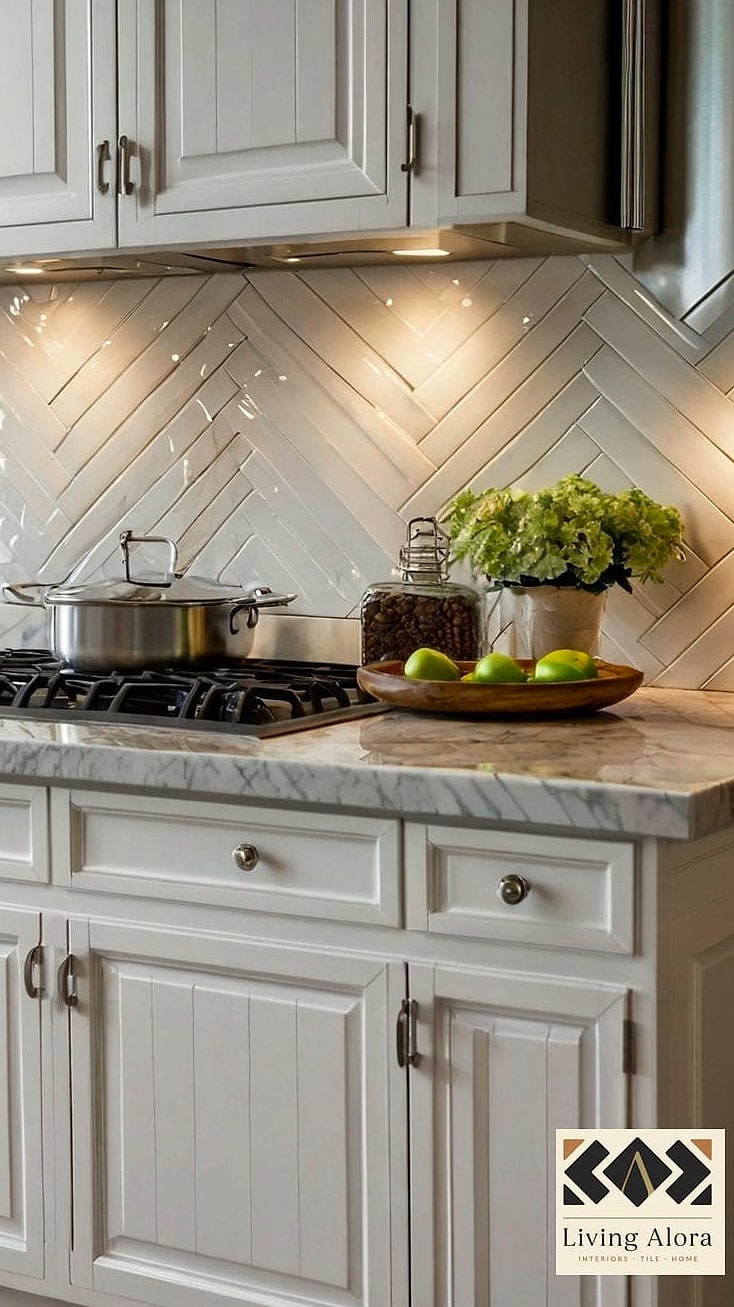
On the flip side, a glossy ceramic herringbone backsplash bounces light around a room in a way matte tile just can’t. If your kitchen is on the darker side or lacks natural light, this reflective quality can genuinely brighten things up.
The shine also makes the pattern feel a little more polished and formal. This is a great pick for kitchens that lean more traditional or even slightly glam, especially when paired with polished chrome or nickel fixtures.
Herringbone Backsplash with Marble Look
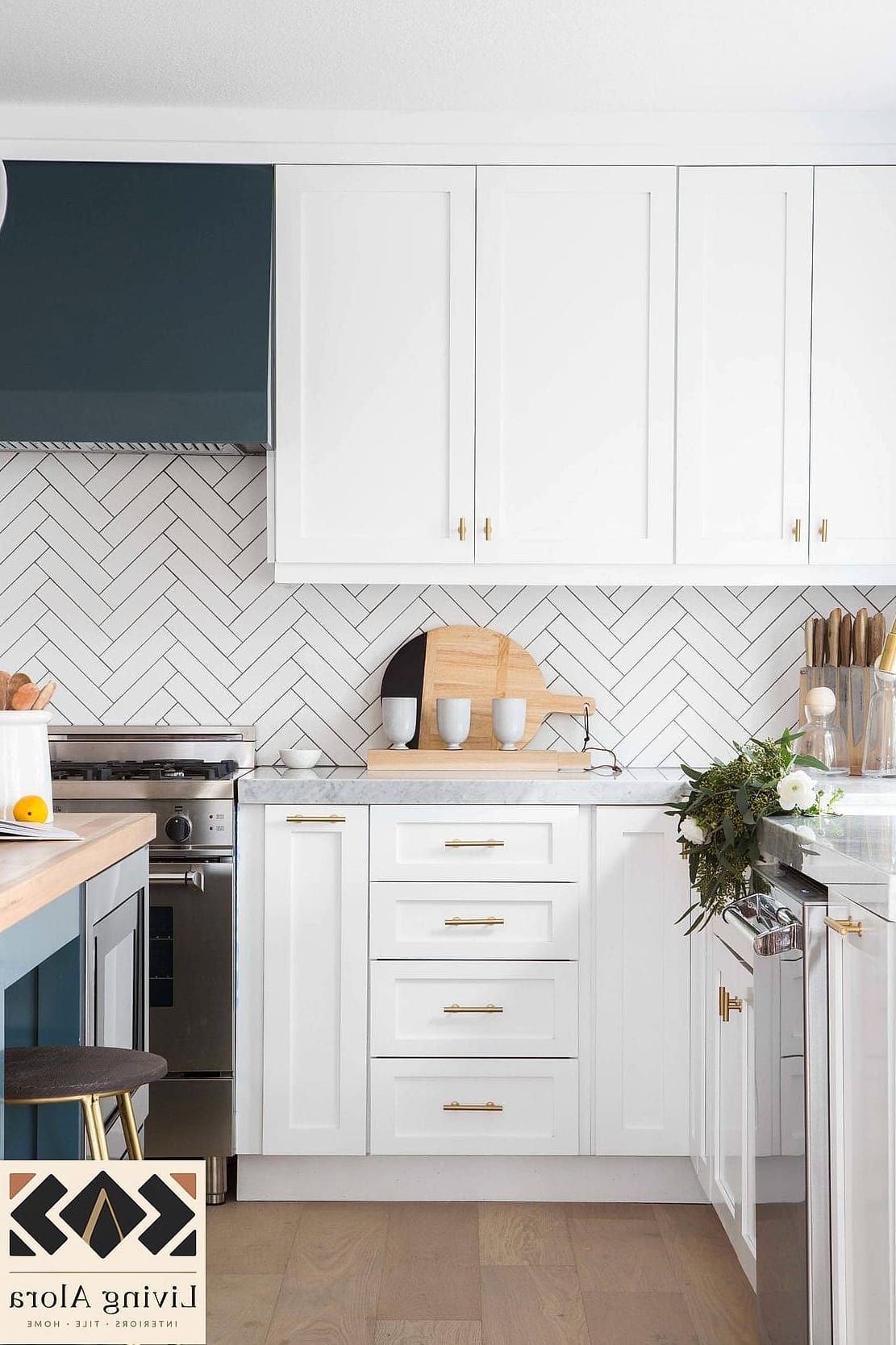
You don’t need actual marble to get that luxurious veined look anymore. Porcelain tiles that mimic marble, laid in a herringbone pattern, give you the elevated feel of natural stone without the maintenance headaches real marble demands.
This option works well for anyone who loves the marble aesthetic but worries about staining or etching. The subtle veining adds depth to the pattern, so it never looks flat even under bright kitchen lighting. It’s a bit pricier than plain subway tile but far more forgiving to live with day to day.
Small-Format Mini Herringbone

Scaling down the tile size changes the whole feel of this pattern. Mini herringbone tiles, often just an inch or two long, create a denser, more intricate zigzag that reads almost like a textile print from a distance.
This works particularly well in smaller kitchens or as an accent behind a range, where you want detail without overwhelming the space. It does take a bit more patience during installation since there are simply more pieces to lay, so factor that into your timeline if you’re tackling this as a DIY project.
Oversized Herringbone Tile Pattern
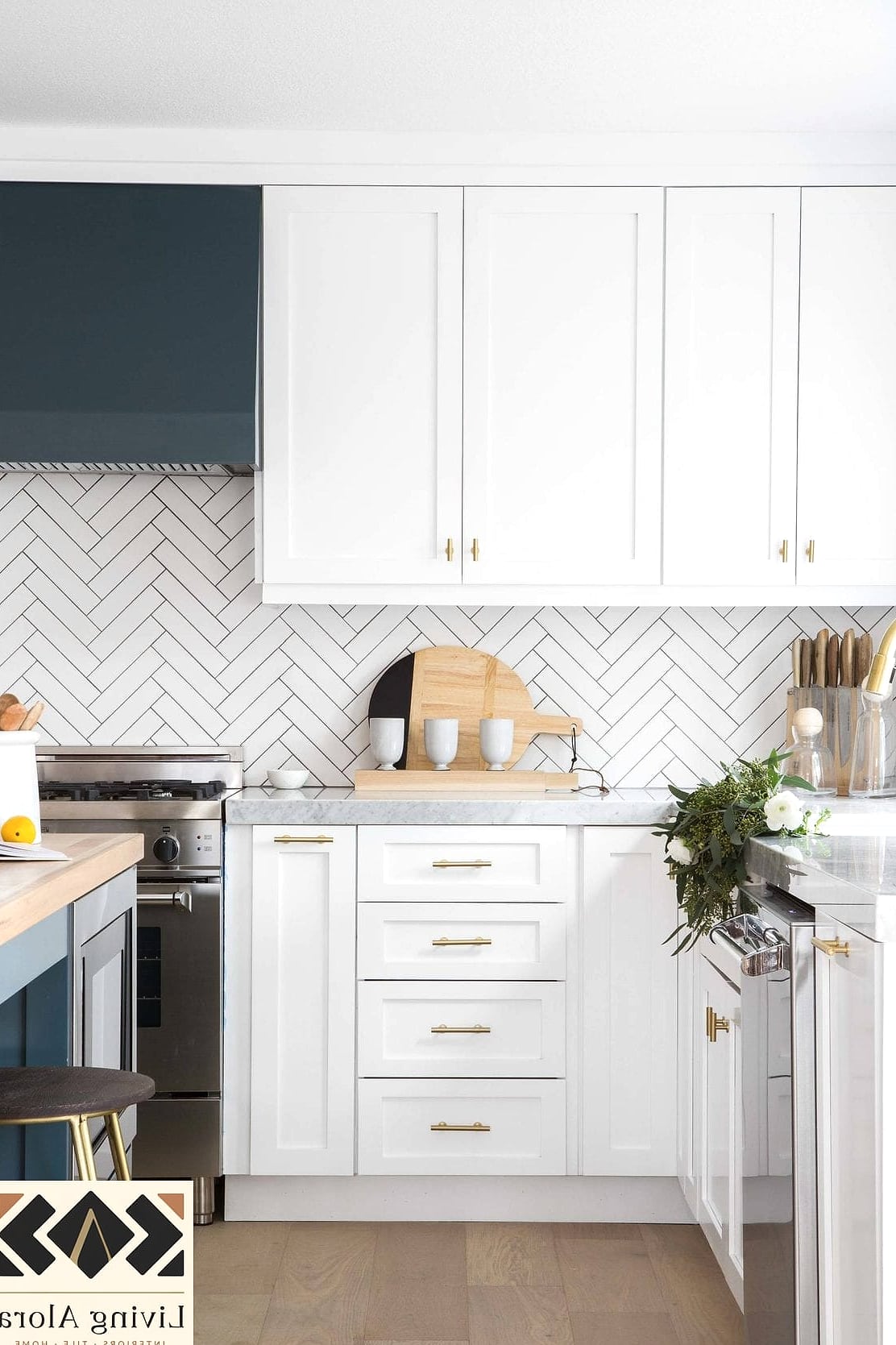
Go the opposite direction with larger format tiles, and you get a bolder, more graphic version of the pattern. Oversized herringbone tiles make a statement fast, and because there are fewer grout lines, cleaning becomes noticeably easier too.
This is a great choice for larger kitchens where a busier, tighter pattern might get lost. It also tends to read as more contemporary, so if your kitchen leans modern rather than farmhouse, this scale might suit it better.
Herringbone Behind a Range Only
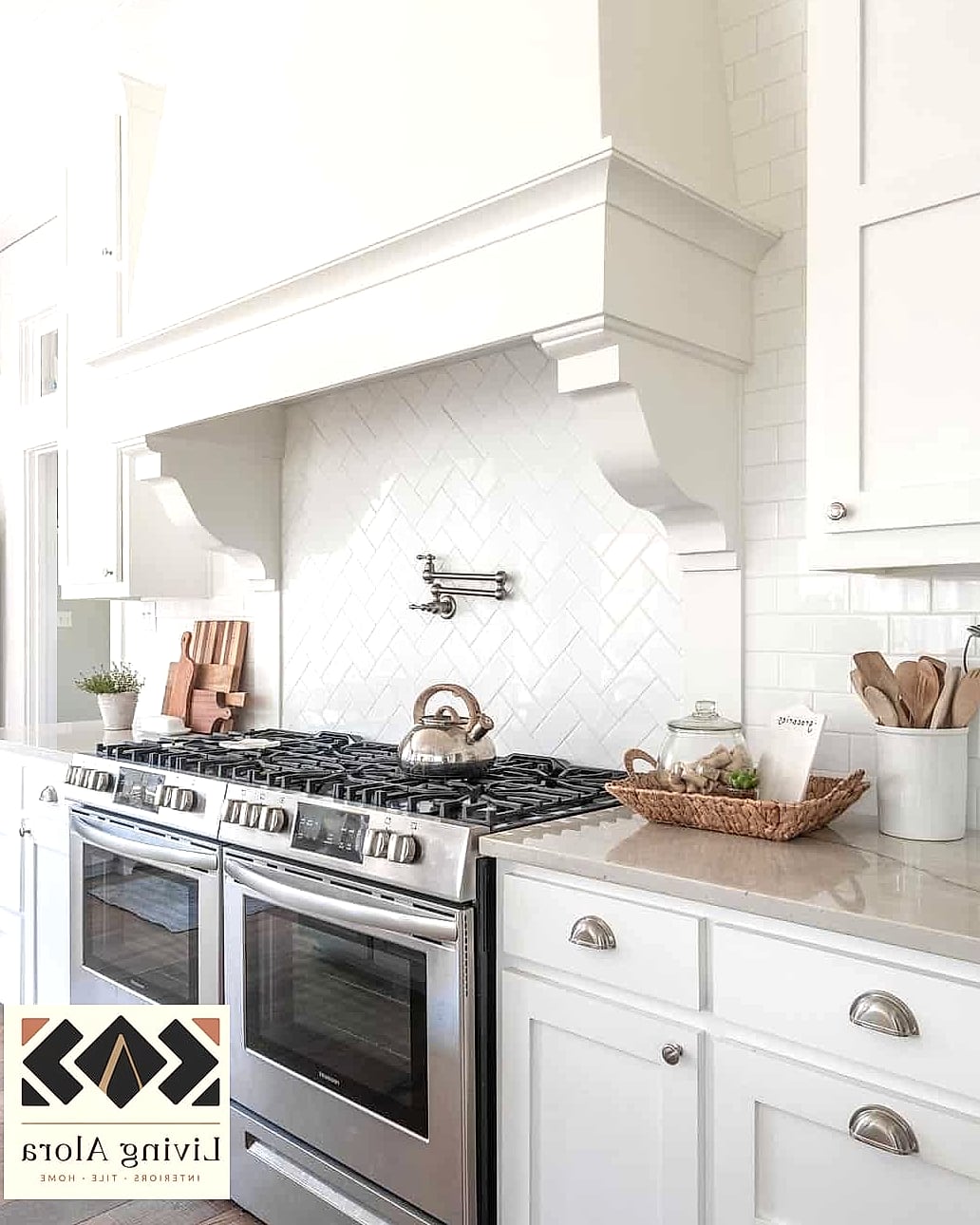
Not ready to tile your entire backsplash? Installing herringbone tile just behind the stove as a focal point is a smart way to get the look without the full cost or labor.
This approach works great in kitchens with a hood vent, since the tile pattern draws the eye right where you want it. Pair it with open shelving on either side and you’ve got a genuinely custom-looking feature wall for a fraction of the price of a full installation.
Herringbone Extending to the Ceiling
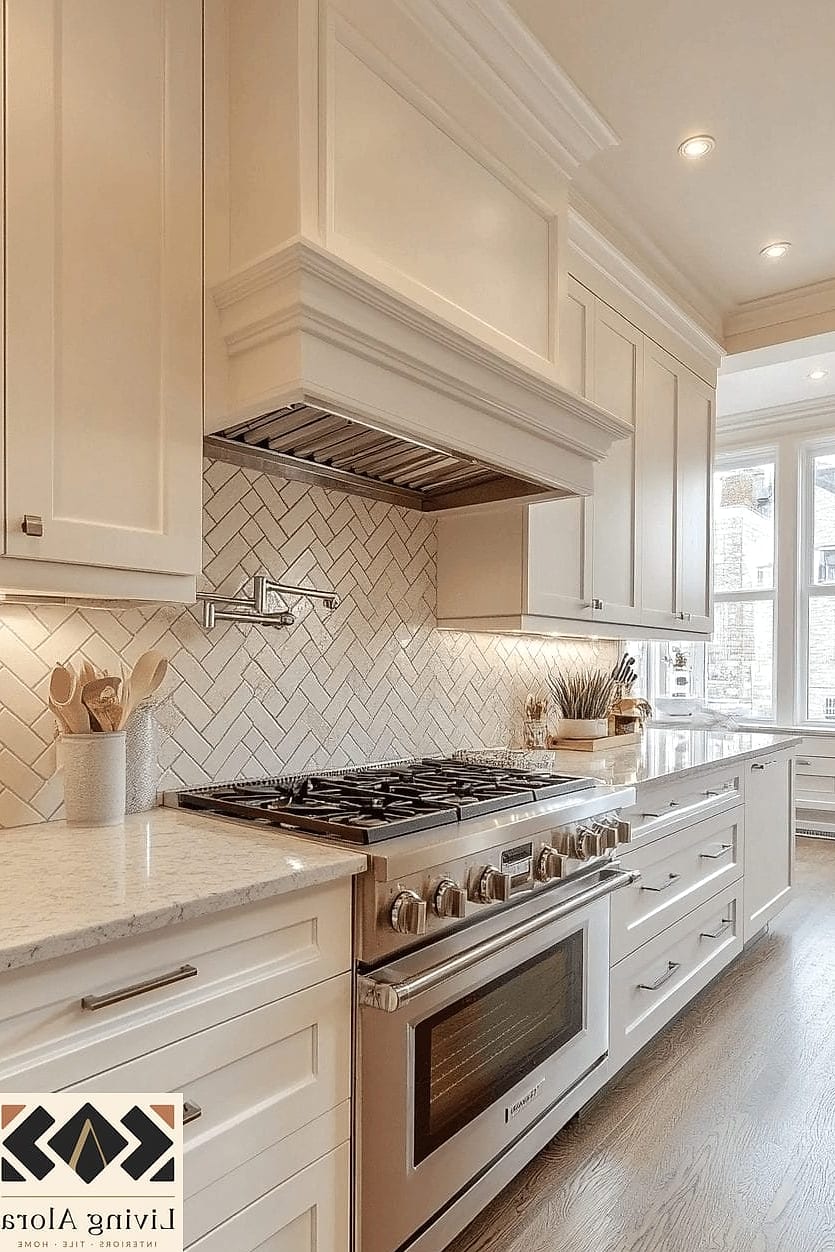
Instead of stopping the tile at the standard height, running it all the way up to your upper cabinets or even to the ceiling creates a dramatic, high-end look. This full-height treatment makes a kitchen feel taller and more intentional.
It’s particularly striking in kitchens with open shelving instead of upper cabinets, since there’s more wall space to actually show off the pattern. Just be prepared for a bigger tile order and a longer installation process if you go this route.
Peel-and-Stick Herringbone for Renters
If you’re renting or just not ready to commit to a full tile job, peel-and-stick herringbone options have come a long way. Many now look surprisingly convincing, with textured surfaces that mimic real ceramic or subway tile.
This is a renter-friendly, budget-conscious way to test out the look before investing in permanent tile. Installation is genuinely doable in an afternoon, no grout or mortar required, and most options can be removed without damaging the wall underneath.
Herringbone with Warm Wood Open Shelving

Pairing your white herringbone backsplash with open wood shelving softens the whole look and adds warmth to what could otherwise feel like a stark, all-white space. The texture of the tile plays nicely against the grain of natural wood.
This combination is especially popular in modern farmhouse and Scandinavian-inspired kitchens. Style the shelves with a mix of everyday dishware and a few plants for a lived-in feel that doesn’t look overly styled or staged.
Herringbone with Brushed Brass Accents

White herringbone tile is basically a blank canvas, which means it plays well with almost any hardware finish. Brushed brass in particular adds a warm, slightly vintage touch that keeps the space from feeling too cold or clinical.
Think brass cabinet pulls, a brass faucet, or even brass-framed pendant lights above the island. The metal warms up the whiteness of the tile and grout, creating a balanced palette that still feels fresh rather than trendy for trendy’s sake.
Herringbone with Black Matte Fixtures
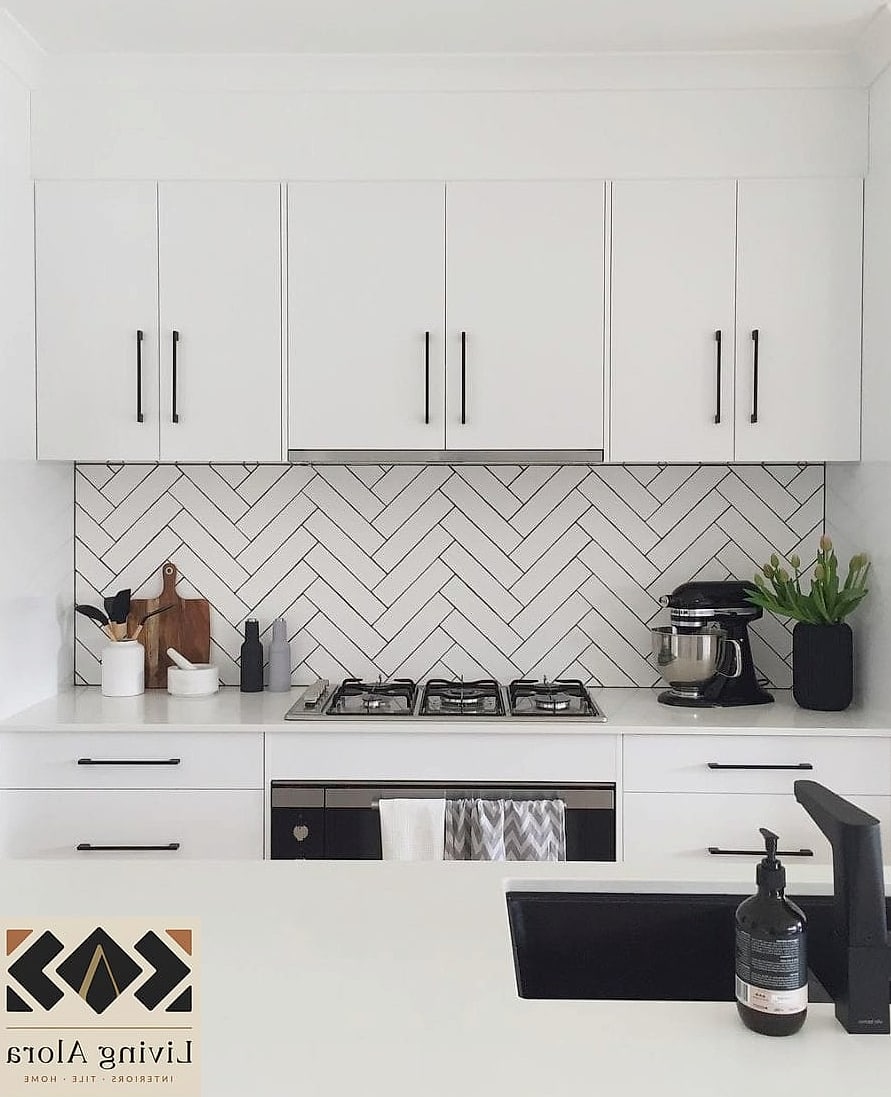
For a more graphic, high-contrast look, pair your herringbone backsplash with black matte fixtures instead. The dark faucet, cabinet hardware, and even window frames create clean lines against the busier tile pattern.
This combination reads as more modern and a little more dramatic than brass. It’s a good fit if the rest of your kitchen leans minimal, since the herringbone pattern already provides plenty of visual texture on its own.
Herringbone Paired with Butcher Block Counters

There’s something really inviting about pairing crisp white herringbone tile with warm butcher block countertops. The wood grain and the tile pattern both bring texture to the space, but in totally different ways, so they end up complementing rather than competing.
This pairing works especially well in cottage-style or farmhouse kitchens. Just keep in mind that butcher block requires regular oiling to stay protected from water damage, so it’s a bit more maintenance than quartz or granite.
Vertical Herringbone Layout
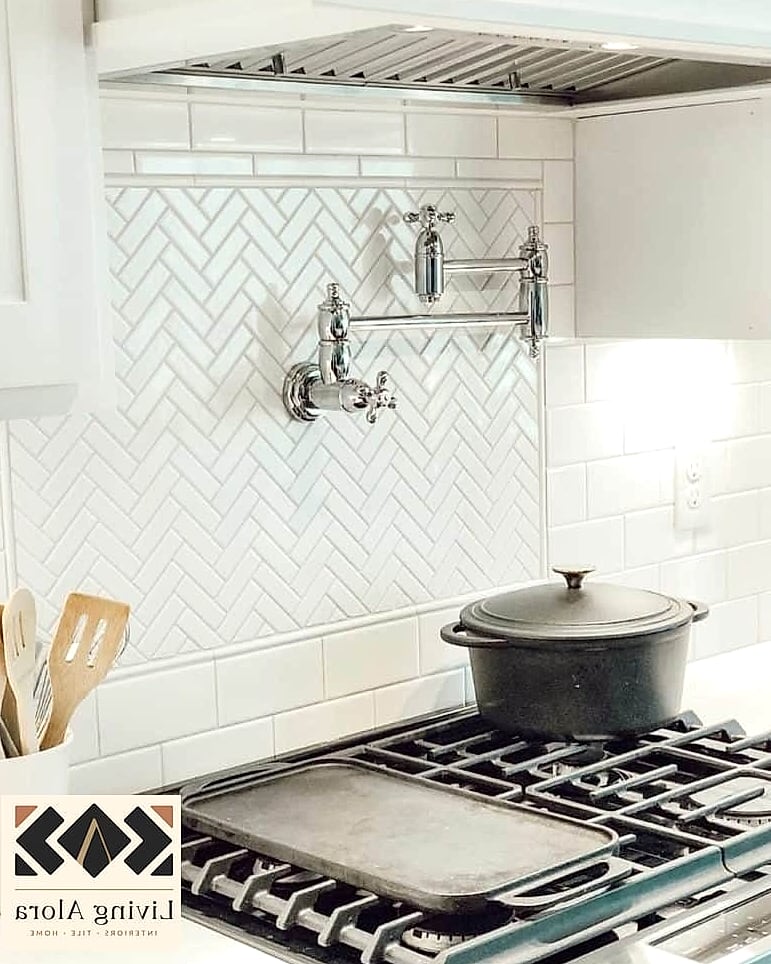
Most herringbone patterns run horizontally, but flipping the orientation to vertical creates a totally different visual effect. It draws the eye upward, which can make lower ceilings feel a little taller.
This layout works particularly well in narrow kitchens or as an accent on a single wall. It’s a slightly less common choice, so if you want your backsplash to feel a bit more unexpected, this is an easy way to get there without changing the tile itself.
Herringbone with a Framed Border
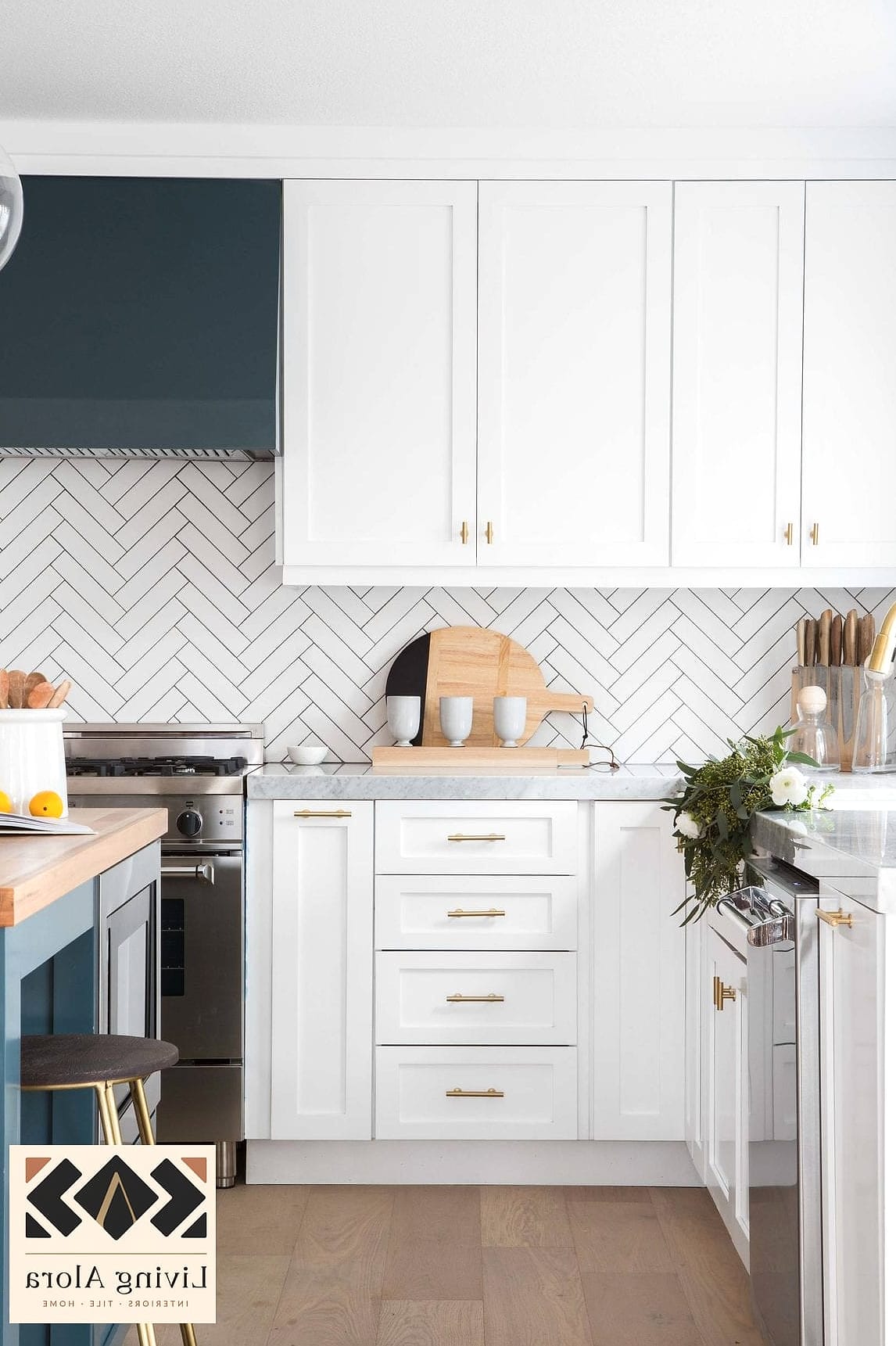
Adding a simple pencil tile or contrasting border around your herringbone backsplash gives the whole installation a finished, tailored look. It’s a small detail, but it makes the pattern feel more like a deliberate design choice than just tile that got laid diagonally.
This works well in kitchens where you want the backsplash to feel like a genuine focal point, almost like art on the wall. A thin black or brass metal trim can serve the same purpose if you want something a little more modern than traditional tile trim.
Textured Zellige-Inspired Herringbone
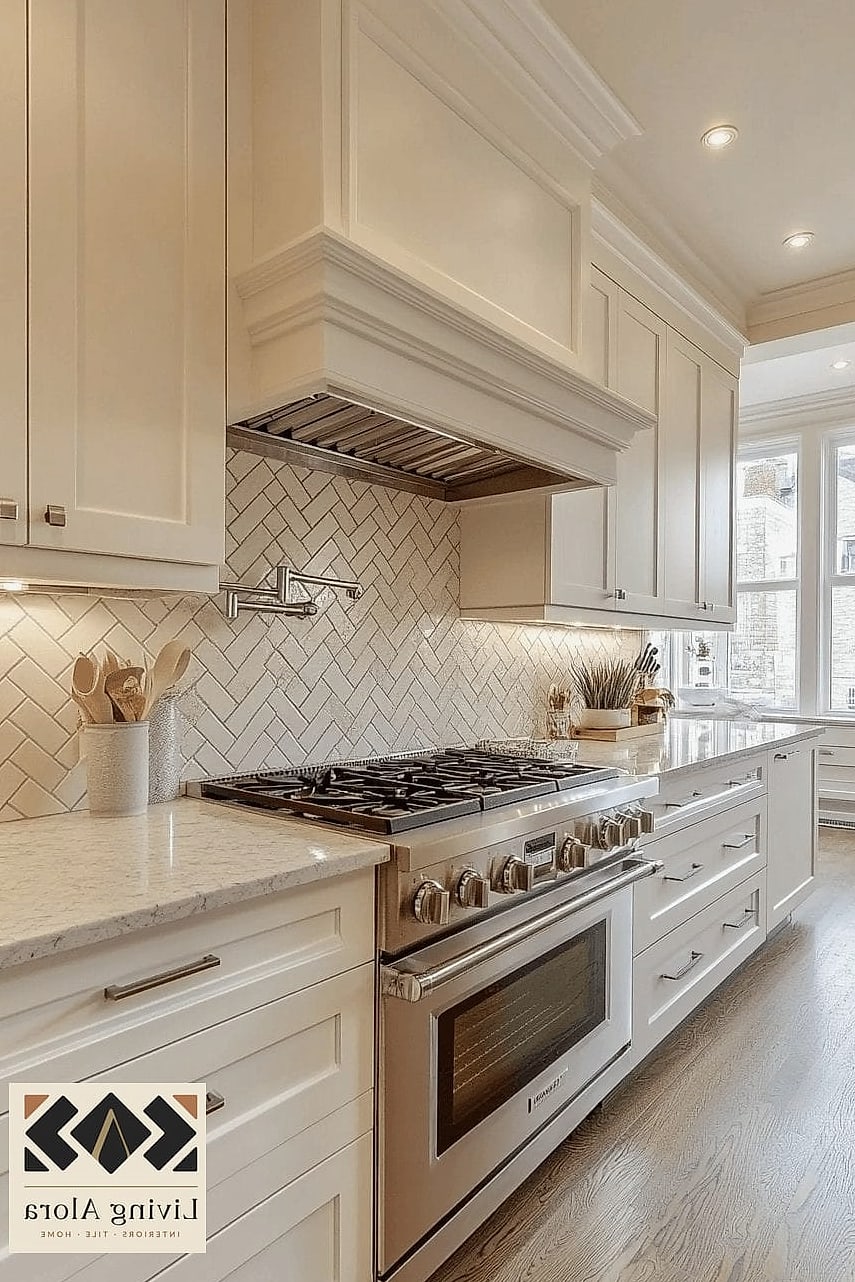
Zellige tile has a handmade, slightly imperfect quality that’s hard to replicate, but some manufacturers now make herringbone tiles with that same textured, variegated surface. Each piece catches light a little differently, which adds depth you just don’t get from perfectly uniform tile.
This option suits kitchens going for an organic, artisanal feel rather than a crisp, modern one. It’s typically pricier than standard ceramic, but the texture and subtle color variation genuinely make the wall feel more interesting up close.
Whichever direction you go, a white herringbone backsplash is one of those upgrades that reads as custom without necessarily requiring a custom budget. The pattern itself carries a lot of the visual weight, so you’ve got plenty of room to play with grout color, tile finish, and surrounding materials until it feels like yours.