18 Modern Backsplash Ideas That Designers Keep Coming Back To
- Classic Subway Tile in an Unexpected Color
- Zellige Tile for Handmade Texture
- Herringbone Pattern for Movement
- Full-Height Slab Backsplash
- Mosaic Tile as an Accent Strip
- Warm Wood Accents Paired with Tile
- Bold Graphic Tile as a Focal Point
- Natural Stone with Visible Veining
- Stacked Rectangular Tile for a Modern Grid
- Textured Tile for Depth Without Color
- Two-Tone Backsplash Zones
- Matte Black Tile for Contrast
- Scalloped or Fish-Scale Tile
- Large Format Slab Tile for a Seamless Look
- Colorful Glass Tile for Shine
- Terracotta Tile for Earthy Warmth
- Vertical Tile Installation for Height
- Mixed Metal Accents Framing the Tile
18 Modern Backsplash Ideas That Designers Keep Coming Back To
If you’ve scrolled through kitchen renovation photos lately, you’ve probably noticed the backsplash is doing a lot of heavy lifting. It’s one of the few spots in a kitchen where you can go bold without committing to something permanent like a full remodel. And honestly, it’s the detail that makes people say “wait, who designed this?”
I’ve pulled together eighteen backsplash ideas that keep showing up in designer portfolios year after year. Some are subtle, some are showstoppers, but all of them earn their keep. Let’s get into it.
Classic Subway Tile in an Unexpected Color
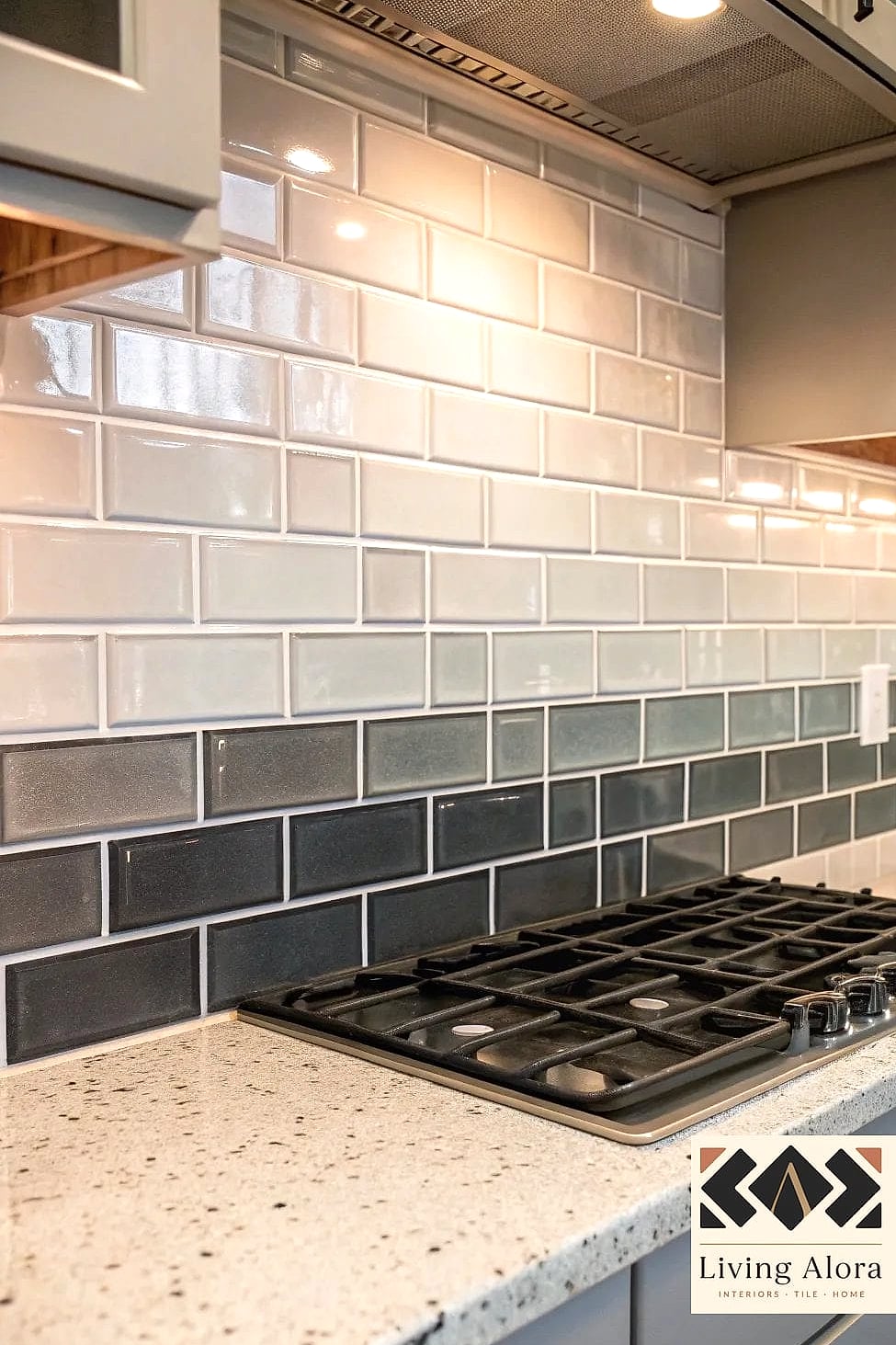
Subway tile isn’t going anywhere, and honestly, it shouldn’t. The shape is timeless because it works with almost any cabinet style, from shaker to slab-front. What’s changed is the color story. Instead of white, designers are reaching for sage green, terracotta, or deep navy to give the classic layout a fresh personality.
This works beautifully in kitchens that already have a lot of neutral tones and need one area to feel intentional. It’s also budget-friendly since subway tile is widely available and easy to source in different price points. Grout color matters here too; a contrasting grout will make the pattern pop, while matching grout keeps things quiet and modern.
Zellige Tile for Handmade Texture

Zellige tile has that slightly imperfect, wavy surface that catches light in a way machine-made tile just can’t replicate. Each piece is a little different, which gives the whole wall a sense of movement even when the color palette is simple.
Designers love it for kitchens that want warmth without pattern. It pairs especially well with brass hardware and warm wood tones. The tradeoff is price and installation difficulty, since it usually costs more and benefits from an experienced tile setter who understands how to work with its irregular edges.
Herringbone Pattern for Movement

A herringbone layout takes an ordinary tile and makes it feel custom. The zigzag pattern draws the eye across the wall, which is a nice trick in narrow kitchens where you want the space to feel wider than it is.
This pattern works with almost any material, from ceramic to natural stone, so it’s flexible for different budgets. It does take a bit more planning during installation since the cuts need to be precise at the edges, but the payoff is a backsplash that looks like it belongs in a magazine spread.
Full-Height Slab Backsplash

Instead of stopping the tile at the upper cabinets, some kitchens are running a single slab of stone or quartz all the way up to the ceiling. It’s a dramatic look that eliminates grout lines almost entirely, which also means less cleaning.
This is more of a splurge option, but it reads as high-end instantly. It’s a favorite for kitchens with a statement range, since the slab can wrap behind the cooktop and create a cohesive backdrop. Matte finishes are especially popular right now because they hide fingerprints and water spots better than glossy stone.
Mosaic Tile as an Accent Strip

Not every kitchen needs a full mosaic wall, and that’s where an accent strip comes in. A narrow band of mosaic tile behind the stove or sink adds detail without overwhelming the space.
This is a great option if you’re renting or working with a smaller budget, since you’re covering less square footage. Peel-and-stick mosaic options have also gotten a lot better in quality, so renters can get this look without any permanent installation.
Warm Wood Accents Paired with Tile

Mixing a small section of wood paneling or wood trim with tile is a trend that keeps showing up in kitchens that want to feel less clinical. The wood softens the hard surfaces around it and adds a layer of warmth that stone or ceramic alone can’t provide.
This pairs nicely with open shelving, since the wood tones can echo shelf brackets or floating shelves nearby. It’s not the most practical choice directly behind a stove, so designers usually place it near a sink or prep area instead.
Bold Graphic Tile as a Focal Point
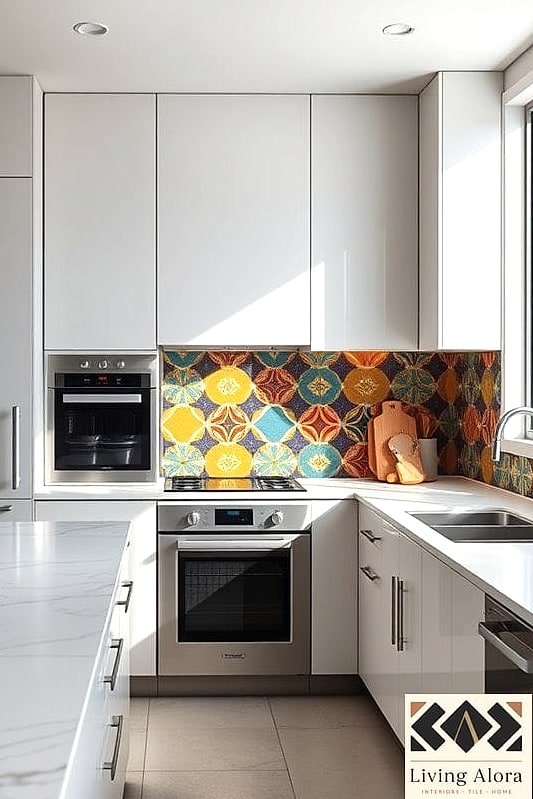
Sometimes a kitchen just needs one loud moment, and a graphic patterned tile behind the range does exactly that. Think Moroccan-inspired prints, geometric shapes, or even a checkerboard motif in unexpected colors.
This works best when the rest of the kitchen is fairly neutral, letting the backsplash be the star. It’s also a fun way to bring in personality if your cabinets and countertops are more classic and understated.
Natural Stone with Visible Veining
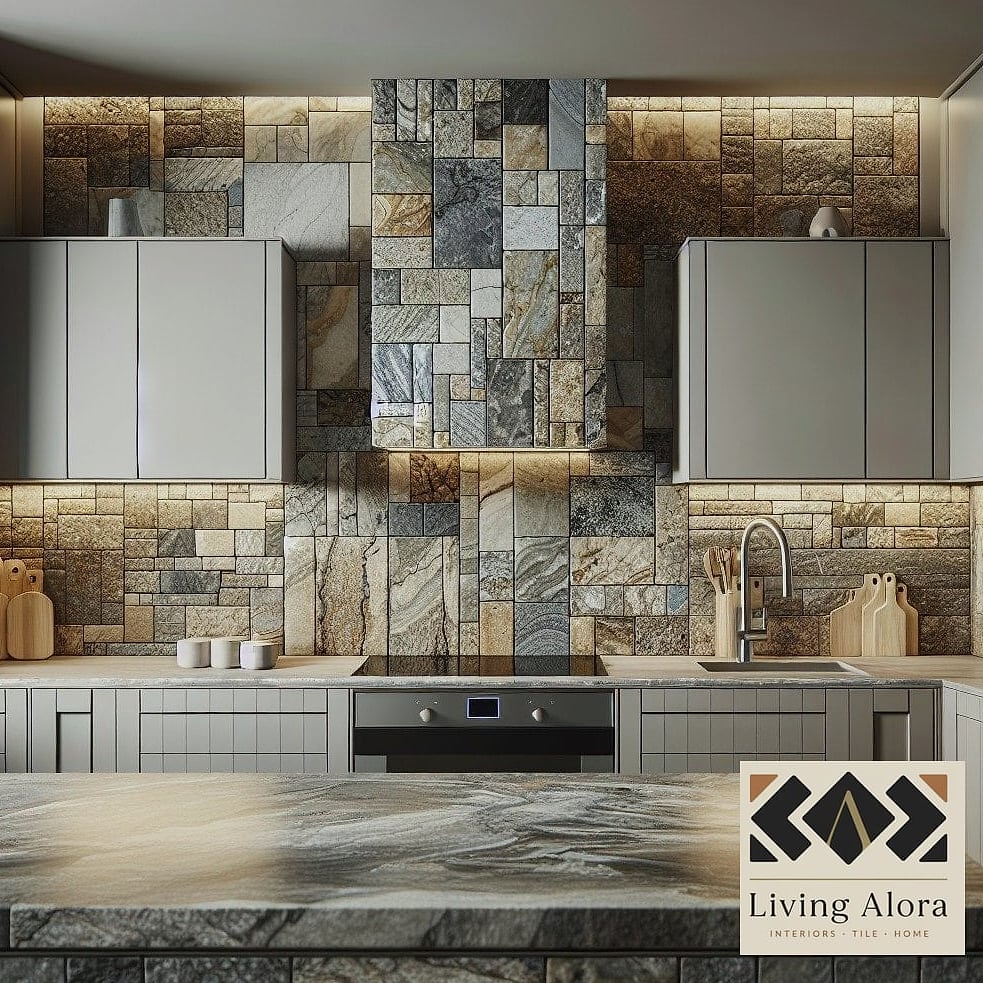
Marble and quartzite backsplashes with dramatic veining have become a go-to for kitchens that want an organic, high-end look. The veining creates a kind of natural artwork on the wall, and no two installations look exactly alike.
Maintenance is worth mentioning here since natural stone is porous and benefits from sealing to resist stains. If you love the look but want less upkeep, porcelain tile now does a convincing job of mimicking marble veining at a fraction of the cost and effort.
Stacked Rectangular Tile for a Modern Grid

A stacked layout, where rectangular tiles line up in neat rows instead of the offset brick pattern, gives a backsplash a clean, architectural feel. It’s a favorite in modern and minimalist kitchens because the straight lines feel deliberate and calm.
This layout works especially well with larger format tile, since fewer grout lines mean a sleeker overall look. It’s also a solid DIY-friendly option if you’re comfortable with tile spacers and a level, since the pattern is more forgiving than diagonal layouts.
Textured Tile for Depth Without Color
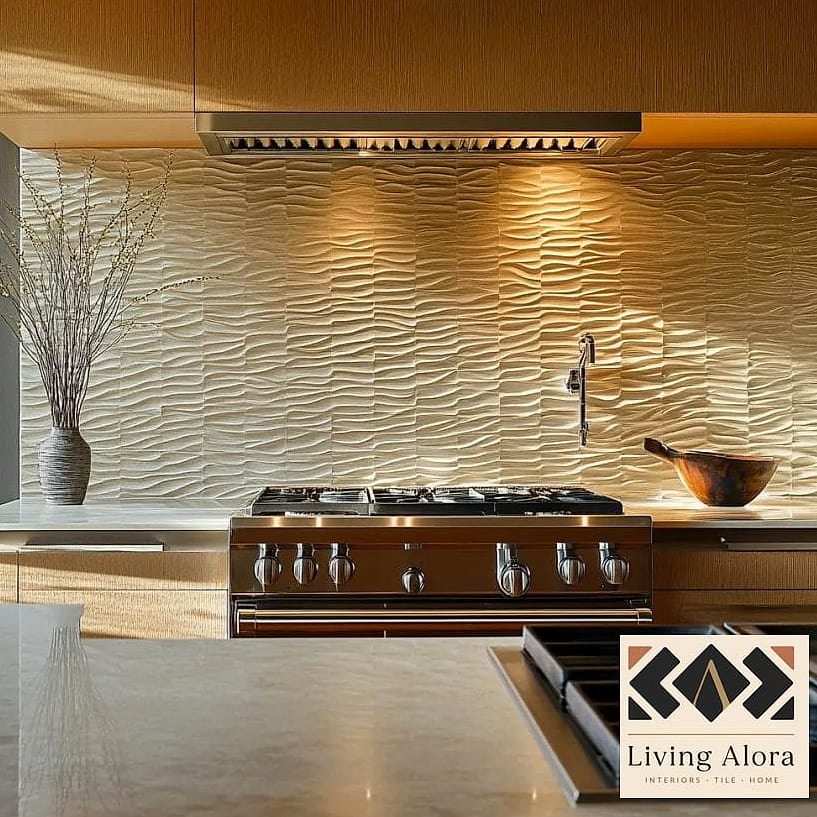
Not every backsplash needs pattern or color to feel interesting. Textured tile, like fluted or ribbed ceramic, adds dimension through shadow and light instead. It’s a subtle upgrade that photographs beautifully thanks to the way light plays across the surface.
This is a nice pick for all-white or monochrome kitchens that still want visual interest. It tends to show water spots more than flat tile, so a quick wipe-down after cooking keeps it looking its best.
Two-Tone Backsplash Zones
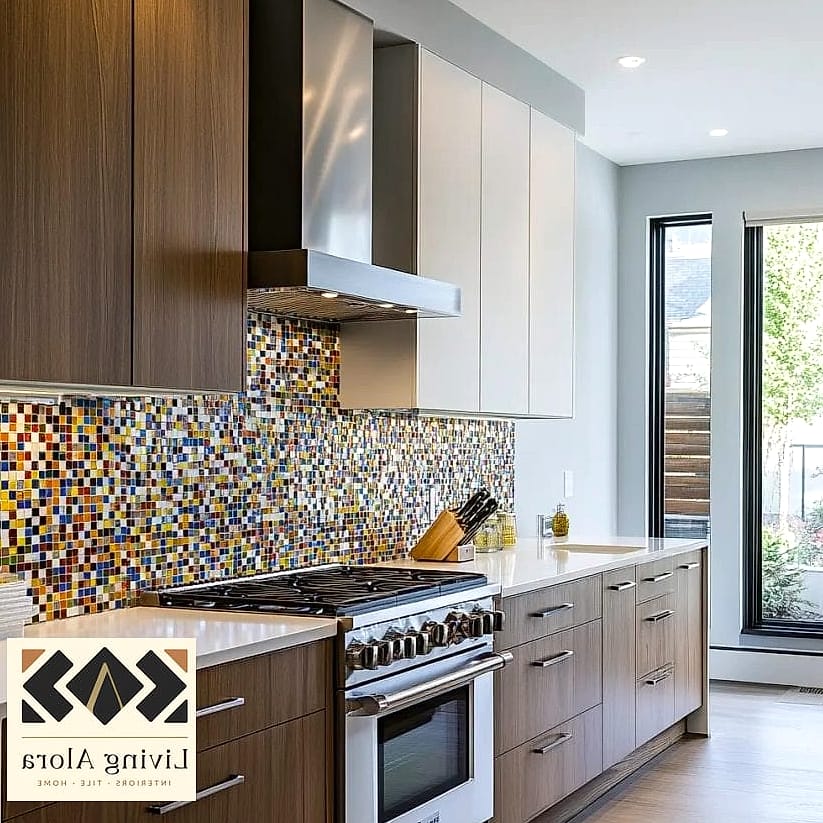
Splitting the backsplash into two materials or colors, one behind the stove and another along the counters, is a layout designers keep experimenting with. It creates a natural focal point without tiling an entire wall in a bold pattern.
This approach is great if you’re torn between two tile options, since you don’t have to choose just one. It also tends to be more budget-conscious since the statement tile only covers a smaller section of wall.
Matte Black Tile for Contrast
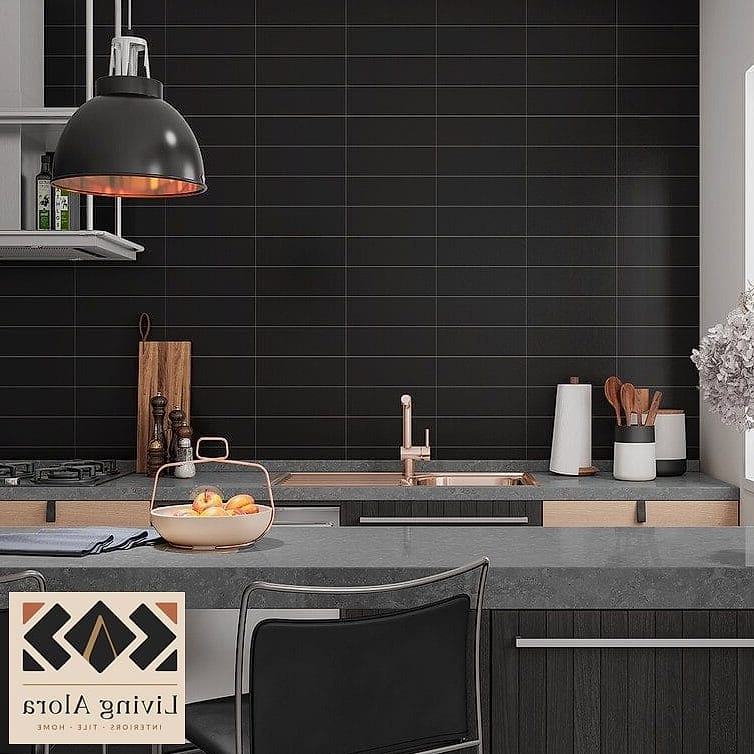
Matte black subway or square tile has become a favorite for kitchens leaning into a moodier, more dramatic palette. Paired with black fixtures and brushed brass accents, it creates a lot of contrast against white or wood cabinetry.
It hides grease splatters better than you’d expect, honestly, which makes it fairly practical for people who cook often. Just know that matte finishes can show water spots more visibly than glossy ones, so a squeegee near the sink area helps.
Scalloped or Fish-Scale Tile
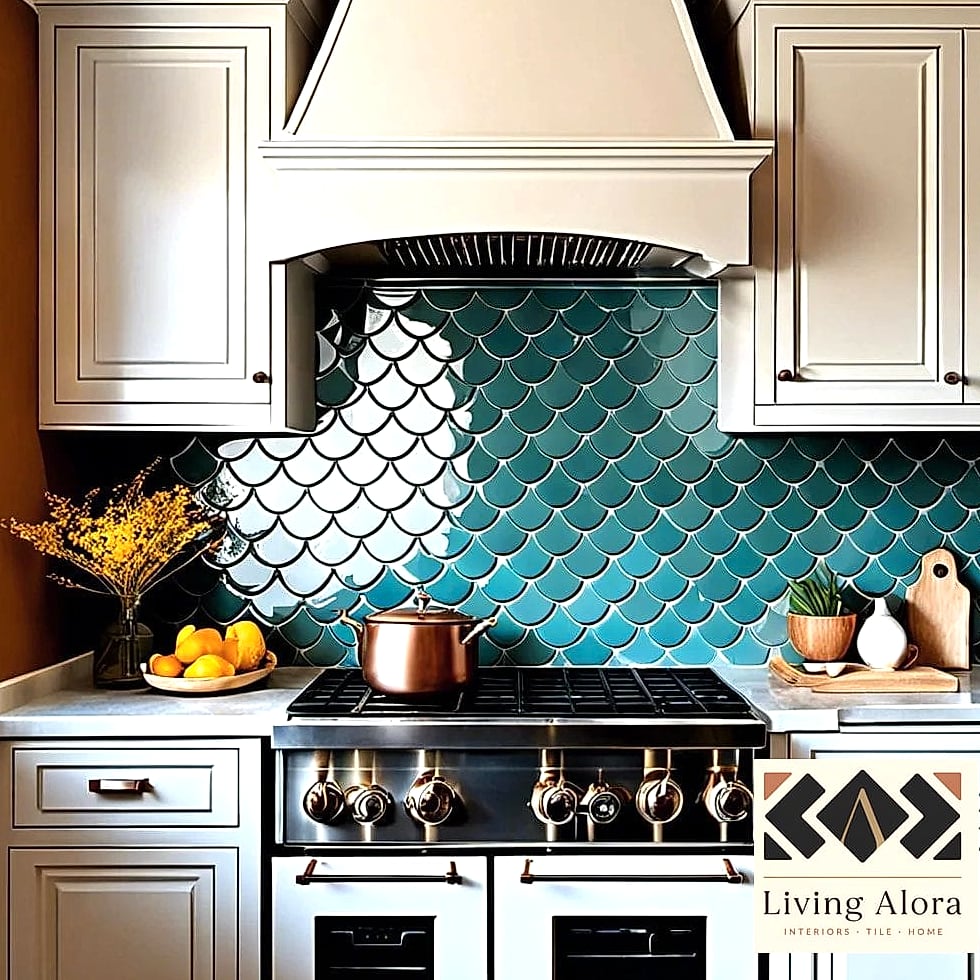
Scalloped tile brings a soft, almost whimsical curve into a kitchen that’s otherwise full of straight lines and hard angles. It’s a pattern that reads as playful without feeling overly trendy, especially in a muted color palette.
This style works well as a full backsplash or just behind open shelving, where the curves peek out between displayed dishes and greenery. It’s a bit more involved to install because of the curved cuts, so budgeting a little extra for labor is smart.
Large Format Slab Tile for a Seamless Look
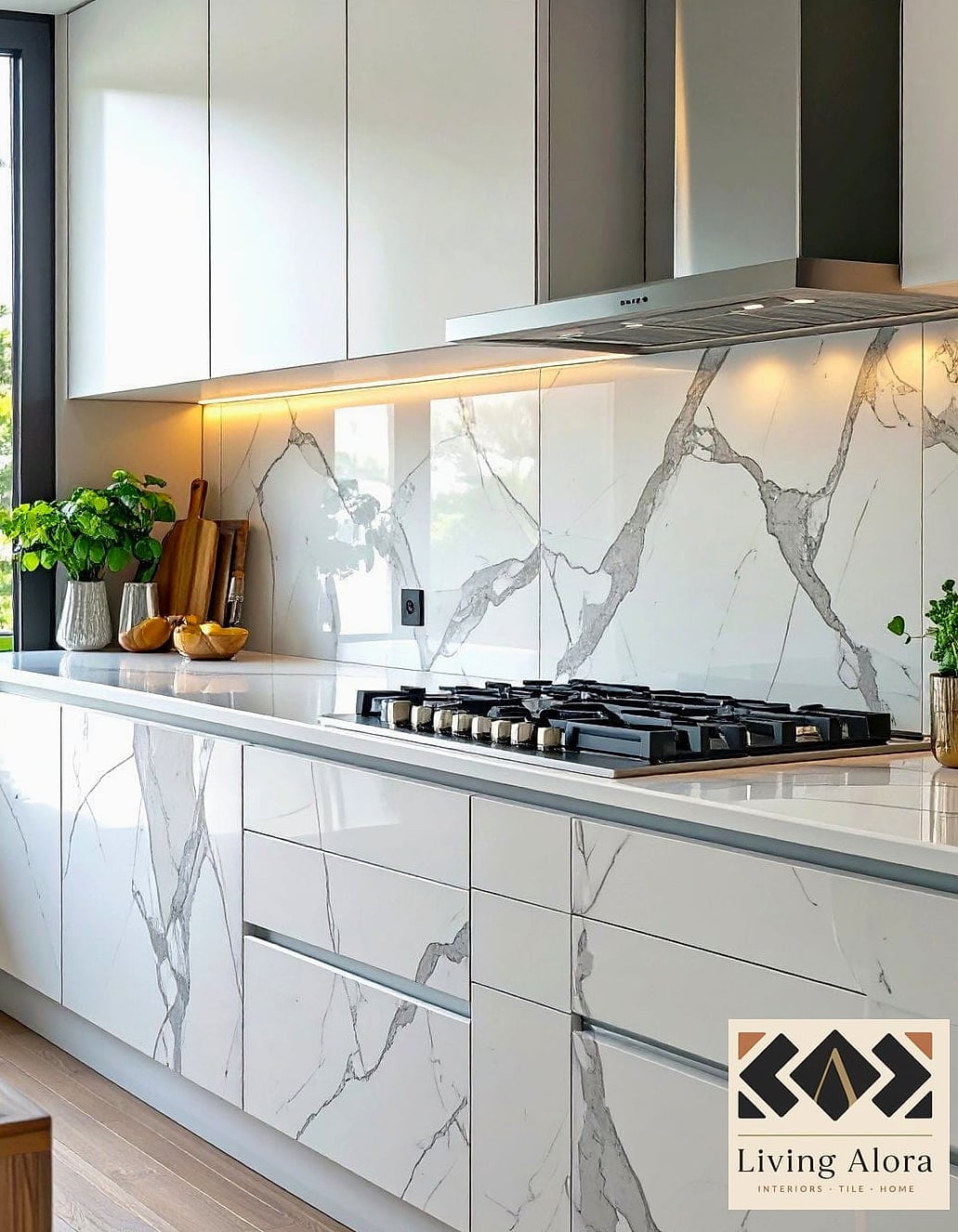
Large format porcelain slabs are gaining ground because they minimize grout lines while still being more affordable and easier to maintain than natural stone. A single large panel behind the range can look almost like a piece of art.
This is a great low-maintenance option for busy households since there’s less grout to scrub. It’s heavier to install, so it’s not really a weekend DIY project, but the payoff is a clean, modern finish that feels intentional.
Colorful Glass Tile for Shine

Glass tile brings a reflective quality that ceramic and stone simply don’t have. A soft blue, green, or amber glass tile can make a kitchen feel brighter, especially in spaces without a ton of natural light.
Designers like using it in smaller kitchens where the reflective surface helps bounce light around the room. It’s fairly low-maintenance too, since glass doesn’t stain the way natural stone can, though it will show water spots if not wiped down regularly.
Terracotta Tile for Earthy Warmth
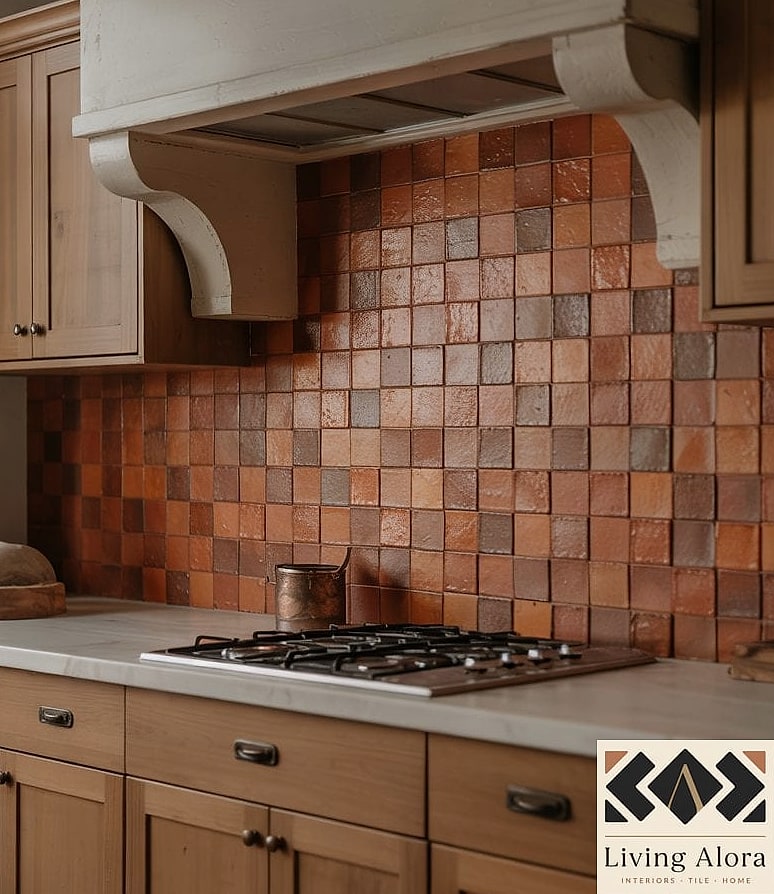
Terracotta has made a real comeback, especially in kitchens leaning into a warmer, more organic palette. The slightly rustic, sun-baked look pairs beautifully with wood cabinetry and brass hardware.
This tile tends to be more porous than porcelain or ceramic, so sealing it is worth doing if it’s going behind a stove or sink. The color variation between tiles is part of the charm, so it’s not a great fit if you want a perfectly uniform look.
Vertical Tile Installation for Height
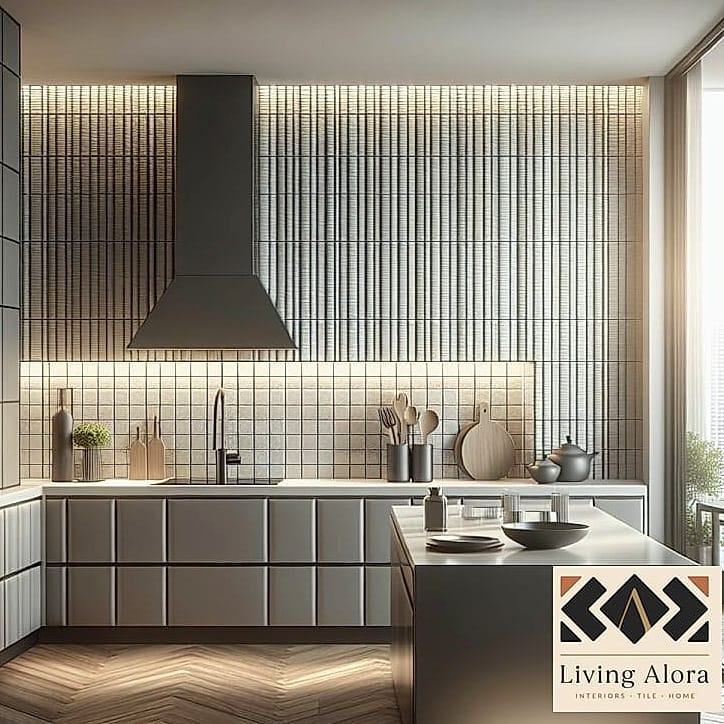
Instead of the standard horizontal layout, some kitchens are installing tile vertically to draw the eye upward. This trick makes ceilings feel taller and adds a subtle architectural detail that’s easy to miss until you notice how good the proportions feel.
It works particularly well with narrow tile shapes like thin subway or stacked rectangles. This is a great option for kitchens with lower ceilings that could use a little visual lift without any construction involved.
Mixed Metal Accents Framing the Tile

Rather than treating the backsplash as tile alone, some designers are framing sections with metal trim in brushed brass, matte black, or brushed nickel. It creates a finished, almost furniture-like edge around the tile.
This detail works especially well with a floating shelf or open shelving nearby, tying the metal tones together throughout the kitchen. It’s a smaller, more affordable way to add a custom touch without redoing the entire wall, and it’s something a confident DIYer could tackle over a weekend.
Whatever direction you land on, the backsplash is one of those details that quietly shapes how the whole kitchen feels. It’s worth taking your time picking a style that fits how you actually use the space, not just what looks good in a photo. A backsplash that’s practical for your cooking habits and easy to keep clean will serve you a lot longer than one chosen purely for trend value.