30 Stone Backsplash Ideas That Will Transform Your Space
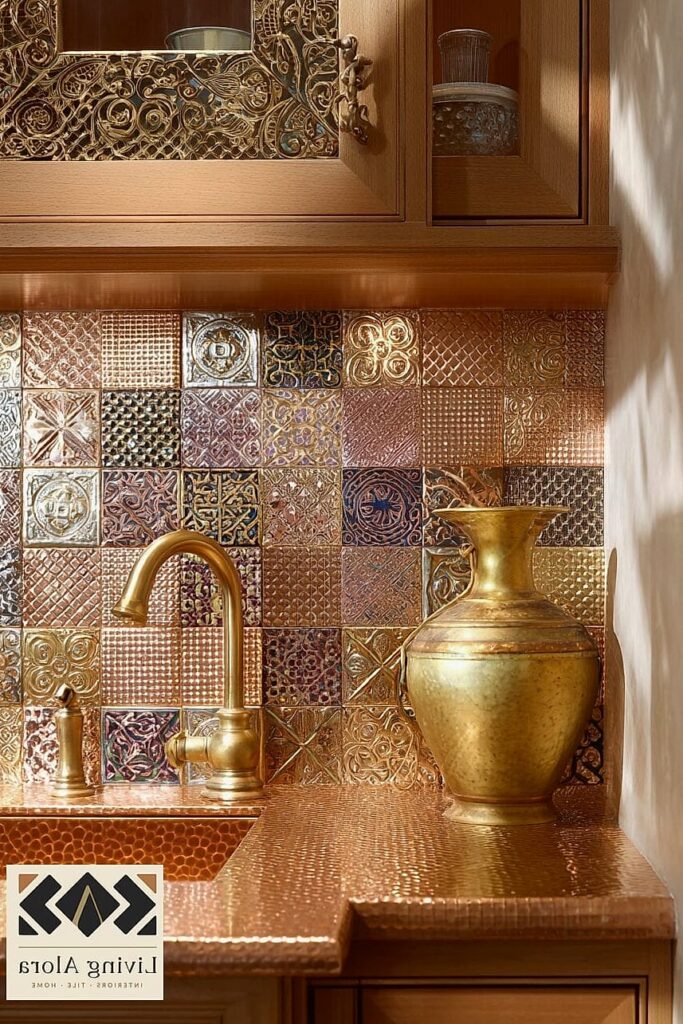
- Classic Carrara Marble Slab
- Herringbone Travertine Tile
- Floor-to-Ceiling Slate Wall
- Soapstone Panel Backsplash
- Mosaic Pebble Stone Tile
- Basketweave Marble Mosaic
- Large-Format Quartzite Slab
- Stacked Stone Ledger Panels
- Honed Limestone Backsplash
- Chevron Marble Tile
- River Rock Accent Strip
- Granite Slab with Waterfall Edge
- Zellige-Inspired Stone Tile
- Onyx Backlit Backsplash
- Fieldstone Mosaic Blend
- Bookmatched Marble Slabs
- Vertical Stacked Marble Tile
- Terrazzo-Style Stone Backsplash
- Rustic Fieldstone Fireplace-to-Backsplash Continuity
- Honed Black Granite Wall
- Marble Herringbone with Metal Inlay
- Natural Cleft Slate Backsplash
- Marble Subway Tile
- Grey Quartzite Mosaic Blend
- Stone Tile with Open Shelving
- Moroccan-Inspired Stone Mosaic
- Limestone Brick-Look Tile
- Marble and Wood Combination Backsplash
- Textured Quartzite Waterfall Wall
- Budget-Friendly Stone-Look Porcelain Tile
30 Stone Backsplash Ideas That Will Transform Your Space
Stone backsplashes have this way of making a kitchen feel grounded and intentional, like it was designed rather than just decorated. Whether you’re drawn to the raw texture of natural stone or the low-maintenance charm of stone-look porcelain, there’s a version of this trend for basically every budget and every style. Let’s get into thirty ways to bring it into your own space.
Classic Carrara Marble Slab
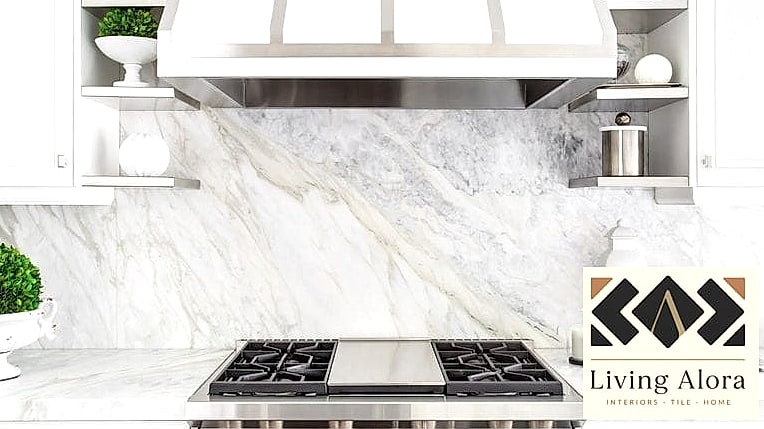
A single slab of Carrara marble behind the range is one of those choices that never really goes out of style. The soft gray veining against a white background pairs beautifully with almost any cabinet color. It works best in kitchens that already lean traditional or transitional, and it does need periodic sealing to resist stains from oil and acidic splatters.
Herringbone Travertine Tile

Travertine has this warm, sunbaked quality that instantly makes a space feel more layered. Laying it in a herringbone pattern adds movement without being loud. It’s a great fit for Mediterranean or farmhouse-style kitchens, and honed finishes tend to hide water spots better than polished ones.
Floor-to-Ceiling Slate Wall

Slate brings a moody, almost industrial feel that works wonders in kitchens with black fixtures and warm wood tones. Running it all the way to the ceiling behind open shelving turns the backsplash into a real focal point. It’s more of a statement move, so it suits larger kitchens where the wall isn’t broken up by too many upper cabinets.
Soapstone Panel Backsplash
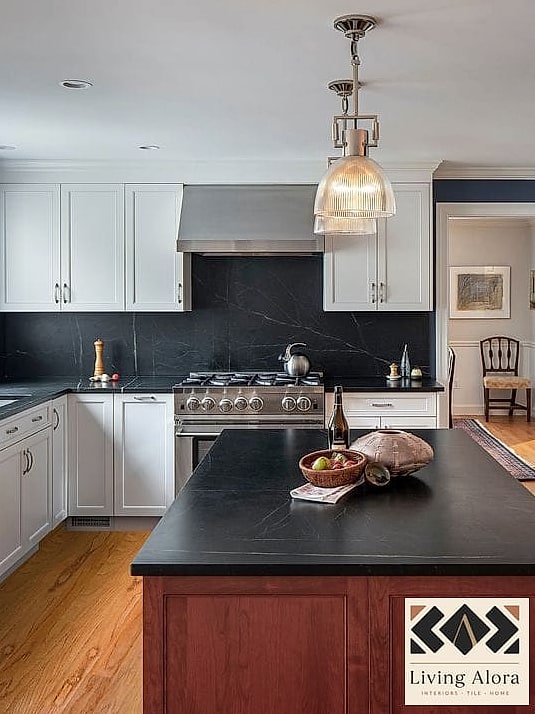
Soapstone has a soft, almost velvety texture that darkens naturally over time, which some homeowners love for the character it develops. It pairs particularly well with soapstone or butcher block countertops for a cohesive, old-world look. Because it’s non-porous, it’s fairly forgiving when it comes to daily cleanup.
Mosaic Pebble Stone Tile
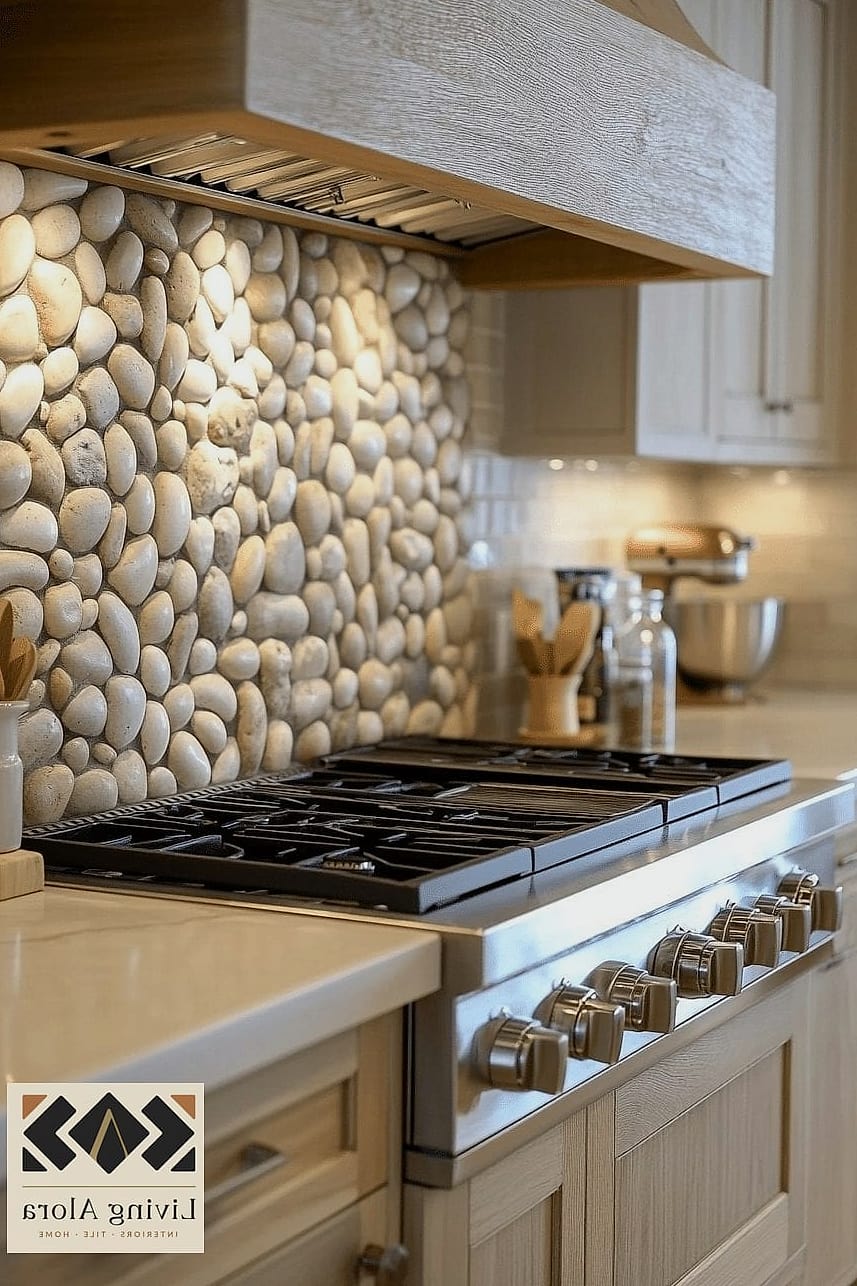
Pebble tile brings texture in a way flat stone can’t, and it’s a fun choice for anyone who wants their backsplash to feel a little more organic. It shows up often in spa-inspired bathrooms, but it also works surprisingly well behind a kitchen sink. Just know that the uneven surface can trap grime, so it’s not the most low-maintenance pick.
Basketweave Marble Mosaic

This pattern has a quiet elegance to it, especially in white or soft gray marble. It’s a popular choice for smaller kitchens because the tight, repetitive pattern doesn’t overwhelm the space. Sealing is still necessary, but the smaller tile size makes DIY installation more approachable than a full slab.
Large-Format Quartzite Slab
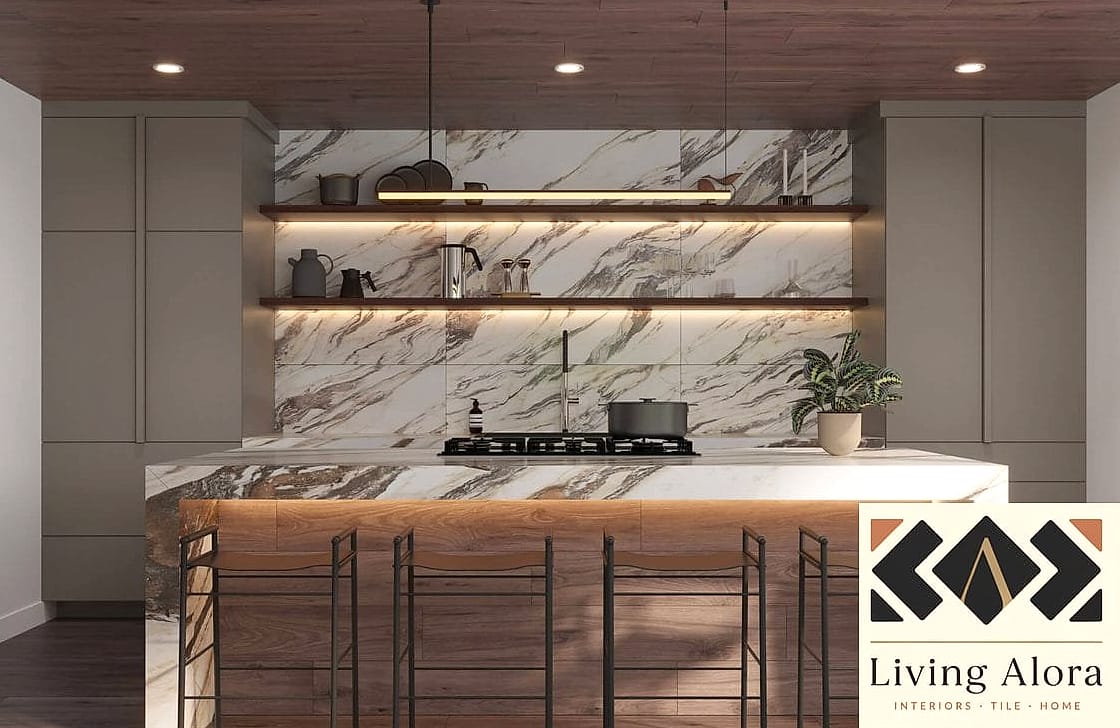
Quartzite gives you the durability of granite with a look that’s closer to marble, which is honestly a great combination for a busy kitchen. A large-format slab minimizes grout lines, so cleaning is refreshingly simple. It’s on the pricier side, but many homeowners consider it worth it for the “wow” factor alone.
Stacked Stone Ledger Panels

Ledger stone gives you that rugged, three-dimensional texture that photographs beautifully but also just feels good to look at in person. It’s especially popular in rustic or lodge-style kitchens paired with wood accents. Because of the deep grooves, a little more effort goes into keeping it dust-free.
Honed Limestone Backsplash
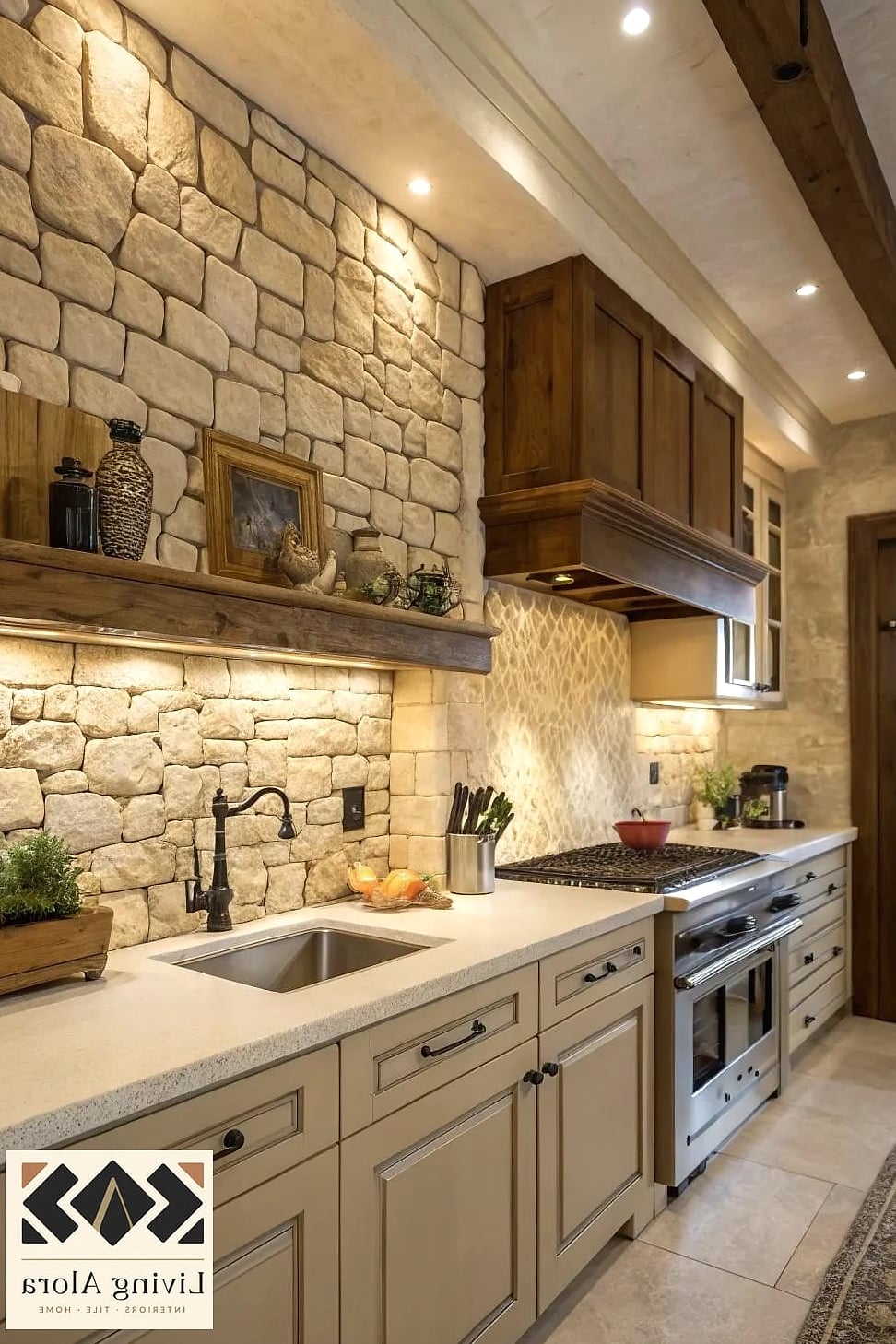
Limestone has a chalky, matte quality that softens a kitchen in the best way. It works particularly well in French country or coastal-inspired spaces with neutral color palettes. Honed limestone is more porous than marble, so a good sealant and prompt cleanup after cooking really matter here.
Chevron Marble Tile
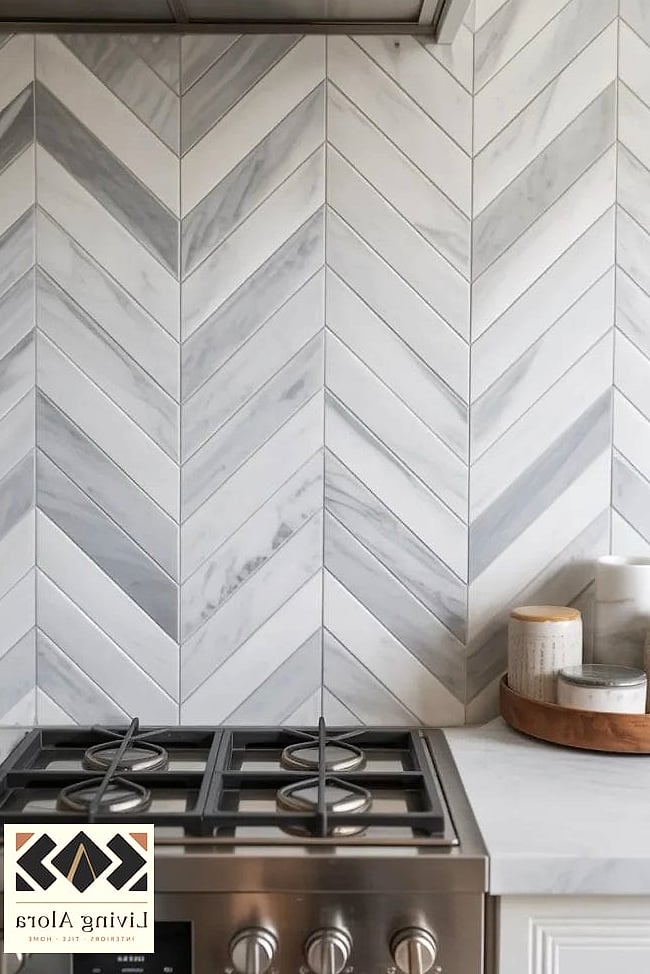
Chevron patterns have a sharper, more graphic energy than herringbone, and marble chevron takes that up a notch with its natural veining. It reads as more modern and works nicely in kitchens with brushed brass hardware and glossy cabinet finishes. This is a pattern best left to a professional installer since the angles need to be precise.
River Rock Accent Strip
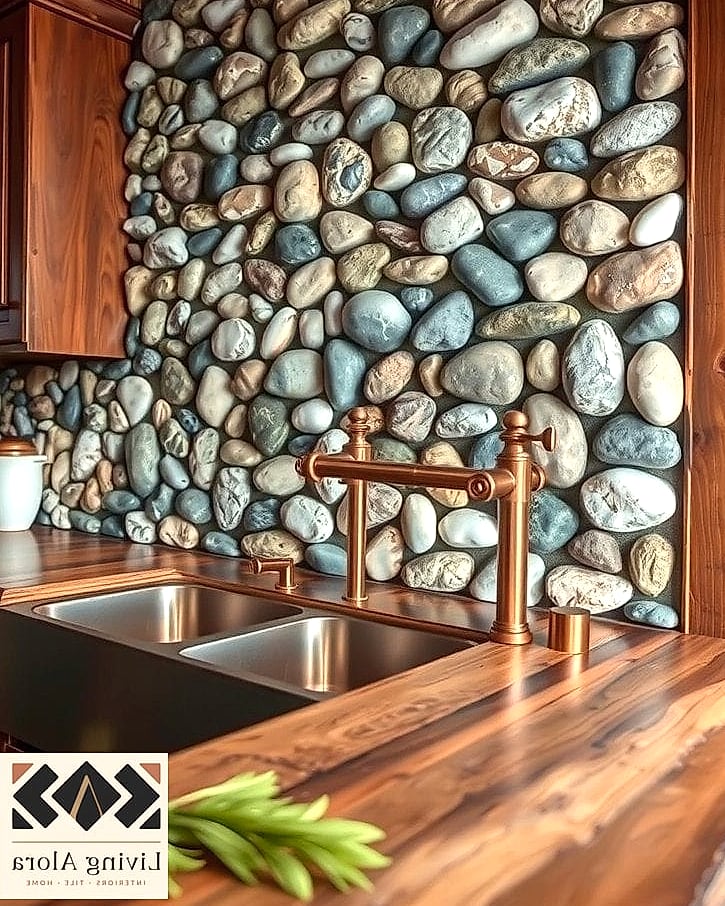
Instead of covering the whole wall, some homeowners use a narrow strip of river rock as an accent above the counter, framed by simpler tile above it. It’s a nice way to introduce texture without committing to a full stone wall. This approach also tends to be more budget-friendly since less material is needed.
Granite Slab with Waterfall Edge
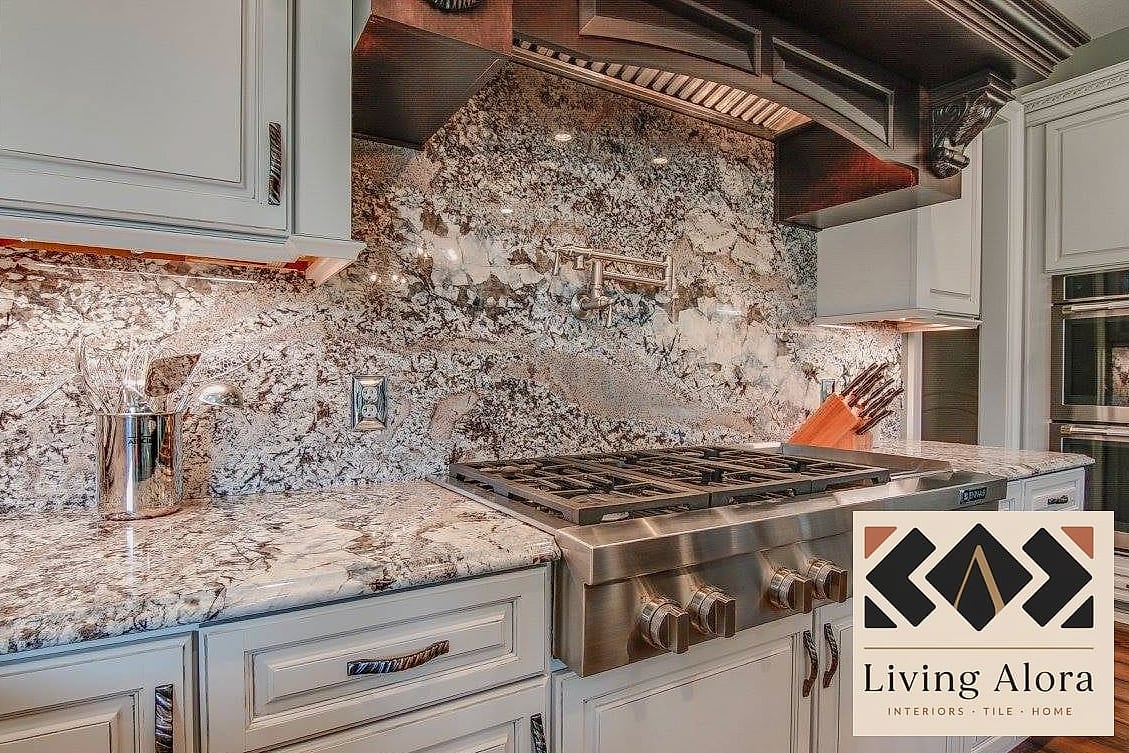
Extending a granite slab from the countertop up the backsplash, and sometimes down the side in a waterfall detail, creates a seamless, high-end look. It’s a favorite in modern kitchens that lean toward minimalism. Because granite is so durable, it holds up well in busy, family-heavy households.
Zellige-Inspired Stone Tile

While true zellige is clay, some stone tile manufacturers now mimic its irregular, handmade look using natural stone finishes. The slight variation in each tile gives the wall a lived-in, artisanal feel. It’s a great pick for anyone who wants texture and imperfection without going full rustic.
Onyx Backlit Backsplash

Onyx is translucent enough that, with the right lighting behind it, the whole backsplash can glow. It’s a dramatic, luxury-leaning choice best suited for kitchens where the backsplash is meant to be the star. This one usually requires a professional installer familiar with backlighting systems.
Fieldstone Mosaic Blend

Mixing several stone types and tones together in a mosaic creates a blend that feels collected over time rather than store-bought. It’s especially popular in farmhouse and cottage kitchens. Because the colors vary, this style is forgiving if a tile chips or needs replacing down the line.
Bookmatched Marble Slabs
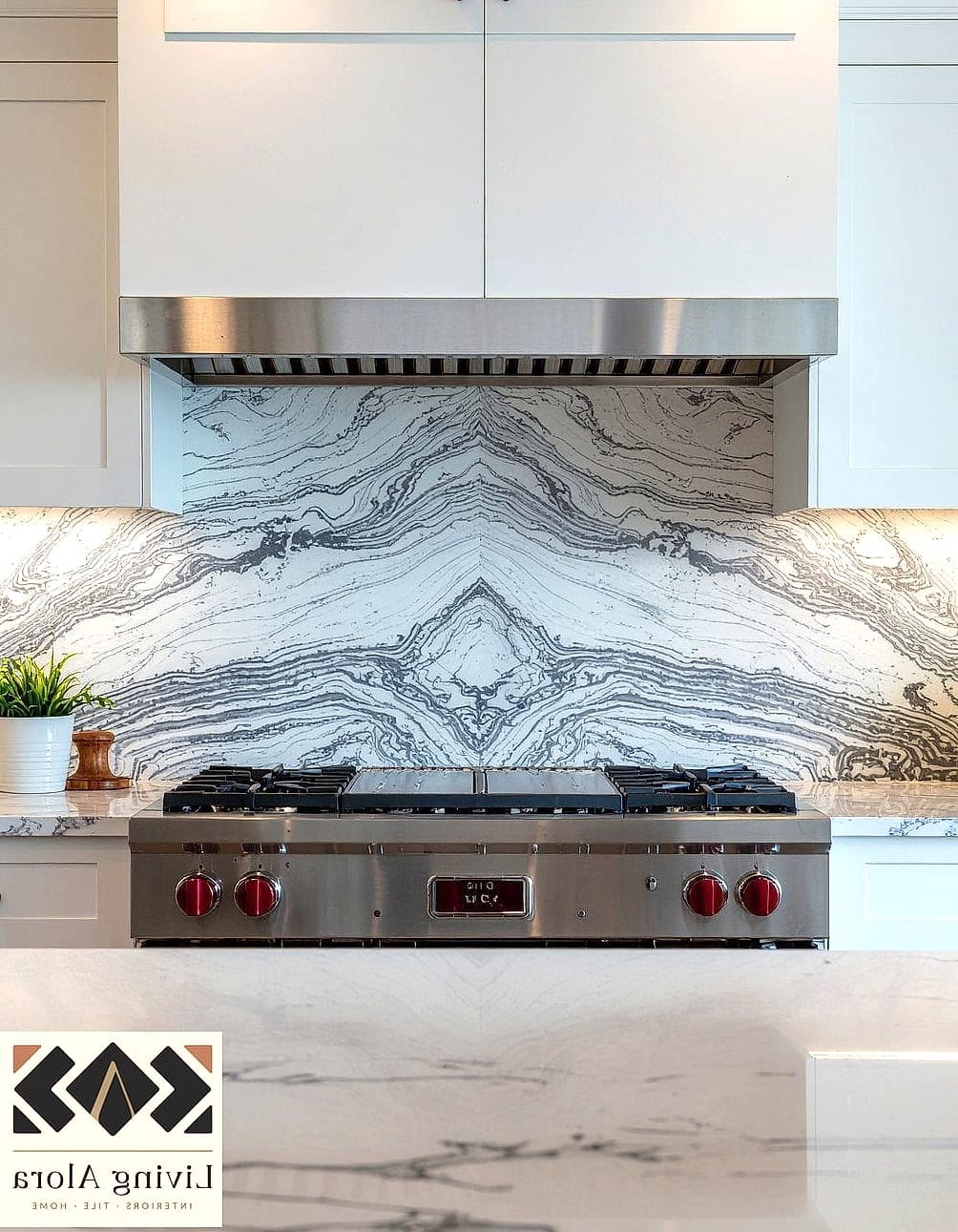
Bookmatching involves cutting two slabs from the same stone block and installing them side by side so the veining mirrors itself, almost like an inkblot. It’s a striking, high-end detail that designers love for a statement wall. This technique does come with a higher price tag due to the precision cutting required.
Vertical Stacked Marble Tile
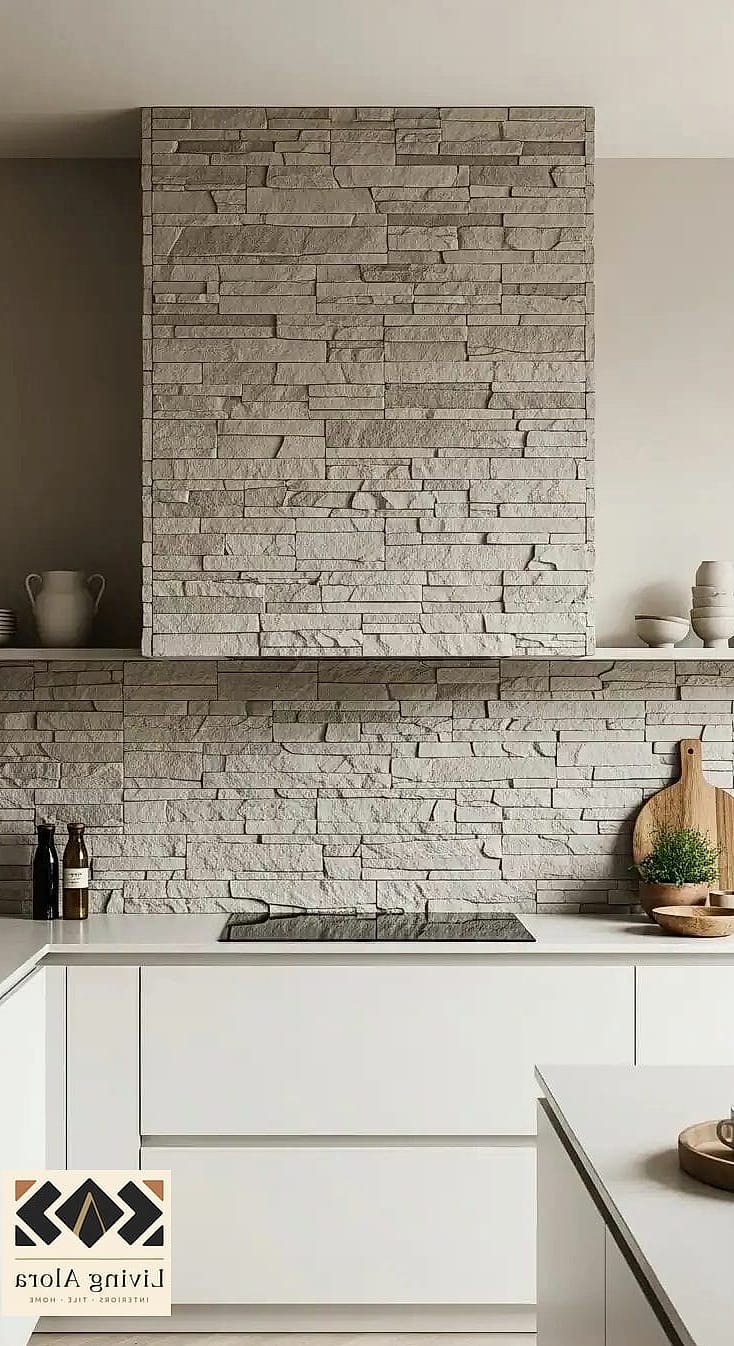
Running marble tile vertically instead of horizontally draws the eye upward, which can make ceilings feel taller. It’s a smart trick for kitchens that feel a little boxy or low. Pair it with simple, flat-panel cabinetry so the vertical lines really get to shine.
Terrazzo-Style Stone Backsplash

Terrazzo has made a real comeback, and stone-based terrazzo tile brings speckled, playful texture to a kitchen. It works especially well in eclectic or retro-inspired spaces. Because the flecks hide small marks well, it’s a practical option for households with kids.
Rustic Fieldstone Fireplace-to-Backsplash Continuity
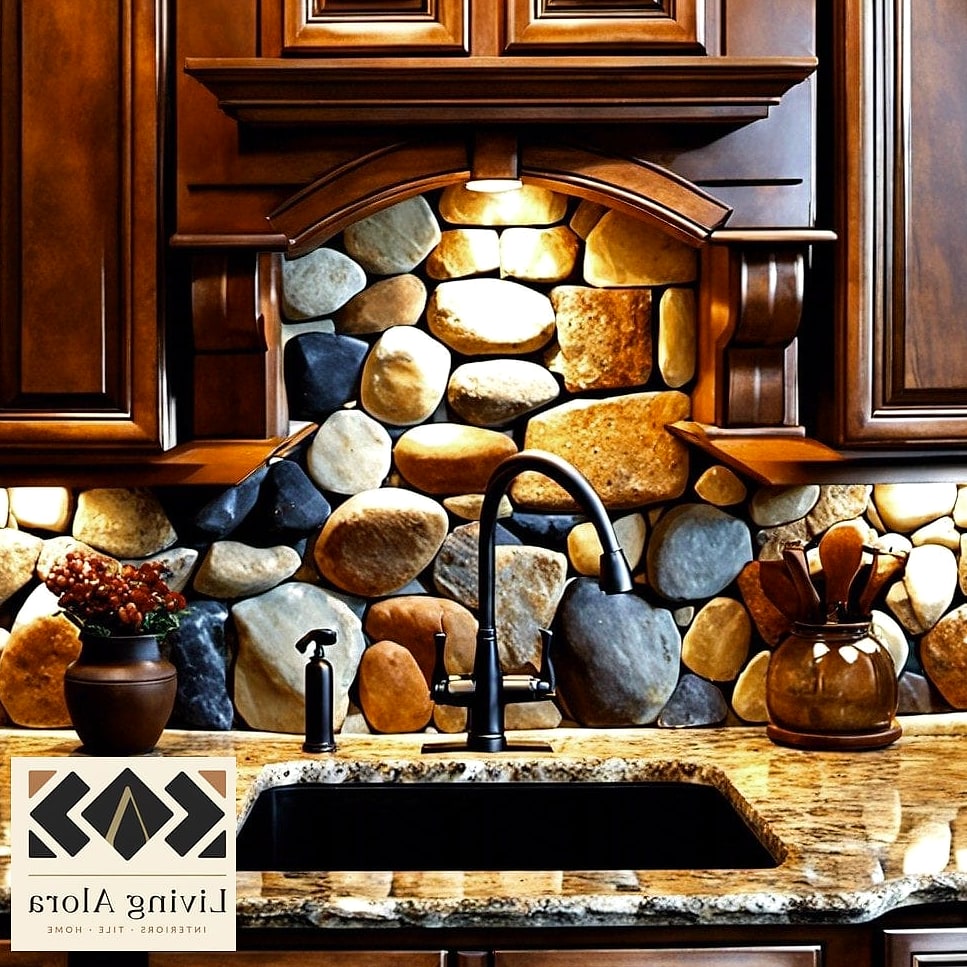
In open-concept homes, some designers carry the same fieldstone from a living room fireplace into the kitchen backsplash for visual continuity. It’s a subtle way to tie two spaces together without matching every finish exactly. This works best when the kitchen and living area share sightlines.
Honed Black Granite Wall

Black granite with a honed, matte finish feels sleek without the shine of polished stone. It pairs beautifully with white cabinetry for a striking contrast. Fingerprints and water spots show up less on honed surfaces than on glossy ones, which is a nice practical bonus.
Marble Herringbone with Metal Inlay
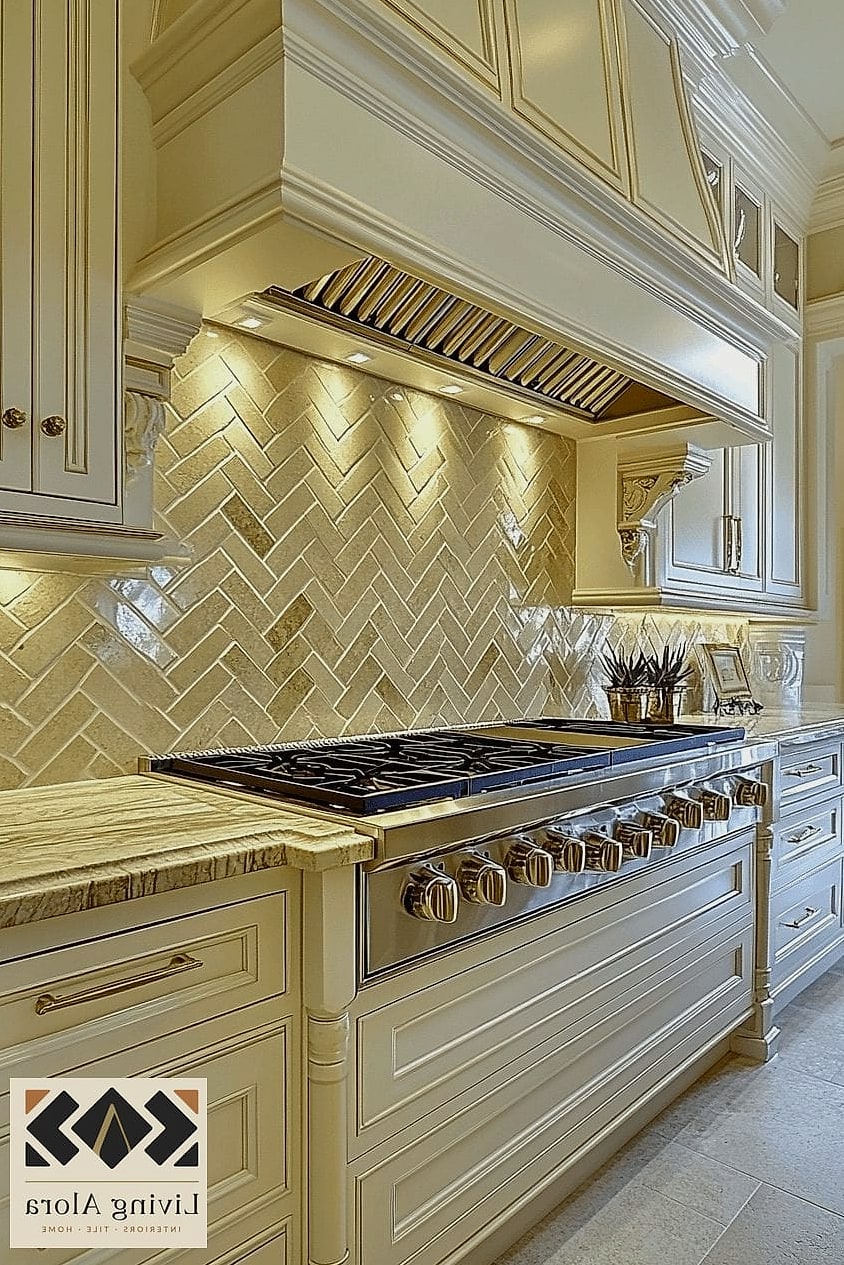
Adding thin brass or pewter strips between herringbone marble tiles gives the whole wall a custom, jewelry-like detail. It’s a favorite in more glam or transitional kitchens. This is a splurge-worthy detail, so it’s often reserved for a smaller focal area rather than the whole kitchen.
Natural Cleft Slate Backsplash
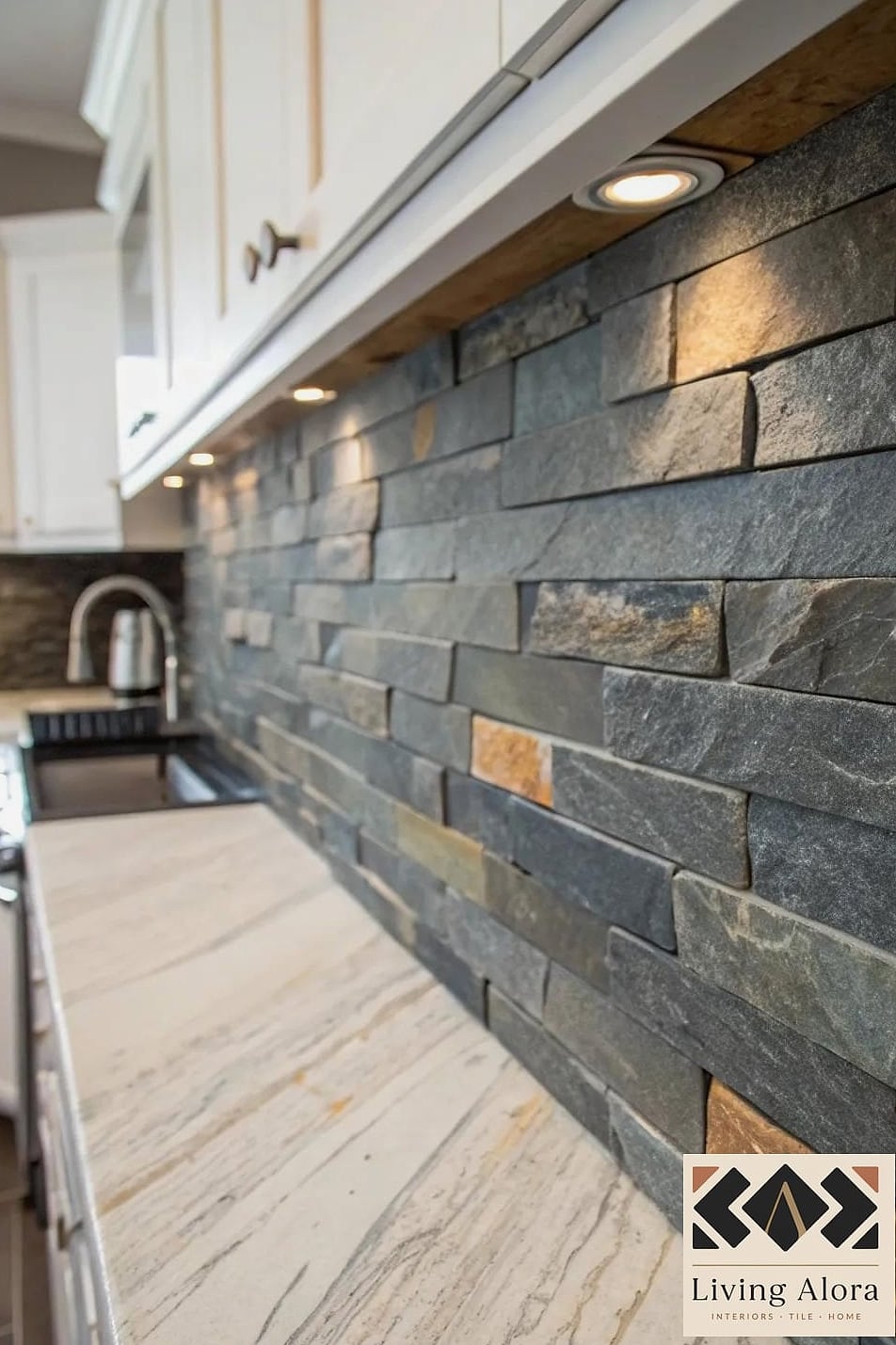
Cleft slate has a naturally split, uneven surface that catches light in an interesting way throughout the day. It brings an earthy feel that suits kitchens with a lot of natural wood. Because of the texture, a handheld cleaning brush works better than a flat sponge for upkeep.
Marble Subway Tile
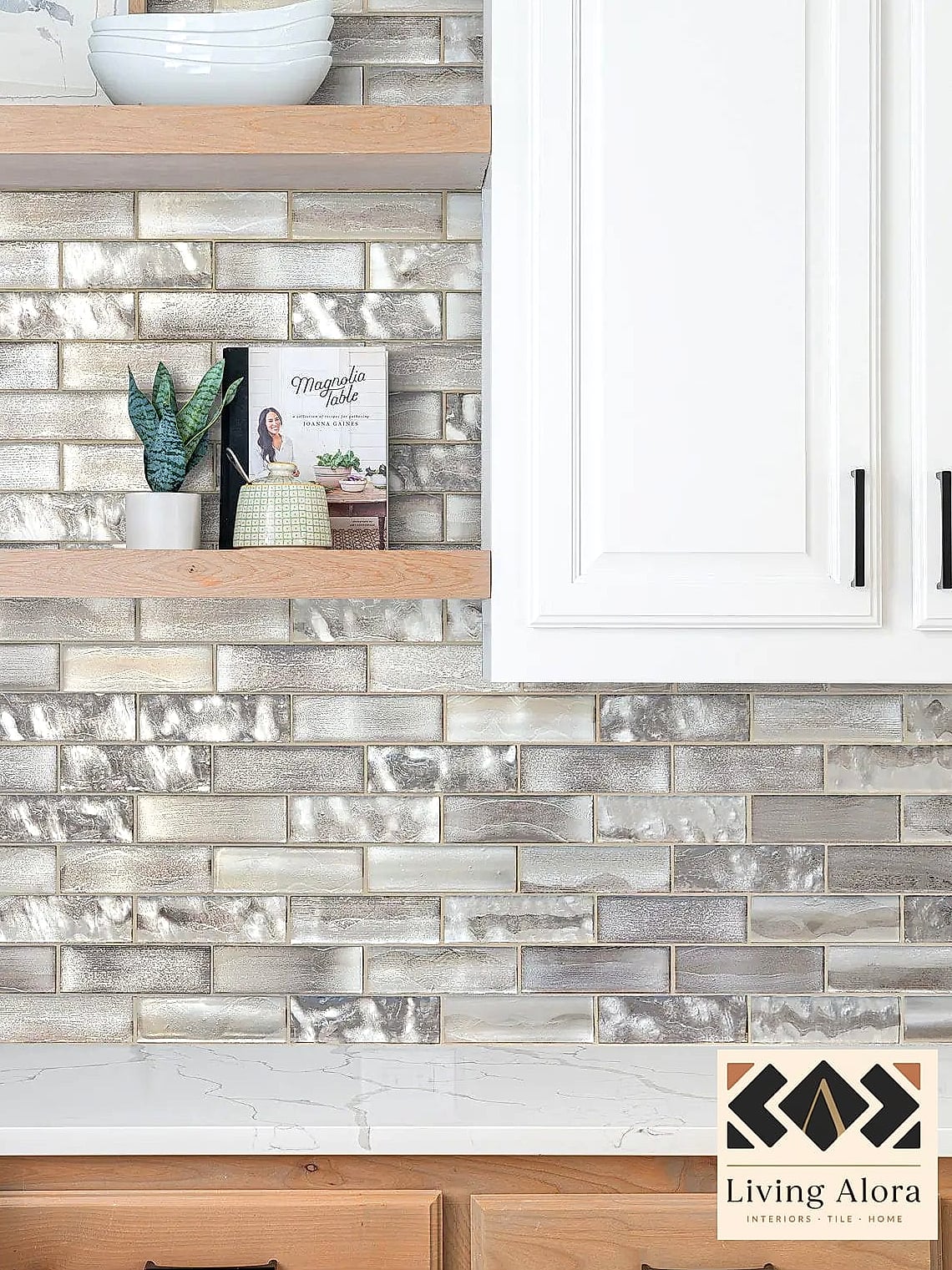
Taking the classic subway tile shape but using marble instead of ceramic gives a familiar layout an upgrade. It’s a great middle ground for anyone who loves the subway look but wants something with more natural variation. This is also one of the more approachable stone options for a first-time DIY project.
Grey Quartzite Mosaic Blend
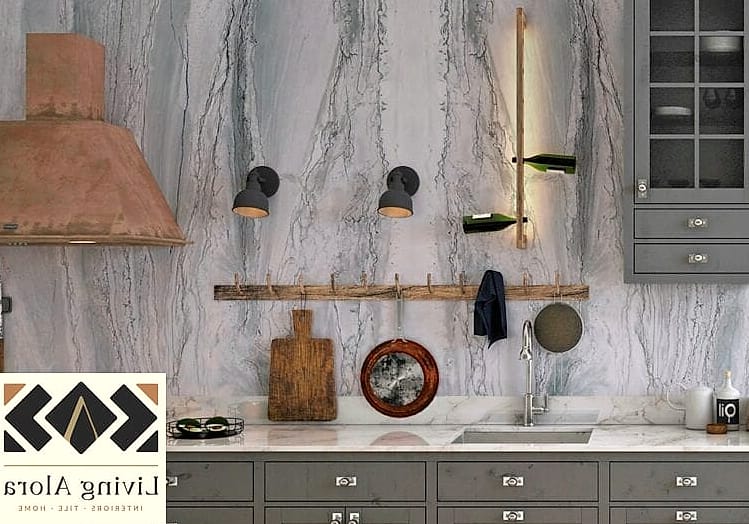
Cool-toned quartzite in a mosaic layout brings texture without pulling too much attention from other design elements. It’s especially nice in kitchens with matte black fixtures and quartz countertops. The mixed sizing in most mosaic sheets also makes minor imperfections less noticeable.
Stone Tile with Open Shelving

Pairing a textured stone backsplash with open shelving instead of upper cabinets lets the material really breathe. It’s a popular combo in modern farmhouse kitchens where the goal is a lighter, more open feel. Just keep in mind open shelving means dust and grease need more frequent wiping down.
Moroccan-Inspired Stone Mosaic
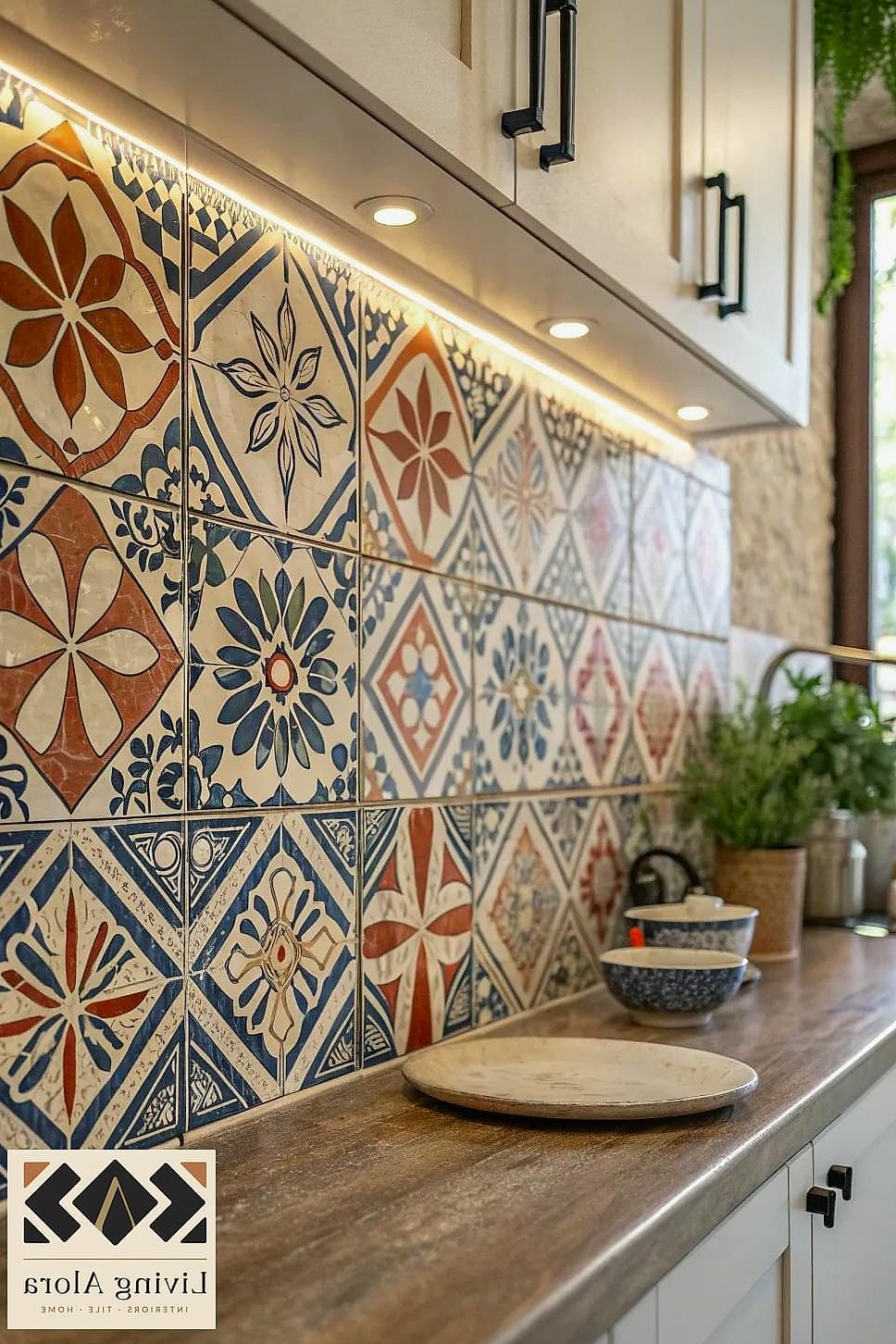
Geometric stone mosaics inspired by Moroccan tilework bring pattern and personality without relying on color. It’s a lovely option for anyone who wants an intricate look but prefers a neutral stone palette over bold paint. These patterns tend to work best as a focal strip rather than covering an entire wall.
Limestone Brick-Look Tile
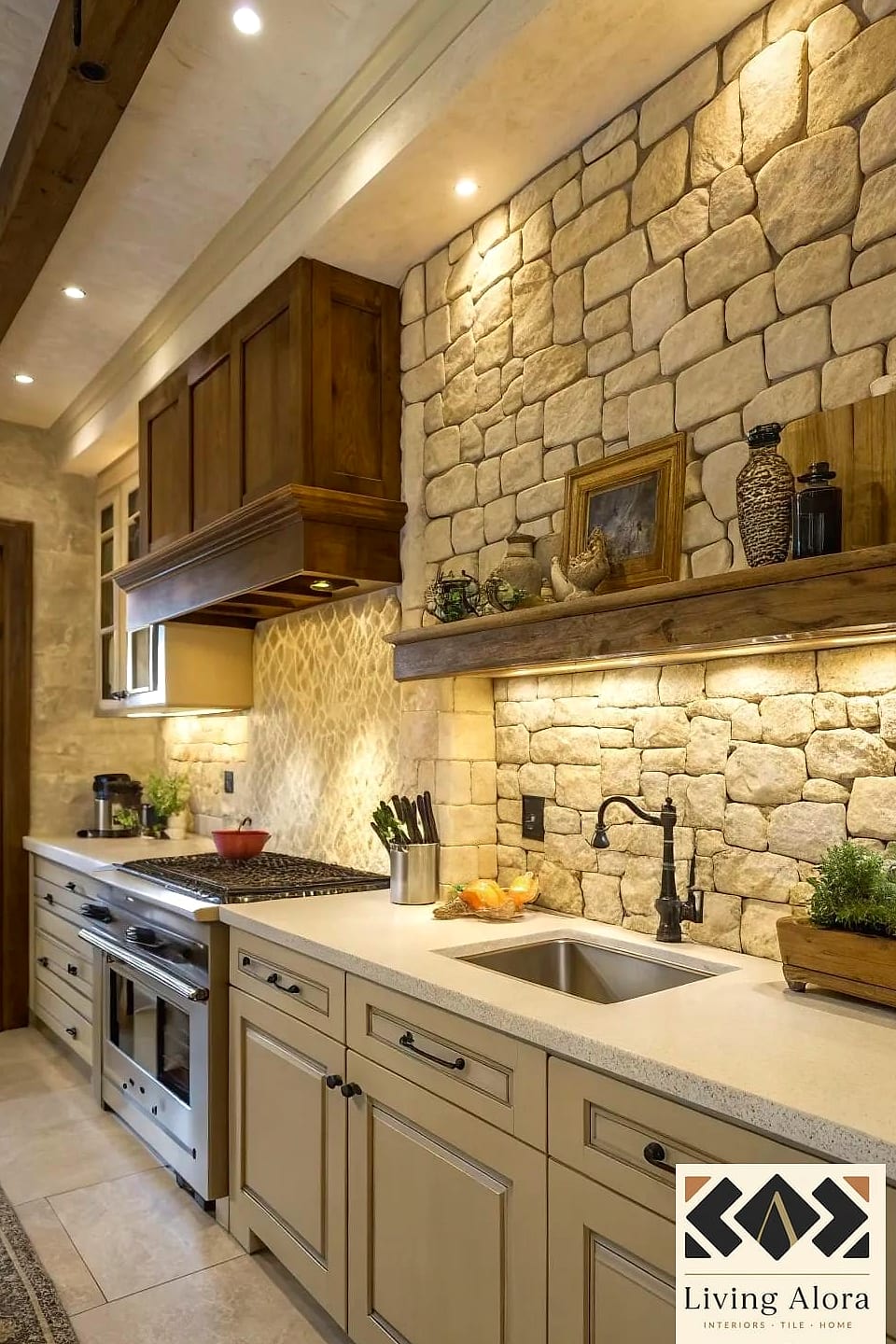
Cutting limestone into small brick-shaped pieces gives a nod to exposed brick without the maintenance headaches real brick can bring in a kitchen. It suits industrial-loft kitchens especially well. The smaller format also makes it easier to work around outlets and switches during installation.
Marble and Wood Combination Backsplash

Combining marble tile with a wood shelf or trim detail softens the coolness of stone and adds warmth. It’s an easy way to bring in natural material variety without overcomplicating the palette. This pairing also gives you a built-in spot for small plants or seasonal decor.
Textured Quartzite Waterfall Wall

Some homeowners extend a heavily textured quartzite slab from counter to ceiling for a bold, architectural statement. It works best in kitchens with minimal upper cabinetry so the stone has room to be the focus. Because it’s such a commitment, it’s worth having a professional handle the layout and cuts.
Budget-Friendly Stone-Look Porcelain Tile
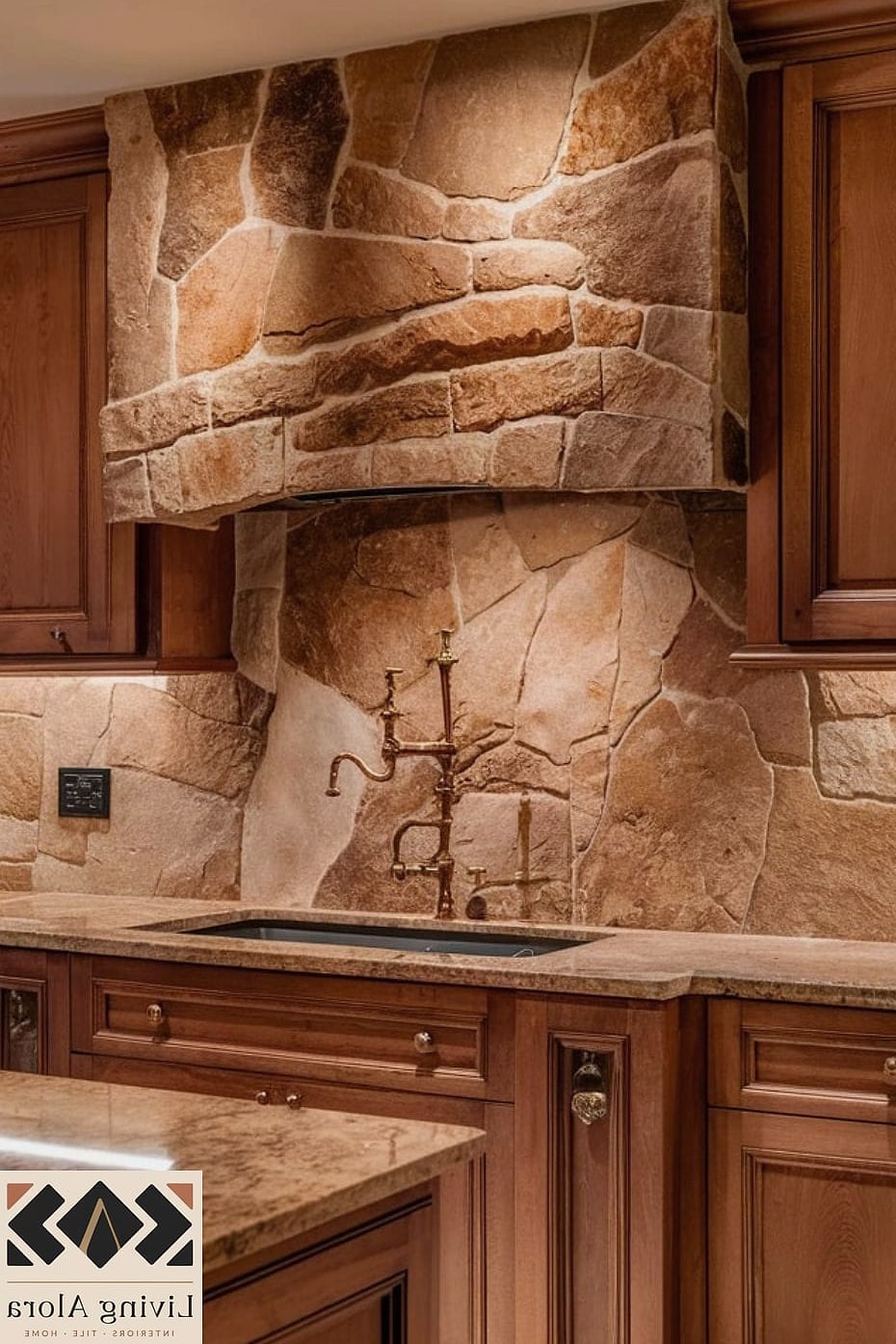
If real stone feels out of reach right now, stone-look porcelain has come a long way in mimicking marble, travertine, and slate at a fraction of the cost. It’s non-porous, low-maintenance, and genuinely renter-friendly if you’re using a peel-and-stick version. This is a smart starting point for anyone testing out a look before committing to natural stone.
Whichever direction you go, a stone backsplash has a way of making the rest of the kitchen fall into place around it. Start with the material that fits your daily routine and your budget, and let the pattern or layout be where you have a little fun.