10 Modern Backsplash Ideas Worth Stealing From Interior Designers
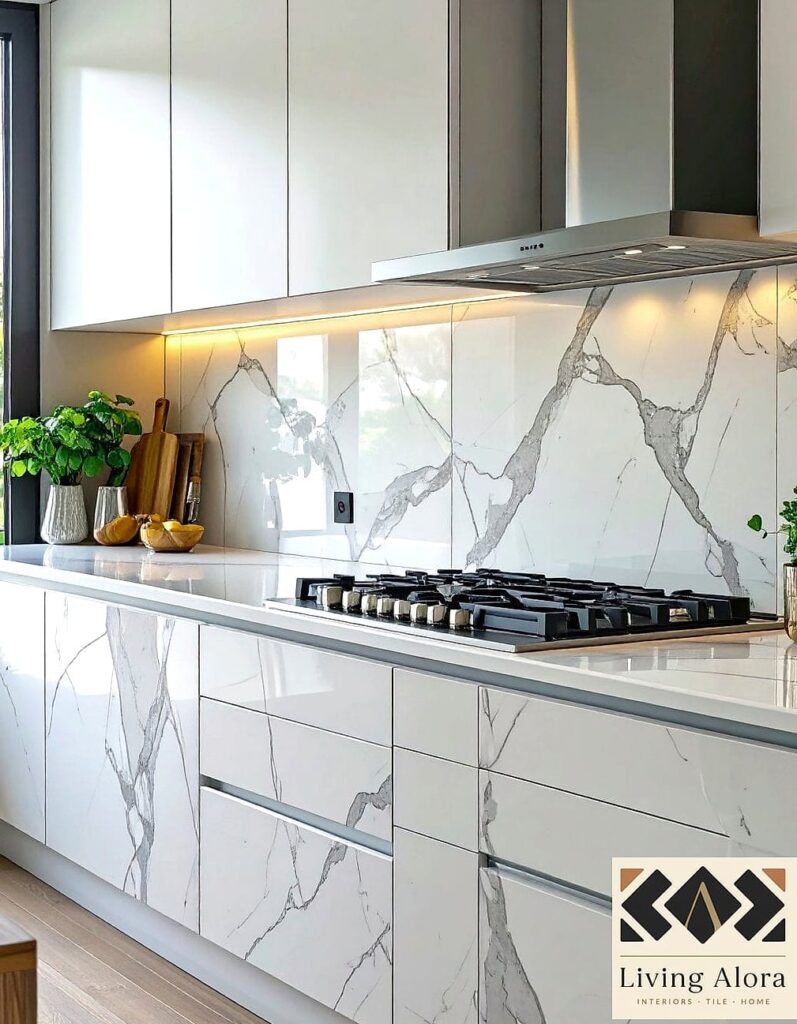
- Zellige Tile in a Soft Neutral Tone
- Full-Height Slab Backsplash
- Herringbone Pattern in Classic Subway Tile
- Mixed Metal Mosaic Accents
- Warm Terracotta Tile
- Vertical Stacked Tile Layout
- Handpainted Talavera-Style Tile
- Textured Zellige-Inspired Ceramic
- Bold Color Blocking with Two-Tone Tile
- Large-Format Tile for a Minimal Look
10 Modern Backsplash Ideas Worth Stealing From Interior Designers
Your backsplash does a lot of heavy lifting in a kitchen. It’s often the first thing people notice, and it can make a space feel custom-designed or completely forgettable. If you’ve been scrolling through inspiration photos wondering how designers get that pulled-together look, you’re in the right place.
I’ve pulled together ten backsplash ideas that keep showing up in the kitchens I admire most. Some are budget-friendly weekend projects, others are splurges worth saving for, but all of them add real personality to a space. Let’s get into it.
Zellige Tile in a Soft Neutral Tone
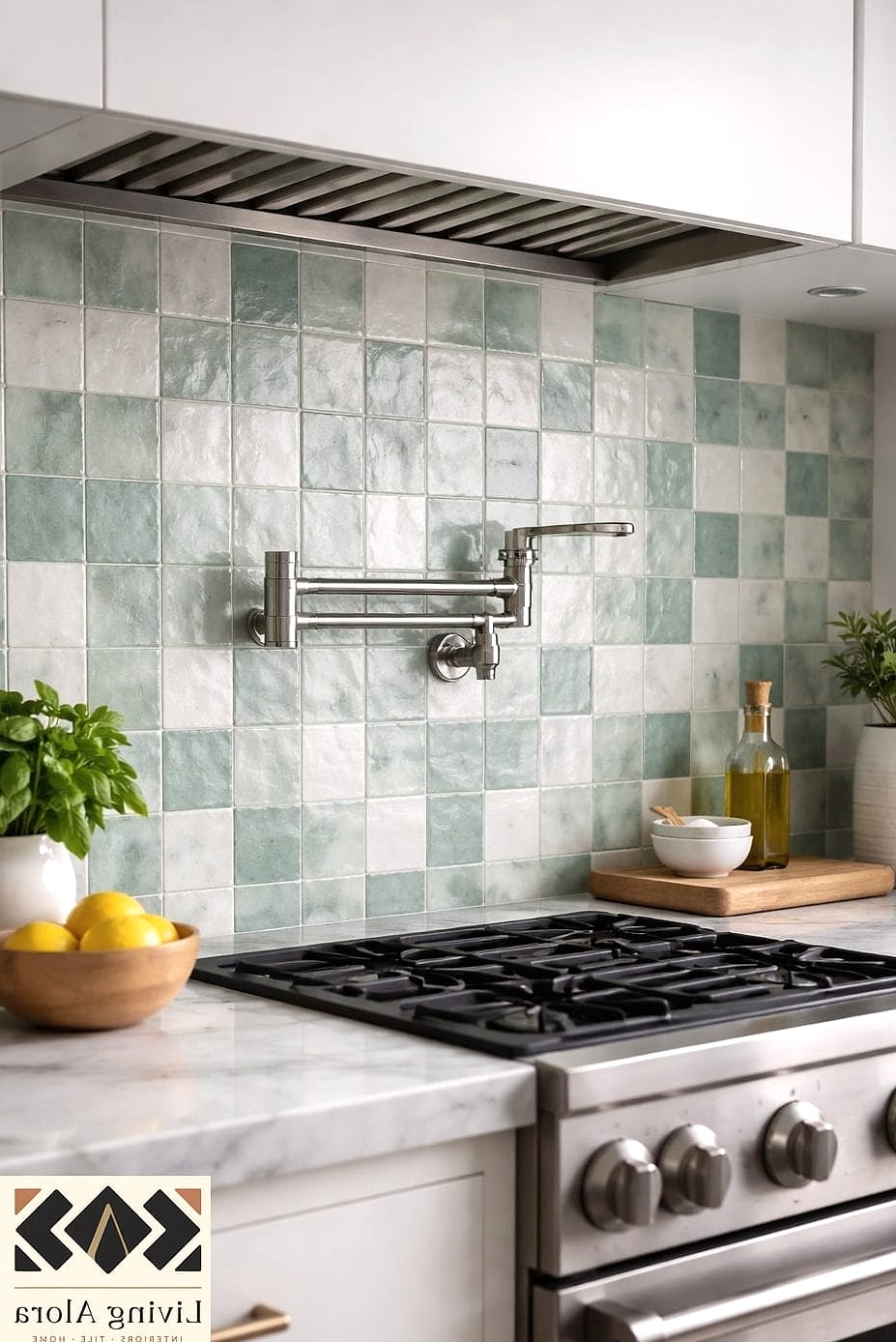
Zellige tile has that handmade, slightly imperfect look that photographs beautifully and feels even better in person. Each tile has subtle variations in color and texture, so the wall never looks flat or mass-produced.
It works especially well in kitchens that already lean warm and organic, think wood cabinetry, brass fixtures, natural stone counters. The uneven surface catches light differently throughout the day, which is part of the charm.
One thing to know before you commit: zellige is more porous than standard ceramic tile, so it needs a proper sealant and a little extra care during installation. It’s not the easiest DIY project, but a lot of homeowners find it worth hiring a professional for.
Full-Height Slab Backsplash
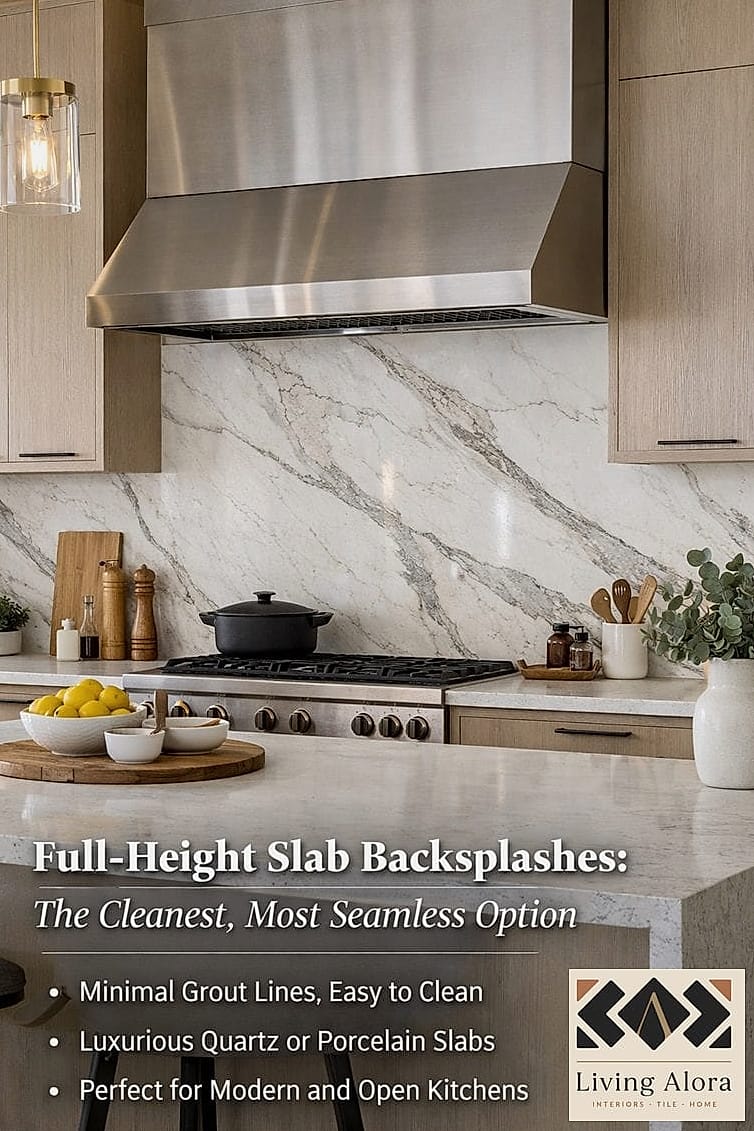
Instead of stopping at the standard 18 inches above the counter, some designers are running the backsplash material all the way to the upper cabinets or ceiling. Quartz and porcelain slabs are popular choices here because they come in large formats with minimal seams.
This look reads as sleek and architectural, and it’s genuinely one of the easiest surfaces to wipe down since there’s no grout line to catch grease or splatters. Families with young kids or anyone who cooks a lot tend to appreciate that.
It’s a bigger investment upfront, but it eliminates a lot of visual clutter. If your budget doesn’t stretch that far, even extending tile a few inches higher than usual can hint at the same effect.
Herringbone Pattern in Classic Subway Tile
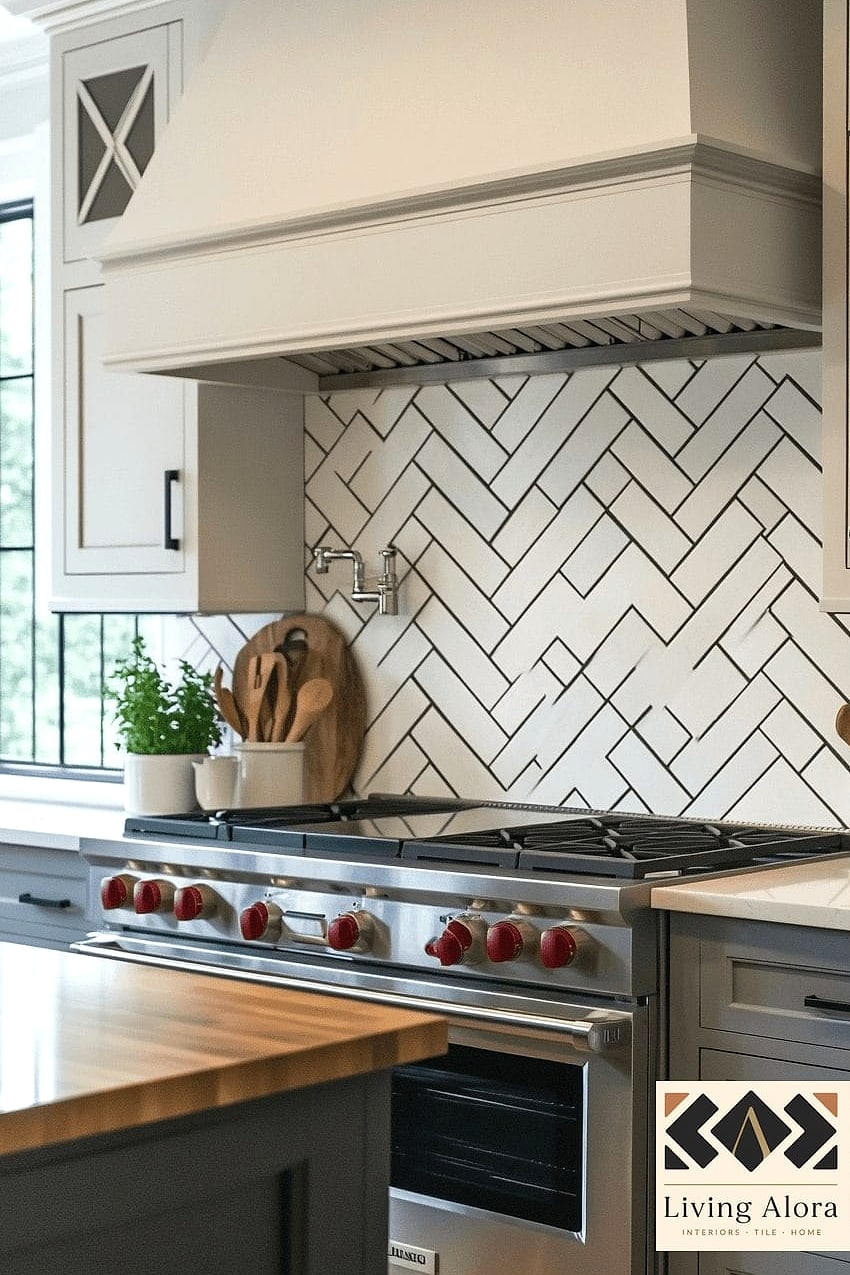
Subway tile isn’t going anywhere, but the way it’s being laid has changed. Herringbone patterns take that same familiar tile and give it a completely different personality just by shifting the angle.
This layout adds movement and visual interest without introducing a bold color, which makes it a safe choice if you’re worried about resale value or just don’t want to commit to something too trendy. It works in traditional kitchens just as easily as modern ones.
Keep in mind herringbone takes more time and tile to install because of all the angled cuts, so labor costs run a bit higher than a straight-set pattern. If you’re tiling it yourself, budget extra time and expect more waste.
Mixed Metal Mosaic Accents
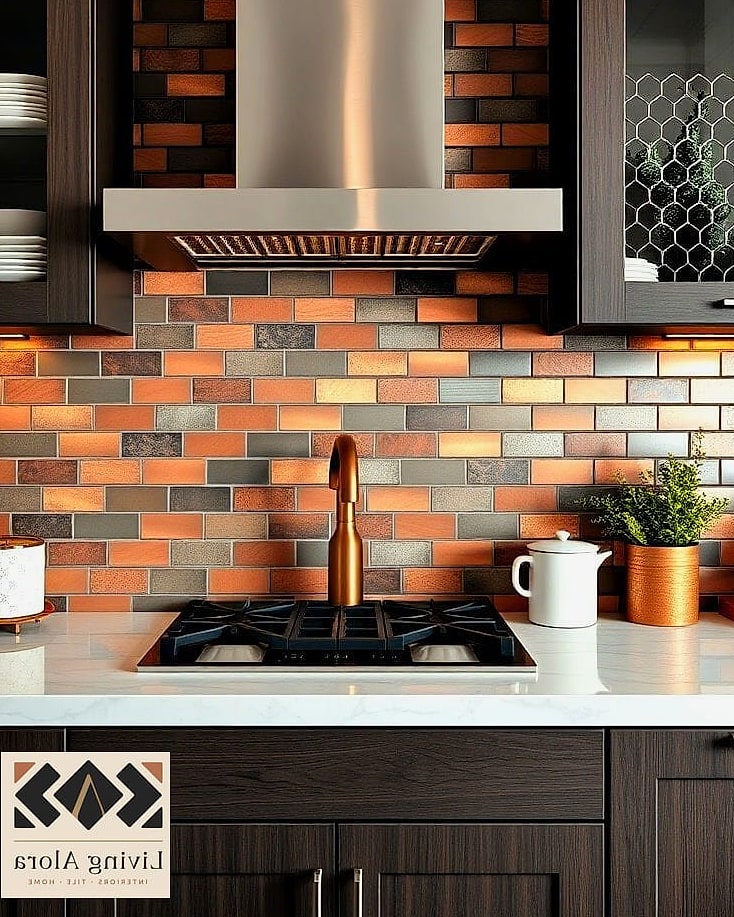
A lot of designers are moving away from matching every metal finish in the kitchen. Instead, they’re mixing brushed brass, matte black, and even a little copper into a mosaic backsplash for texture and depth.
This works particularly well behind a stove as a focal point, paired with simpler tile everywhere else. It gives the eye somewhere to land without overwhelming the whole room.
Mixed metal mosaics tend to run on the pricier side per square foot, so many homeowners use them as an accent strip rather than covering the entire wall. It’s a smart way to get a luxury look without the luxury price tag.
Warm Terracotta Tile

Terracotta has made a real comeback, and it’s easy to see why. The warm, earthy tone adds instant coziness to a kitchen, especially when paired with white cabinets or natural wood tones.
It suits Mediterranean, farmhouse, and even some modern kitchens surprisingly well. The material has a slightly rustic, handcrafted quality that keeps a space from feeling too sterile or overly designed.
Unglazed terracotta can stain if it’s not sealed properly, so glazed options are usually the more practical pick for a busy kitchen. Either way, it’s a color choice that feels different from the white and gray palettes we’ve all seen a hundred times.
Vertical Stacked Tile Layout

Turning a standard tile ninety degrees and stacking it vertically instead of horizontally is such a simple change, but it makes a real difference. It draws the eye upward, which can make a kitchen with lower ceilings feel a little taller.
This layout pairs nicely with narrow tile shapes and works well behind a range where you want a clean, linear look. It’s also fairly beginner-friendly if you’re tackling the project yourself, since there’s less pattern-matching involved than something like herringbone.
Grout color matters a lot here since the vertical lines are so visible. Matching grout to the tile keeps things seamless, while contrasting grout emphasizes the stacked effect even more.
Handpainted Talavera-Style Tile
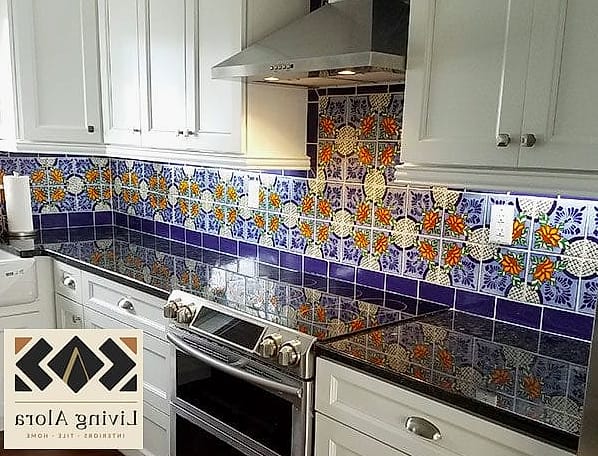
For homeowners who want their kitchen to feel like it has a story, handpainted tile is worth a look. These tiles often feature intricate patterns in blues, yellows, and greens, and no two tiles are ever quite identical.
They shine as a statement behind the stove or as a border around a simpler tile field. Using them sparingly keeps the look intentional rather than busy, especially in a kitchen with otherwise neutral finishes.
Because they’re handmade, expect a higher price point and slightly longer lead times when ordering. It’s a splurge, but for a lot of people it’s the detail that makes the whole kitchen feel personal.
Textured Zellige-Inspired Ceramic
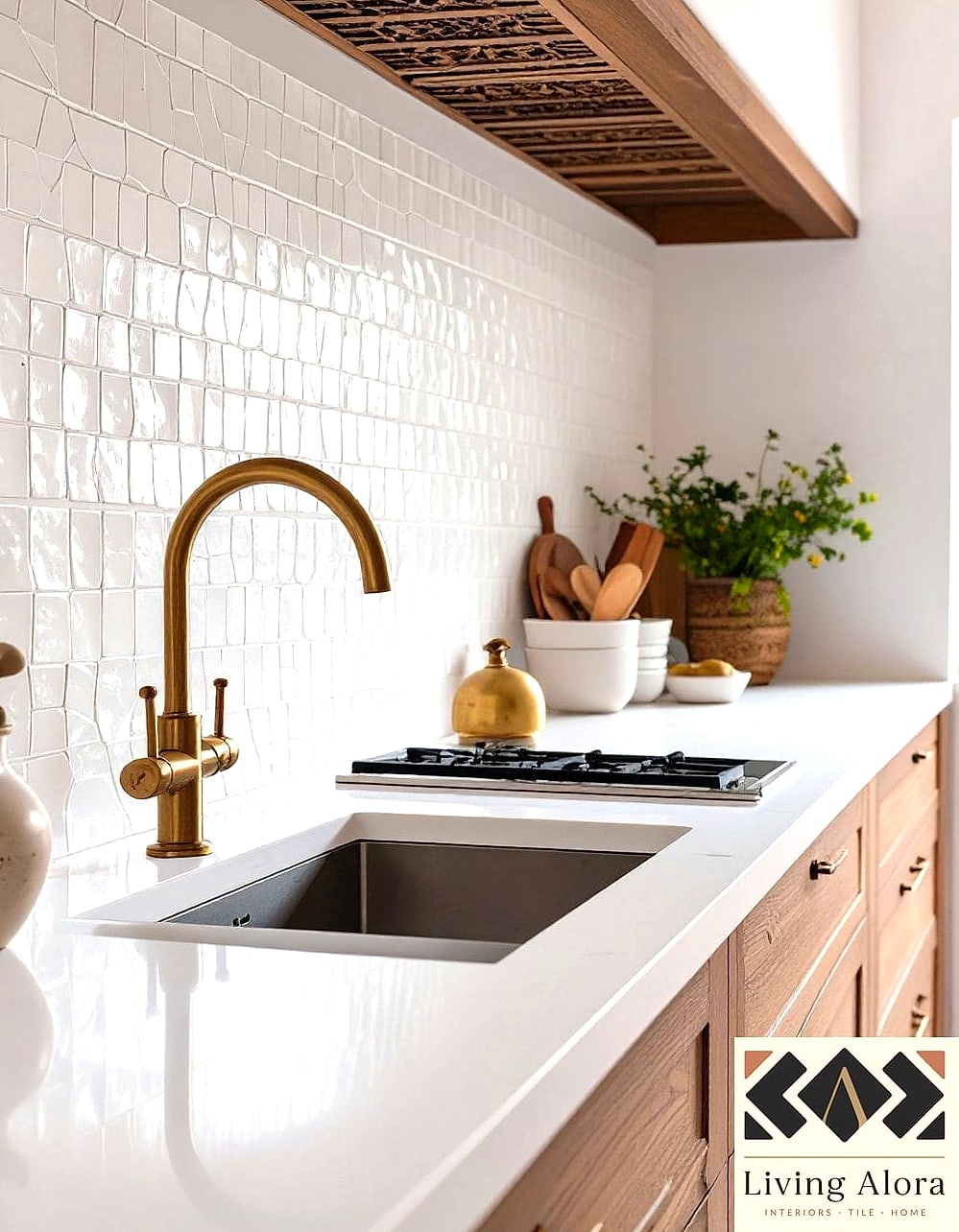
If you love the look of zellige but not the price or maintenance, several tile companies now make ceramic versions with a similar handcrafted texture. They mimic the subtle color variation and slightly wavy surface without the porosity concerns.
This is a great middle-ground option for anyone who wants that organic, artisan feel but needs something more forgiving for a busy household. It’s also generally easier to find in stock, which matters if you’re working on a tight renovation timeline.
The look reads almost identically to the real thing from a few feet away, so it’s a smart swap if budget or maintenance is a concern.
Bold Color Blocking with Two-Tone Tile
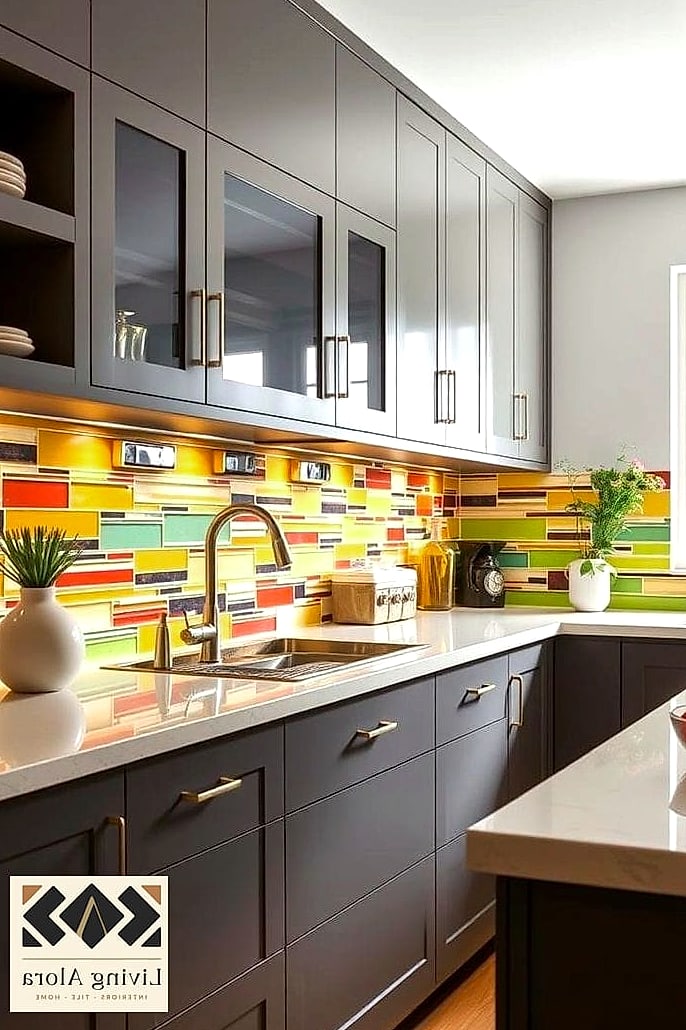
Rather than picking one tile for the whole kitchen, some designers are splitting the backsplash into two distinct color zones. Maybe a darker tile behind the stove and a lighter one along the rest of the counter, or a colored tile that stops partway up the wall with paint above it.
This approach lets you introduce color without it feeling overwhelming, since it’s broken up rather than covering every surface. It also gives you a natural way to define a cooking zone or add visual interest to an otherwise simple layout.
If you’re nervous about color commitment, this is a good way to test the waters. You can always start with a smaller accent area and expand later if you love it.
Large-Format Tile for a Minimal Look
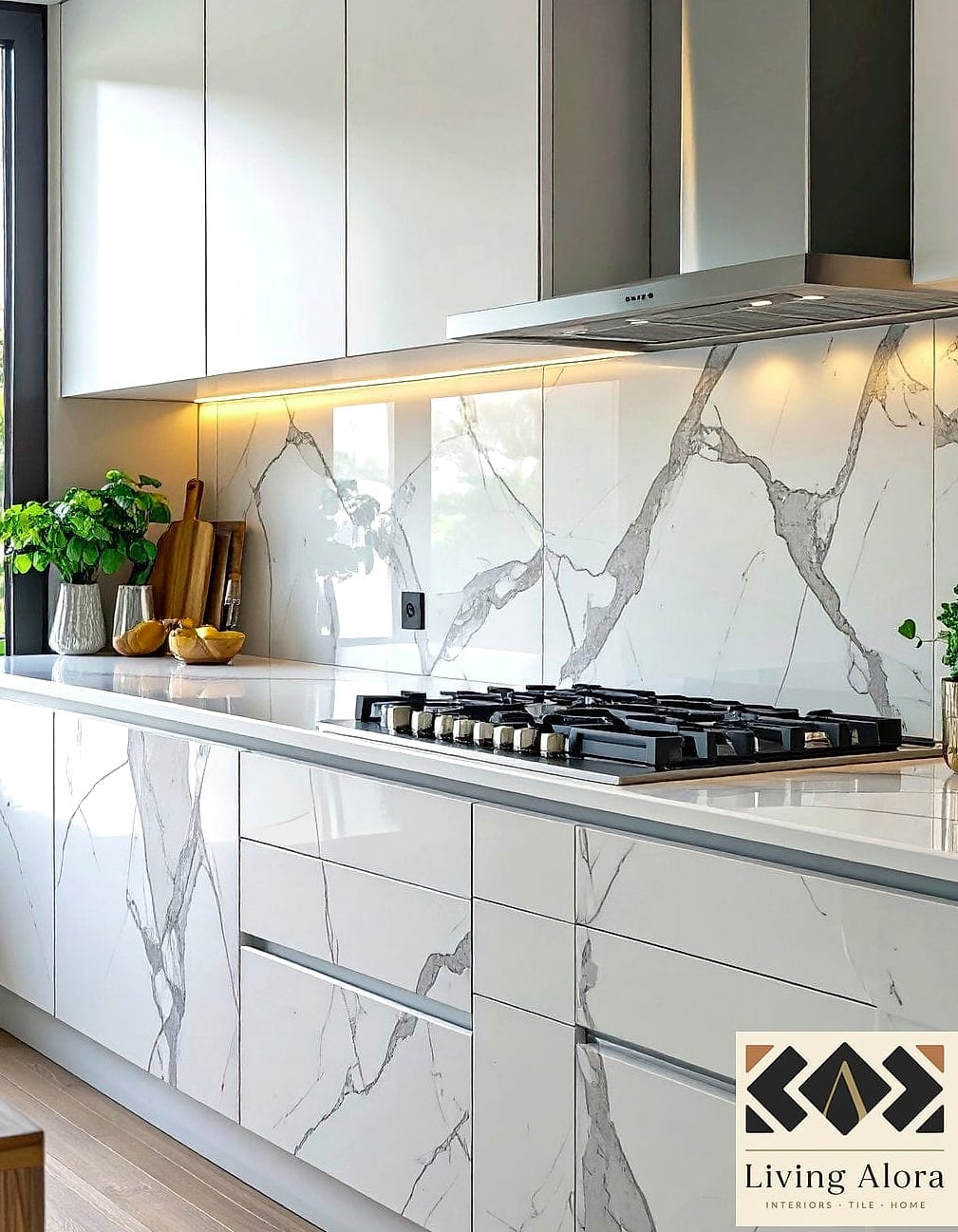
On the opposite end of the spectrum from mosaic and pattern work, large-format tile keeps things clean and understated. Bigger tiles mean fewer grout lines, which gives the whole wall a smoother, more continuous appearance.
This style suits modern and minimalist kitchens especially well, and it’s genuinely one of the lowest-maintenance options on this list since there’s less grout to scrub. If you’ve dealt with grimy grout lines before, you’ll understand why that matters.
Installation requires a flat, well-prepped wall since larger tiles show imperfections more easily than smaller ones. It’s usually worth hiring a professional for this one unless you’ve got solid tiling experience already.
Whichever direction you land on, the best backsplash is one that fits how you actually use your kitchen. If you cook often, prioritize something easy to wipe down. If you’re going for resale value, lean toward timeless over trendy. And if this kitchen is just for you, don’t be afraid to pick the one that made you stop scrolling. That’s usually a good sign it’s the right one.