11 White Glass Mosaic Tile Ideas Worth Bookmarking Before You Renovate
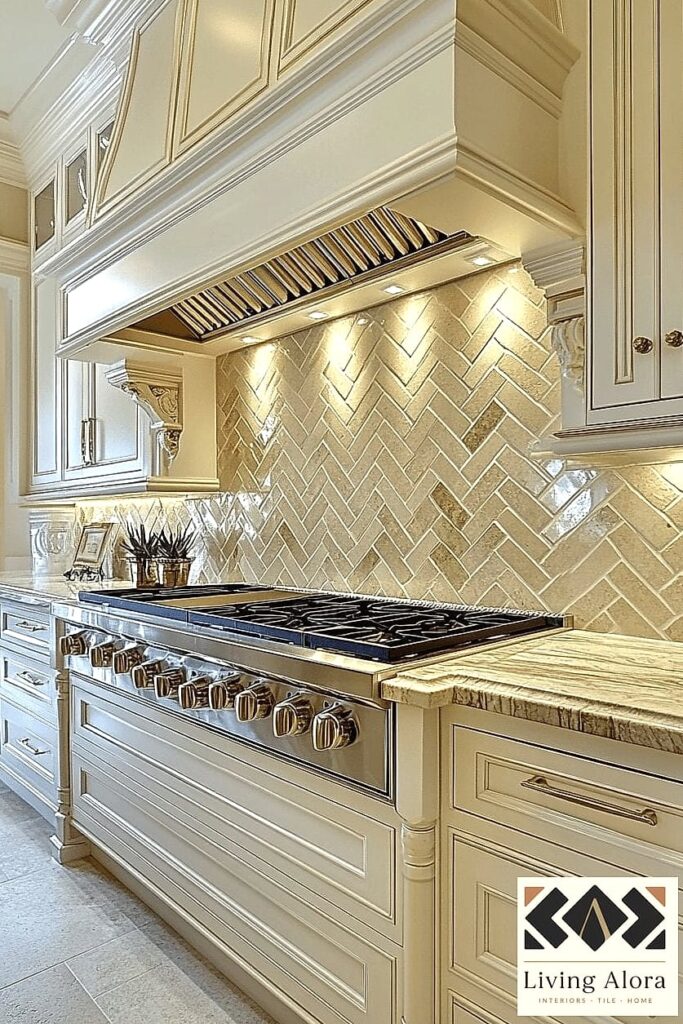
- Classic Brick Pattern Backsplash
- Herringbone Accent Wall
- Iridescent Glass Mosaic Shower Surround
- Small-Format Penny Tile Floor
- Stacked Vertical Installation
- Mosaic Tile Kitchen Island Wrap
- Bathroom Niche Accent
- Textured 3D Mosaic Feature Wall
- Mosaic Tile Fireplace Surround
- Two-Tone Mosaic Border Detail
- Peel-and-Stick Glass Mosaic for Renters
11 White Glass Mosaic Tile Ideas Worth Bookmarking Before You Renovate
There’s something about white glass mosaic tile that photographs beautifully and looks even better in person. It catches light in a way ceramic and porcelain just can’t compete with, adding a subtle shimmer that makes a kitchen or bathroom feel brighter and more finished. If you’re planning a renovation and keep coming back to glass mosaics in your inspiration folder, you’re onto something. Here are eleven ways to actually use them.
Classic Brick Pattern Backsplash
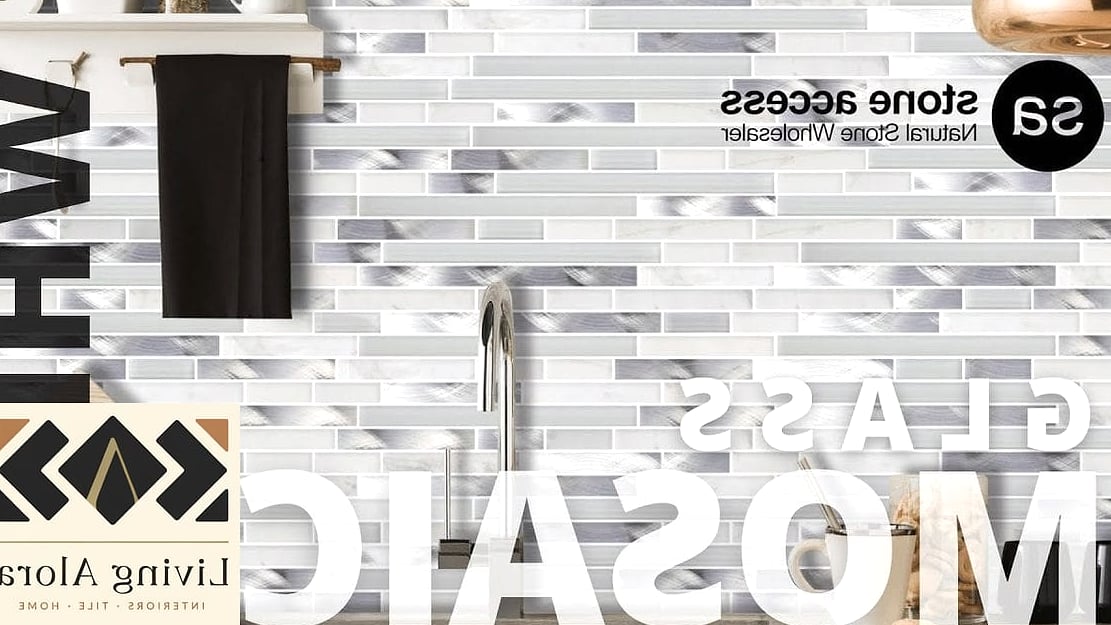
This is the tile layout most people picture when they hear “glass mosaic,” and for good reason. The small rectangular pieces run in an offset brick pattern, similar to subway tile but with that glassy shimmer subway tile lacks. It works especially well behind a stove or sink where you want visual interest without going overboard. Grout lines stay thin, so cleanup is fairly simple with a basic tile spray. Budget-wise, this pattern is one of the more affordable ways to bring glass mosaic into a kitchen since sheets install quickly and waste very little material.
Herringbone Accent Wall
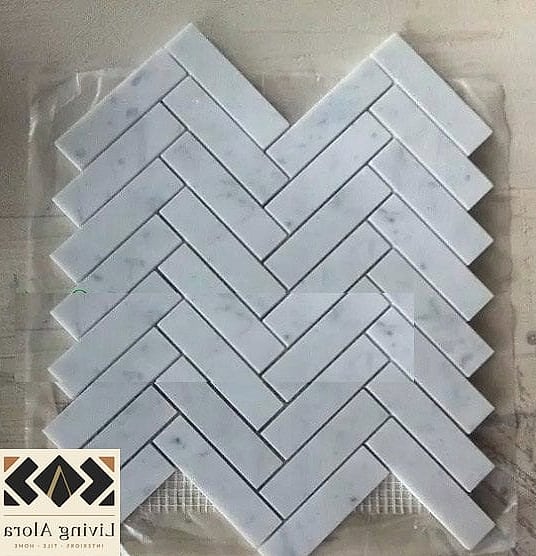
Herringbone turns a plain white tile into something that looks custom-designed, even though the tile itself is simple. The zigzag pattern adds movement to a wall that would otherwise feel flat, and it’s particularly striking as a shower accent or a statement wall behind open shelving. Installation takes more patience than a straight layout since each piece has to be cut and angled carefully, so this is one I’d lean toward hiring a pro for unless you’ve done tile work before. The payoff is a wall that looks far more expensive than it actually was.
Iridescent Glass Mosaic Shower Surround
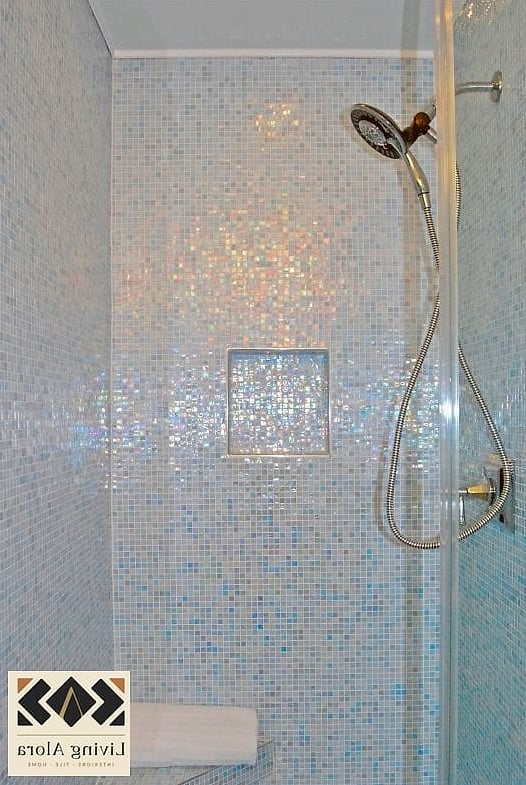
Some white glass mosaics have a slight iridescent quality, shifting between white, pale blue, and silver depending on the light. In a shower, this creates a subtle glow effect that plain tile just doesn’t offer. It pairs nicely with brushed nickel or chrome fixtures, which pick up on that same cool, reflective quality. Maintenance is straightforward, though hard water spots show up a little more on shiny surfaces, so a squeegee after each shower goes a long way in keeping it looking fresh.
Small-Format Penny Tile Floor
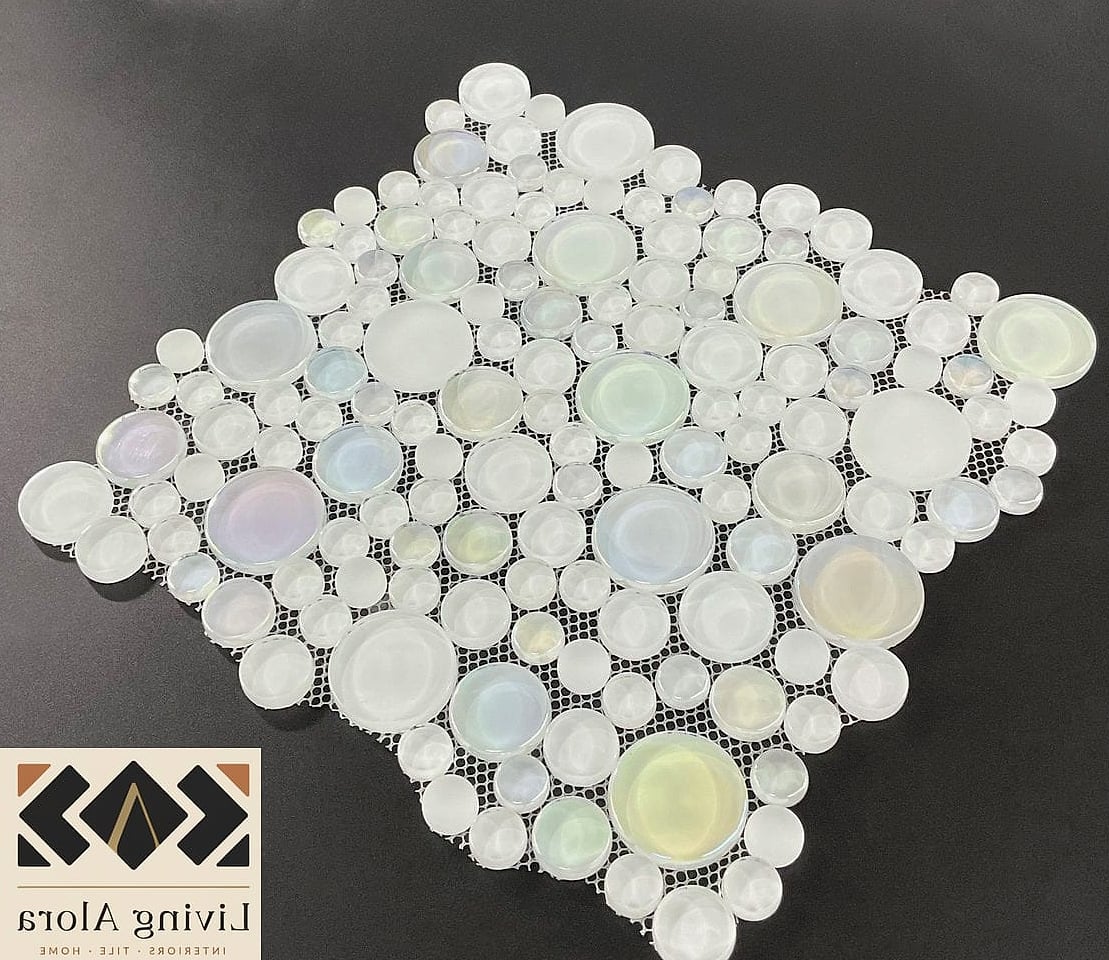
Penny-round glass mosaics on a bathroom floor bring texture underfoot and a slightly vintage feel, especially when paired with black or dark grout for contrast. The rounded shape means more grout lines than a standard tile floor, which actually helps with slip resistance in a wet space like a shower floor or powder room. It’s a detail that guests notice, even if they can’t quite articulate why the space feels special. Just know that more grout lines mean more sealing and occasional touch-up cleaning over time.
Stacked Vertical Installation
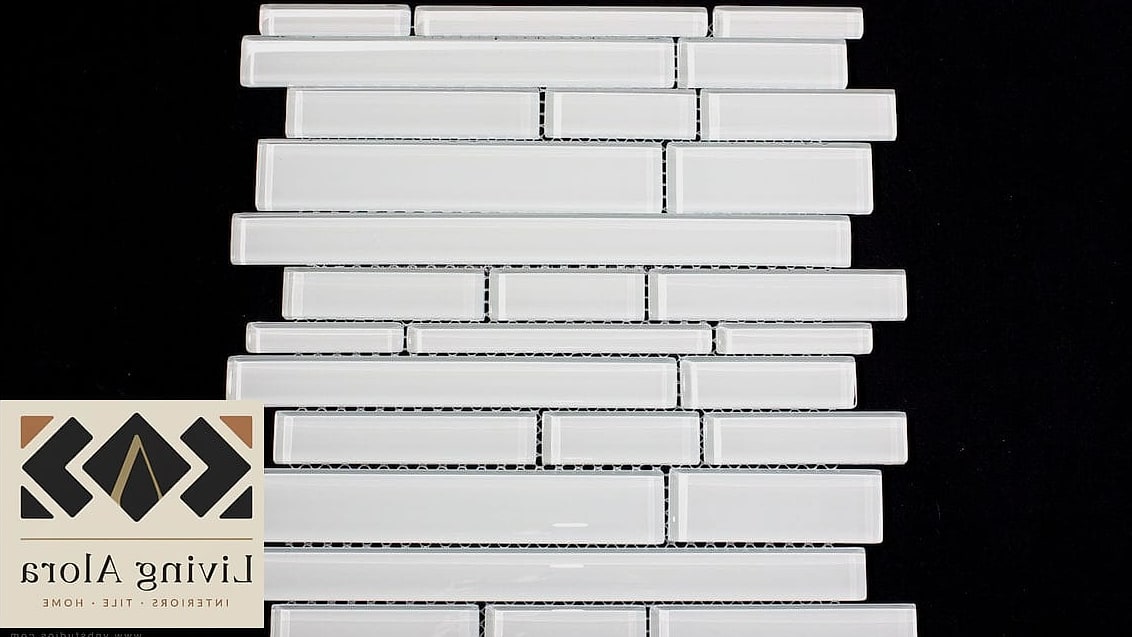
Instead of the traditional horizontal brick layout, stacking white glass mosaic tiles in clean vertical columns gives a backsplash or accent wall a more modern, architectural feel. This layout works particularly well in contemporary or minimalist kitchens where you want the tile’s texture to read without competing with other patterns. It’s also a smart pick for narrow spaces, like between upper and lower cabinets, since the vertical lines can make the area feel taller. Installation difficulty is about the same as a standard layout, just double-check your tile sheets are cut evenly before you start.
Mosaic Tile Kitchen Island Wrap
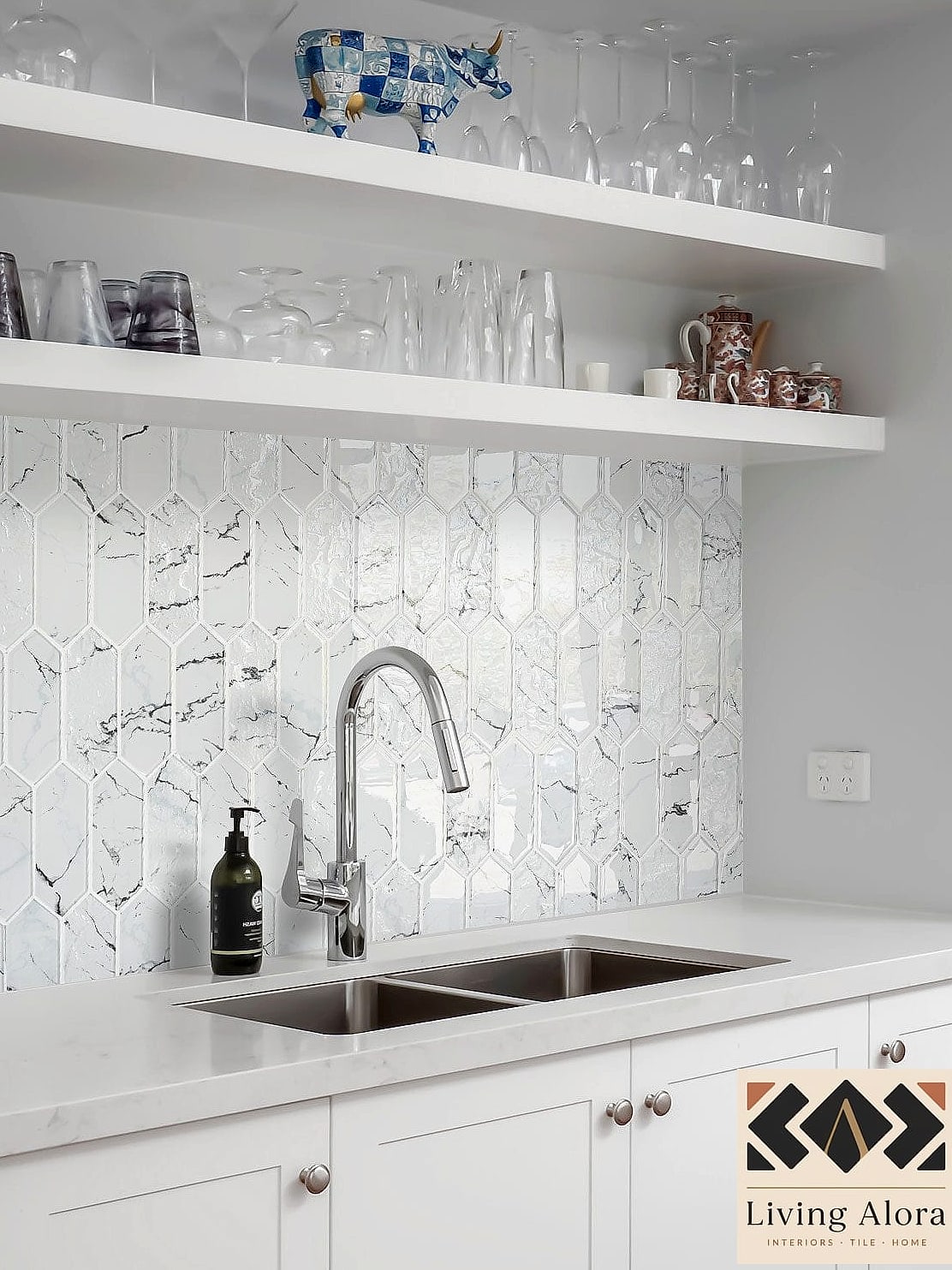
Wrapping a kitchen island in white glass mosaic instead of paint or wood paneling is a bolder move, but it makes the island feel like a genuine focal point rather than just extra counter space. This works best in kitchens with an open layout where the island is visible from multiple angles, like a living or dining area. Pair it with a butcher block or quartz countertop on top for contrast in texture. It’s not the most budget-friendly option on this list since it requires more square footage of tile, but it’s a striking way to make a kitchen feel custom-built.
Bathroom Niche Accent
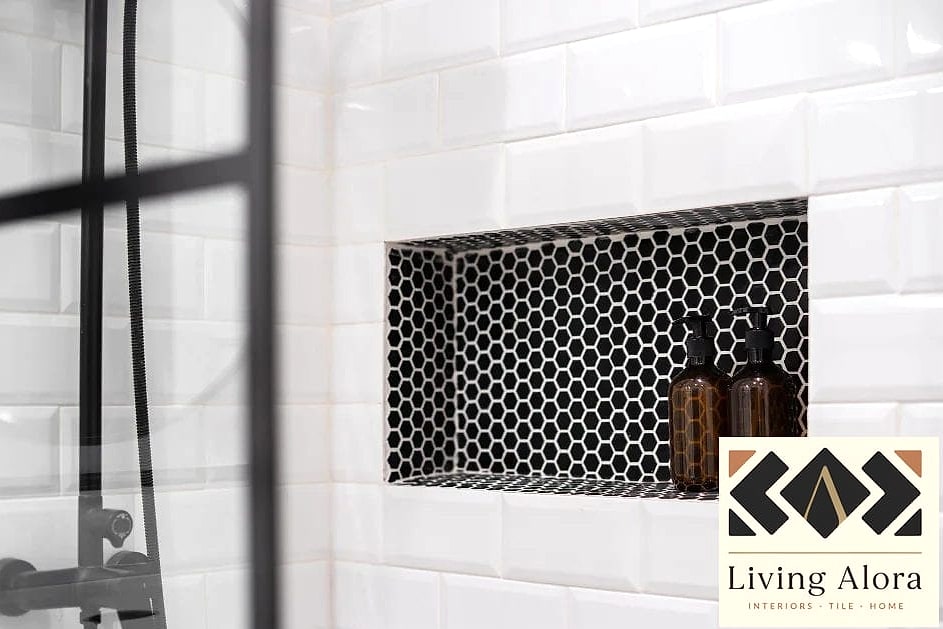
If you’re already adding a shower niche, lining it with white glass mosaic instead of matching your main shower tile creates a nice bit of contrast without overwhelming the space. The reflective surface also helps a niche feel a little brighter, which matters in a spot that often doesn’t get direct lighting. This is a small enough area that even a DIY-friendly renovator could tackle it as a first tile project. It’s also one of the more affordable ways to work glass mosaic into a bathroom since you’re only tiling a few square feet.
Textured 3D Mosaic Feature Wall
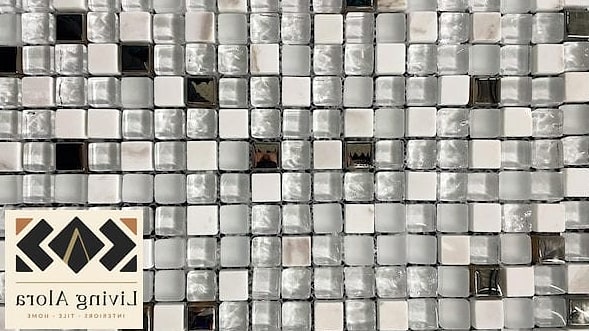
Some white glass mosaic tiles come in dimensional or textured designs, with individual pieces set at slightly different depths to create a wave or ripple effect. This works best as a standalone feature wall rather than throughout an entire room since it’s a strong visual statement on its own. Think a powder room accent wall or the wall behind a soaking tub. Cleaning takes a bit more attention because of the uneven surface catching dust, but a soft brush attachment on a vacuum handles it well.
Mosaic Tile Fireplace Surround
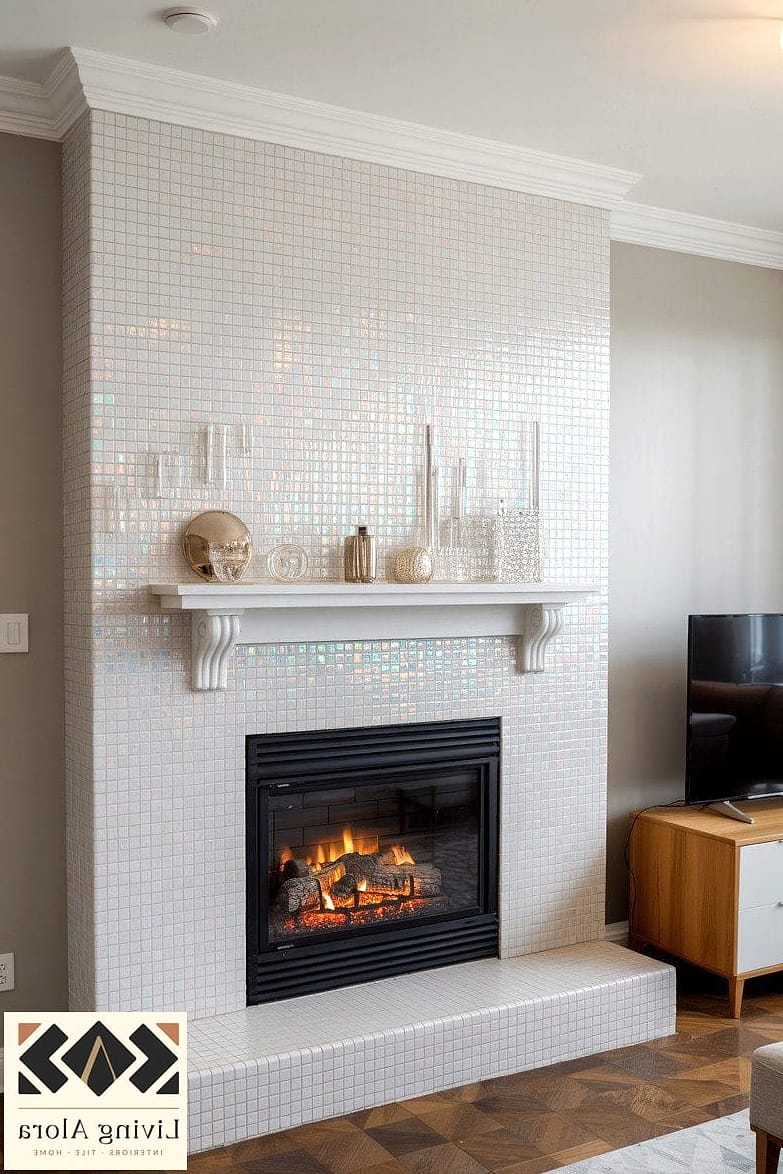
White glass mosaic isn’t just for kitchens and bathrooms. Around a fireplace, it adds a cool, reflective contrast to the warmth of a fire, and it reads as more updated than traditional stone or brick surrounds. This works particularly well in living rooms with a more transitional or contemporary style. Because it’s not exposed to moisture the way a shower is, maintenance here is minimal, just occasional dusting or wiping down. It’s a good example of using a “wet area” material in a dry space for a fresh, unexpected look.
Two-Tone Mosaic Border Detail
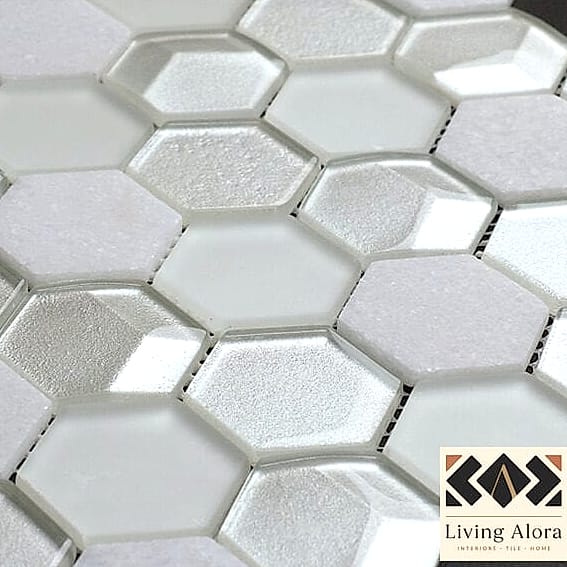
Instead of tiling an entire wall or backsplash in glass mosaic, using it as a thin border or accent stripe within a larger field of subway or porcelain tile is a subtler approach. This works well for anyone who loves the look of glass mosaic but isn’t ready to commit to it as the main event. It’s also one of the more budget-friendly ways to incorporate it since you need far less material. A single mosaic stripe running through a shower wall or backsplash adds just enough sparkle without extra cost or complexity.
Peel-and-Stick Glass Mosaic for Renters
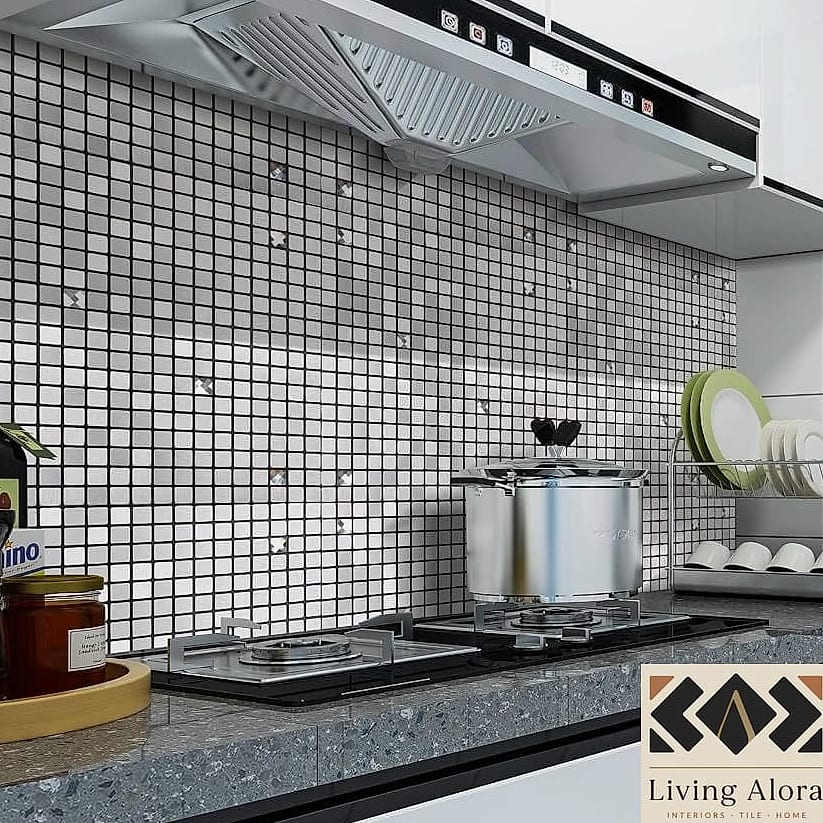
For anyone renting or hesitant to commit to a permanent install, peel-and-stick glass mosaic sheets have come a long way in recent years. They mimic the look of real glass tile closely enough that most people won’t notice the difference from a few feet away, and they’re a genuinely renter-friendly way to update a kitchen or bathroom backsplash without upsetting a landlord. Installation is about as DIY as it gets, most sheets just need a clean, dry surface and a little patience with a utility knife around outlets. It’s not a permanent solution, but it’s a low-risk way to test whether you love the look before committing to real tile down the line.
White glass mosaic tile has a way of making a space feel a little more considered, whether it’s a full shower surround or just a thin accent stripe. What I like about this material is how flexible it is: it works in traditional kitchens, modern bathrooms, and everything in between, and it adapts to nearly any budget depending on how you use it. If you’re gathering ideas before a renovation, keep this list handy. Between the pattern, placement, and finish options here, there’s a version of white glass mosaic tile that fits almost any home.