12 Best Backsplash Ideas You Haven’t Seen Before

- Zellige Tile in an Unexpected Color
- Fluted Ceramic Panels
- Smoked Glass Backsplash
- Checkerboard Tile in Soft Tones
- Vertical Stacked Brick Tile
- Hand-Painted Talavera Tile Accents
- Plaster or Venetian Plaster Finish
- Mirrored Backsplash Panels
- Textured Concrete-Look Tile
- Scalloped or Fish-Scale Tile
- Reclaimed Wood Backsplash
- Marble Mosaic in an Organic Shape
12 Best Backsplash Ideas You Haven’t Seen Before
If you’ve spent any time scrolling kitchen photos, you’ve probably noticed most backsplashes fall into the same three buckets: white subway tile, gray subway tile, or that one marble herringbone everyone copied a few years back. Nothing wrong with those, but if you’re after something that actually makes people stop and ask “wait, where did you get that?” — you need to look past the usual suspects.
I’ve pulled together twelve backsplash ideas that don’t show up in every single roundup. Some are bold, some are quiet and unexpected, and a few are just clever twists on materials you already know. Let’s get into it.
Zellige Tile in an Unexpected Color
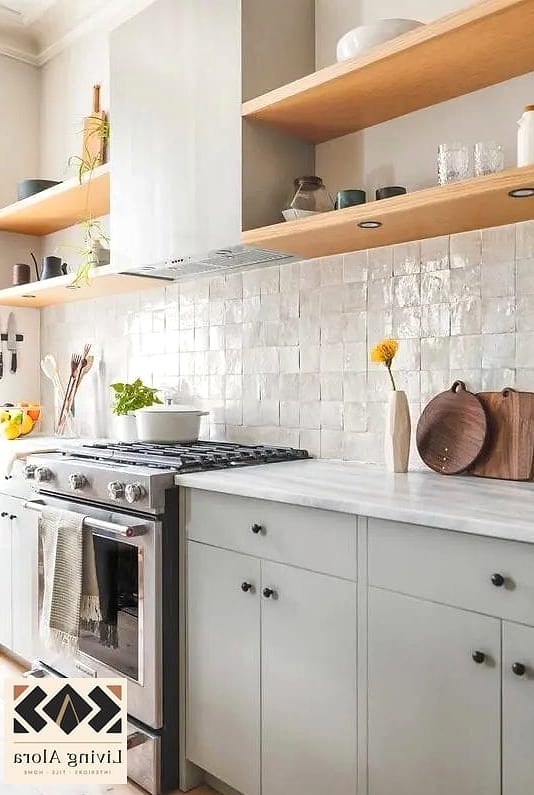
Everyone knows zellige at this point, but most people default to white or that classic blue. Try it in a warm terracotta, olive green, or even a dusty pink instead.
The handmade Moroccan clay tiles have natural variation in tone and a slightly wavy surface, so light bounces around in a way that flat tile just can’t replicate. It works beautifully in kitchens with warm wood cabinetry or brass fixtures, since the earthy color ties everything together without feeling matchy.
Keep in mind zellige is porous, so it needs a proper sealant, and it’s pricier than standard ceramic. Worth it if you want a backsplash that photographs like nothing else on Pinterest.
Fluted Ceramic Panels
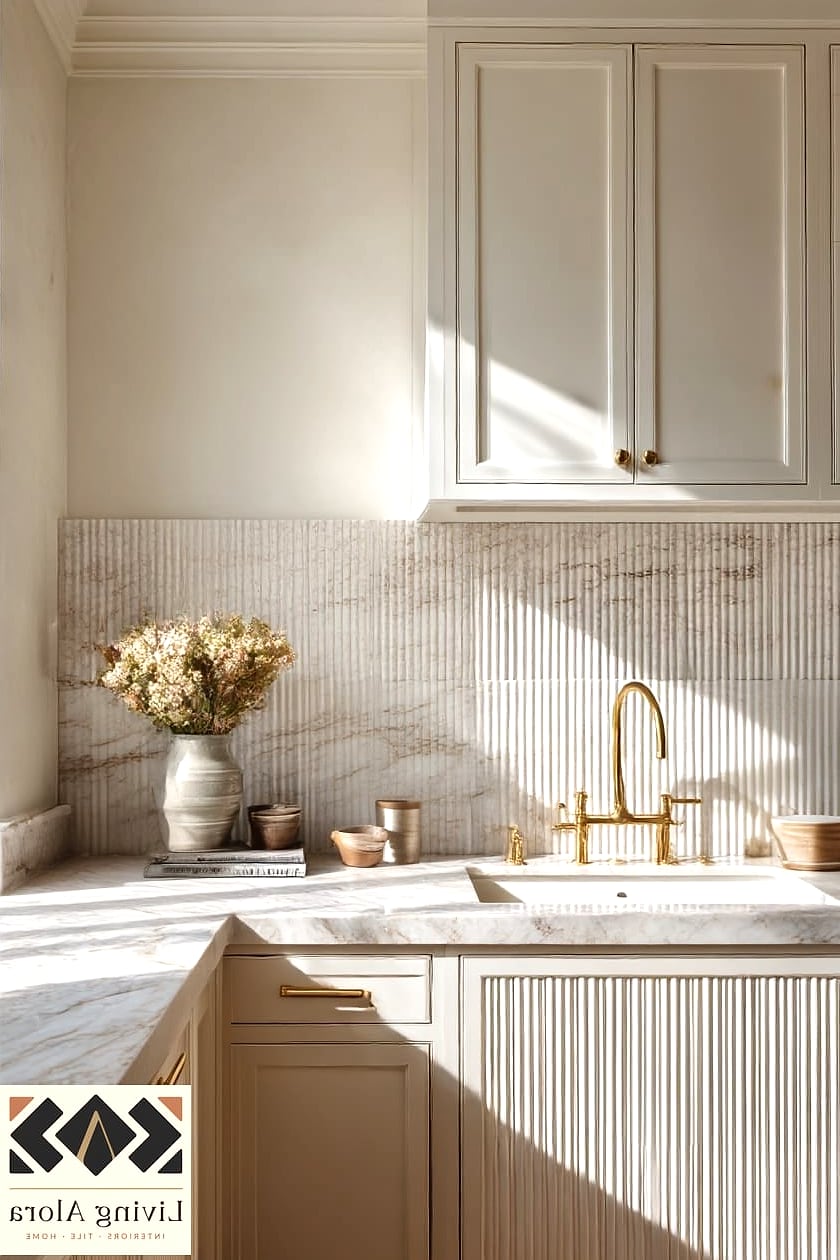
Fluted texture has taken over cabinetry and furniture, and now it’s showing up on backsplashes too. Think vertical ridges in a soft, matte ceramic that catches shadows depending on the time of day.
It’s a great pick for a minimalist kitchen that needs a little tactile interest without adding pattern or color. Pair it with brushed brass hardware and open shelving for a look that feels current but not trendy-for-five-minutes.
Cleaning is straightforward since it’s still a smooth ceramic surface underneath, just with grooves — a soft cloth and a basic degreaser handles it fine.
Smoked Glass Backsplash
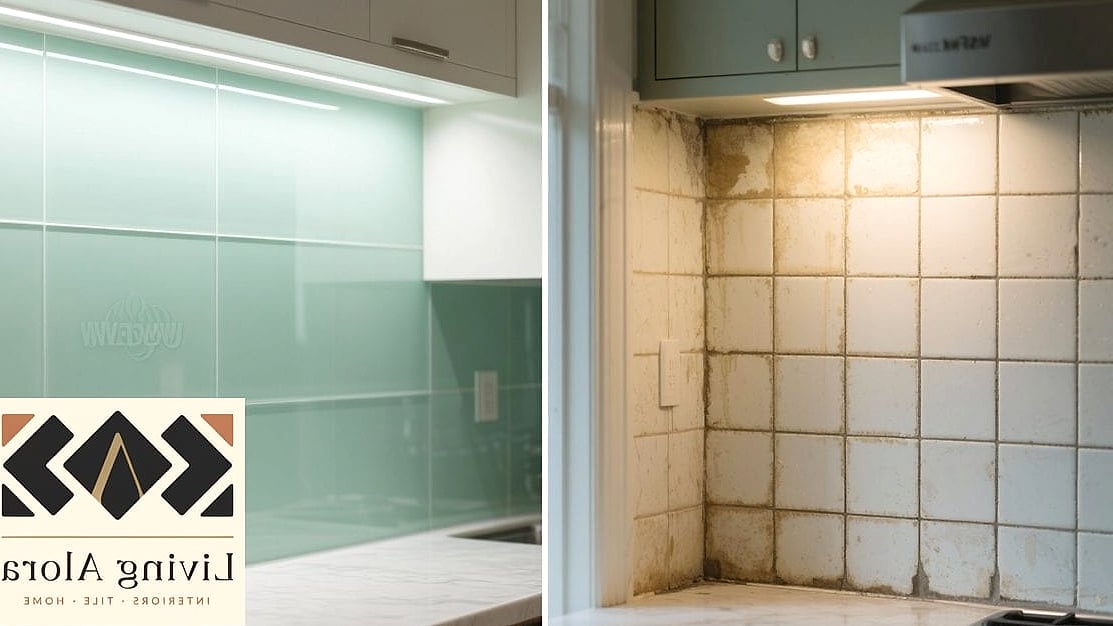
Glass backsplashes usually mean bright, glossy, and a little dated-feeling. Smoked or tinted glass flips that completely. It has a moody, almost reflective quality that pairs surprisingly well with black fixtures and dark cabinetry.
This one’s especially good for smaller kitchens where you want depth without adding a heavy pattern. It also wipes clean in seconds, which is a real perk if you cook often and hate scrubbing grout lines.
Installation typically needs a professional since the glass is custom-cut and mounted flush, so this leans more toward a splurge option than a weekend DIY.
Checkerboard Tile in Soft Tones
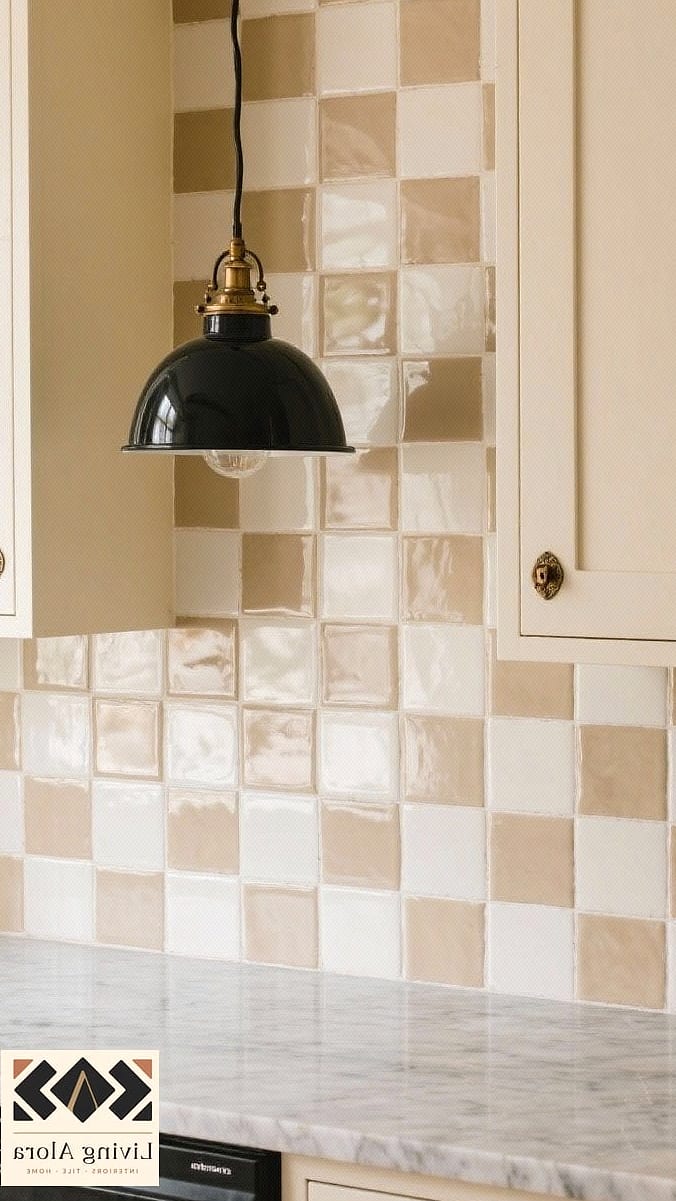
Skip the classic black-and-white checkerboard and go with two close, muted tones instead — like sage and cream, or terracotta and warm white. It reads as playful without tipping into a diner-throwback look.
This pattern works really well behind a stove as a focal point, even if the rest of your kitchen keeps things simple. Ceramic or porcelain tile in this layout is fairly budget-friendly too, since you’re often using standard square tiles just laid in an alternating pattern.
It’s a fun one for a family kitchen — a little personality, but still easy to keep clean with regular grout sealing.
Vertical Stacked Brick Tile

Standard subway tile is almost always laid in a horizontal offset pattern. Turn it vertical and stack it straight instead, and the whole feel changes. It draws the eye upward, which makes lower ceilings feel taller.
This works especially well in narrow kitchens or behind a range where you want the eye to travel up rather than across. Matte finishes give it a more understated, architectural look, while glossy tile keeps things brighter and more traditional.
It’s also one of the easier patterns for a confident DIYer to install, since there’s no offset math to worry about.
Hand-Painted Talavera Tile Accents

Instead of tiling an entire wall in a bold pattern, use hand-painted Talavera or Mexican tile as an accent strip or border within a simpler field of plain tile. You get color and pattern without it overwhelming the whole kitchen.
This is a great option if you love bold design but aren’t ready to commit to it wall-to-wall. It also makes a nice budget-friendly way to bring in pattern, since you’re only buying a fraction of the tile in the statement design.
Look for these in warm color palettes with blues, yellows, and terracottas for a look that feels collected rather than themed.
Plaster or Venetian Plaster Finish

This one skips tile altogether. A hand-applied plaster finish behind the stove and counters gives a soft, cloud-like texture that feels more like art than a functional surface.
It’s become a favorite in Mediterranean and Japandi-inspired kitchens because it’s tactile and imperfect in a good way — no grout lines, no seams, just a continuous textured surface. Pair it with natural stone counters and warm wood tones for a really cohesive, quiet kitchen.
The tradeoff is maintenance. Plaster needs a sealant near the stove and sink, and it’s not the most forgiving with grease splatters, so it suits a lighter-cooking household better than a daily stir-fry situation.
Mirrored Backsplash Panels

A mirrored backsplash sounds bold, but used in small doses — like behind open shelving or a bar cart nook — it adds glamour and makes a small space feel bigger by bouncing light around.
This is a strong pick for a butler’s pantry, a small galley kitchen, or even a laundry room that doubles as extra prep space. Smoked or antiqued mirror softens the look so it doesn’t feel like a nightclub.
Just know that mirror shows fingerprints and water spots more than tile does, so it’s a better fit for lower-traffic zones than the main cooking area.
Textured Concrete-Look Tile

Concrete counters and walls have a certain industrial-meets-Scandinavian appeal, but pouring actual concrete is a huge commitment. Textured porcelain tile made to look like concrete gives you that same raw, matte surface with none of the maintenance headaches.
It pairs beautifully with warm wood open shelving and black fixtures for a kitchen that feels a little edgier than your standard farmhouse look. Porcelain also holds up well to daily wear, so it’s family- and pet-friendly.
Budget-wise, this sits in the middle — pricier than basic ceramic, but far cheaper than real poured concrete.
Scalloped or Fish-Scale Tile

Scalloped tile has a soft, almost feminine quality that works really well in a smaller kitchen or as a statement behind an island rather than the whole room. The rounded edges break up all the straight lines you usually get from cabinetry and counters.
It looks especially good in a single soft color like blush, sage, or pale blue, laid in a monochrome scheme so the shape does the talking rather than a busy color mix.
This one’s a little trickier to install because of the curved cuts around outlets and edges, so it’s generally worth hiring a tile setter who’s done the pattern before.
Reclaimed Wood Backsplash

If you want warmth and texture that tile just can’t give you, reclaimed wood planks installed as a backsplash bring in a rustic, collected feel — especially nice around a wet bar, coffee station, or a stove-free wall.
It needs to be properly sealed to handle humidity, and it’s not the best choice directly behind a busy cooking zone, but as an accent wall or bar backsplash it adds a layer of texture that tile simply doesn’t have.
Pair it with black fixtures and open shelving for a look that feels more like a cozy cabin kitchen than anything mass-produced.
Marble Mosaic in an Organic Shape

Skip the usual hexagon or square marble mosaic and look for organic, pebble-like or irregular-shaped marble mosaic tile instead. It has a natural, almost riverbed quality that feels more artisanal than geometric.
This works particularly well in a bathroom-meets-kitchen aesthetic, especially if you’ve got natural stone counters already and want the backsplash to feel like an extension of that same material rather than a separate design decision.
Because it’s marble, it does need regular sealing and a gentler cleaning approach — skip acidic cleaners and stick to a pH-neutral stone cleaner to avoid etching.
Final thoughts: the best backsplash ideas you haven’t seen before usually aren’t about finding some wild new material — they’re about taking something familiar and using it in a way most people haven’t tried yet. Whether that’s a color shift, a new layout, or swapping tile for plaster or wood, small departures from the expected are often what make a kitchen feel genuinely custom.