15 Stone Backsplash Ideas That Work in Any Size Home
- Classic Carrara Marble Subway Tile
- Dramatic Calacatta Slab Backsplash
- Herringbone Travertine Tile
- Soapstone Backsplash Panel
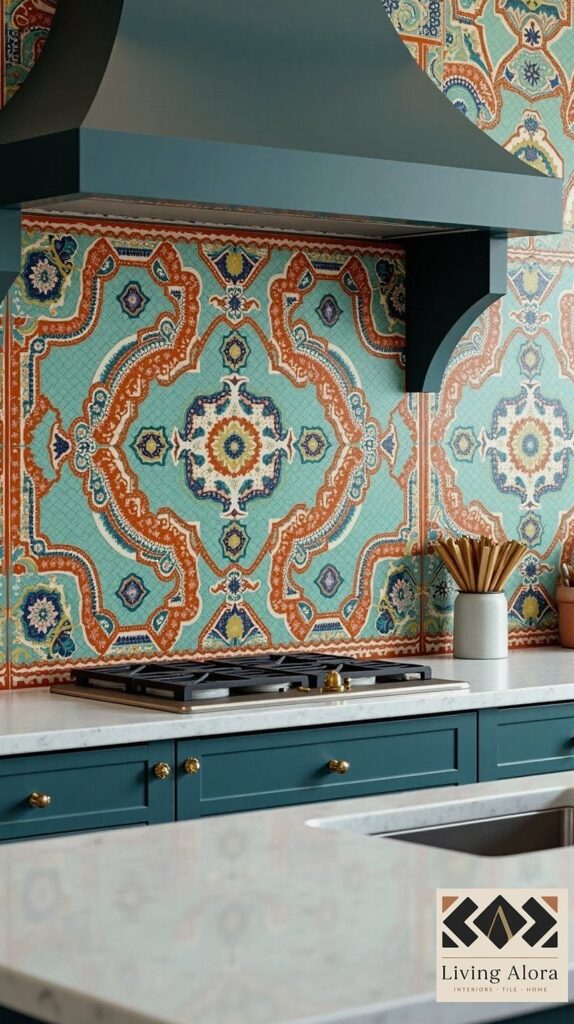
- Moroccan-Inspired Zellige-Style Stone Mosaic
- Vertical Stacked Slate Tile
- Honed Limestone in a Brick Pattern
- Green Marble Statement Wall
- Quartzite Slab for Durability
- Small Pebble Stone Mosaic Accent
- Black Granite Backsplash Behind the Range
- Warm Onyx Backlit Panel
- Gray Basalt Tile in a Grid Layout
- Beige Travertine Herringbone with Wood Shelving
- Mixed Natural Stone Mosaic Blend
15 Stone Backsplash Ideas That Work in Any Size Home
Stone backsplashes have this way of making a kitchen feel grounded and expensive at the same time, even when the rest of the room is pretty simple. There’s something about natural veining and texture that tile just can’t fake, no matter how good the printing technology gets these days.
Whether you’ve got a sprawling chef’s kitchen or a galley kitchen the size of a closet, there’s a stone backsplash option that’ll fit your space and your budget. Let’s get into it.
Classic Carrara Marble Subway Tile

This is the backsplash equivalent of a little black dress. Carrara marble subway tiles bring soft gray veining against a bright white background, and they work in literally any kitchen style you can think of.
Small kitchens benefit especially here because the light color bounces sunlight around and keeps things feeling open. Just know that marble is porous, so you’ll want to seal it once during installation and then again every year or so to keep wine and tomato sauce from leaving their mark.
Budget-wise, marble subway tile sits in the mid-range, and honestly it’s one of those upgrades that instantly makes a kitchen feel more custom without requiring a full renovation.
Dramatic Calacatta Slab Backsplash
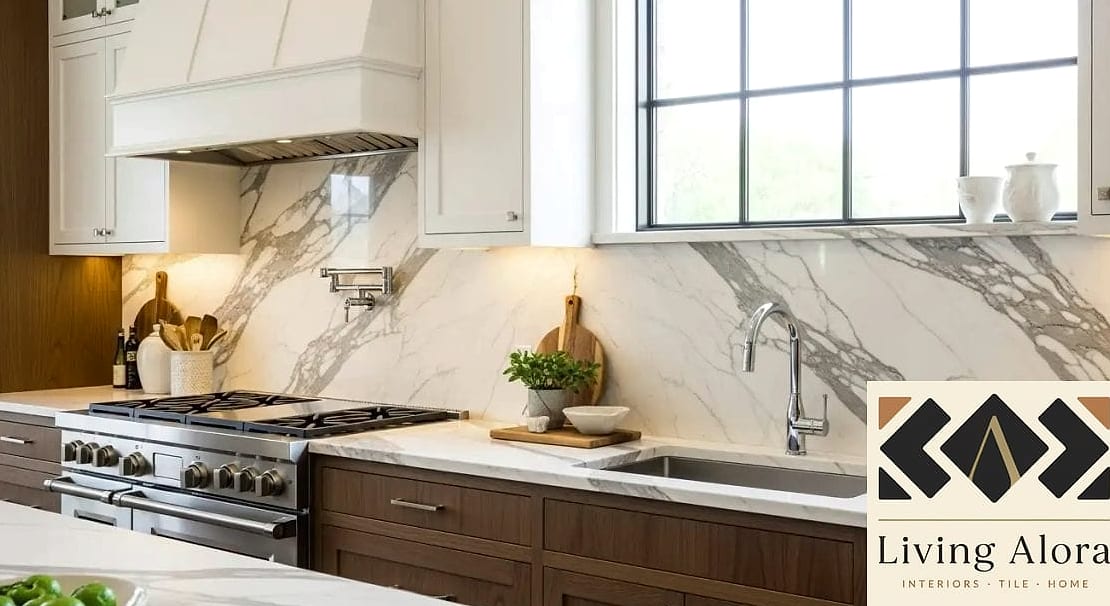
If you want your backsplash to basically be the art piece in the room, a full slab of Calacatta marble behind the range does the job. The bold gold and gray veining creates this continuous, almost painterly look since there’s no grout lines breaking things up.
This one leans luxury, and it works best in larger kitchens where there’s enough wall space to really let the veining shine. A slab installation also cuts down on cleaning time since you’re not scrubbing grout lines after every meal.
For smaller budgets, some fabricators offer slab remnants left over from countertop jobs, which can bring the cost down quite a bit if you’re only covering the area behind your cooktop.
Herringbone Travertine Tile
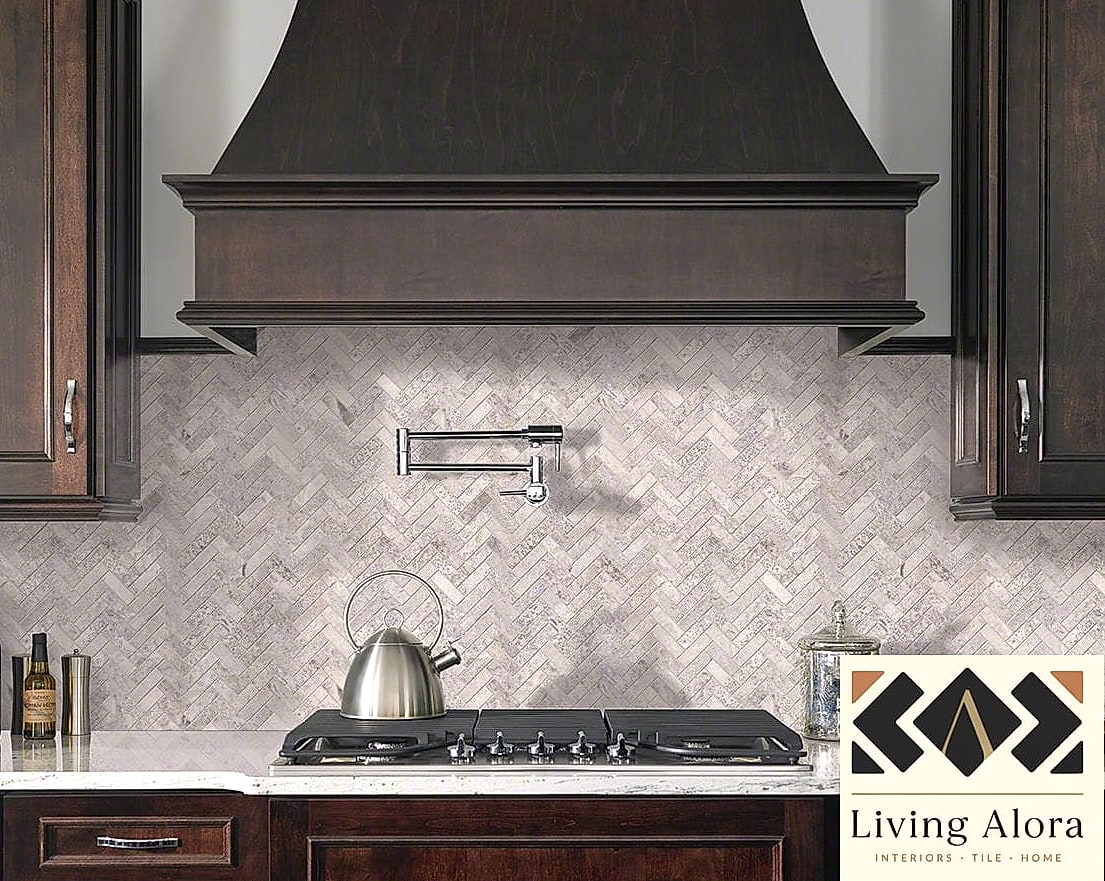
Travertine has this warm, sandy tone that pairs beautifully with wood cabinets and brass hardware. Laying it in a herringbone pattern adds movement and visual interest without needing bright colors or bold contrast to do the work.
This look feels especially at home in Mediterranean, rustic, or organic modern kitchens. The texture also happens to hide water spots and minor smudges better than a glossy tile would, which is a small win if you’ve got kids or a busy household.
Travertine does need sealing since it’s naturally porous, but a lot of homeowners appreciate the character that comes with those little natural pits and fissures.
Soapstone Backsplash Panel

Soapstone brings a soft, matte finish and a deep charcoal color that reads as both modern and old-world at once. It’s actually nonporous, so it resists staining better than marble or travertine without needing regular sealing, which is a nice break from typical stone maintenance.
Farmhouse and industrial kitchens both lean into soapstone well, especially when paired with matte black fixtures or warm wood open shelving. It also tends to develop a natural patina over time that a lot of people genuinely love watching happen.
Since soapstone is quarried in fewer locations than marble or granite, it can run pricier, but a smaller backsplash area keeps the overall cost manageable even in a modest kitchen.
Moroccan-Inspired Zellige-Style Stone Mosaic

Okay, technically zellige is clay, but there are natural stone mosaic versions that mimic that same handmade, slightly irregular look using limestone or marble chips. Each tile catches light a little differently, which gives the whole wall texture and depth.
This works great as a statement wall behind an open shelving setup, especially in eclectic or bohemian kitchens where you want something that feels collected rather than mass-produced. Small kitchens can use it as an accent strip instead of covering the whole wall, keeping the boldness in check.
Cleaning is straightforward with a soft cloth and mild soap, though the irregular surface does mean a little extra attention during grout cleaning.
Vertical Stacked Slate Tile

Slate brings deep charcoal, gray, and sometimes rust-colored tones, and installing it in a vertical stacked layout draws the eye upward, which is a neat trick in kitchens with lower ceilings. It makes the whole room feel taller than it actually is.
This backsplash style suits modern farmhouse and contemporary kitchens equally well. Slate is also naturally slip and heat resistant, so it holds up nicely right behind a range where splatters happen.
It’s a fairly DIY-friendly stone option too, since slate tiles are lightweight compared to thicker marble or granite slabs.
Honed Limestone in a Brick Pattern
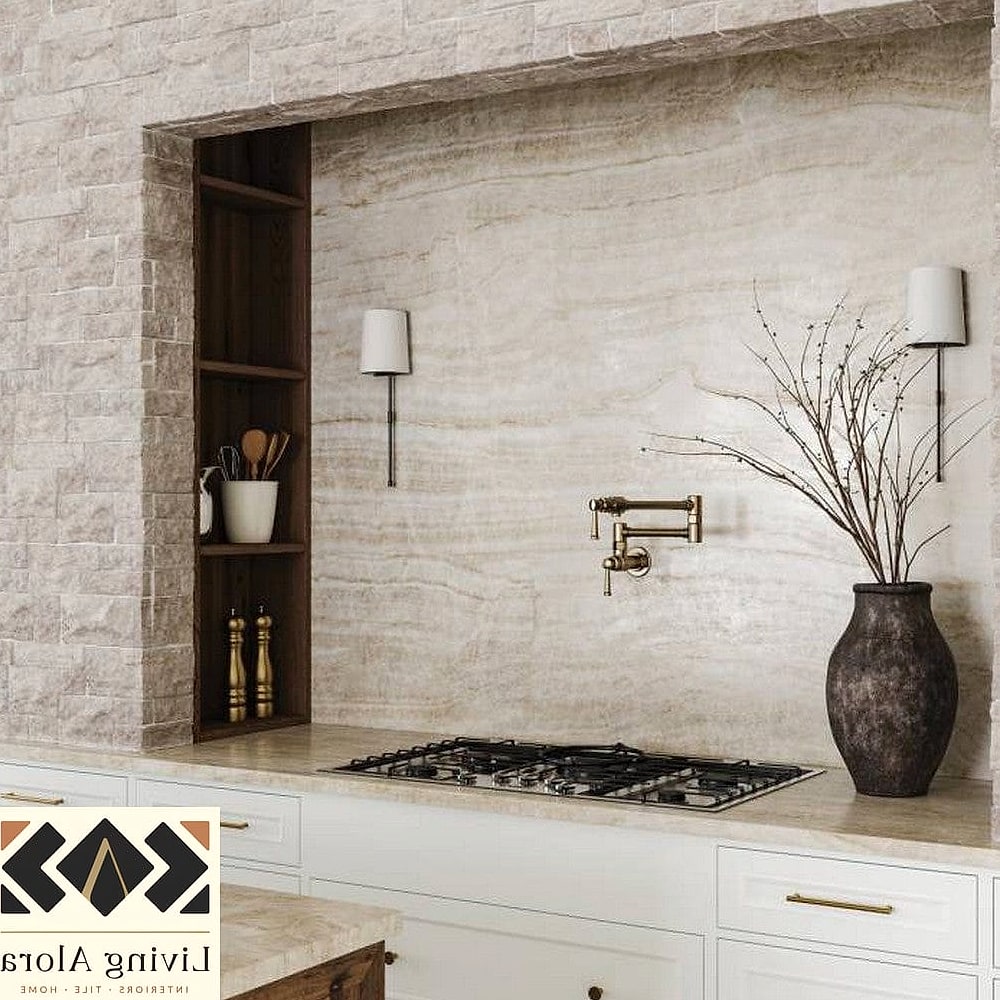
Limestone has this soft, chalky texture that feels warm and lived-in rather than polished and formal. Laying it in an offset brick pattern gives a nod to traditional European kitchens without going full farmhouse.
This is a great pick for medium to large kitchens with a lot of wall space, since the subtle pattern needs some room to really read. A honed (matte) finish also hides fingerprints and water spots way better than a polished surface would.
Limestone does require regular sealing and isn’t the most stain-resistant option out there, so it’s worth thinking twice if you’re not into yearly maintenance.
Green Marble Statement Wall
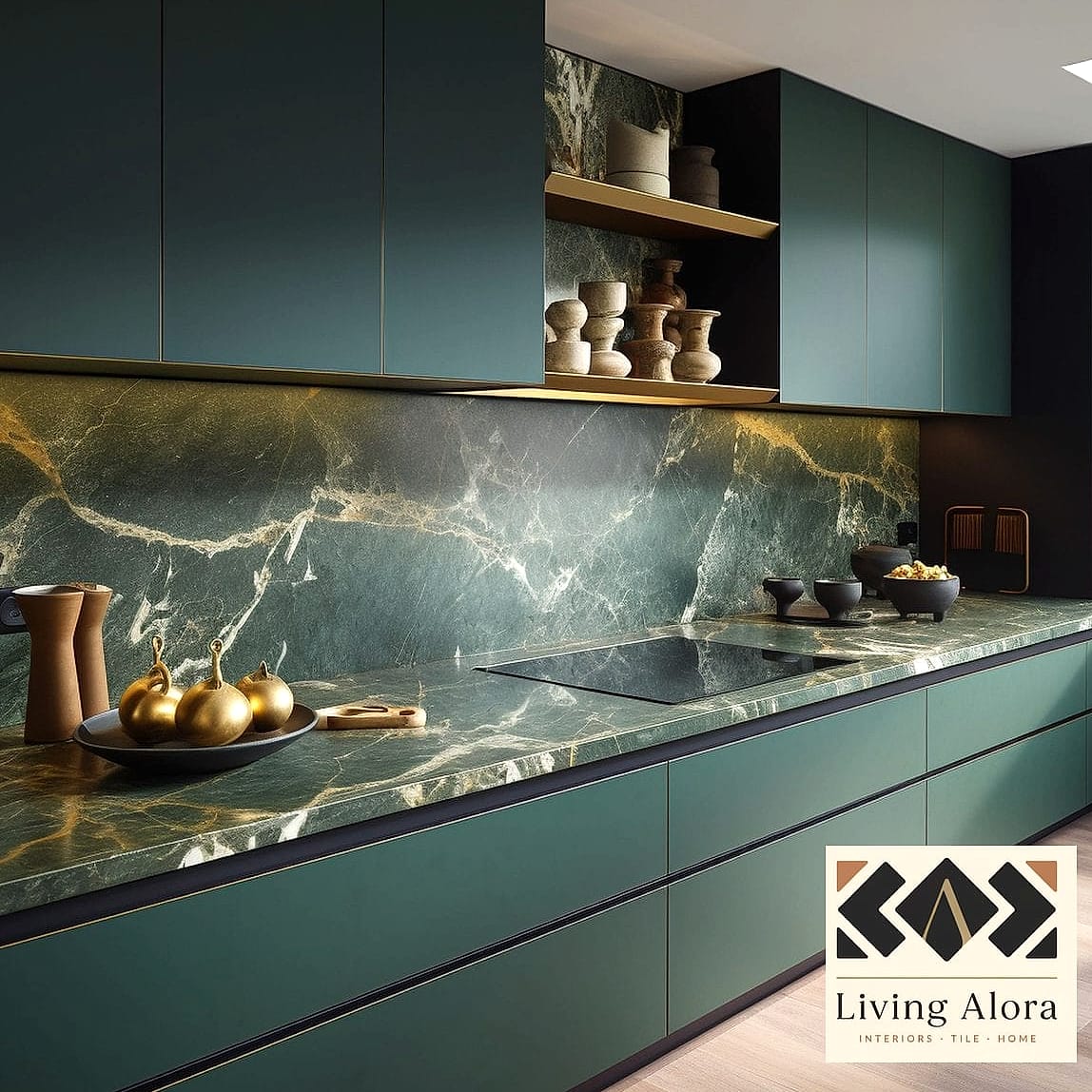
Green marble, whether it’s a deep emerald or a lighter sage tone, has had a real moment in kitchen design lately, and for good reason. It pairs beautifully with brass fixtures and warm wood tones, adding color without feeling like you painted a wall.
This works especially well as a focal point behind a range hood in an otherwise neutral kitchen. Smaller kitchens can use a narrow strip of green marble as an accent rather than covering the entire backsplash area, which keeps costs and visual weight in check.
Because green marble often has bold veining, it tends to hide minor stains and water spots better than plain white marble does.
Quartzite Slab for Durability

Quartzite looks a lot like marble but performs more like granite, which makes it a smart pick for families who love the marble aesthetic but don’t want to deal with constant sealing and staining worries. It’s harder and more scratch-resistant than true marble.
This is a solid choice for busy kitchens, rental properties you actually own long-term, or anyone who cooks a lot and doesn’t want to babysit their backsplash. The natural stone look still reads as high-end even though the material itself is more forgiving day to day.
Quartzite slabs run a bit pricier than tile options, but the lower maintenance can offset that cost over the years.
Small Pebble Stone Mosaic Accent
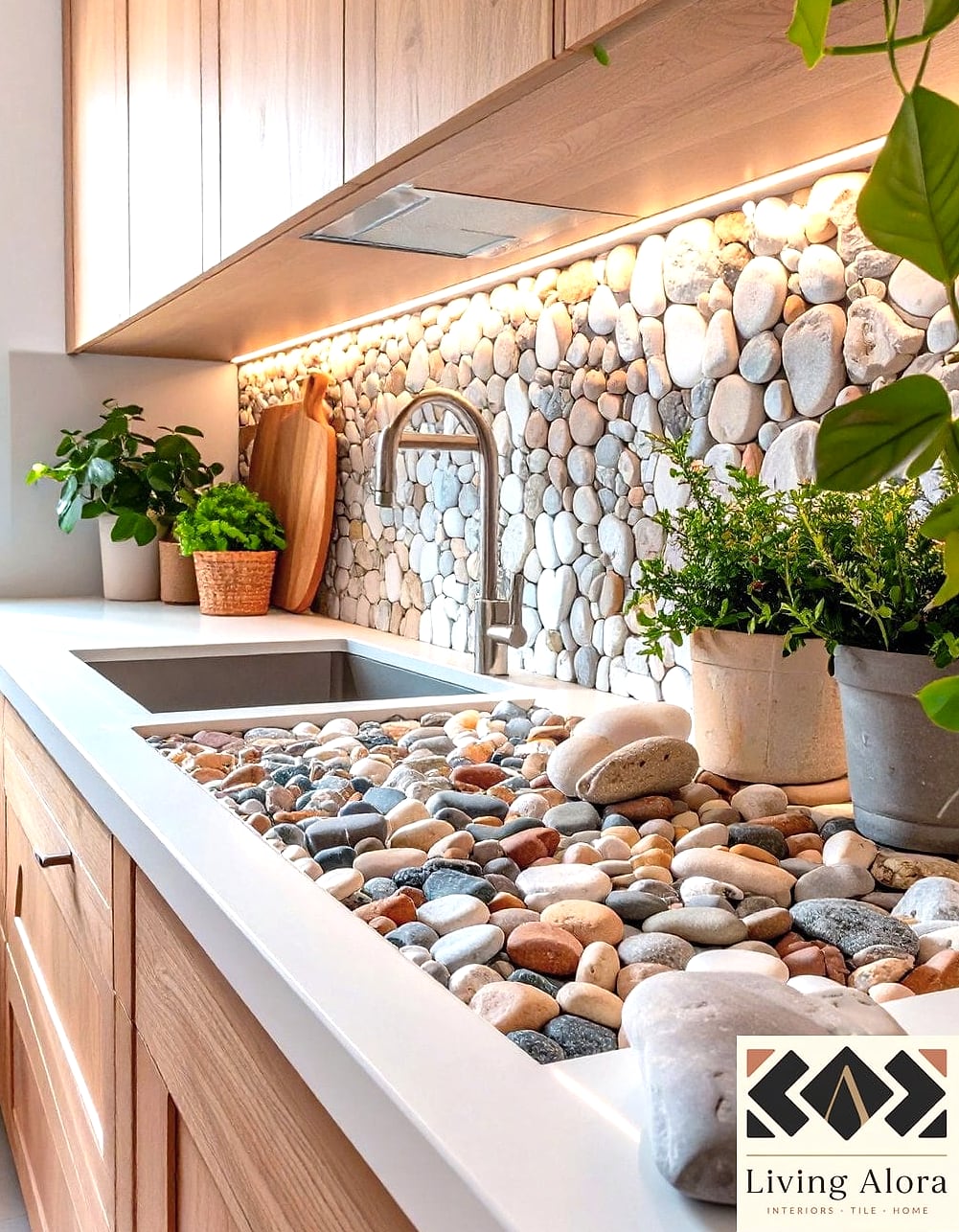
For a spa-like, organic feel, small pebble stone mosaics bring texture that you can actually see and feel. This works best as an accent strip rather than covering a whole wall, since the busy texture can feel like a lot in large doses.
It’s a great fit for coastal, organic modern, or Japandi-inspired kitchens where natural materials do a lot of the design work. Pebble mosaics also happen to be pretty forgiving with imperfect walls since the small pieces flex around uneven surfaces.
Grout maintenance is the main consideration here, since there’s a lot more grout surface area than with larger tiles.
Black Granite Backsplash Behind the Range

Granite gets overlooked a lot these days in favor of marble and quartz, but a black granite backsplash behind just the cooktop area is incredibly practical and still looks sharp. It’s heat resistant, scratch resistant, and basically ignores splatters.
This is an especially smart choice for small kitchens where you want the durability of stone without covering the entire wall, both for budget reasons and to keep the space from feeling heavy. Pair it with lighter cabinets and you get a nice contrast that doesn’t overwhelm a compact layout.
Granite is nonporous once sealed, so cleanup really is just a wipe with a damp cloth most days.
Warm Onyx Backlit Panel

This one’s for the homeowners who want their kitchen to feel like a design magazine spread. Onyx is translucent enough that, with LED backlighting installed behind the panel, the whole backsplash glows with warm amber or honey tones.
It’s a splurge, no way around it, and it works best as a focal feature rather than covering a large area. Think a single panel behind a wet bar or a small accent zone rather than a full kitchen wall.
Onyx is softer than most other natural stones, so it needs careful sealing and a gentler touch when cleaning, but the visual payoff is hard to match.
Gray Basalt Tile in a Grid Layout

Basalt brings a cool, volcanic gray tone with a naturally matte, slightly textured surface. Laid in a simple grid pattern, it gives off a clean, architectural feel that works really well in modern and minimalist kitchens.
This is a great option if you want the sophistication of natural stone without a busy pattern competing with other design elements in the room. It also plays nicely with both matte black and brushed brass hardware, so you’re not locked into one hardware finish.
Basalt holds up well to heat and moisture, making it a practical pick for kitchens that see a lot of daily cooking.
Beige Travertine Herringbone with Wood Shelving

Pairing a warm beige travertine herringbone backsplash with open wood shelving creates that layered, collected-over-time look a lot of people are after right now. The warm stone tones and natural wood grain just work together without trying too hard.
This combination shines in farmhouse, transitional, and modern rustic kitchens, and it’s particularly nice in smaller spaces since the warm tones keep things feeling cozy instead of cold. Adding a few baskets or ceramic canisters on the shelving rounds out the layered feel.
Since travertine is porous, sealing is a must here, especially with open shelving nearby that might mean more airborne cooking splatter reaching the surface.
Mixed Natural Stone Mosaic Blend
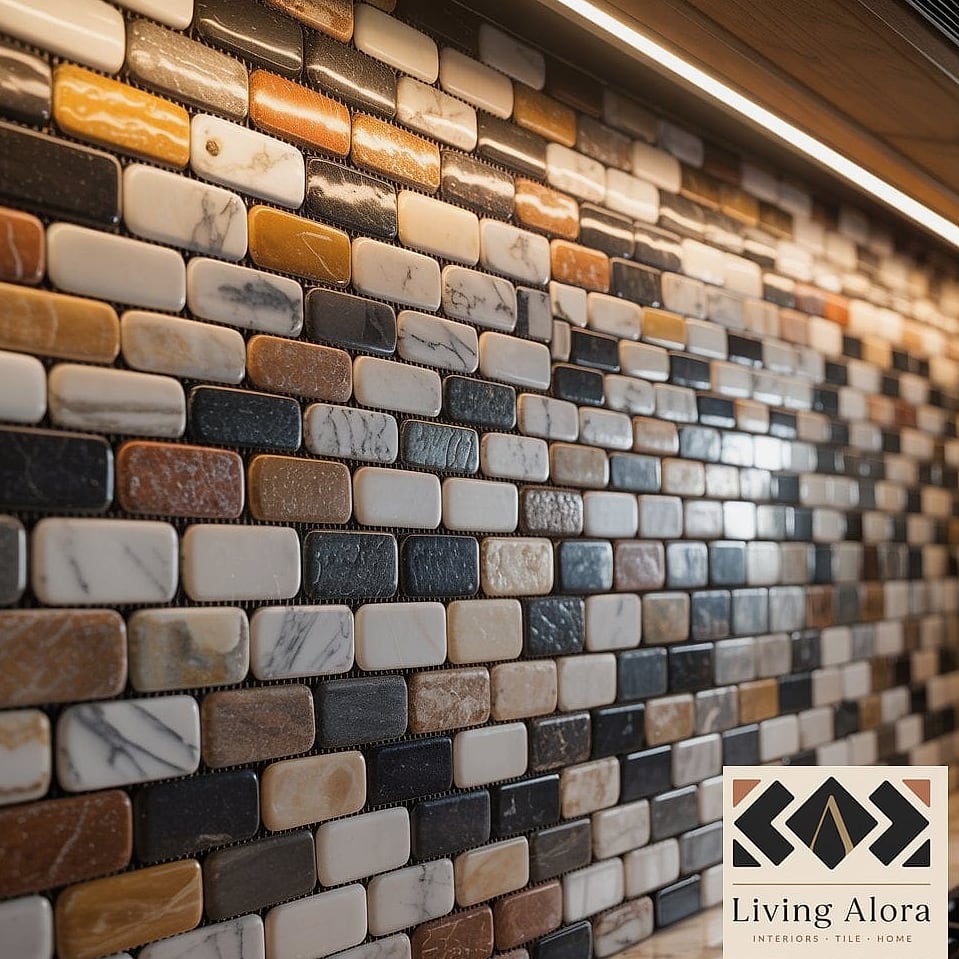
Sometimes the most interesting backsplashes aren’t one single stone but a blend of several, like marble, travertine, and slate chips mixed together in a mosaic sheet. This gives you varied color and texture in one installation, which can be a great way to tie together mismatched elements elsewhere in your kitchen.
This works well in eclectic kitchens or as a way to bridge two different design styles, say if your countertops are one material and your cabinets lean a totally different direction. It’s also a nice option if you genuinely can’t decide on just one stone type.
Maintenance varies by the specific stones included in the blend, so it’s worth asking your supplier which sealants and cleaners will work best across the mix.
Whichever direction you go, a stone backsplash is one of those upgrades that tends to age really well, both in terms of durability and style. Trends come and go, but natural stone has a way of staying relevant because, well, it’s natural. Pick the option that fits your kitchen’s size, your daily habits, and how much maintenance you’re actually willing to keep up with, and you’ll end up with something that feels right for years to come.