19 Modern Porcelain Backsplash Ideas That Prove This Trend Is Here to Stay

- Large-Format Slab Panels
- Marble-Look Porcelain in Bold Veining
- Matte Black Porcelain Tile
- Herringbone Pattern Layout
- Textured 3D Porcelain Tile
- Warm Beige and Travertine-Look Porcelain
- Vertical Stacked Installation
- Porcelain Tile That Mimics Zellige
- Full-Height Backsplash to the Ceiling
- Two-Tone Porcelain Combinations
- Glossy White Porcelain with Thin Grout Lines
- Porcelain Slab with Waterfall Countertop Match
- Checkerboard Porcelain Pattern
- Concrete-Look Porcelain Tile
- Porcelain Mosaic Accent Strip
- Warm Terracotta-Inspired Porcelain
- Extra-Large Format with Minimal Seams
- Porcelain Tile with Metallic Undertones
- Soft Sage and Green-Toned Porcelain
- Budget-Friendly Peel-and-Stick Porcelain-Look Tile
- Final Thoughts
19 Modern Porcelain Backsplash Ideas That Prove This Trend Is Here to Stay
Porcelain has quietly become one of the smartest choices you can make for a kitchen backsplash, and once you start noticing it, you’ll see it everywhere. It’s not just a stand-in for marble or subway tile anymore. Manufacturers have gotten so good at replicating natural materials that porcelain now holds its own as a design choice people actively seek out, not just settle for.
If you’re weighing your options for a kitchen refresh or a full remodel, here are nineteen ways homeowners and designers are using porcelain backsplashes right now, and why the trend shows no signs of slowing down.
Large-Format Slab Panels
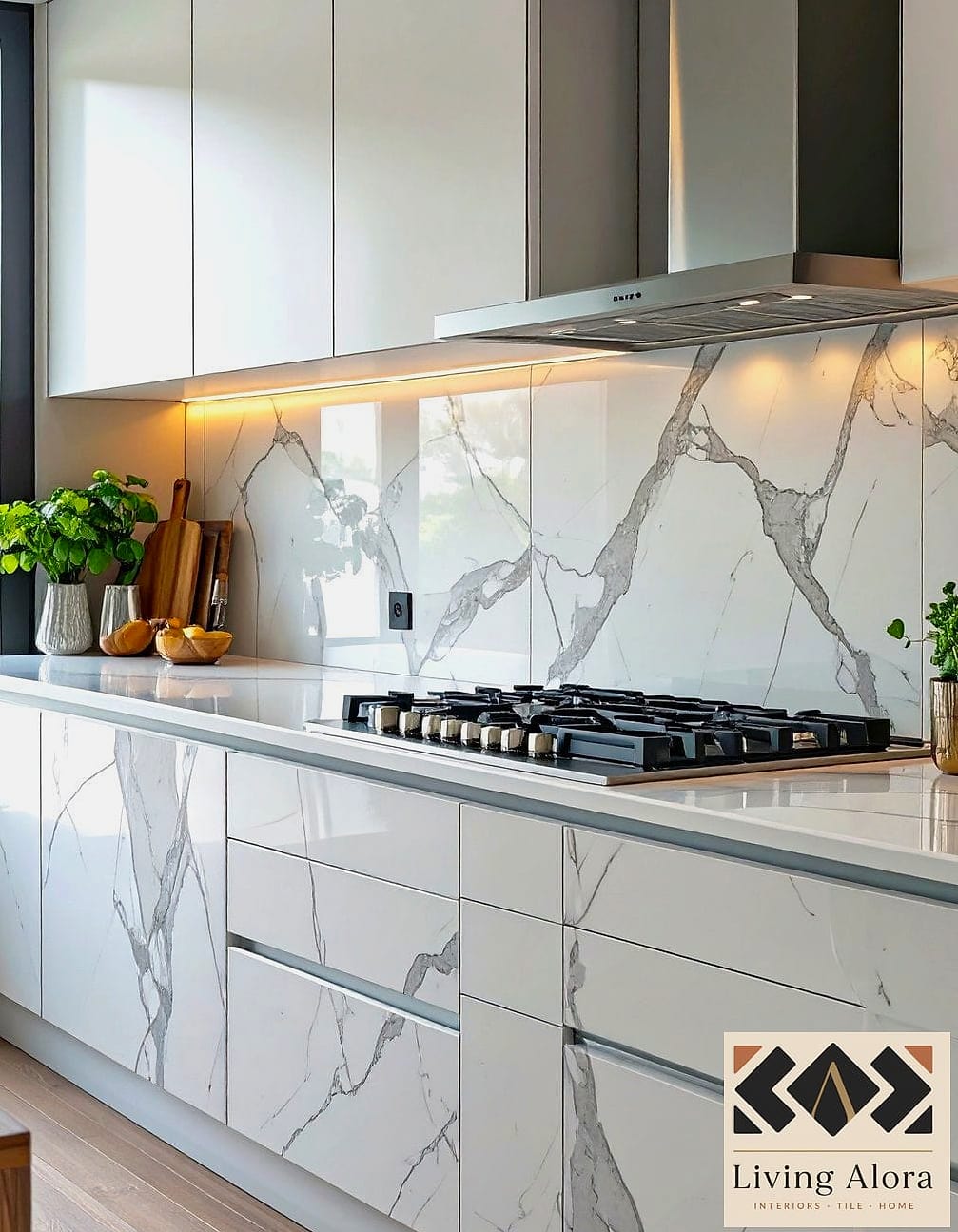
Instead of dozens of small tiles, some kitchens are going with oversized porcelain slabs that stretch from countertop to upper cabinets with barely a seam in sight. It creates a clean, almost sculptural look that reads as high-end without the upkeep of real stone.
This works especially well in minimalist or contemporary kitchens where you want the eye to rest rather than jump around. Fewer grout lines also means less scrubbing later, which is a win for anyone who dreads cleaning day.
Marble-Look Porcelain in Bold Veining
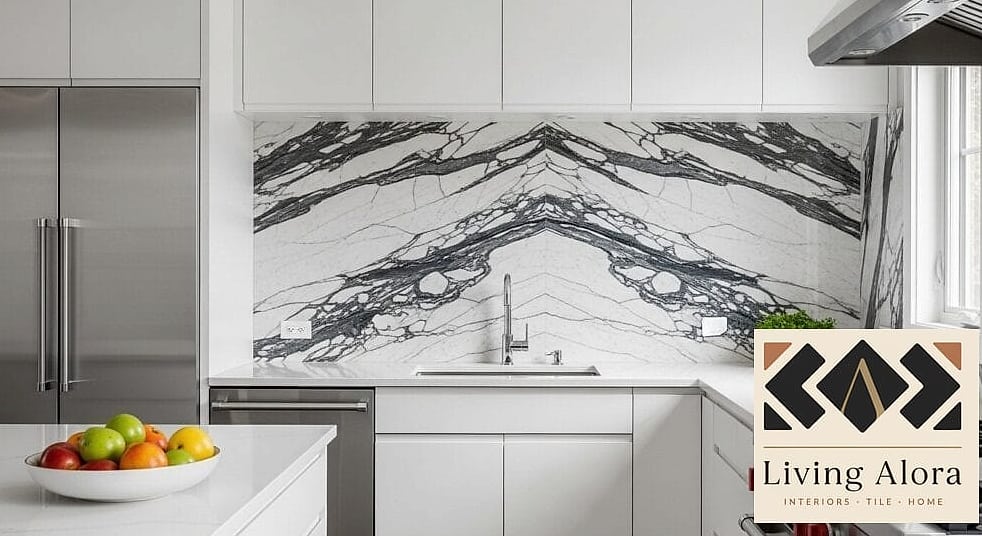
Real marble is gorgeous, but it stains if you look at it wrong. Porcelain that mimics dramatic marble veining gives you that same luxurious movement without the babying. The veining patterns have gotten so realistic that guests genuinely have to ask if it’s the real thing.
This look pairs beautifully with white or navy cabinetry and brushed brass hardware. It’s a favorite for kitchens that want a statement moment without committing to a material that needs sealing every year.
Matte Black Porcelain Tile

Dark backsplashes have moved past being a bold, risky choice and settled into something more classic. Matte black porcelain tiles absorb light in a way that makes a kitchen feel grounded and moody in the best way.
They’re particularly striking against white oak cabinetry or brass fixtures. Matte finishes also do a better job hiding water spots and fingerprints than glossy black, which matters if you’ve got a busy household.
Herringbone Pattern Layout
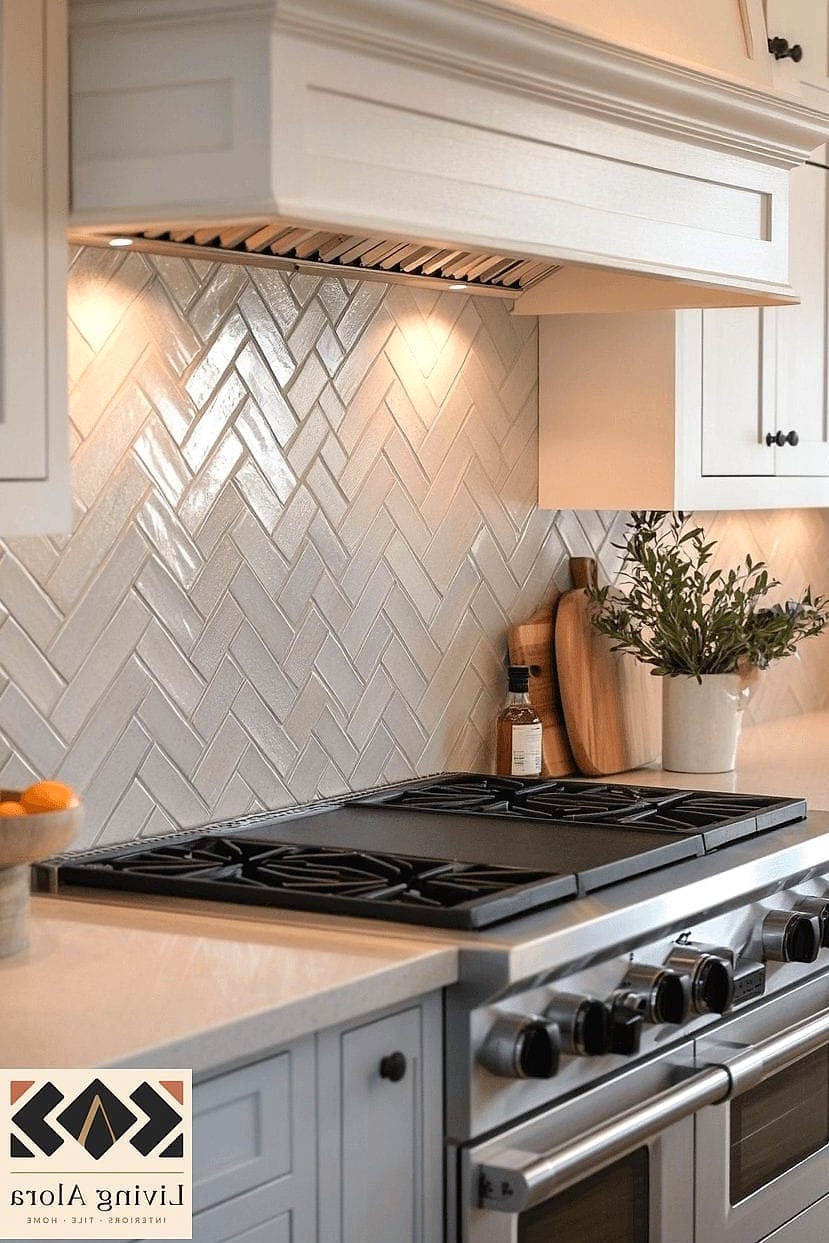
The herringbone pattern isn’t new, but doing it in porcelain gives it a fresh, more durable spin than the classic ceramic subway version. The zigzag installation adds movement and texture to an otherwise flat wall.
It works particularly well behind a range as a focal point, even if the rest of the kitchen keeps things simple. Just know that herringbone takes more installation time and tile cutting, so factor that into your budget if you’re hiring it out.
Textured 3D Porcelain Tile

Flat backsplashes have their place, but textured porcelain tiles with subtle dimension are catching on for kitchens that want a little visual interest. Think gentle waves, fluted lines, or raised geometric shapes that catch light differently throughout the day.
These tiles tend to shine under good task lighting, so pairing them with under-cabinet lights really lets the texture do its thing. They’re a great way to add personality to a kitchen without introducing more color.
Warm Beige and Travertine-Look Porcelain
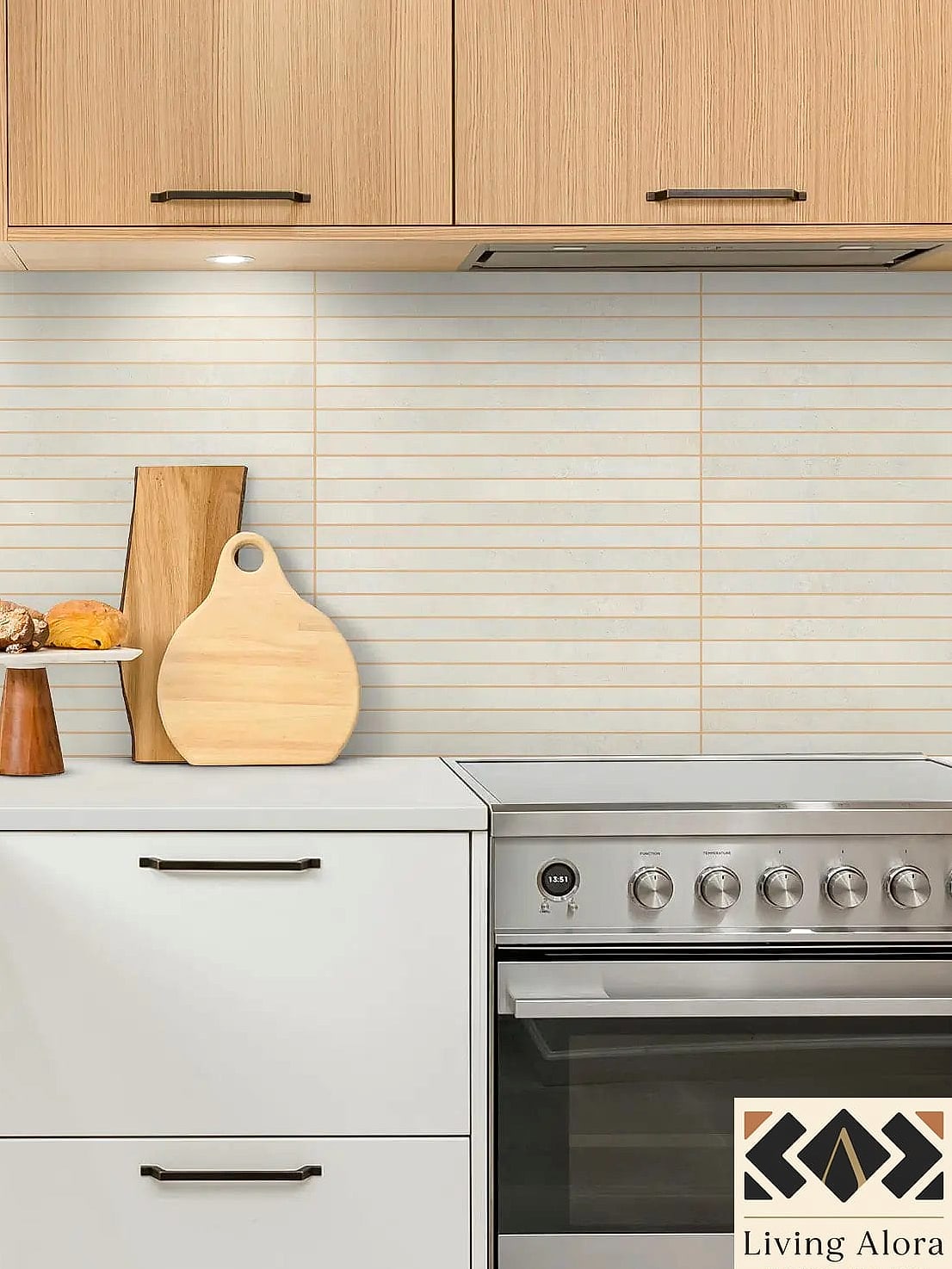
Cool white kitchens have had their moment, and now warmer, earthier tones are creeping back in. Porcelain that replicates travertine’s soft, sandy texture brings warmth to a space without going full rustic farmhouse.
This pairs naturally with warm wood tones, brass fixtures, and cream cabinetry. It’s an easy way to soften a kitchen that might otherwise feel a little cold or clinical.
Vertical Stacked Installation
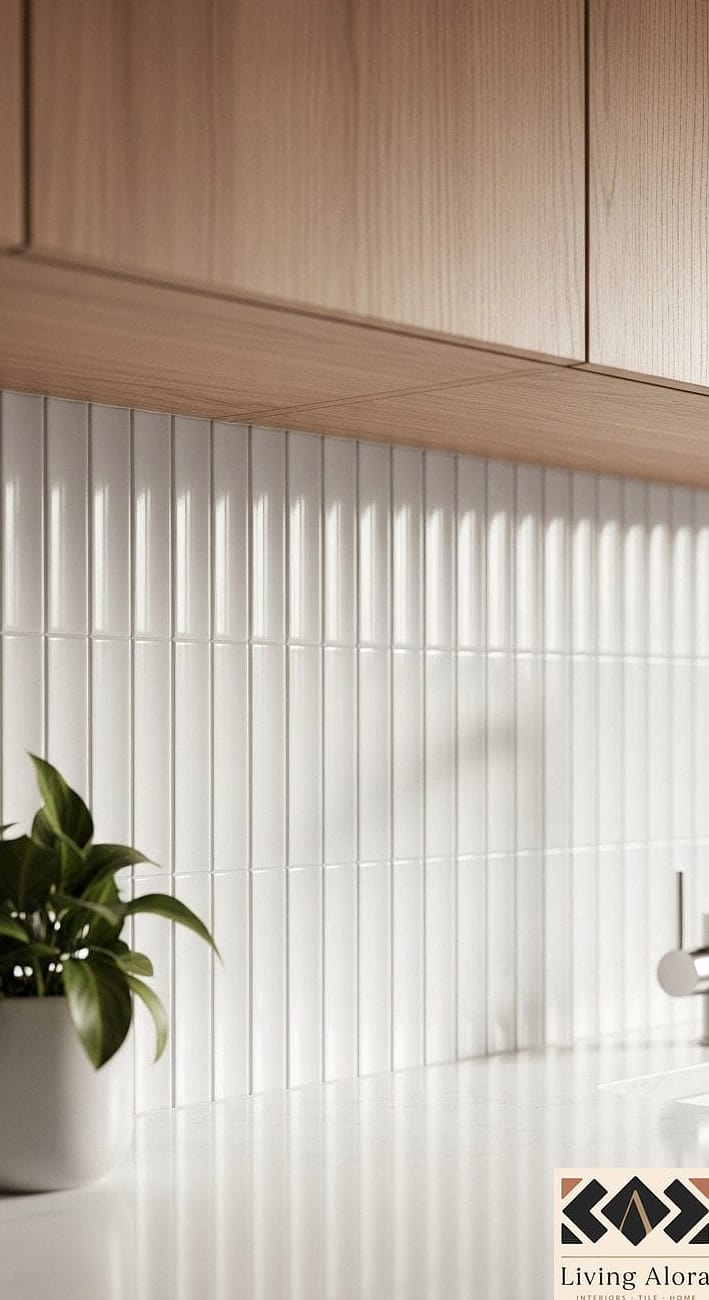
Instead of the standard horizontal brick-lay pattern, some kitchens are turning their porcelain tiles vertically for a subtle but noticeable shift. It draws the eye upward, which can make a kitchen with lower ceilings feel a bit taller.
This layout works especially well with narrow subway-style porcelain tiles. It’s a small tweak that changes the whole feel of a backsplash without requiring a totally different tile.
Porcelain Tile That Mimics Zellige

Zellige tile has a huge following for its handmade, slightly imperfect charm, but the real thing can be pricey and inconsistent to install. Porcelain versions capture that same rippled, artisanal texture with more predictable sizing and a lower price tag.
You still get those gorgeous light-catching variations tile by tile, just with easier maintenance. This is a great middle ground for anyone who loves the zellige look but wants something a little more forgiving for a busy kitchen.
Full-Height Backsplash to the Ceiling
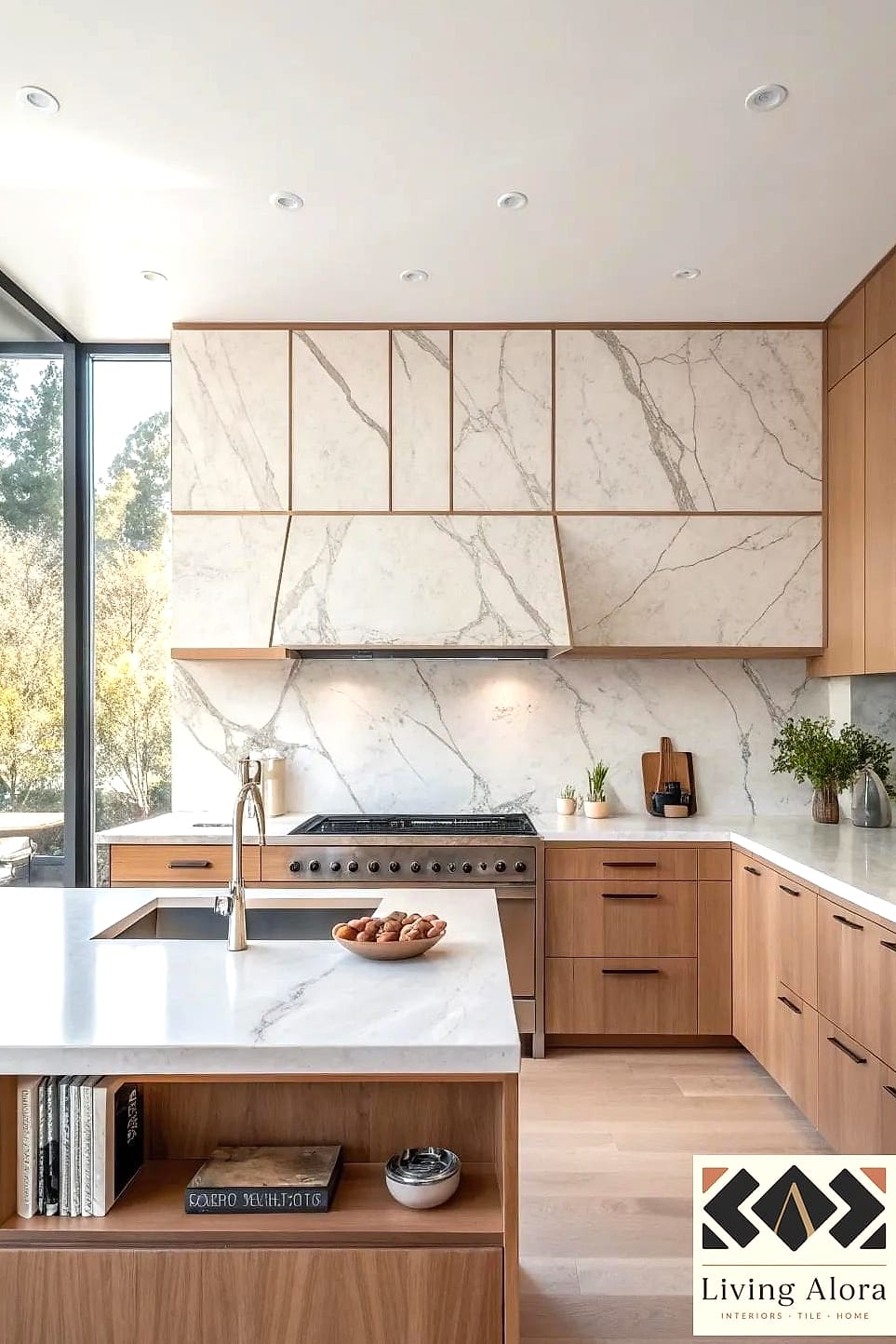
Rather than stopping the backsplash at the upper cabinets, more kitchens are running porcelain tile all the way up to the ceiling. It eliminates that awkward strip of blank wall and makes the whole space feel more intentional.
This look works best when you skip open shelving in that zone, letting the tile itself be the visual interest. It’s a bigger investment since it requires more material, but the payoff is a kitchen that feels custom-built.
Two-Tone Porcelain Combinations

Mixing two different porcelain tiles, like a patterned piece paired with a solid color, adds depth without overwhelming the space. Often you’ll see a decorative band or accent strip running through an otherwise simple field tile.
This is a nice option if you want personality but aren’t ready to commit to a fully patterned wall. It also gives you a way to tie in a secondary color from your countertops or cabinet hardware.
Glossy White Porcelain with Thin Grout Lines
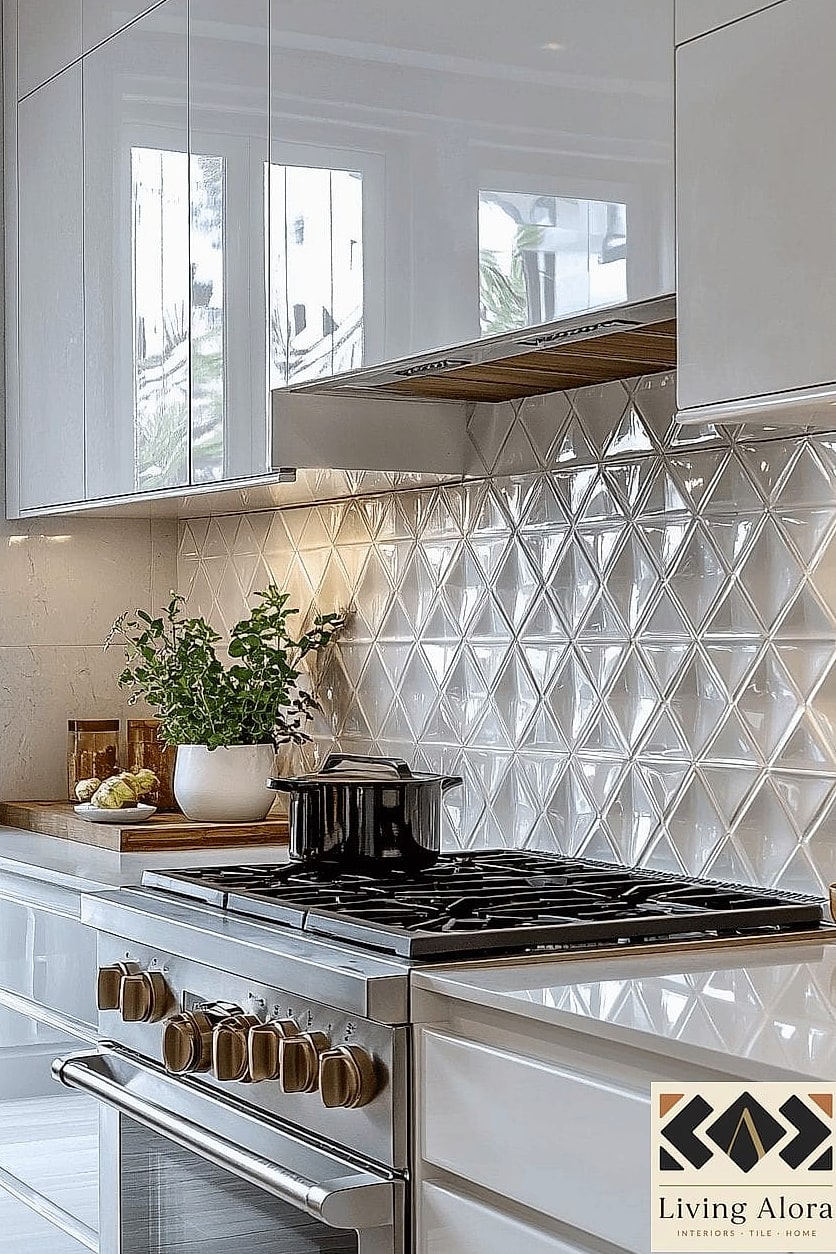
Sometimes the simplest option is still the best one. Glossy white porcelain tile with barely-there grout lines gives you that bright, reflective quality that makes small kitchens feel more open.
Thinner grout lines mean less visible grime buildup over time, which is genuinely helpful if you cook often. This is a solid budget-friendly pick that still looks polished and current.
Porcelain Slab with Waterfall Countertop Match

For kitchens that already have a waterfall-edge countertop, carrying that same porcelain material up the backsplash creates a seamless, monolithic look. The countertop and backsplash essentially become one continuous surface.
It’s a more expensive route since you’re using slab material rather than standard tile, but the visual payoff is significant. Designers love this for modern kitchens that want that sleek, boutique-hotel feel.
Checkerboard Porcelain Pattern

Checkerboard patterns have made their way from flooring up onto backsplashes, and porcelain handles the crisp lines beautifully. A black and white checkerboard adds a playful, slightly retro touch without feeling like a costume.
Softer color combinations, like cream and sage, tone it down for a more subdued take. This pattern works particularly well in kitchens that already lean traditional or vintage-inspired.
Concrete-Look Porcelain Tile

Industrial-inspired kitchens have found a good friend in concrete-look porcelain. It gives you that raw, moody texture without the porousness and staining issues that come with actual poured concrete.
This finish pairs well with matte black fixtures, open shelving, and exposed wood accents. It’s a good pick if your kitchen leans more loft-style than cottage-core.
Porcelain Mosaic Accent Strip

Not every kitchen needs a full mosaic wall, but a narrow strip of small-format porcelain mosaic behind the range or sink can add just enough texture. It’s a subtle way to dip into a bolder pattern without full commitment.
This approach is also friendlier on the budget since you’re only covering a small area with the pricier decorative tile. Renters or anyone testing out a bolder look before a full renovation tend to gravitate toward this option.
Warm Terracotta-Inspired Porcelain

Terracotta has been showing up more in kitchen design, and porcelain versions let you get that earthy, sun-baked color without worrying about the material chipping or absorbing stains the way real terracotta does. It brings a Mediterranean warmth into the space.
This tone works surprisingly well with sage green or olive cabinetry. It’s an unexpected choice that immediately makes a kitchen feel more collected and less cookie-cutter.
Extra-Large Format with Minimal Seams
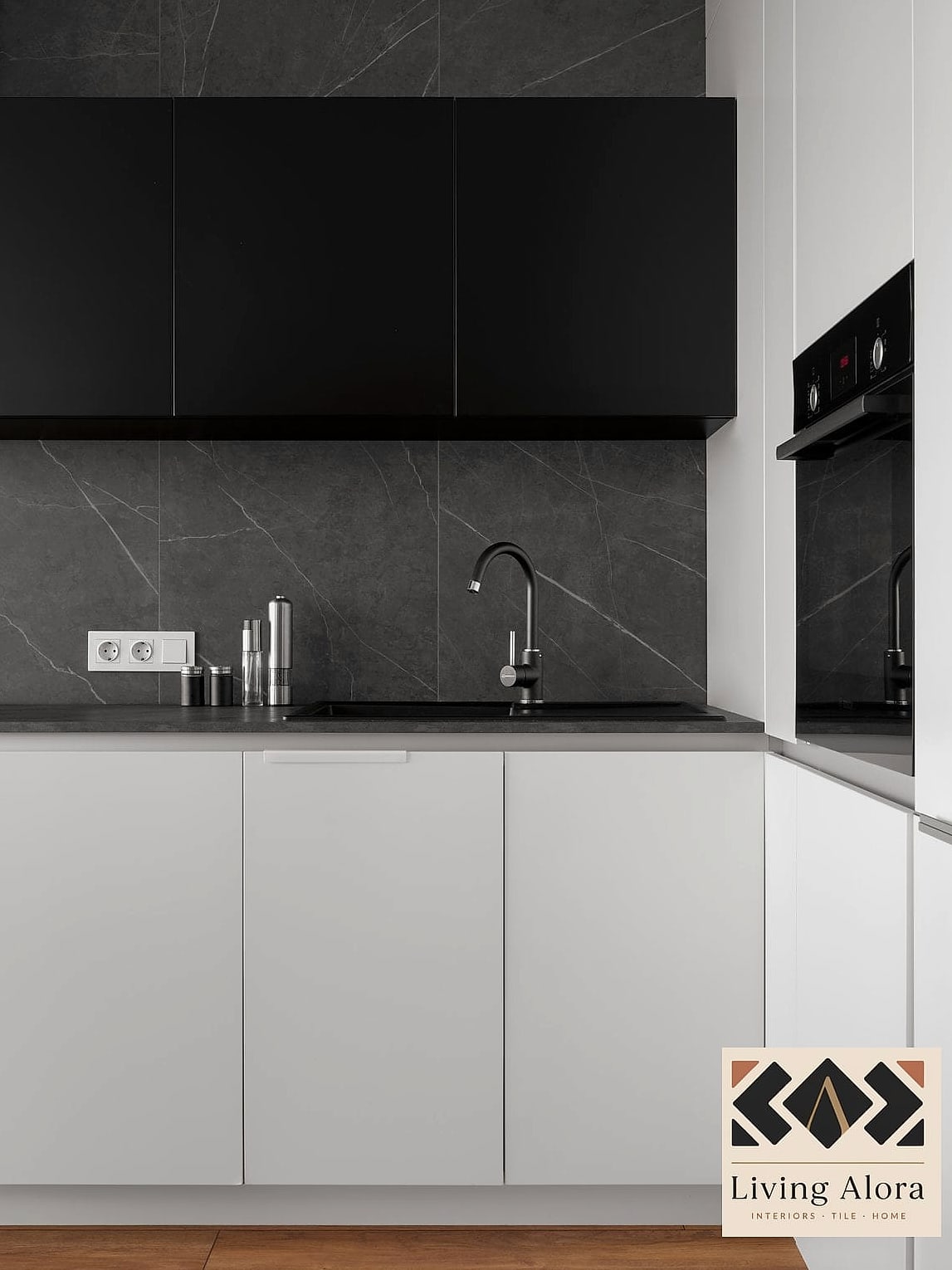
Beyond standard large-format slabs, some homeowners are going even bigger, using massive porcelain panels that cover an entire wall with just one or two seams total. This is about as close as you can get to a seamless backsplash.
It requires precise installation and typically a professional crew, so it’s not really a weekend DIY project. But for anyone wanting a showroom-level finish, this is where the trend is heading.
Porcelain Tile with Metallic Undertones

Some newer porcelain lines incorporate subtle metallic flecks or a soft shimmer into the glaze, adding a bit of glam without going full mirrored backsplash. It catches light in a way that feels a little more elevated than a standard matte or gloss finish.
This works nicely in kitchens that already have brass or gold hardware, tying the metallic tones together. Just a small dose goes a long way, so this is often used as an accent rather than the whole wall.
Soft Sage and Green-Toned Porcelain
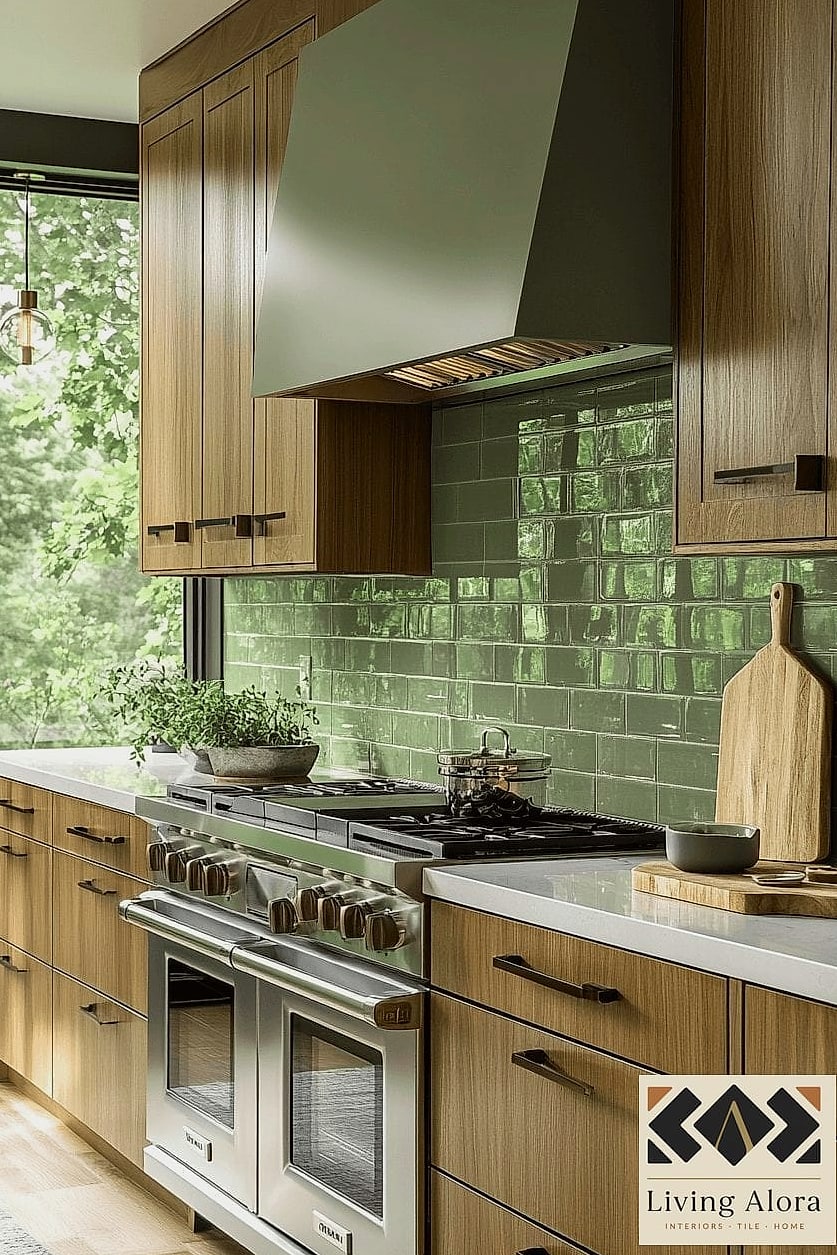
Green has settled in as one of the more enduring color choices in kitchen design, and porcelain in muted sage or olive tones brings that in without competing with the rest of the room. It reads as calm and a little organic.
Pair it with brass fixtures and warm wood open shelving for a look that feels current but not trendy in a way that will date quickly. It’s also a nice option if your cabinetry is a neutral white or cream and you want the backsplash to carry the color.
Budget-Friendly Peel-and-Stick Porcelain-Look Tile
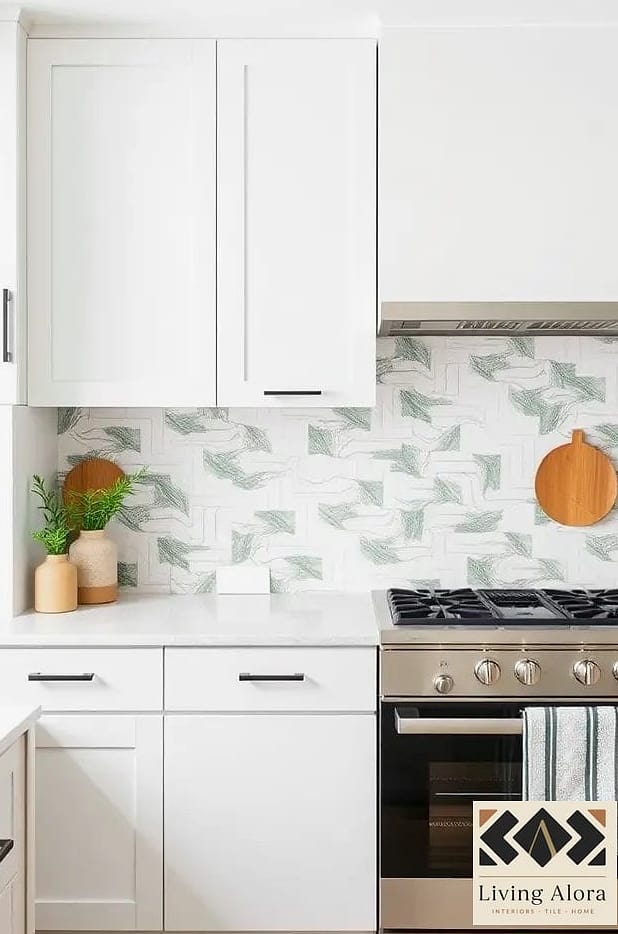
Not everyone is ready for a full tile installation, and that’s fair. Peel-and-stick options that mimic porcelain’s look have improved a lot, giving renters and budget-conscious homeowners a way to test the trend without the commitment or the mess.
These won’t have quite the same durability or heat resistance as real porcelain, so they’re better suited for a light-use area or a temporary refresh. Still, it’s a good entry point if you want to see how a pattern or color feels in your space before investing in the real thing.
Final Thoughts
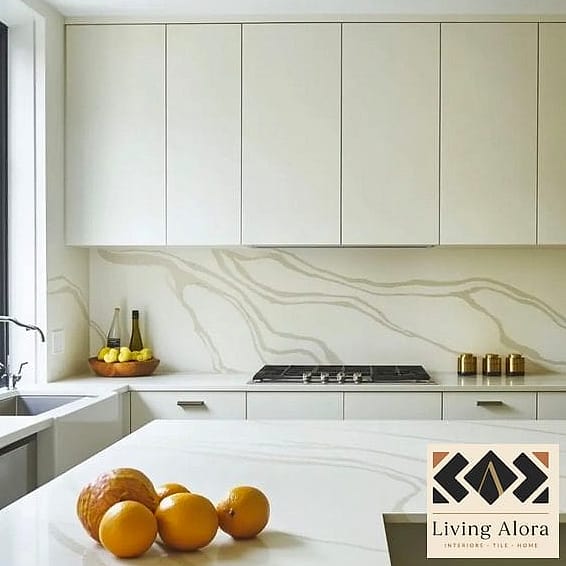
Porcelain backsplashes keep gaining ground because they genuinely deliver on both looks and practicality. You get the appearance of marble, concrete, or handmade tile, but with a material that shrugs off stains, resists heat, and holds up to daily kitchen chaos.
Whether you’re drawn to a bold matte black wall or something softer like a travertine-look slab, there’s a version of this trend that fits your space and your budget. Given how far the designs have come, it’s easy to see why porcelain isn’t going anywhere anytime soon.