19 Terrazzo Backsplash Ideas That Look Expensive But Aren’t

- Classic White Terrazzo with Colorful Chips
- Pastel Terrazzo for a Soft, Retro Vibe
- Large-Format Terrazzo Slabs
- Terrazzo Tile in a Herringbone Pattern
- Dark Terrazzo for Moody Kitchens
- Terrazzo Peel-and-Stick Panels
- Mini Terrazzo Chip Tiles
- Terrazzo with Brass or Gold Flecks
- Terrazzo Behind Open Shelving
- Full-Height Terrazzo Backsplash
- Terrazzo Tile Paired with Wood Open Shelving
- Terrazzo Mosaic Backsplash
- Neutral Terrazzo with Warm Undertones
- Terrazzo Countertop-to-Backsplash Match
- Terrazzo Tile with Thin Grout Lines
- Terrazzo Accent Strip Above the Stove
- Colorful Multi-Tone Terrazzo
- Terrazzo in a Butler’s Pantry or Coffee Bar
- DIY Terrazzo-Look Backsplash Paint or Epoxy
19 Terrazzo Backsplash Ideas That Look Expensive But Aren’t
Terrazzo has quietly become one of my favorite materials to recommend to people who want a kitchen that feels a little different without going overboard. It’s speckled, playful, and honestly kind of nostalgic if you grew up around old Florida hotels or Italian courtyards. The best part is that terrazzo backsplashes come in so many forms now, from real stone slabs to budget-friendly tile and peel-and-stick versions, that almost any kitchen can pull one off. Here are nineteen ways to work terrazzo into your space without draining your renovation budget.
Classic White Terrazzo with Colorful Chips
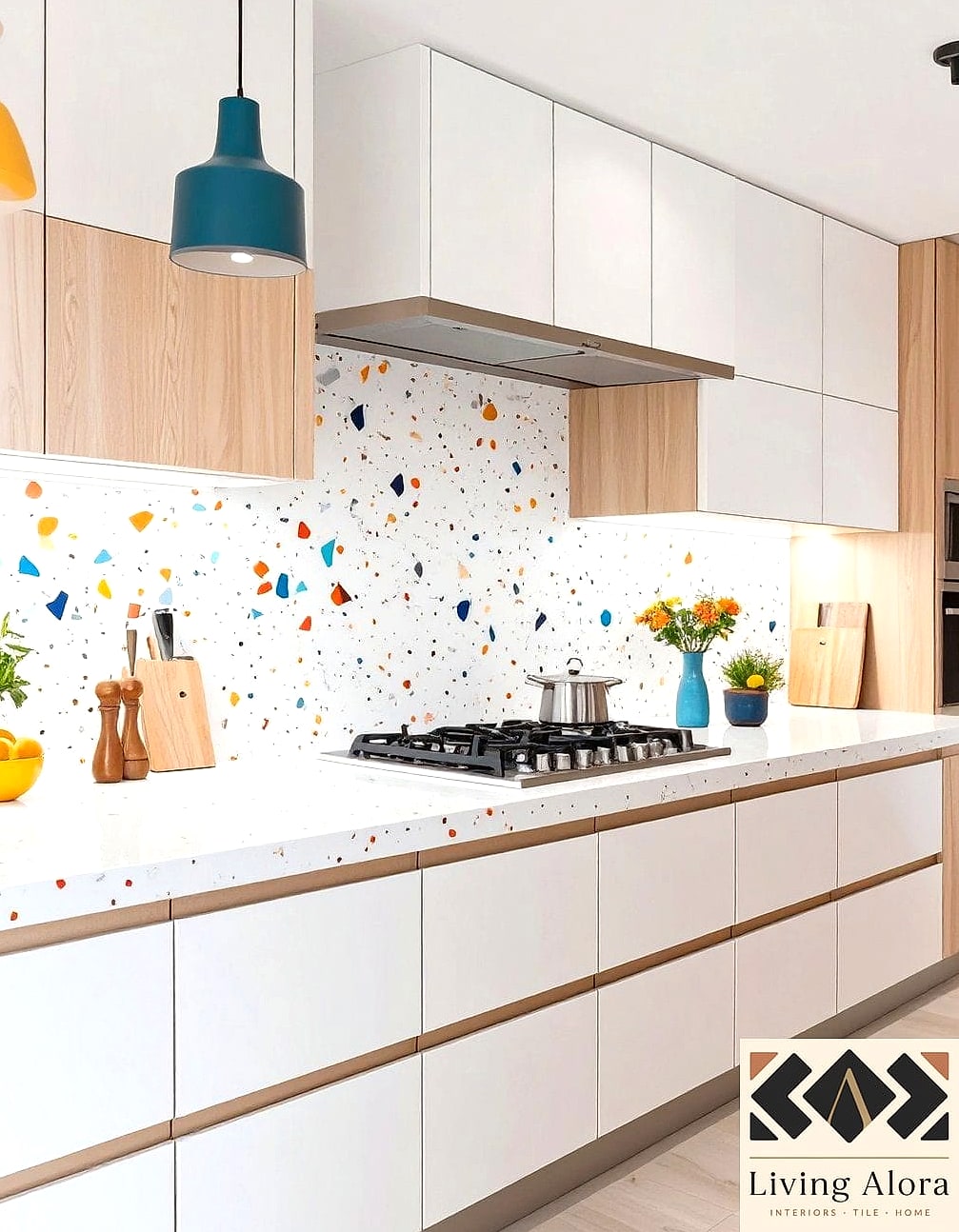
This is the terrazzo look most people picture first, a creamy white base scattered with chips of black, gray, and maybe a pop of rust or green. It works beautifully in kitchens that already lean neutral because it adds texture without introducing a jarring new color. I love pairing it with brushed brass hardware since the warm tone picks up on the flecks in the stone. It’s genuinely one of those upgrades that instantly makes a kitchen feel more custom without requiring a full renovation.
Pastel Terrazzo for a Soft, Retro Vibe

If you want something a little more playful, look for terrazzo tile with a pale pink, mint, or butter yellow base. It reads as vintage-inspired without feeling like a costume, especially against white shaker cabinets. This style works especially well in smaller kitchens or breakfast nooks where you want a focal point that doesn’t overwhelm the room. Keep the rest of your palette simple so the backsplash stays the star.
Large-Format Terrazzo Slabs
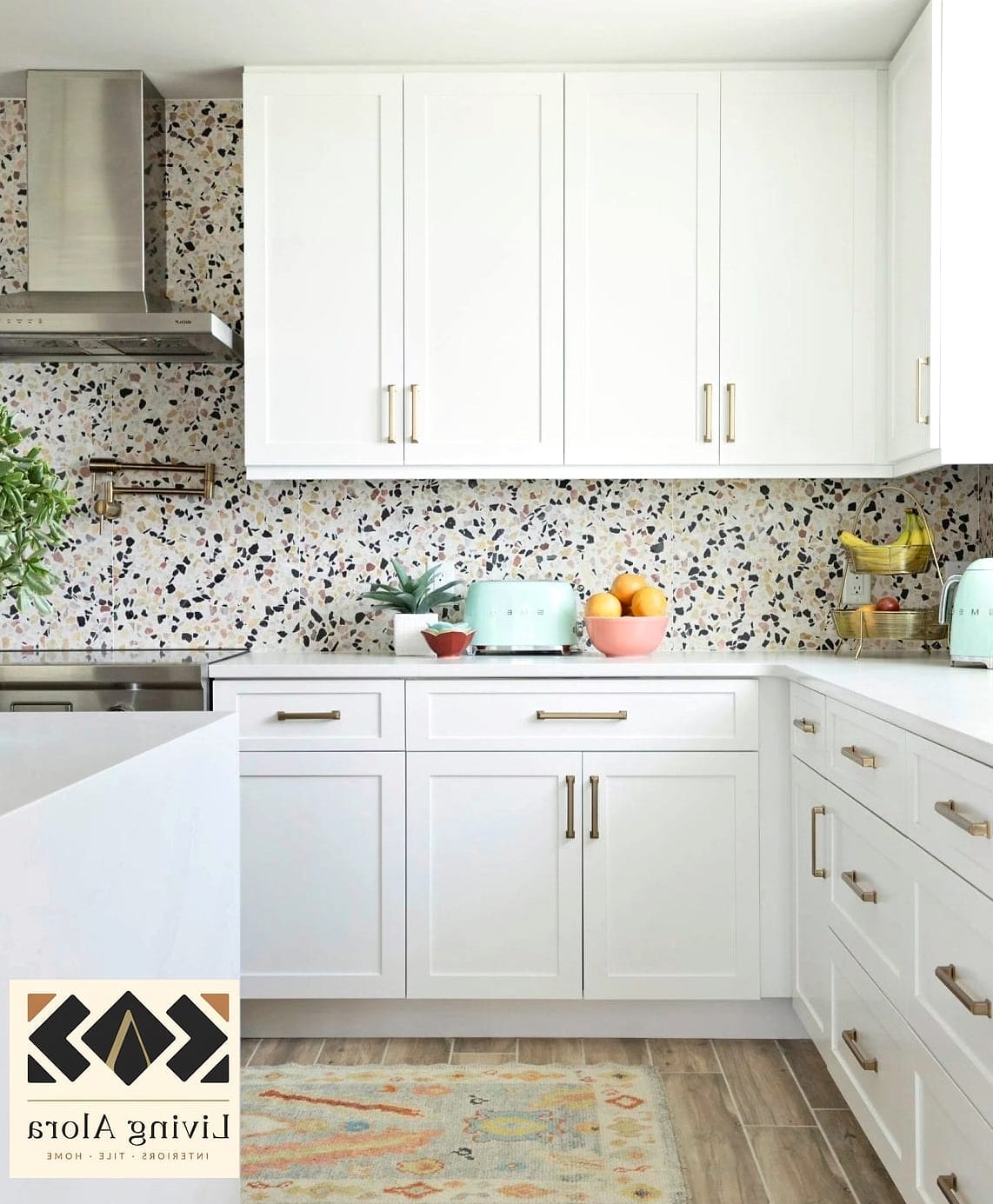
Instead of individual tiles, some homeowners are installing terrazzo in big slab pieces, similar to how you’d install a marble backsplash. Fewer grout lines means less cleaning and a sleeker, more continuous look. This is a pricier route, but it still tends to cost less than natural stone slabs, so you get a similar visual payoff for less money. It’s a great option if your kitchen has a minimalist or modern feel.
Terrazzo Tile in a Herringbone Pattern
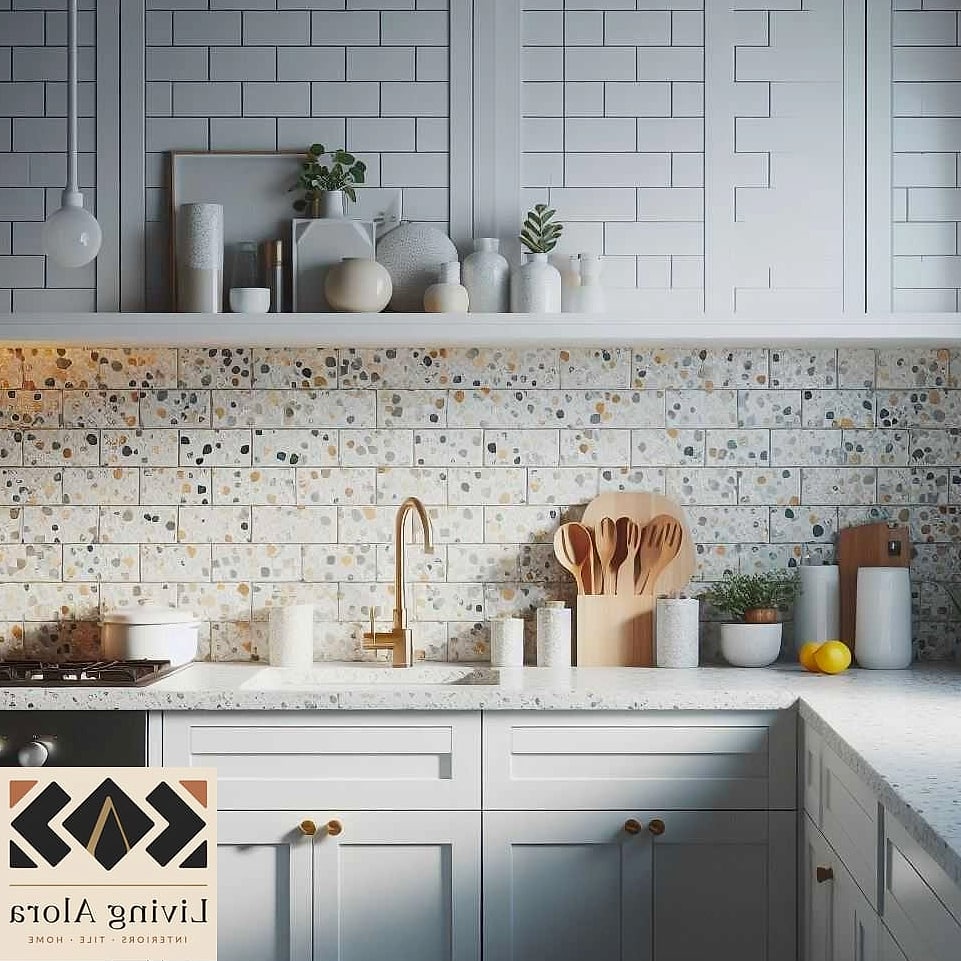
Laying terrazzo tiles in a herringbone pattern adds movement and makes even a small backsplash area feel intentional. The angled lines catch light differently than a straight layout, which gives depth to what might otherwise be a flat wall. This works particularly well behind a stove where you want a little visual drama. It does take more planning during installation, so budget a bit of extra time or hire a tile setter if you’re not confident with pattern work.
Dark Terrazzo for Moody Kitchens

Terrazzo isn’t only light and airy. Darker versions with charcoal or black bases and white or gold flecks bring a moodier, more dramatic feel. This pairs nicely with matte black fixtures and warm wood open shelving for contrast. It’s a good pick for kitchens that get a lot of natural light and can handle a deeper color without feeling closed in. Just know that dark grout or dark stone can show water spots more easily, so a quick wipe-down after cooking helps keep it looking sharp.
Terrazzo Peel-and-Stick Panels
For renters or anyone who wants to test the look before committing, peel-and-stick terrazzo panels have gotten surprisingly convincing. They mimic the speckled texture in vinyl or laminate form and install in an afternoon with no grout or tile saw required. It’s not going to fool a designer up close, but from a normal viewing distance it reads as the real thing. This is probably the most budget-friendly and renter-friendly option on this list.
Mini Terrazzo Chip Tiles

Smaller format terrazzo tiles, sometimes just a couple inches square, create a denser, more intricate pattern than the standard tile size. They work well in narrow backsplash strips or as an accent behind open shelving rather than covering a full wall. Because the chips are smaller, the overall look tends to feel more subtle and textured rather than bold. This is a nice middle ground if you like the material but want it to stay understated.
Terrazzo with Brass or Gold Flecks
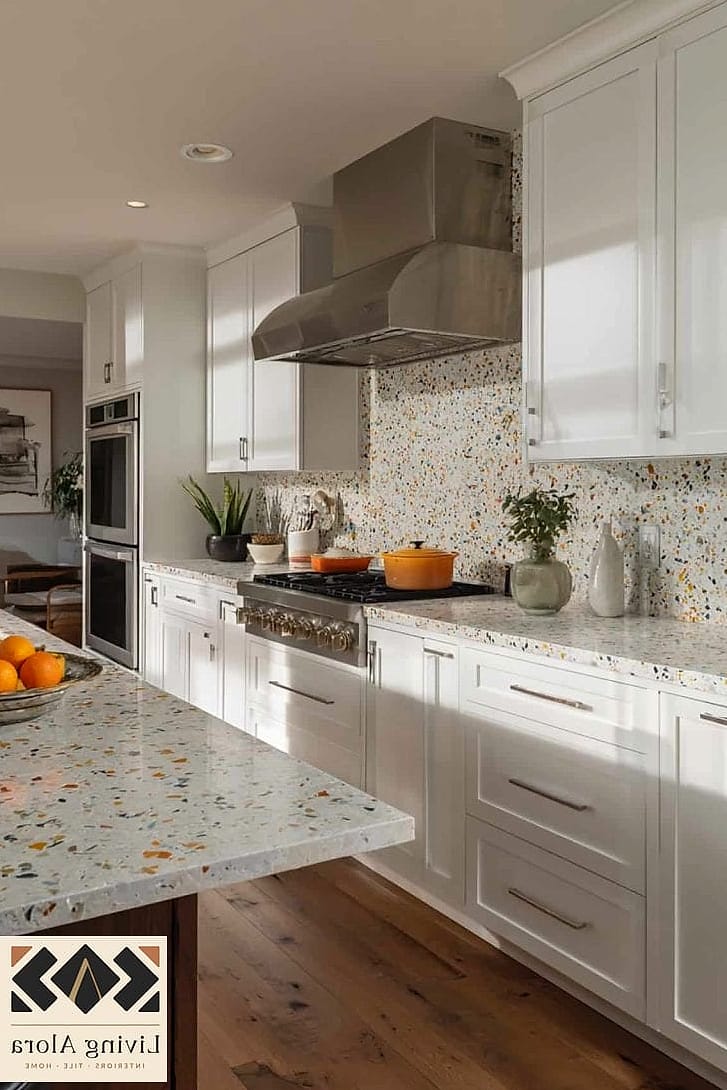
Some terrazzo blends include actual metallic chips mixed into the stone or resin base, which catch the light in a way that feels a little more luxurious. Paired with brass faucets or cabinet pulls, it ties the whole kitchen together without needing extra decor. This works especially well in kitchens going for a glam or art deco feel. Just keep in mind that shinier finishes can show fingerprints and water spots more than a matte version.
Terrazzo Behind Open Shelving

Instead of running terrazzo across the whole wall, use it as a backdrop for a stretch of open shelving. The textured pattern gives the shelving area visual interest even when you’re not styling it with much. This is a great way to introduce terrazzo on a smaller budget since you’re covering less square footage. Add a few ceramic mugs, some greenery, and a wood cutting board and the whole corner feels curated.
Full-Height Terrazzo Backsplash

Taking terrazzo all the way up to the upper cabinets, rather than stopping at a standard four-inch or eighteen-inch height, creates a much bolder statement. It’s become a popular move in kitchens that skip upper cabinets entirely in favor of a single dramatic wall of material. This does add to material and installation costs, but it also eliminates the need for extra decor since the wall does all the visual work. It’s a striking choice for a kitchen you want to feel like the centerpiece of the home.
Terrazzo Tile Paired with Wood Open Shelving

Warm wood tones soften terrazzo’s coolness and keep the kitchen from feeling too stark or clinical. Floating wood shelves against a speckled terrazzo wall give you contrast in both texture and material, which photographs really well too. This combination leans into a modern organic style that’s been trending for a while now. It’s an easy way to make a newly built kitchen feel a little more collected and less showroom-perfect.
Terrazzo Mosaic Backsplash

Mosaic sheets made of tiny terrazzo pieces let you create curved or irregular backsplash shapes that standard tile can’t easily achieve. This is a good option if your kitchen has an arched alcove or a rounded stove nook you want to highlight. The mosaic format also means less waste and easier cuts around outlets and corners. It’s a bit more labor-intensive to install, so factor that into your timeline if you’re doing it yourself.
Neutral Terrazzo with Warm Undertones

Not every terrazzo needs to read as stark white and gray. Blends with beige, tan, or warm cream bases feel cozier and pair especially well with wood cabinetry or a farmhouse-adjacent kitchen. This softer palette tends to age well too, since it won’t clash if you update your countertops or hardware down the road. It’s a safe but still interesting choice for anyone nervous about committing to something too bold.
Terrazzo Countertop-to-Backsplash Match

Running the same terrazzo material from your countertop up the wall as a backsplash creates a seamless, built-in look that feels custom-designed. It eliminates the visual break between counter and wall, which makes small kitchens feel a bit more expansive. This is a splurge-worthy option, but it reads as high-end because it mimics what a lot of professionally designed kitchens do with marble or quartz. If the full match isn’t in the budget, even a partial return along the sides of the stove can hint at the same effect.
Terrazzo Tile with Thin Grout Lines
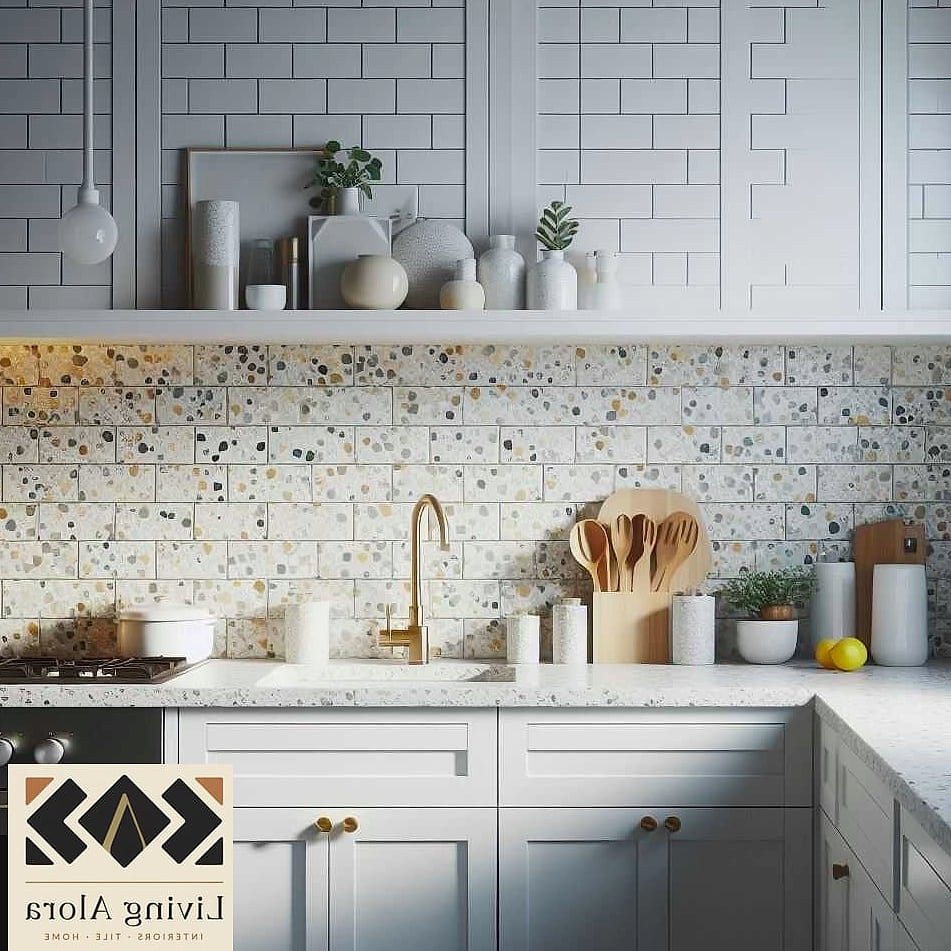
Choosing a thinner grout line and a grout color that closely matches your tile keeps the focus on the terrazzo pattern itself rather than a grid of lines competing with it. This small detail makes a real difference in how polished the final wall looks. It’s worth discussing with your installer ahead of time since grout width is easy to overlook until the tile is already up. A tighter, well-matched grout line is one of those details that quietly signals a higher-end finish.
Terrazzo Accent Strip Above the Stove
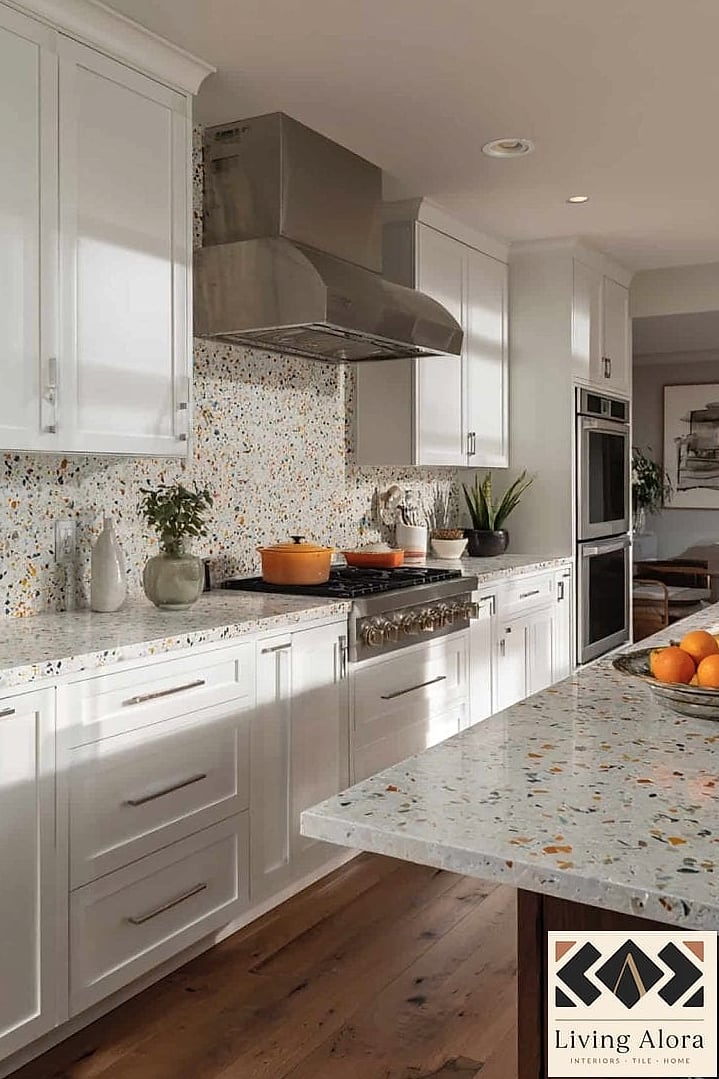
If a full terrazzo wall feels like too much, try a narrow accent strip just above the stove or range hood. It gives you the texture and color payoff in a concentrated spot without committing to covering the whole backsplash. This is also a smart way to test whether you actually love the material before a bigger installation elsewhere in the home. Pair it with simple subway tile on the rest of the wall so the terrazzo stands out as the intentional focal point.
Colorful Multi-Tone Terrazzo

Some terrazzo blends pack in several colors at once, blues, greens, pinks, and grays all mixed together in one base. This works best in kitchens that already have a playful, maximalist personality and want the backsplash to be a genuine conversation piece. Keep your cabinetry and countertops simple so the wall doesn’t compete with everything else in the room. It’s not for everyone, but in the right kitchen it looks incredibly custom and collected.
Terrazzo in a Butler’s Pantry or Coffee Bar

If a full terrazzo backsplash feels like a lot for your main kitchen, consider using it in an adjacent butler’s pantry or dedicated coffee station instead. These smaller, contained spaces are perfect for testing a bolder material choice since they’re not the main event of the home. It also lets you layer in open shelving, baskets, and glass canisters against the textured backdrop for a styled, boutique-cafe feel. This is a favorite trick for adding personality to secondary spaces without overhauling the whole kitchen.
DIY Terrazzo-Look Backsplash Paint or Epoxy
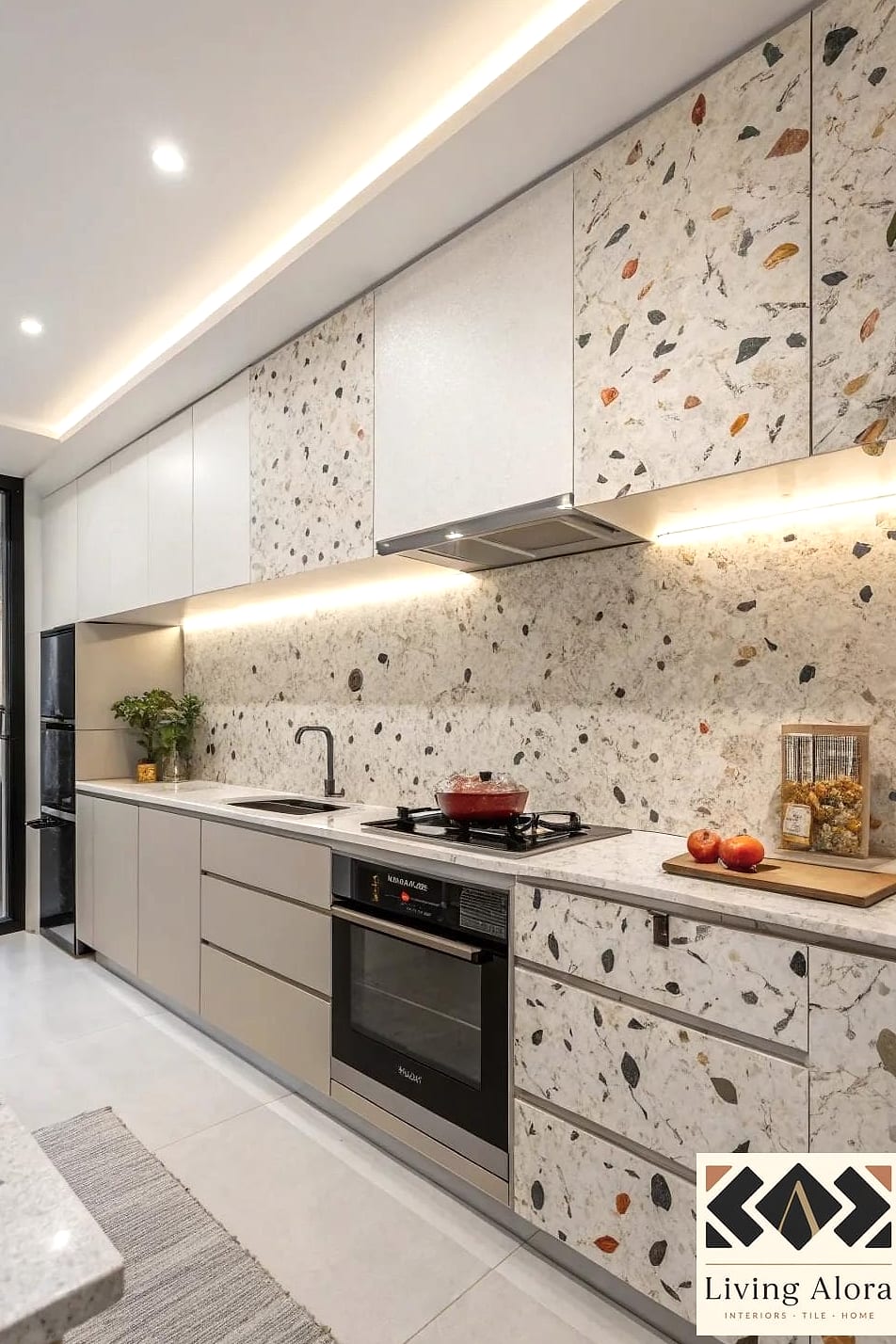
For the most budget-conscious option on this list, there are specialty paint and epoxy techniques that mimic the speckled terrazzo look directly on existing tile or drywall. It’s not going to have the same depth or durability as real stone or tile, but it’s a fun weekend project if you’re renting or just want to experiment before committing. Make sure to seal it properly since this area deals with grease, water, and regular wiping down. It won’t fool anyone up close, but from across the room it can capture the spirit of terrazzo for a fraction of the cost.
Terrazzo has this rare quality of feeling both nostalgic and completely current at the same time, which is probably why it keeps showing up in kitchen renovations year after year. Whether you go full slab or just add a small accent strip, there’s a version of this material that fits almost any budget and style. Start with a sample or two before you commit, since terrazzo blends vary a lot in color and chip size from one supplier to the next. Once you find the right one, it tends to be the detail people notice first when they walk into your kitchen.