21 How to Choose Backsplash Ideas Worth Bookmarking Before You Renovate
- Start With Your Countertop, Not the Tile
- Think About How Long You’ll Live There
- Consider Your Cleaning Tolerance Honestly
- White Subway Tile Stays a Safe Bet
- Zellige Tile for Handmade Character
- Herringbone Pattern for Movement
- Stacked Layout for a Modern Edge
- Vertical Installation to Add Height
- Full Slab Backsplash for a Seamless Look
- Natural Stone for Warmth and Texture
- Porcelain Tile That Mimics Marble
- Mosaic Tile for a Statement Wall
- Bold Color for Personality
- Two-Tone Tile for Depth
- Extending Tile to the Ceiling
- Textured Tile for Dimension
- Matte Finish for a Softer Look
- Glossy Finish to Bounce Light
- Peel-and-Stick for Renters and Budgets
- Open Shelving Paired With Backsplash
- Wood Accents for a Softer Contrast
- Matching Backsplash to Your Kitchen’s Overall Style
21 How to Choose Backsplash Ideas Worth Bookmarking Before You Renovate
Picking a backsplash is one of those decisions that feels small until you’re standing in a tile aisle completely overwhelmed. It’s a tiny surface area with a huge visual impact, and it’s usually one of the last things you pick during a renovation, which means decision fatigue is real. I’ve pulled together 21 backsplash ideas and considerations that actually help you choose with confidence instead of just grabbing whatever’s on sale. Some are about style, some are about practicality, and a few are just things I wish someone had told me before my first kitchen remodel.
Start With Your Countertop, Not the Tile
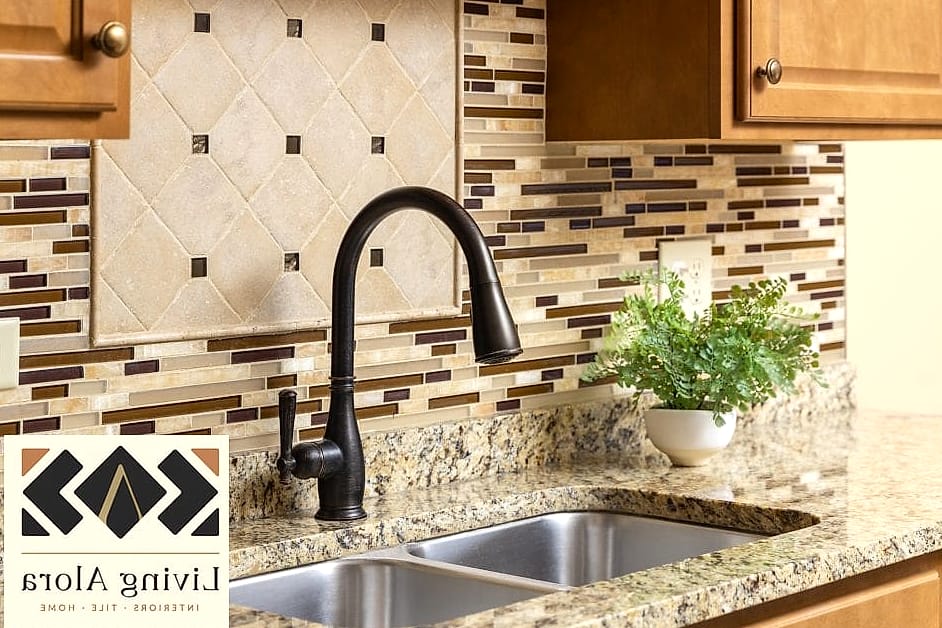
Before you fall in love with a gorgeous mosaic online, look at what’s already on your counters. Your backsplash should complement your countertop, not compete with it. If you’ve got busy quartz with lots of veining, a simple subway tile or plain ceramic square keeps things balanced. If your counters are a solid, quiet color like butcher block or matte concrete, that’s your cue to have a little more fun with pattern or texture up top.
Think About How Long You’ll Live There
This sounds obvious, but it changes everything. If you’re planning to sell in a few years, a neutral color palette with classic subway tile or simple ceramic tile is going to appeal to more buyers and photograph well for listings. If this is your forever kitchen, you’ve got more freedom to go bold with color, pattern, or a statement material without worrying about resale.
Consider Your Cleaning Tolerance Honestly
Grout lines collect grease and grime, especially behind a stove. If you cook a lot and dread scrubbing, look for larger format tiles with fewer grout lines, or a slab backsplash in quartz or porcelain that wipes clean in seconds. If you don’t mind a little upkeep, smaller tiles like mosaic or zellige give you more texture and character.
White Subway Tile Stays a Safe Bet

There’s a reason this one never really goes out of style. White subway tile with a classic offset pattern works in farmhouse kitchens, modern spaces, and everything between. It’s affordable, widely available, and easy to match with almost any cabinet color. Pair it with dark grout for a bit of definition, or white grout for a cleaner, more seamless look.
Zellige Tile for Handmade Character
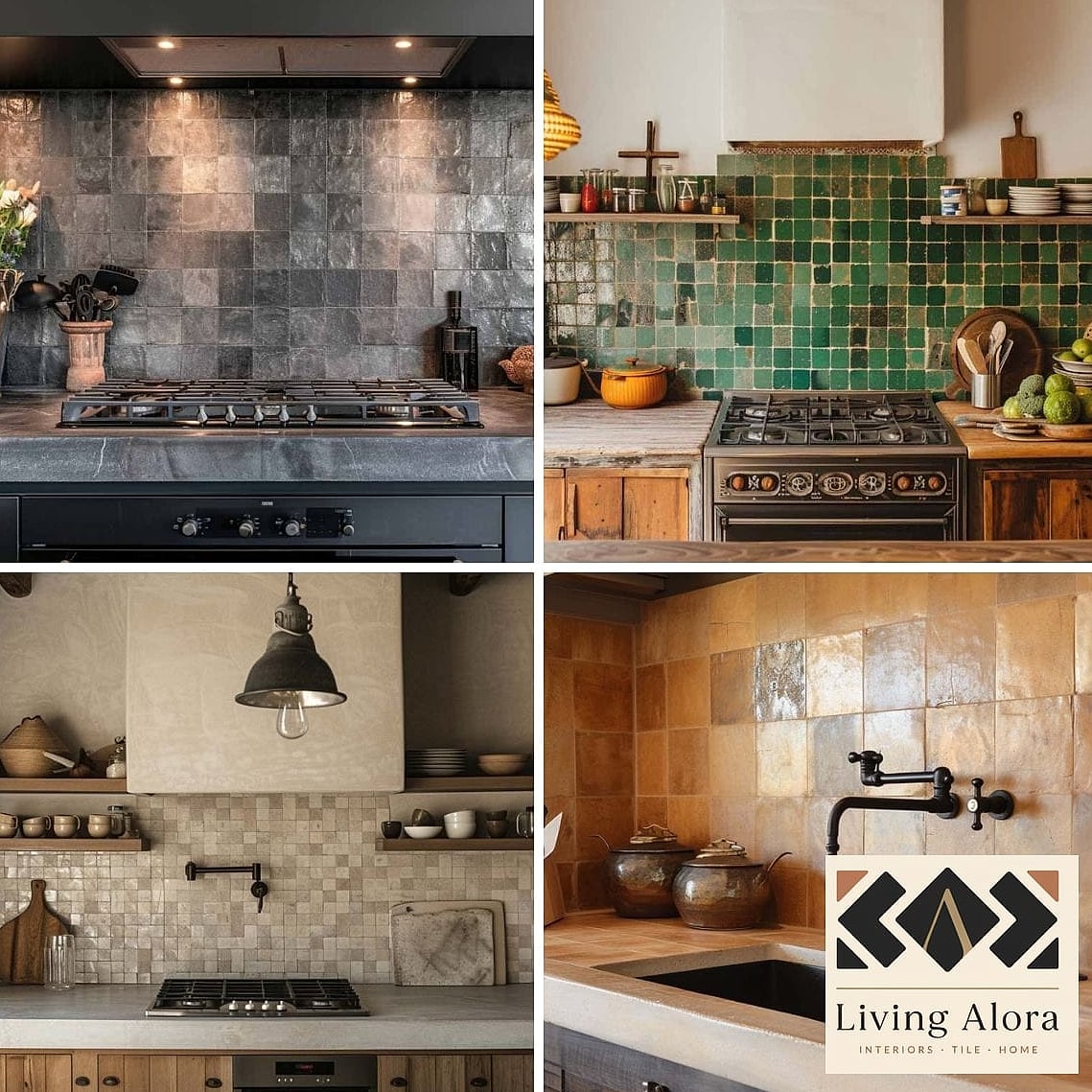
If you want something with more personality than standard ceramic, zellige tile brings texture and slight color variation because each piece is handmade. It catches light differently across the surface, which gives even a simple kitchen a custom, artisanal feel. It’s pricier and needs a little more sealing and care, but the visual payoff is real.
Herringbone Pattern for Movement
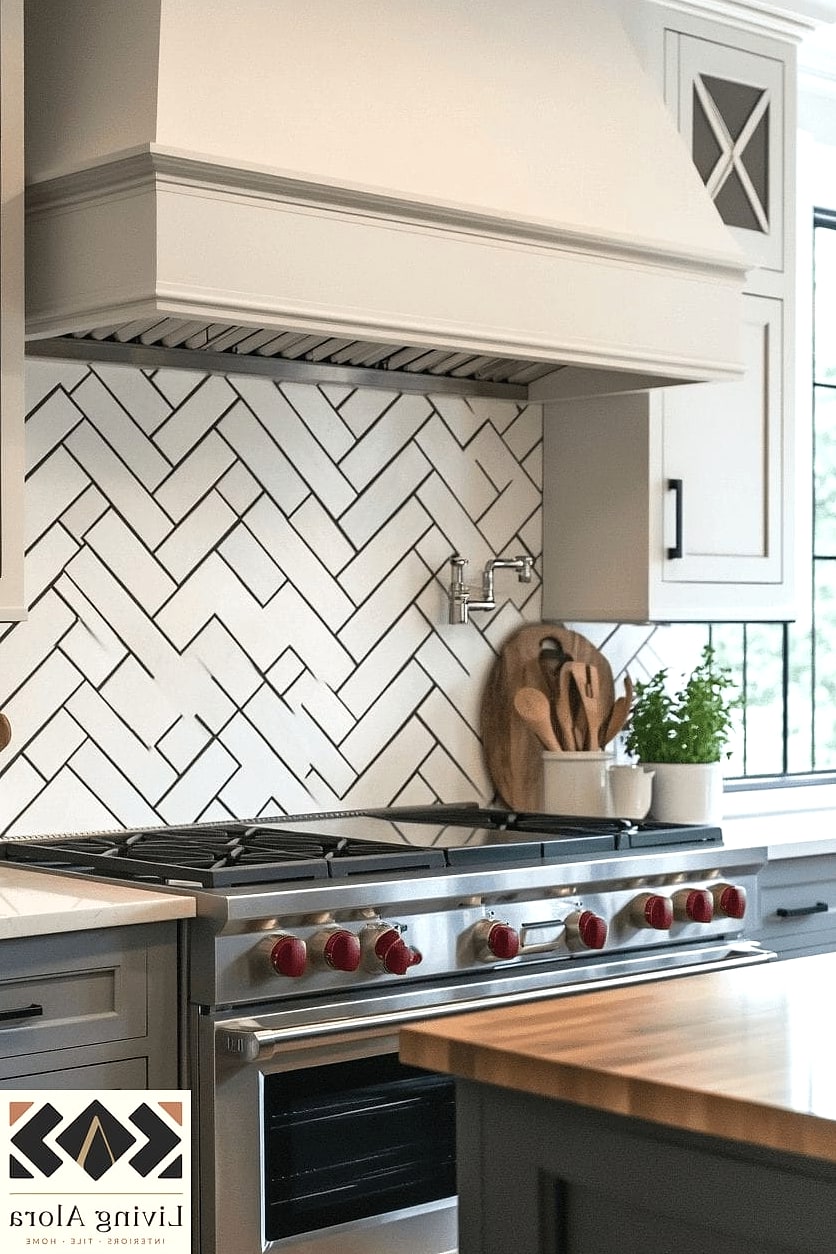
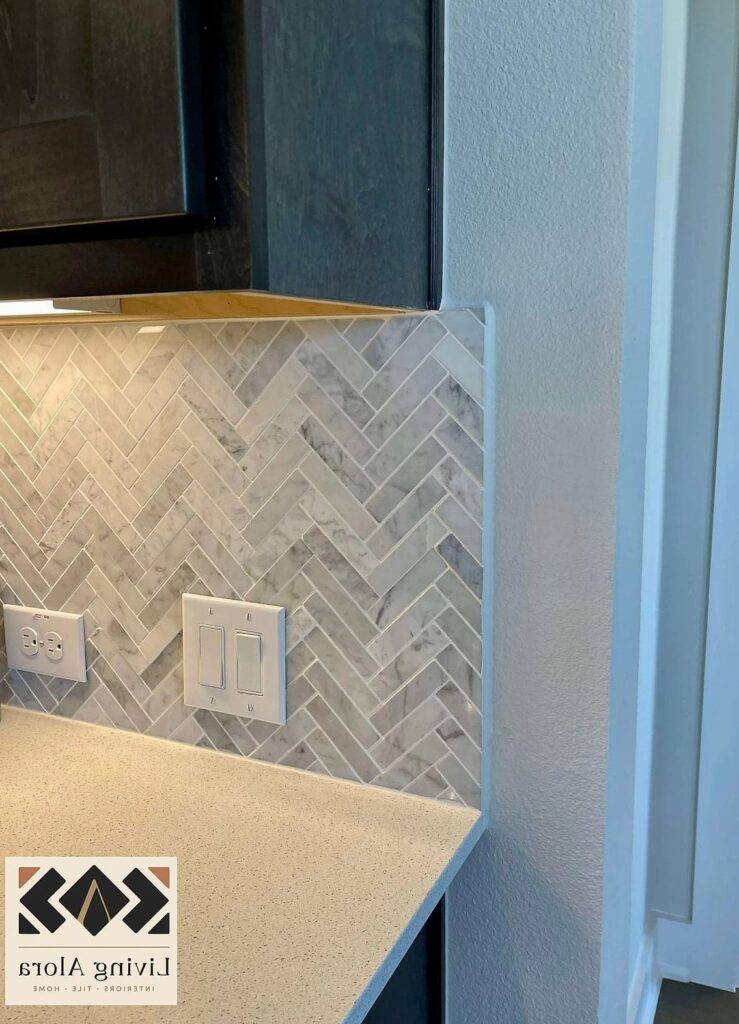
Sometimes the shape you lay your tile in matters more than the tile itself. A herringbone pattern adds visual movement and makes even plain white tile feel intentional and elevated. It works especially well behind a stove as a focal point, and it’s a great way to use a basic, budget-friendly tile in a way that still looks custom.
Stacked Layout for a Modern Edge
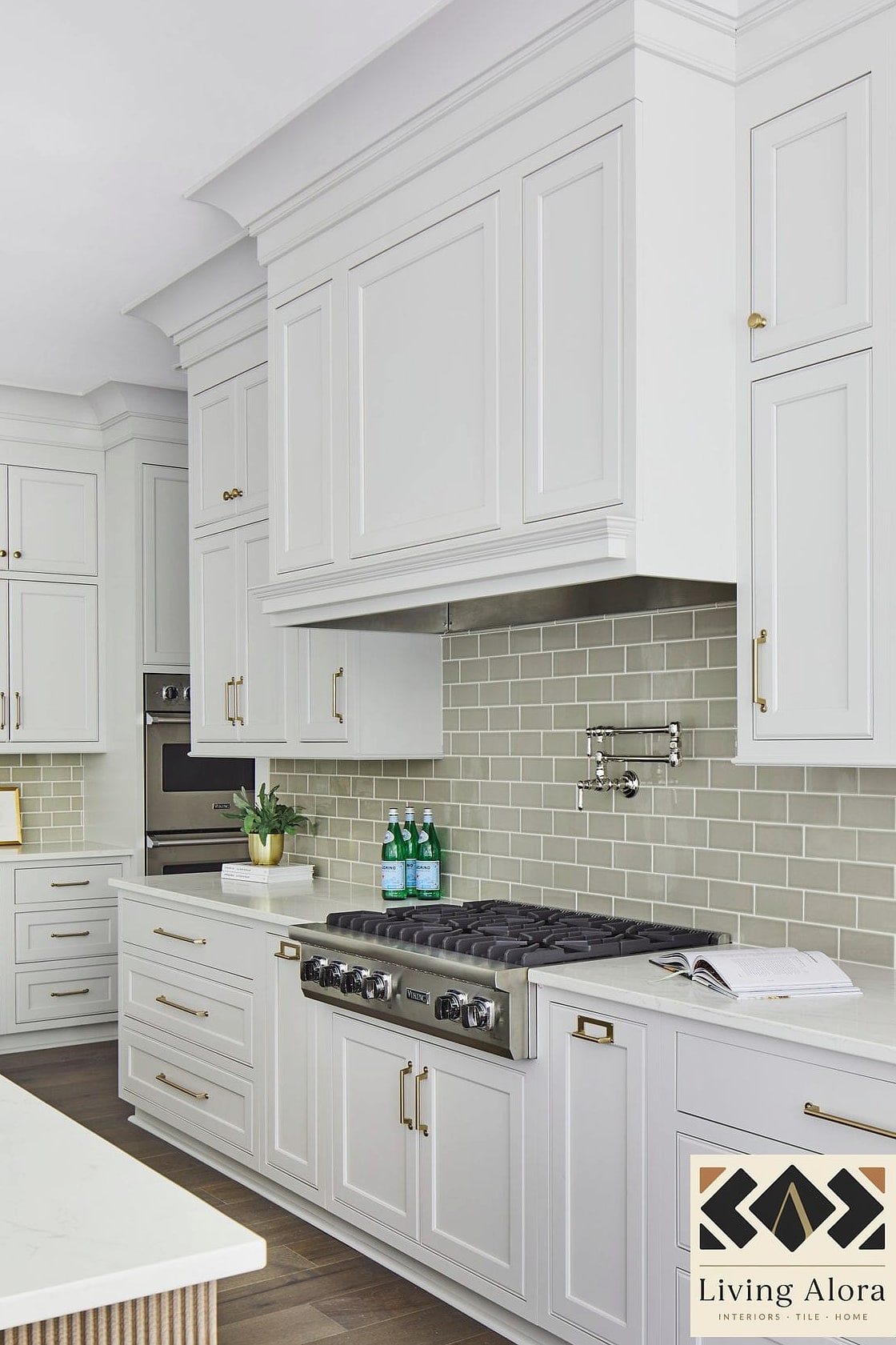
If herringbone feels too busy for your taste, a stacked layout is the cleaner, more contemporary alternative. Instead of the classic brick offset, tiles line up in straight vertical and horizontal grid lines. It reads more minimalist and pairs nicely with flat-panel cabinets and simple hardware.
Vertical Installation to Add Height
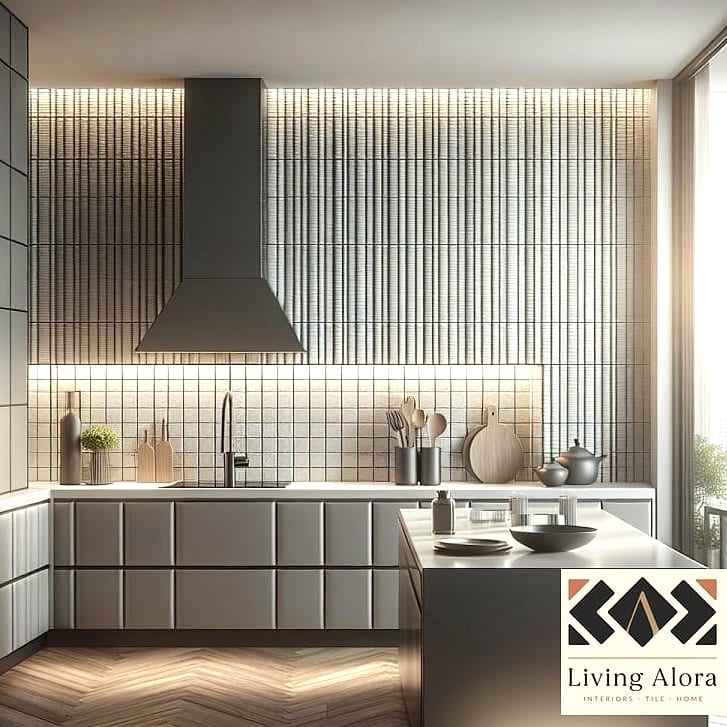
Running tile vertically instead of horizontally is a simple trick that makes low ceilings feel taller. It’s a good option for smaller kitchens where you want the eye drawn upward. This works particularly well with narrow subway tiles or thin linear mosaics.
Full Slab Backsplash for a Seamless Look
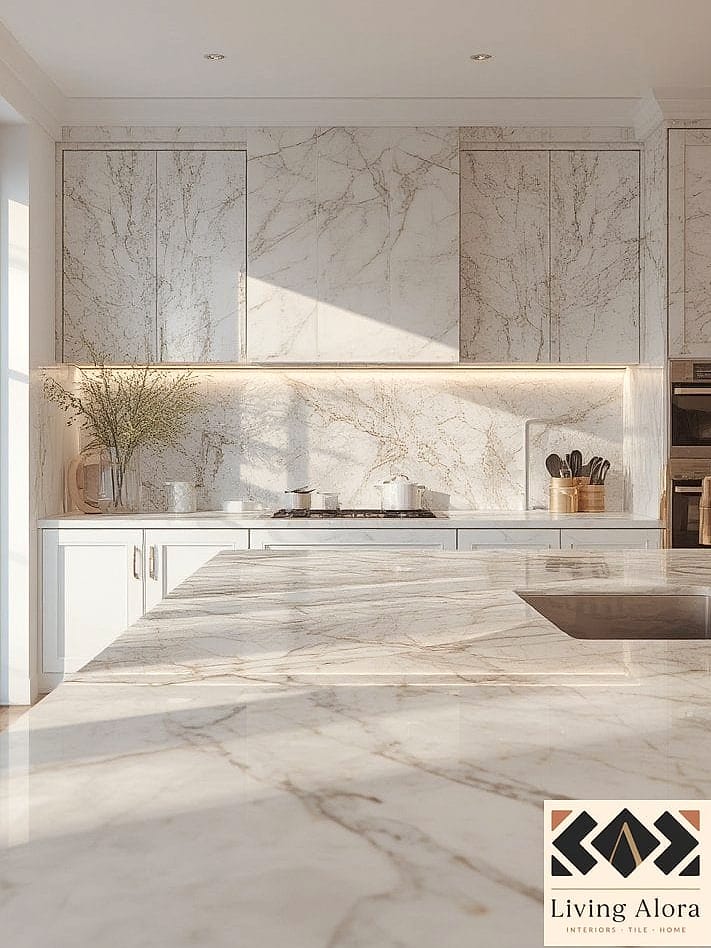
If grout lines aren’t your thing at all, a full slab of quartz or marble that runs from counter to upper cabinets gives you a completely seamless surface. It’s a bigger investment upfront, but there’s zero grout to clean and it creates a really luxurious, uninterrupted line. This is popular in modern and minimalist kitchens where the goal is visual calm.
Natural Stone for Warmth and Texture

Natural stone like travertine, slate, or marble mosaic brings warmth that manufactured tile sometimes can’t replicate. Every piece has natural variation, so no two installations look identical. Stone does need sealing and a bit more maintenance, but if you love an organic, earthy look, it’s worth the extra care.
Porcelain Tile That Mimics Marble

Love the look of marble but not the maintenance? Porcelain tile has come a long way and now replicates marble veining convincingly while being far more durable and stain-resistant. It’s a smart choice for busy families or anyone who wants the high-end look without babying the surface.
Mosaic Tile for a Statement Wall

A mosaic backsplash, whether it’s glass, stone, or a mix of materials, works best as a focal point rather than covering every wall. Consider using it just behind the stove or sink and keeping the rest of the kitchen simpler. This keeps the look intentional instead of overwhelming.
Bold Color for Personality

Not every backsplash needs to be neutral. A deep green, terracotta, or navy tile can become the character-defining feature of your kitchen. If you’re nervous about commitment, test the color on a small accent area first, like a shelf backsplash or a single wall, before going all in.
Two-Tone Tile for Depth
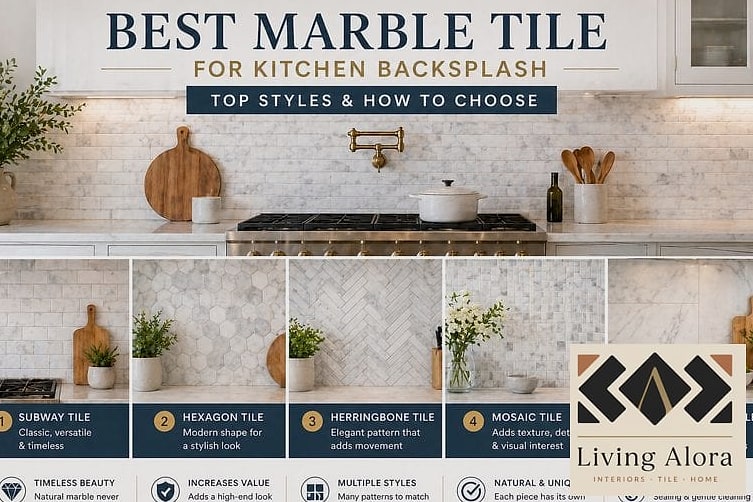
Mixing two complementary tile colors, like a soft sage and cream, adds depth without going full bold color. This works nicely in a checkerboard pattern or as an alternating stripe. It’s a good middle ground if you want personality but aren’t ready for a saturated color everywhere.
Extending Tile to the Ceiling
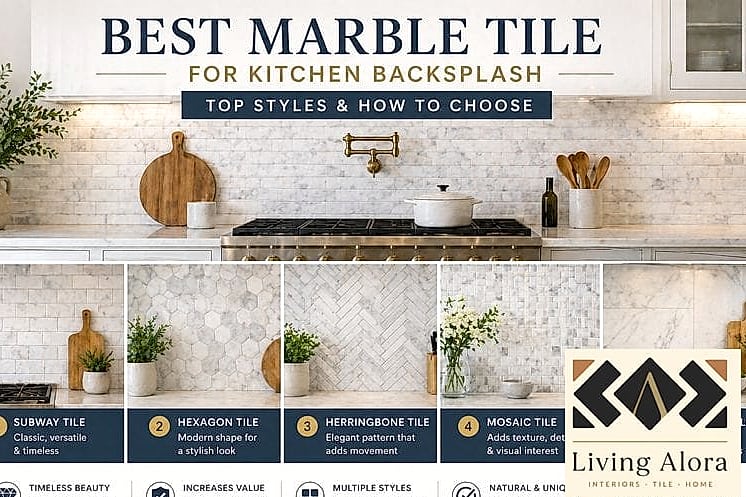
Instead of stopping your backsplash at the upper cabinets, running it all the way to the ceiling creates a dramatic, high-end look, especially around a range hood. It draws the eye up and makes the whole wall feel like a designed feature rather than an afterthought.
Textured Tile for Dimension
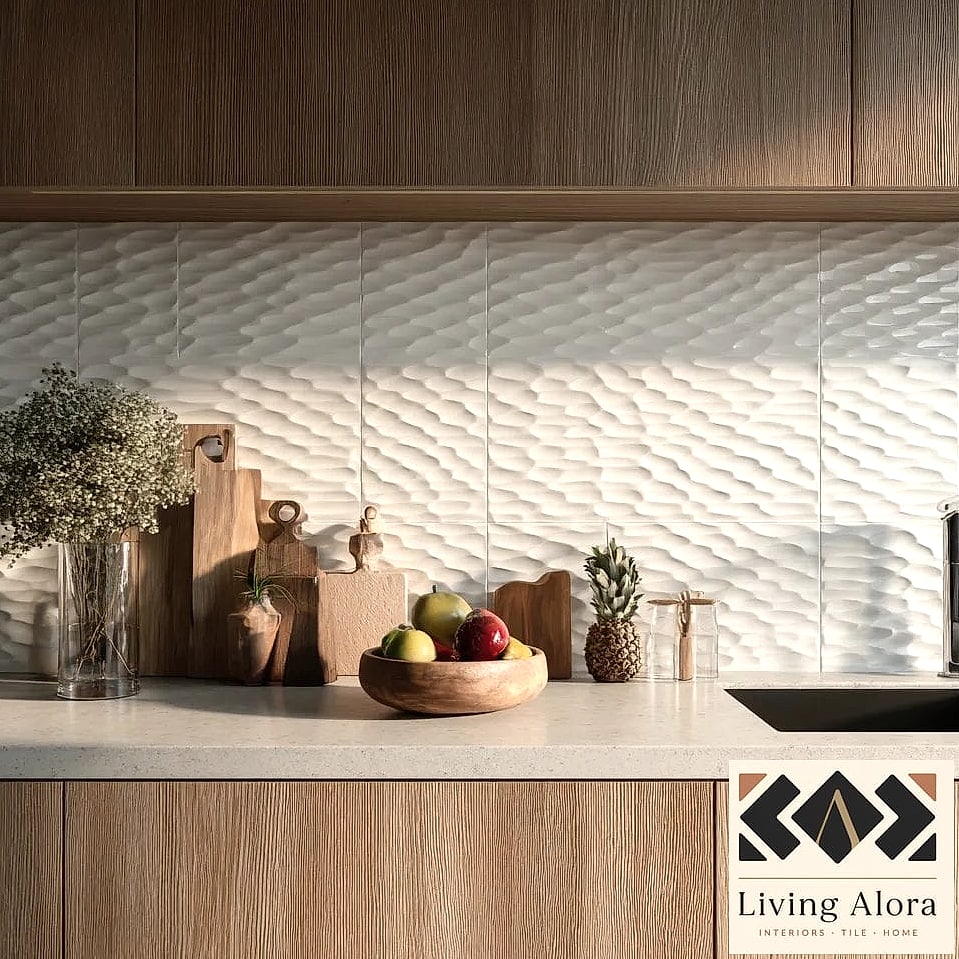
Dimensional or textured tiles, the kind with a slight 3D relief or wave pattern, catch light in a way flat tile can’t. They add subtle interest even in an all-white kitchen. Just know they can be a little trickier to clean since grease can settle into the grooves, so they’re best away from the stove.
Matte Finish for a Softer Look
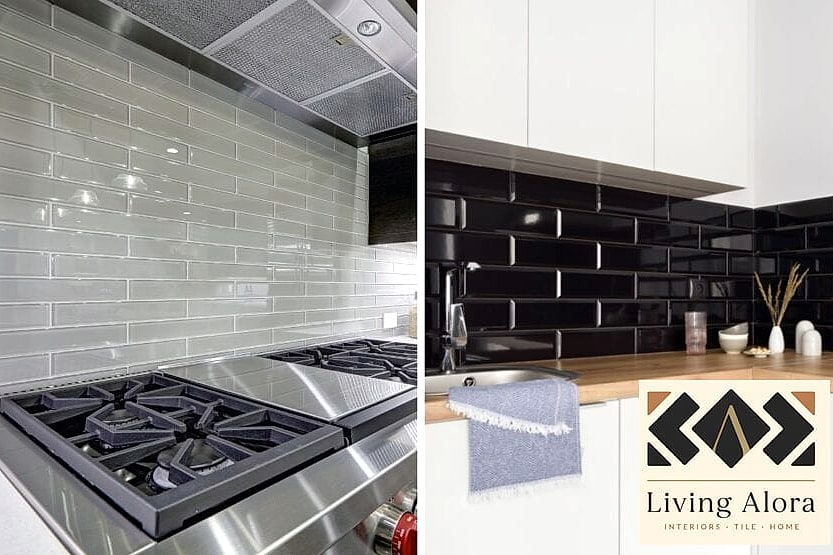
Glossy tile has its place, but matte finishes have become the go-to for a more understated, modern feel. Matte tends to hide water spots and fingerprints better than glossy, which is a nice bonus for a high-touch area like behind the sink.
Glossy Finish to Bounce Light

On the flip side, if your kitchen doesn’t get much natural light, a glossy tile finish reflects light around the room and can make the space feel brighter and larger. It also tends to be easier to wipe down quickly since grease doesn’t cling as easily to a shiny surface.
Peel-and-Stick for Renters and Budgets
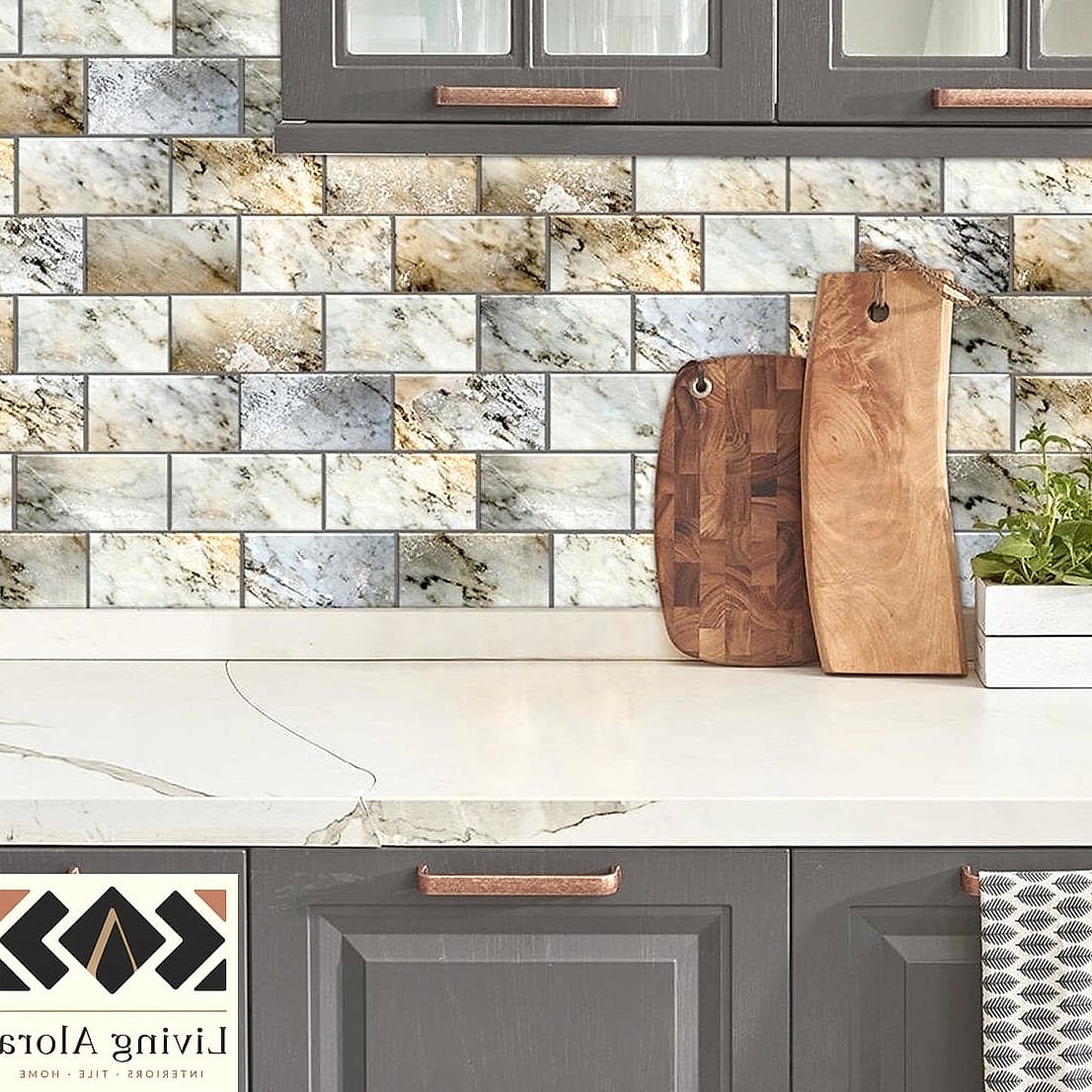
If you’re renting or just want to test a look before committing, peel-and-stick backsplash tile has gotten surprisingly good. It’s renter-friendly, budget-friendly, and can be swapped out later. It’s not meant to be a permanent, heat-resistant solution right behind a stove, but for the rest of the wall it holds up well.
Open Shelving Paired With Backsplash
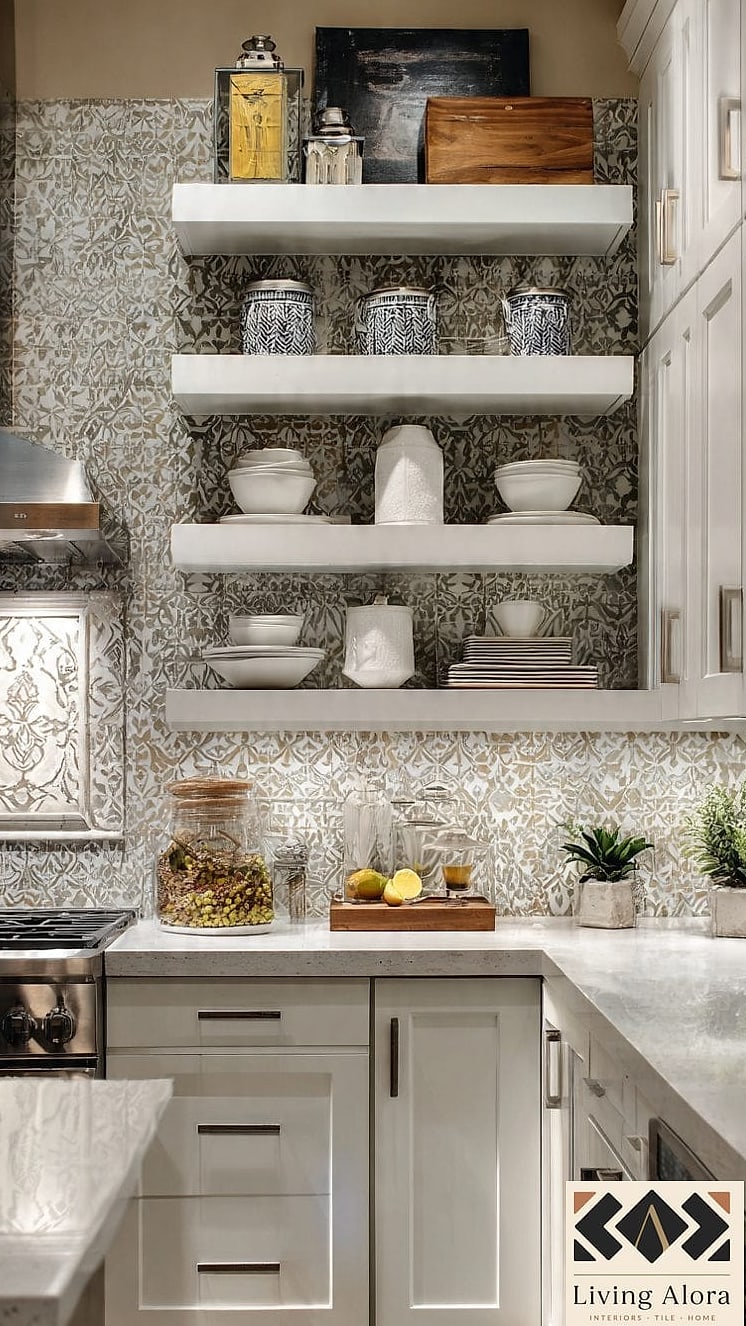
If you’re planning open shelving over part of your counter, choose a backsplash that still looks finished behind bare shelves, since there won’t be cabinets to break it up visually. A patterned or textured tile gives the open shelving area something to play against instead of looking bare.
Wood Accents for a Softer Contrast
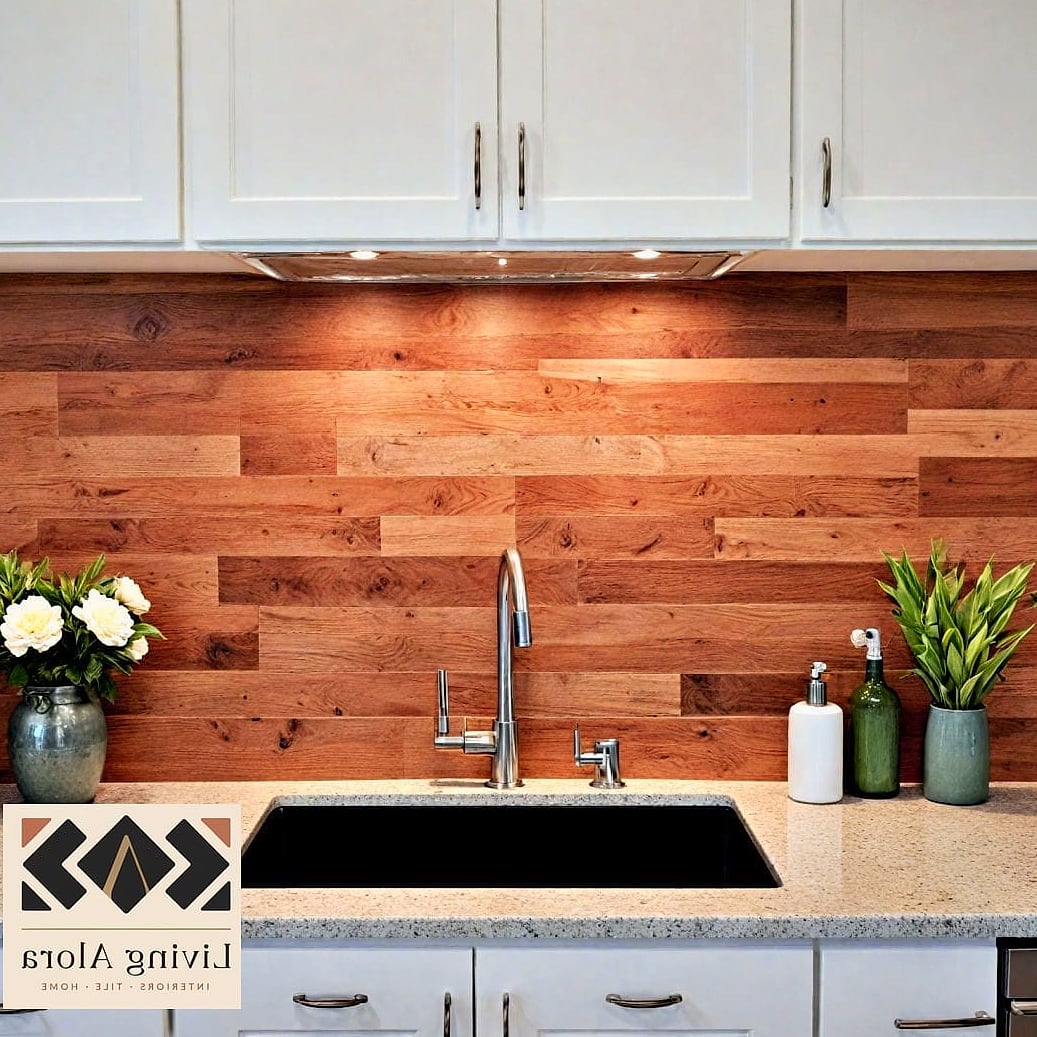
Pairing tile with a wood accent shelf or a wood-toned range hood adds warmth against cooler materials like quartz or marble. Warm wood tones balance out a kitchen that might otherwise feel too sterile or overly white.
Matching Backsplash to Your Kitchen’s Overall Style
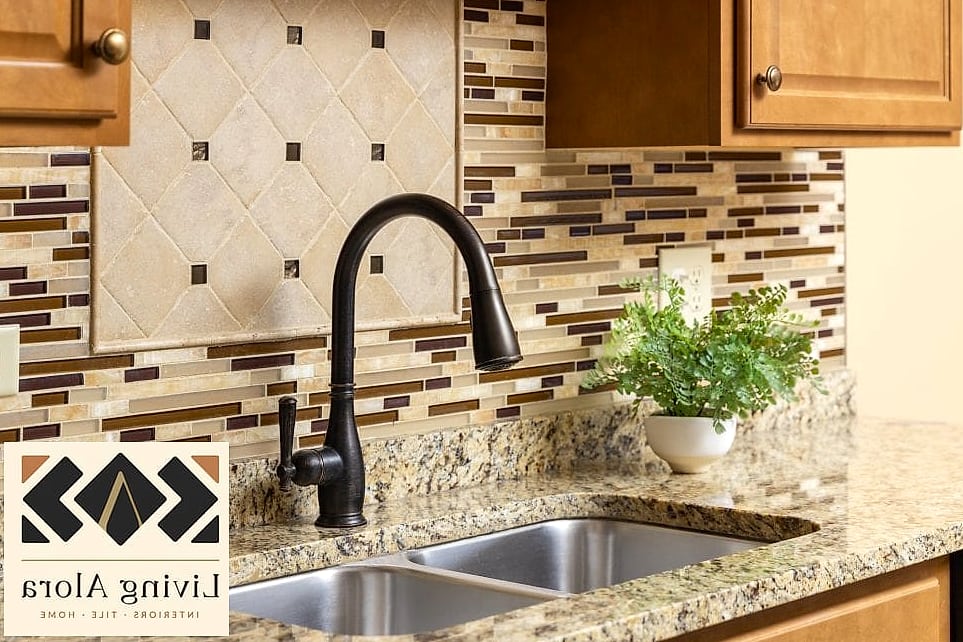
Before you finalize anything, step back and think about your kitchen’s overall vibe. A farmhouse kitchen leans toward subway tile, shiplap-inspired patterns, and warm neutrals. A modern kitchen suits slab backsplashes or simple stacked tile. A Japandi-inspired space wants natural stone, muted tones, and minimal pattern. Choosing a backsplash that matches your kitchen’s existing personality, rather than picking something trendy in isolation, is honestly the biggest factor in whether you’ll still love it in five years.
Choosing a backsplash doesn’t have to mean staring at sample boards for weeks. Start with your countertop, be honest about how much maintenance you’re willing to do, and pick something that fits the style you’re already building. Whichever of these ideas you land on, the best backsplash is the one that still feels right long after the renovation dust settles.