27 Kitchen Backsplash Ideas That Look Expensive But Aren’t

- White Subway Tile with Dark Grout
- Herringbone Pattern in Classic White
- Zellige-Inspired Ceramic Tile
- Vertical Stacked Subway Tile
- Marble-Look Porcelain Slab
- Peel-and-Stick Tile Backsplash
- Handmade-Look Fluted Tile
- Bold Color Block Tile
- Checkerboard Floor-to-Backsplash Tile
- Mosaic Tile Accent Strip
- Textured Zellige-Style Squares in a Grid
- Butcher Block Backsplash Panels
- Large-Format Slab Backsplash
- Scalloped or Fish Scale Tile
- Matte Black Subway Tile
- Hexagon Tile in Neutral Tones
- Stone-Look Tile with Natural Veining
- Glass Tile in Soft Pastels
- Diagonal Subway Tile Layout
- Encaustic-Look Cement Tile
- Brick-Style Thin Veneer Backsplash
- Two-Tone Tile Backsplash
- Arched Niche Tile Detail
- Pressed Tin-Look Backsplash Panels
- Terrazzo-Look Tile
- Warm Beige Zellige Squares
- Mixed Material Backsplash
27 Kitchen Backsplash Ideas That Look Expensive But Aren’t
A backsplash can make or break a kitchen, and honestly, it’s one of the easiest ways to make a space feel custom without touching your foundation budget. I’ve pulled together 27 kitchen backsplash ideas that look expensive but aren’t, ranging from classic to bold, so there’s something here whether you’re renting, renovating, or just bored on a Sunday with a tile sample in your hand.
White Subway Tile with Dark Grout

This combo never really goes out of style, and there’s a reason for it. The contrast between crisp white tile and charcoal or black grout gives you visual interest without adding a single extra dollar to your tile budget. It works in farmhouse kitchens, modern galley kitchens, and everything in between. Cleaning is straightforward too, since dark grout hides stains way better than white ever will.
Herringbone Pattern in Classic White
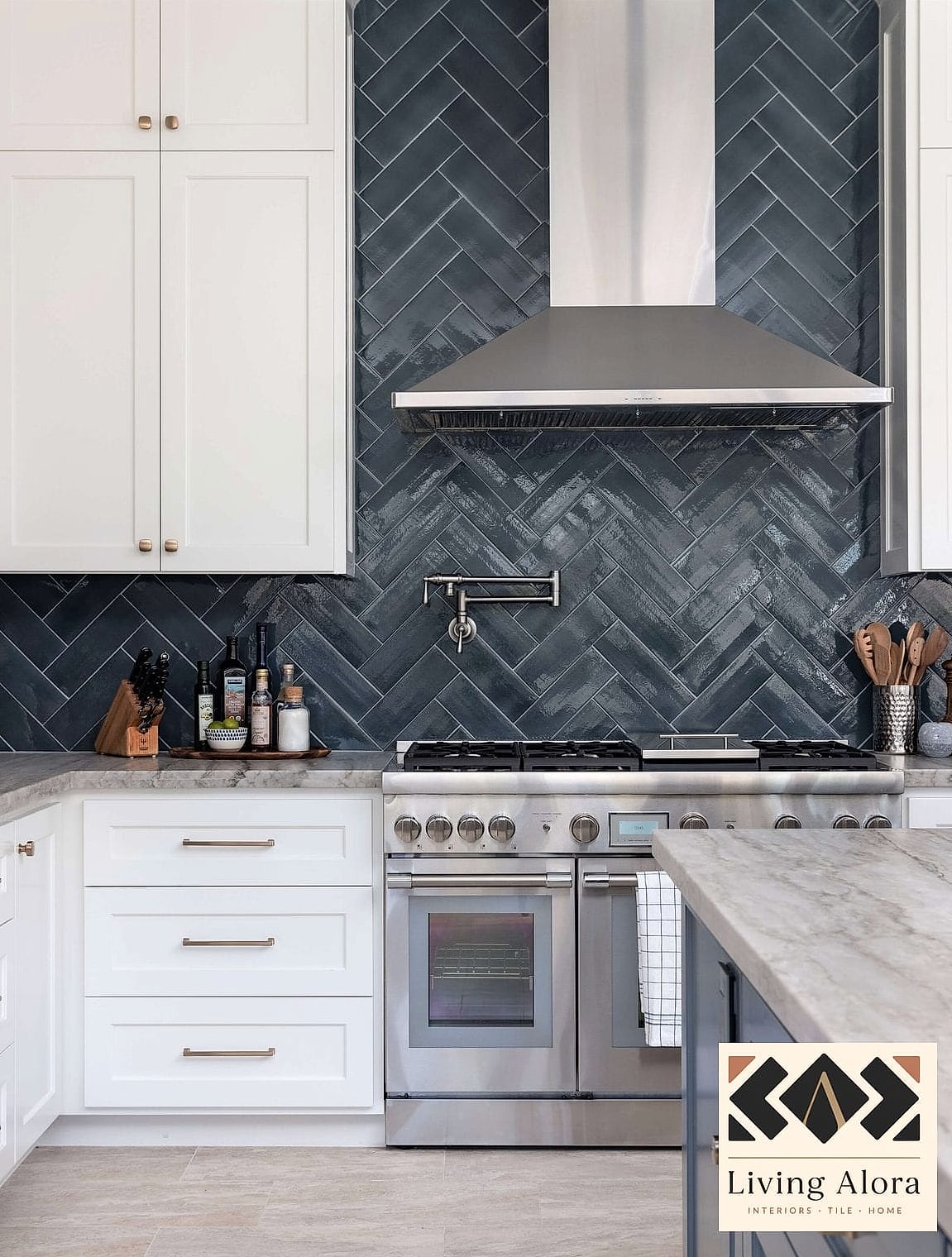
Skip the standard grid layout and lay your subway tile in a herringbone pattern instead. Same tile, completely different personality. It reads as far more custom than it actually is, and most tile setters can install it without upcharging much, since it’s really just a change in layout, not material. This is a great pick if you want your kitchen to feel a little more architectural.
Zellige-Inspired Ceramic Tile

Real Moroccan zellige tile is gorgeous but pricey and inconsistent to install. The good news is there are ceramic and porcelain versions now that mimic that handmade, slightly imperfect glaze look for a fraction of the cost. You get all that warm, light-catching texture without importing anything from Fez.
Vertical Stacked Subway Tile
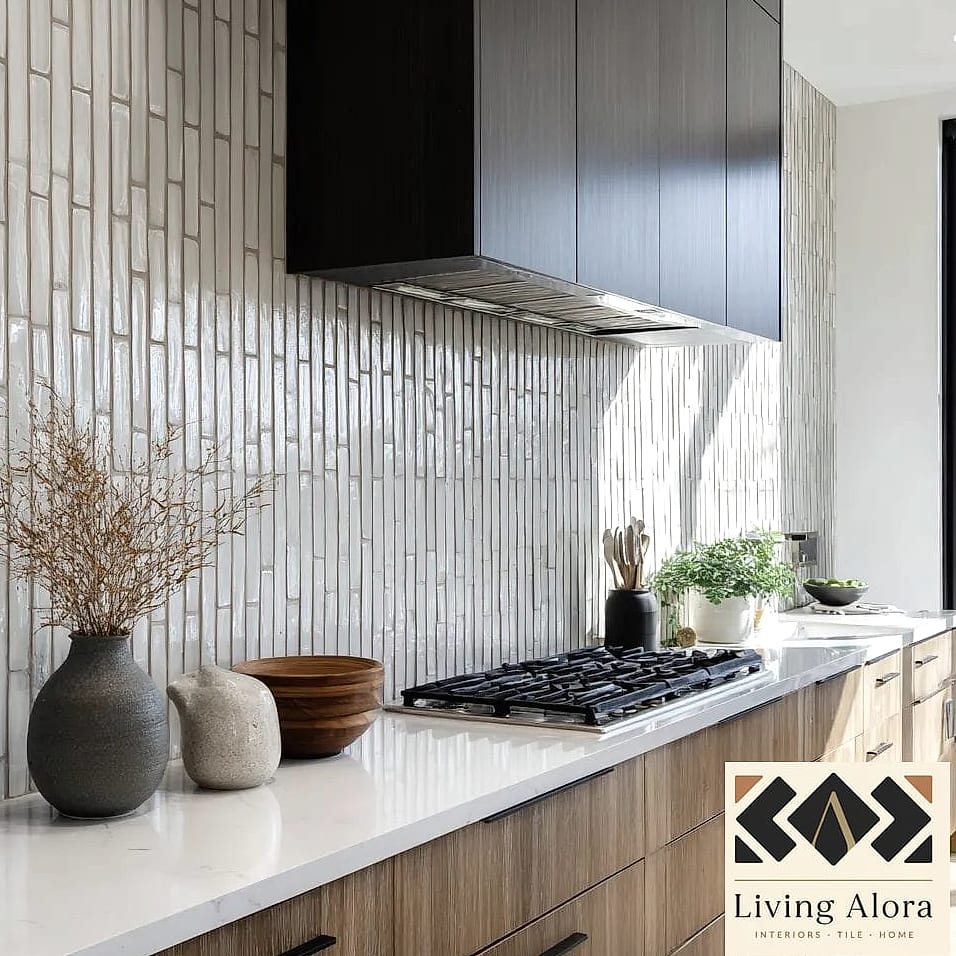
Instead of laying subway tile horizontally, stack it vertically in a straight stacked bond. It draws the eye up, which makes lower ceilings feel taller, and it has a cleaner, more modern edge than the traditional running bond pattern. Great for small kitchens that need a little visual lift.
Marble-Look Porcelain Slab

Real marble is stunning, but it stains if you look at it wrong. Marble-look porcelain slabs give you that same veining and luxury feel with none of the sealing, staining, or babying real stone requires. Large-format slabs also mean fewer grout lines, which reads as high-end instantly.
Peel-and-Stick Tile Backsplash

If you’re renting or just not ready to commit, peel-and-stick tile has come a long way. The textures and finishes now genuinely look like ceramic or glass tile from a few feet away. It’s renter-friendly, removable, and you can install it yourself in an afternoon with basically no tools.
Handmade-Look Fluted Tile

Fluted or ribbed tile adds dimension without adding pattern, which makes it feel expensive and intentional. The ridges catch light differently throughout the day, giving your backsplash a little movement. It pairs beautifully with brushed brass hardware and warm wood tones.
Bold Color Block Tile

A saturated color like deep green, terracotta, or navy on your backsplash instantly makes a kitchen feel designed rather than default. You don’t need to tile the whole wall either. Even a color-blocked section behind the range can carry the whole room.
Checkerboard Floor-to-Backsplash Tile
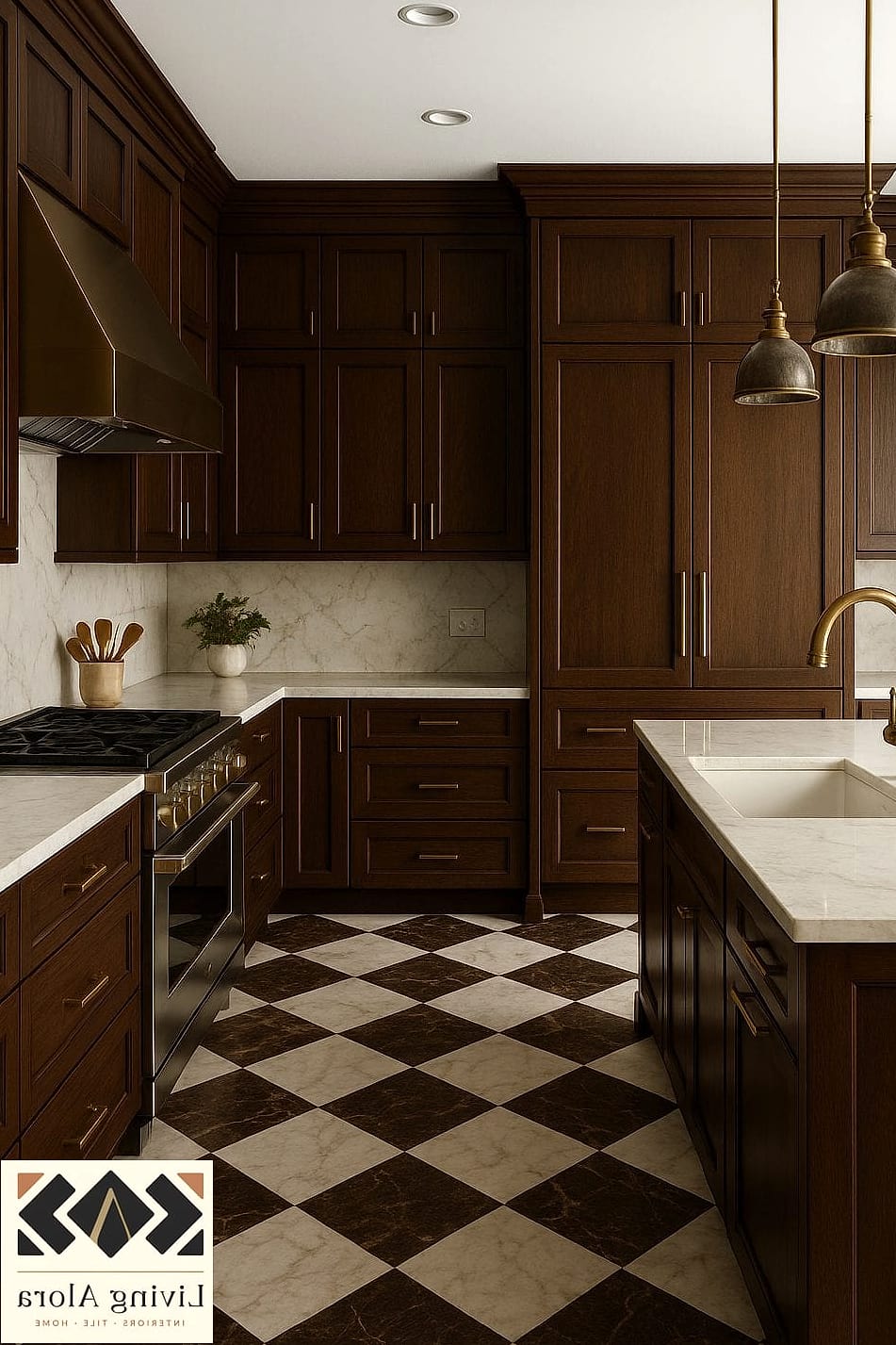
Checkerboard patterns are having a real moment, and using the same tile on your floor and backsplash creates a cohesive, boutique-hotel feel. Black and white is the classic route, but muted tones like sage and cream feel softer and more livable long term.
Mosaic Tile Accent Strip

You don’t need to cover your whole wall in expensive mosaic tile to get the effect. A single accent strip behind the stove or sink adds texture and shine while keeping material costs low. It’s a nice way to sneak in a splurge-feeling material in a budget-friendly amount.
Textured Zellige-Style Squares in a Grid

A simpler cousin to the herringbone zellige look, laying square zellige-style tile in a basic grid still gives you that handcrafted, uneven glaze texture. It’s a quieter version of the trend for kitchens that want texture without too much visual noise.
Butcher Block Backsplash Panels
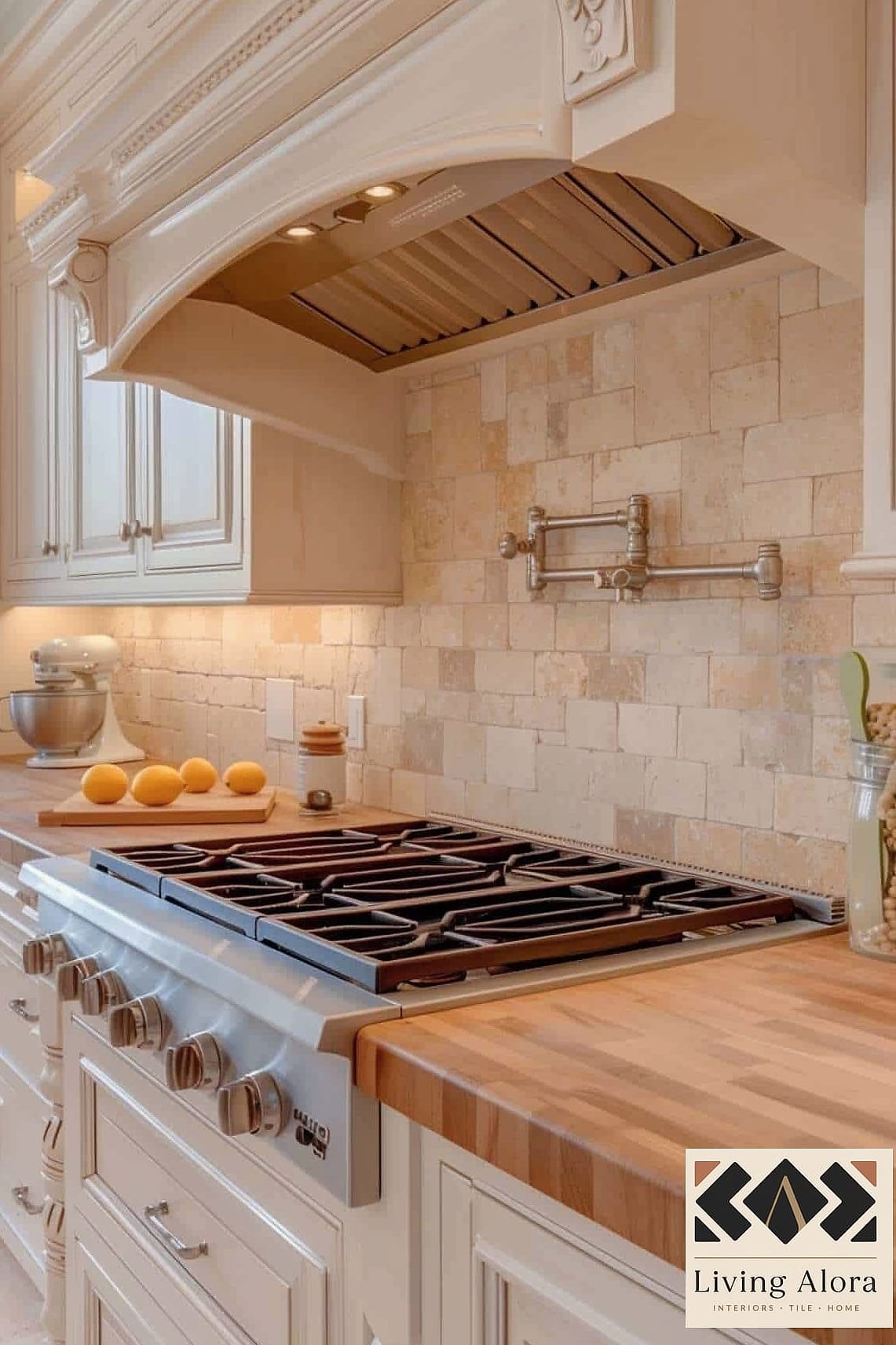
Wood isn’t just for countertops. A butcher block or wood panel backsplash adds warmth and softens an otherwise all-white or all-stone kitchen. Seal it well since it sits near water and heat, but it’s genuinely one of the more affordable ways to add natural material to your walls.
Large-Format Slab Backsplash
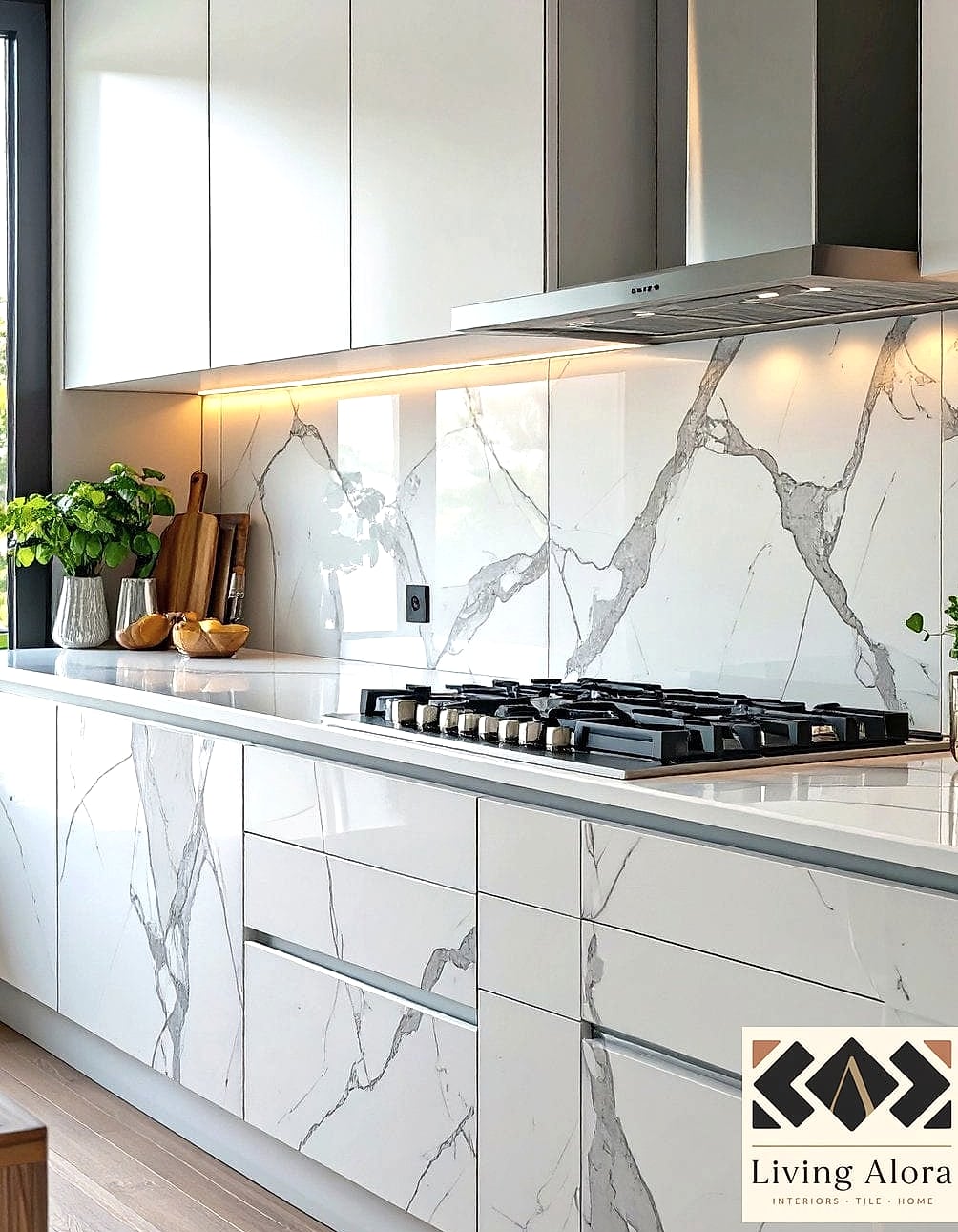
Instead of individual tiles, a single large slab (or a few large panels) creates a seamless look with almost no grout lines. It’s easier to clean since there’s nowhere for grease to hide, and it reads as high-end because, frankly, it mimics what luxury kitchens do with full stone slabs.
Scalloped or Fish Scale Tile

This pattern feels playful and a little unexpected, which is exactly why it photographs so well. Scalloped tile in a soft neutral tone keeps things elegant, while a bold color leans more eclectic. Either way, it’s a small detail that makes people stop and ask where you got your kitchen designed.
Matte Black Subway Tile
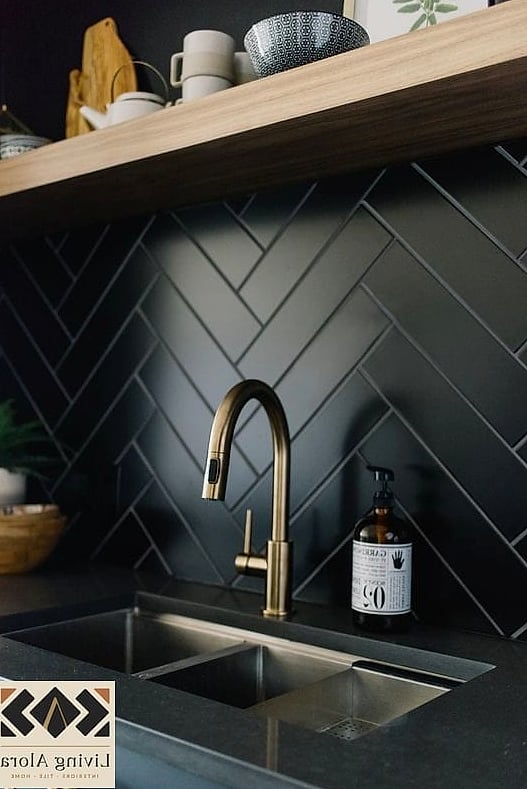
Swapping glossy white subway for matte black instantly changes the whole mood of a kitchen. It pairs beautifully with brass or black fixtures and works especially well in kitchens with lots of natural light, since matte finishes soften glare. Just know fingerprints show up more on glossy black, so matte is the practical choice here.
Hexagon Tile in Neutral Tones
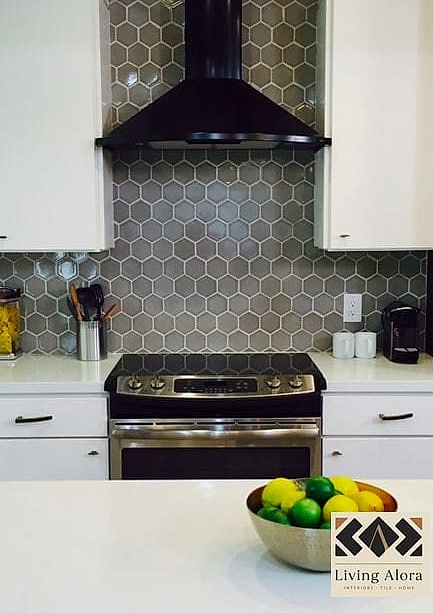
Hexagon tile has a graphic, geometric quality that feels more custom than a standard square. Stick to warm neutrals like cream, taupe, or greige if you want it to feel timeless rather than trendy. It’s a nice middle ground between classic subway and something more statement-making.
Stone-Look Tile with Natural Veining
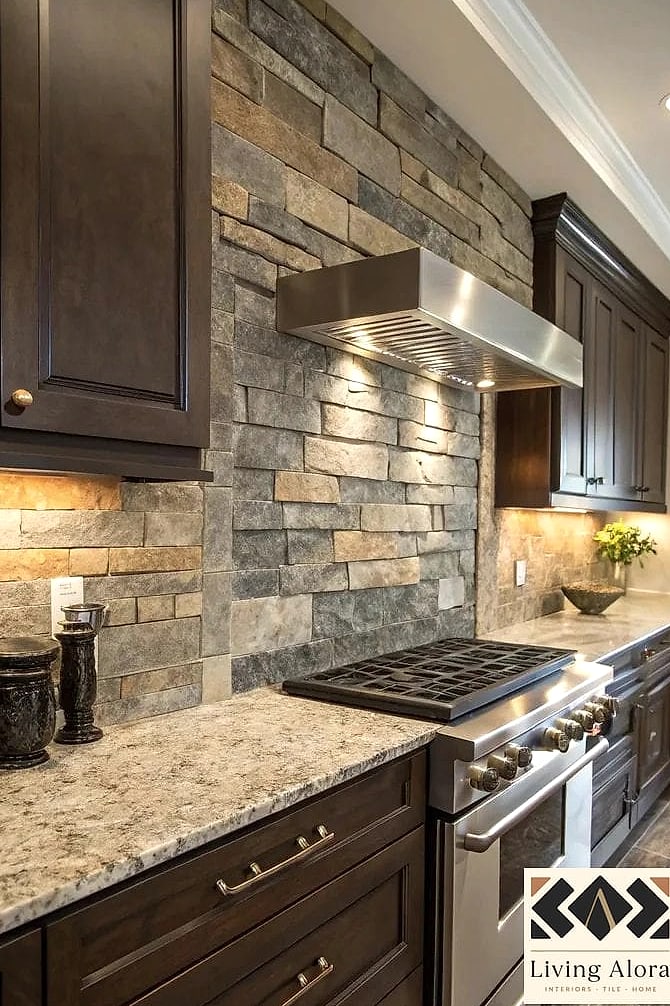
Similar to marble-look porcelain but slightly more affordable, stone-look tile mimics travertine or limestone textures. It brings an earthy, organic feel that pairs well with warm wood cabinetry and matte black fixtures. Great for kitchens leaning into a more Mediterranean or Old World look.
Glass Tile in Soft Pastels
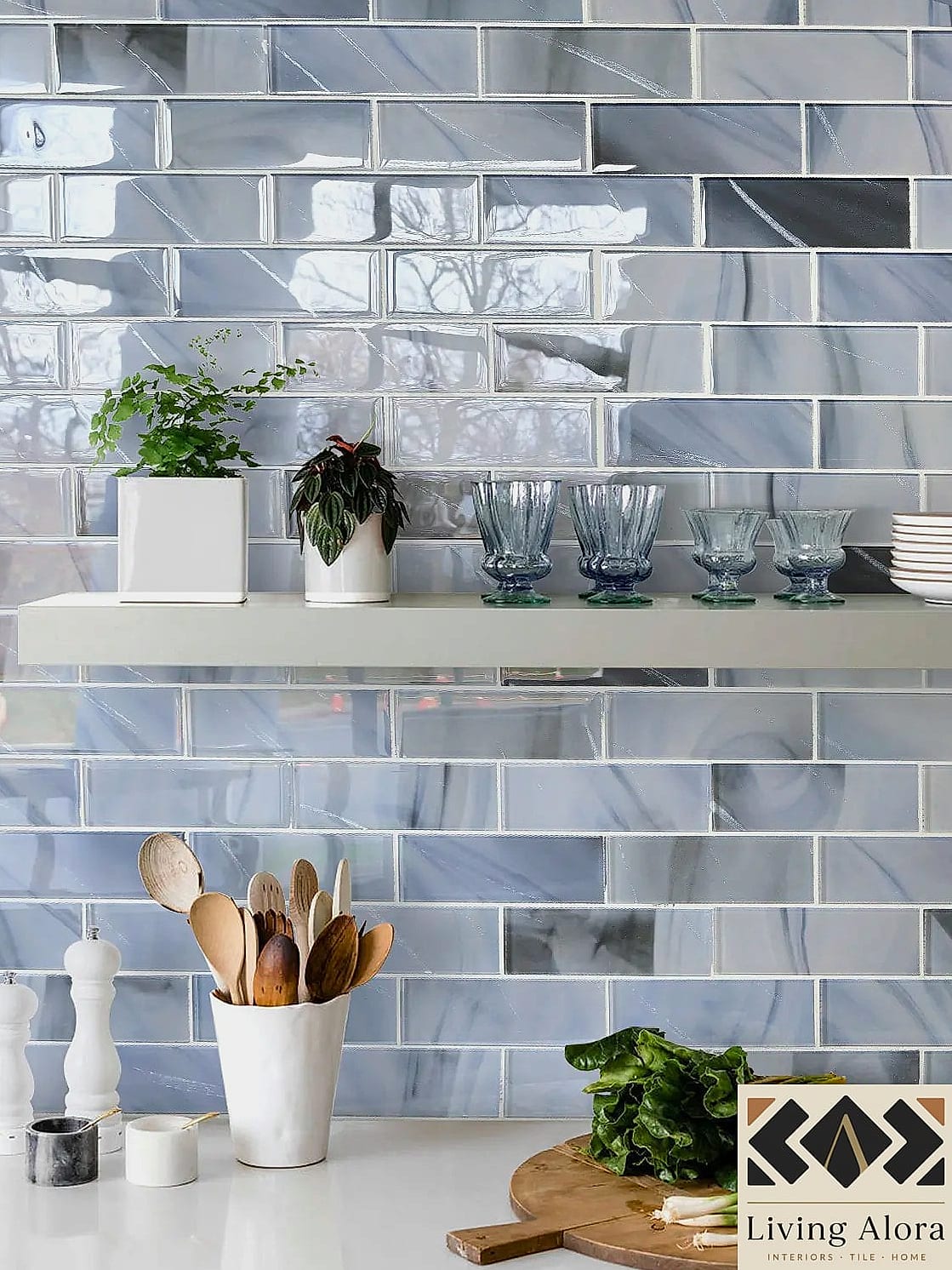
Glass tile catches light in a way that ceramic just can’t replicate, giving even a small kitchen a little sparkle. Soft pastels like blush, sage, or pale blue keep it from feeling too flashy while still adding personality. It’s especially pretty over a sink where natural light hits it directly.
Diagonal Subway Tile Layout
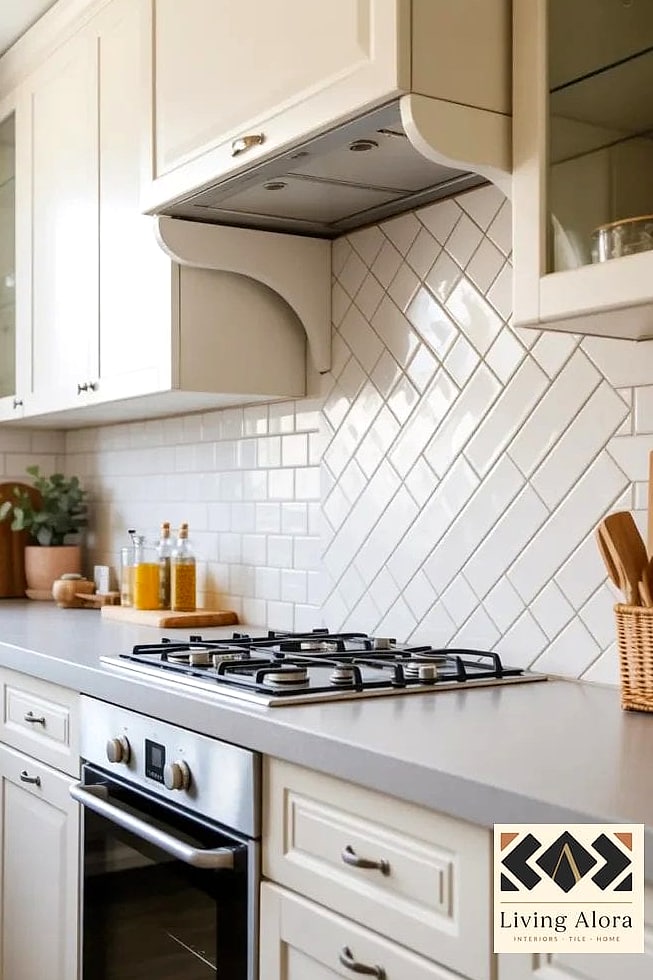
Rotating your subway tile 45 degrees changes the whole rhythm of the wall. It’s a subtle shift, but it makes a standard tile choice feel more considered and less like it came straight off a builder-grade checklist. Works particularly well in kitchens with a lot of straight lines that need a little softening.
Encaustic-Look Cement Tile
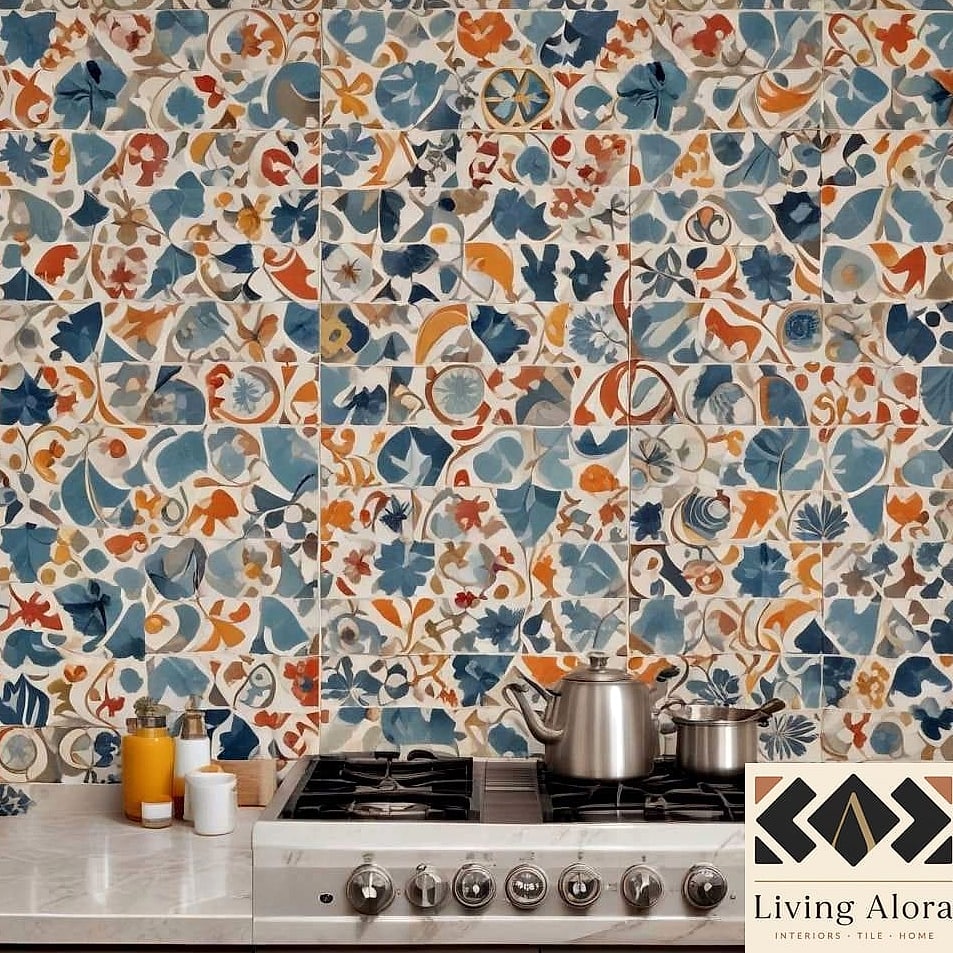
Real cement tile is beautiful but heavy, porous, and expensive to install. Porcelain versions that mimic encaustic patterns give you that bold, patterned look without the sealing maintenance. This is a great option if you want your backsplash to double as the statement piece in an otherwise simple kitchen.
Brick-Style Thin Veneer Backsplash

Exposed brick reads as expensive and architectural, but full brick installation is a big project. Thin brick veneer gives you the same texture and warmth at a much lower cost and weight. It’s especially nice in kitchens going for an industrial or urban loft feel.
Two-Tone Tile Backsplash
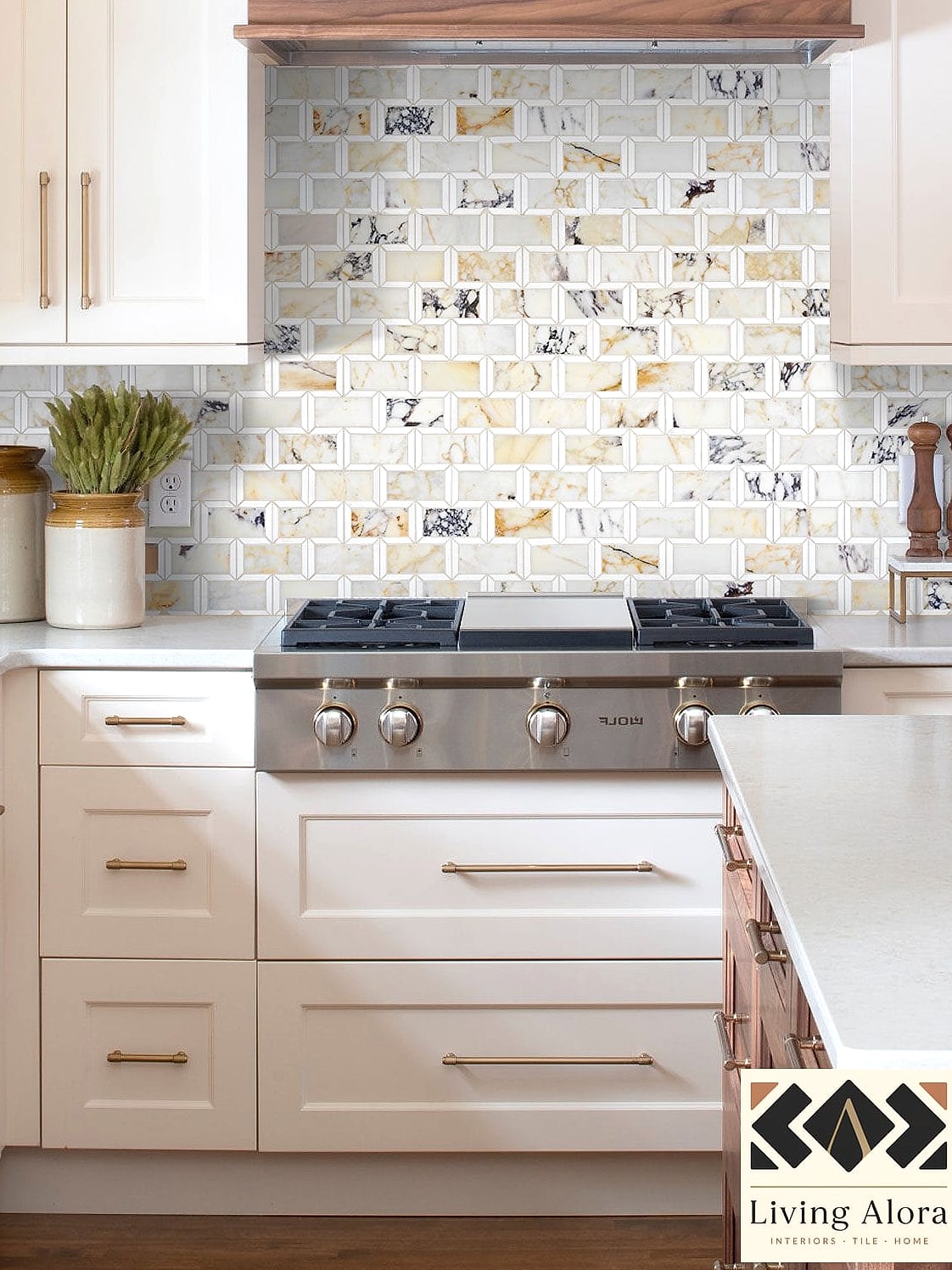
Pairing two complementary tile colors or finishes, like a matte lower half and a glossy upper strip, adds dimension without needing a fancy pattern. It’s an easy way to make a builder-basic kitchen feel more layered and custom.
Arched Niche Tile Detail

If you have a stove alcove or any recessed wall space, tiling it in a contrasting pattern or color creates a built-in focal point. It’s a small architectural detail that makes the whole kitchen feel like it was designed with intention rather than picked off a showroom floor.
Pressed Tin-Look Backsplash Panels
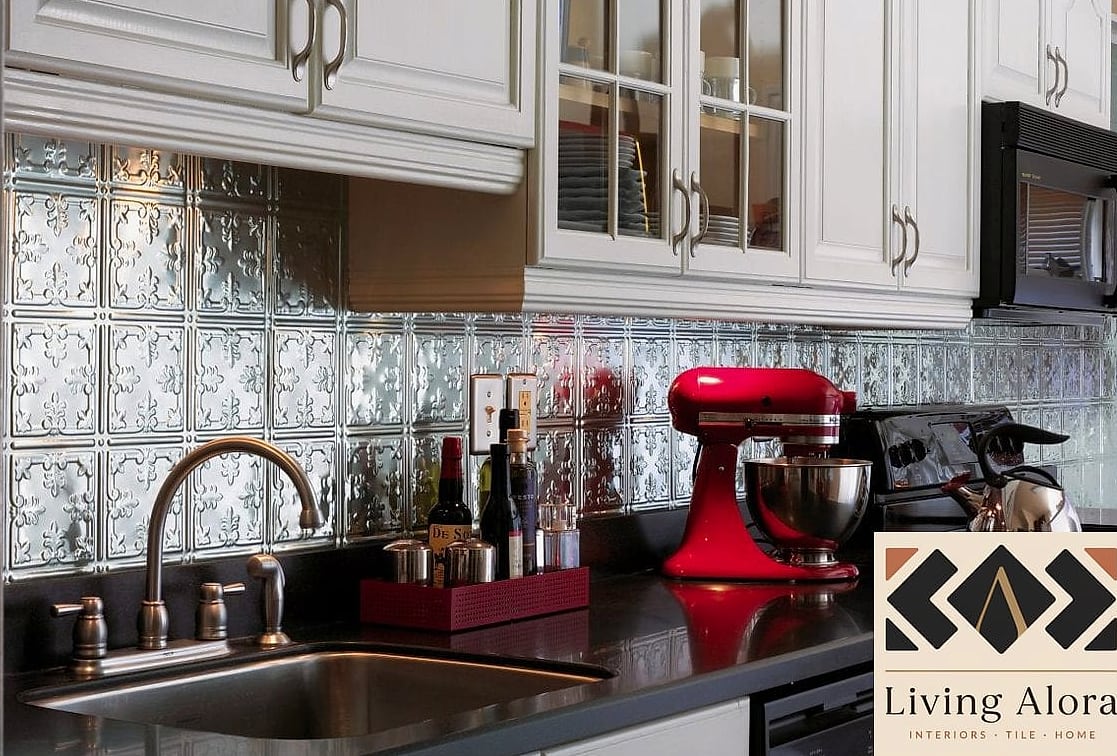
Pressed tin backsplashes have serious vintage charm, and the modern PVC or aluminum versions install almost like peel-and-stick panels. They’re lightweight, easy to clean, and give off a distinct old-world bakery or farmhouse kitchen vibe that tile alone can’t quite replicate.
Terrazzo-Look Tile

Terrazzo has that fun, flecked look that feels collected and artsy rather than mass-produced. Porcelain terrazzo-look tile gives you the texture and color variation without the cost of poured terrazzo. It’s an especially good fit for kitchens that already have a playful, maximalist personality.
Warm Beige Zellige Squares
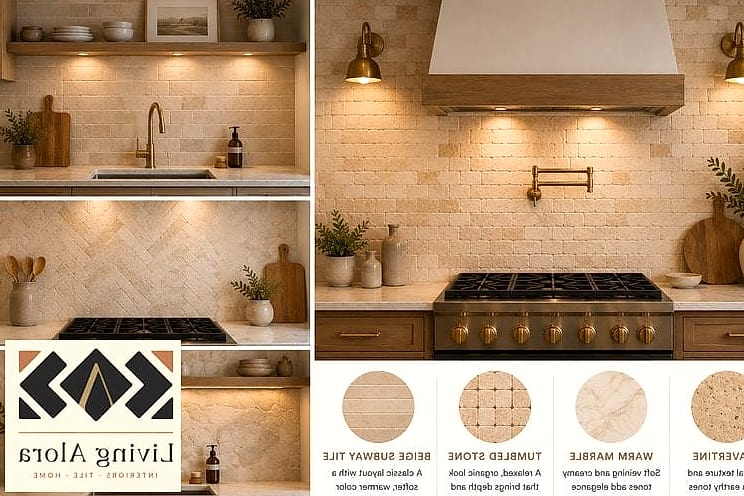
Not every zellige moment needs to be bright white or bold blue. A warm beige or sand-toned zellige-style tile brings in that handcrafted texture while staying soft and neutral, which makes it easier to live with long term and easier to sell your house with later, if that’s ever a concern.
Mixed Material Backsplash
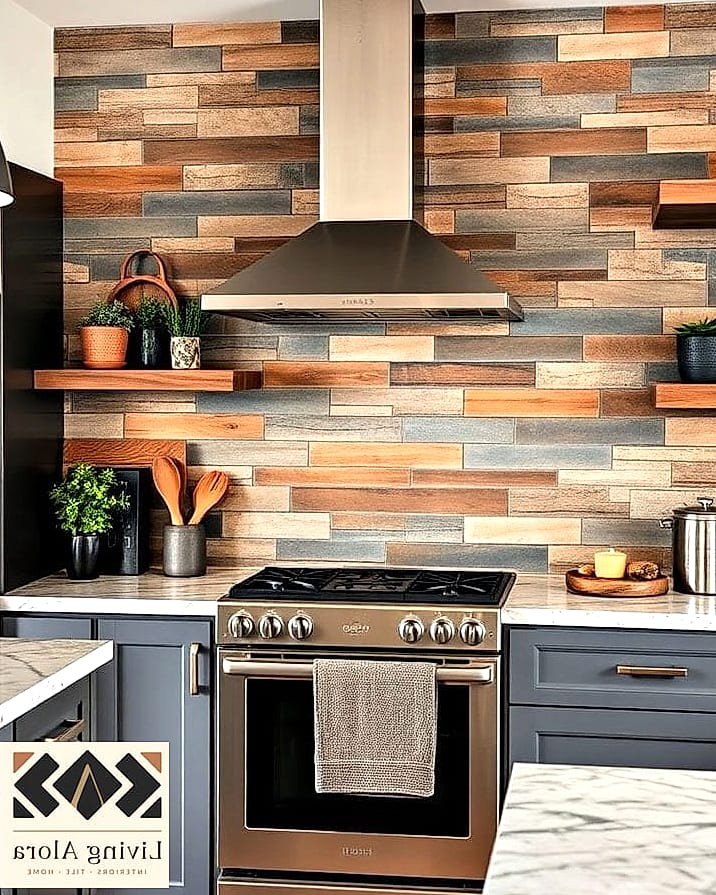
Combining two materials, like tile behind the stove and wood shelving elsewhere, or stone slab paired with a mosaic accent, creates a layered, collected-over-time look. It takes a little more planning, but it’s one of the best ways to make a kitchen feel like it was designed by a professional rather than picked from a single aisle.
Whichever direction you lean, the real trick to any of these 27 kitchen backsplash ideas that look expensive but aren’t is confidence in the pattern and finish, not the price tag behind it. Grab a few samples, hold them up in your actual kitchen lighting, and trust your gut. Good design rarely announces its budget.