12 Mediterranean Backsplash Ideas for Every Home Style and Budget
- Handmade Zellige Tile in Ocean Blue
- Terracotta Hexagon Tile
- Blue and White Talavera-Inspired Tile
- Herringbone Marble Mosaic
- Moroccan Fish Scale Tile
- Warm Terracotta and Cream Mix
- Deep Blue Subway Tile with Textured Edges
- Moorish Star and Cross Pattern
- Olive Green Ceramic Tile
- Natural Stone Mosaic in Warm Tones
- Yellow and Blue Patterned Accent Strip
- Peel-and-Stick Mediterranean Tile Panels
12 Mediterranean Backsplash Ideas for Every Home Style and Budget
There’s something about Mediterranean style that just makes a kitchen feel warmer and more lived-in. Maybe it’s the sun-baked colors, the handmade texture, or the way it borrows from Spain, Italy, Morocco, and Greece all at once. Whatever it is, this look has serious staying power, and the backsplash is usually where it all comes together. Here are twelve ways to bring that feeling into your own kitchen, no matter your style or budget.
Handmade Zellige Tile in Ocean Blue
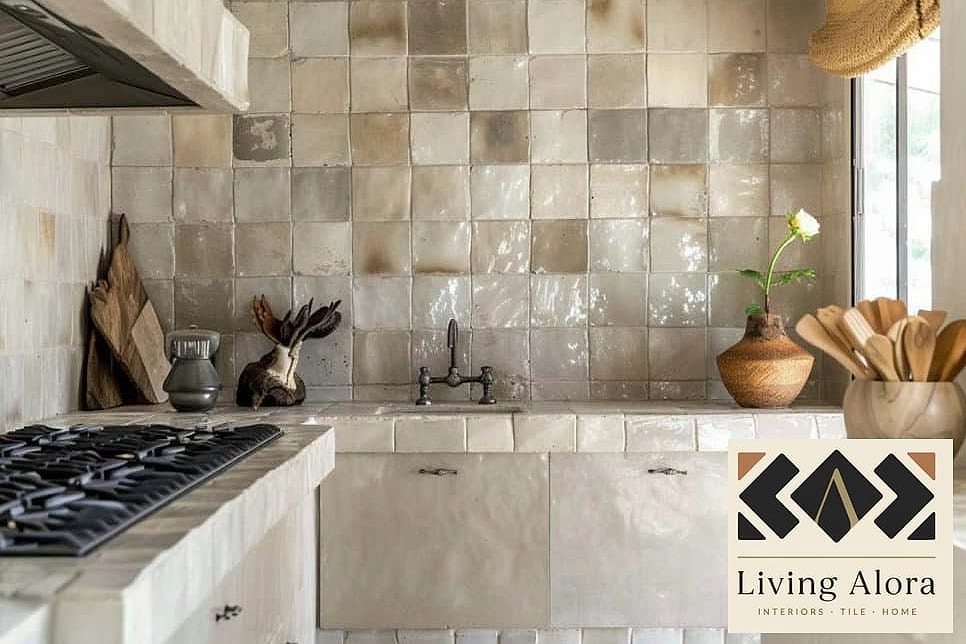
Zellige is probably the first thing people picture when they think Mediterranean, and for good reason. Each tile is hand-glazed in Morocco, so no two pieces reflect light exactly the same way. That subtle variation gives a backsplash a rippling, almost watery look that flat tile just can’t fake. It works beautifully behind a range as a statement wall, especially paired with white cabinetry and brass hardware. The catch is that authentic zellige comes at a real price point and needs a bit more grout maintenance since it’s more porous than porcelain. If you love the look but not the cost, several tile brands now make porcelain zellige-look tiles that mimic the texture for a fraction of the price.
Terracotta Hexagon Tile
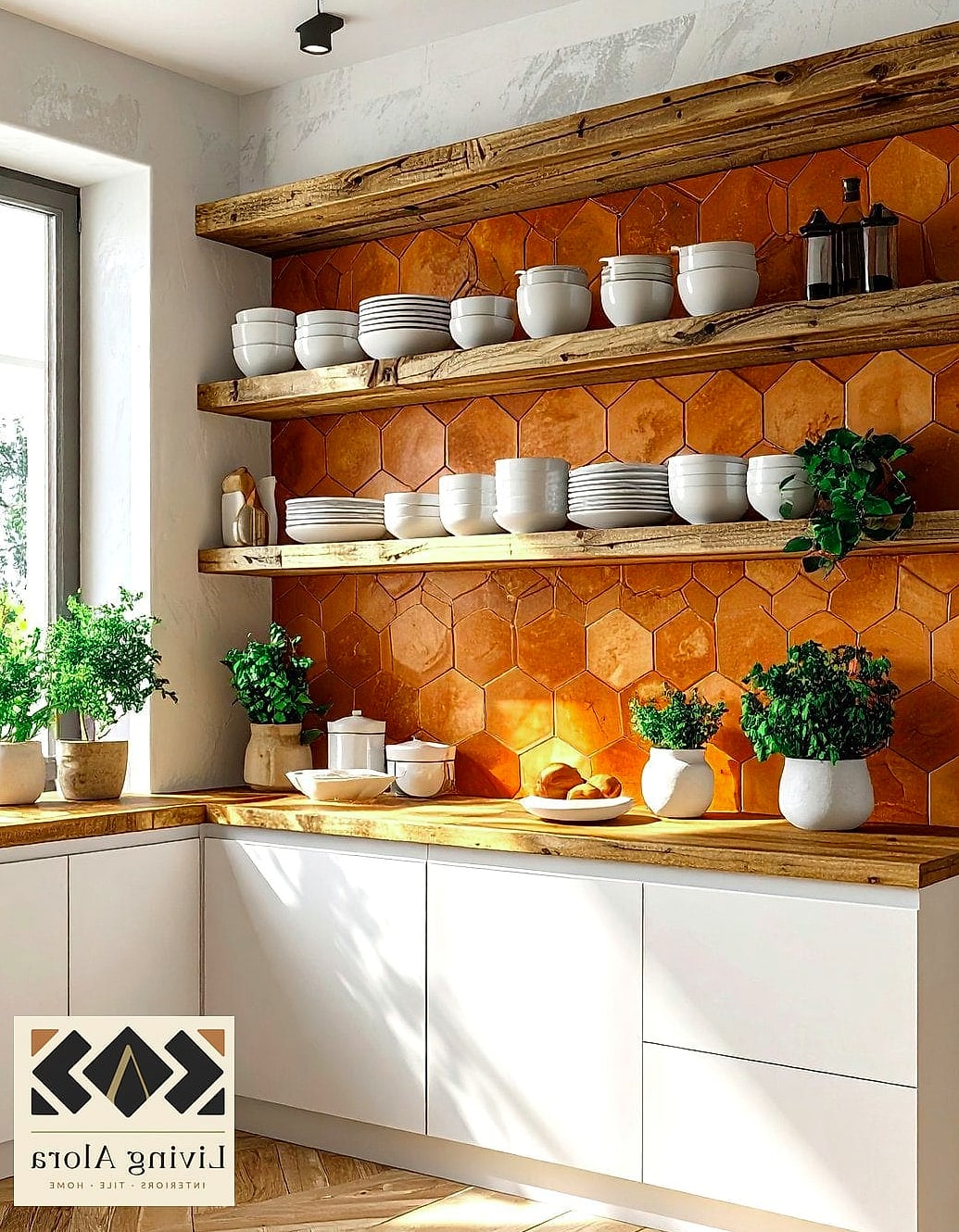
Terracotta brings that earthy, sun-warmed feeling that’s central to Mediterranean design. Hexagon shapes specifically nod to old Spanish and Moroccan floor patterns, so using them on a backsplash feels like an intentional wink to tradition rather than a random tile choice. This works especially well in kitchens with warm wood tones, wrought iron light fixtures, or exposed wood beams. It’s a natural fit for farmhouse and rustic Mediterranean kitchens. Unsealed terracotta does need regular sealing to resist stains, so budget that into your maintenance routine. Sealed porcelain versions give you the color without the extra upkeep.
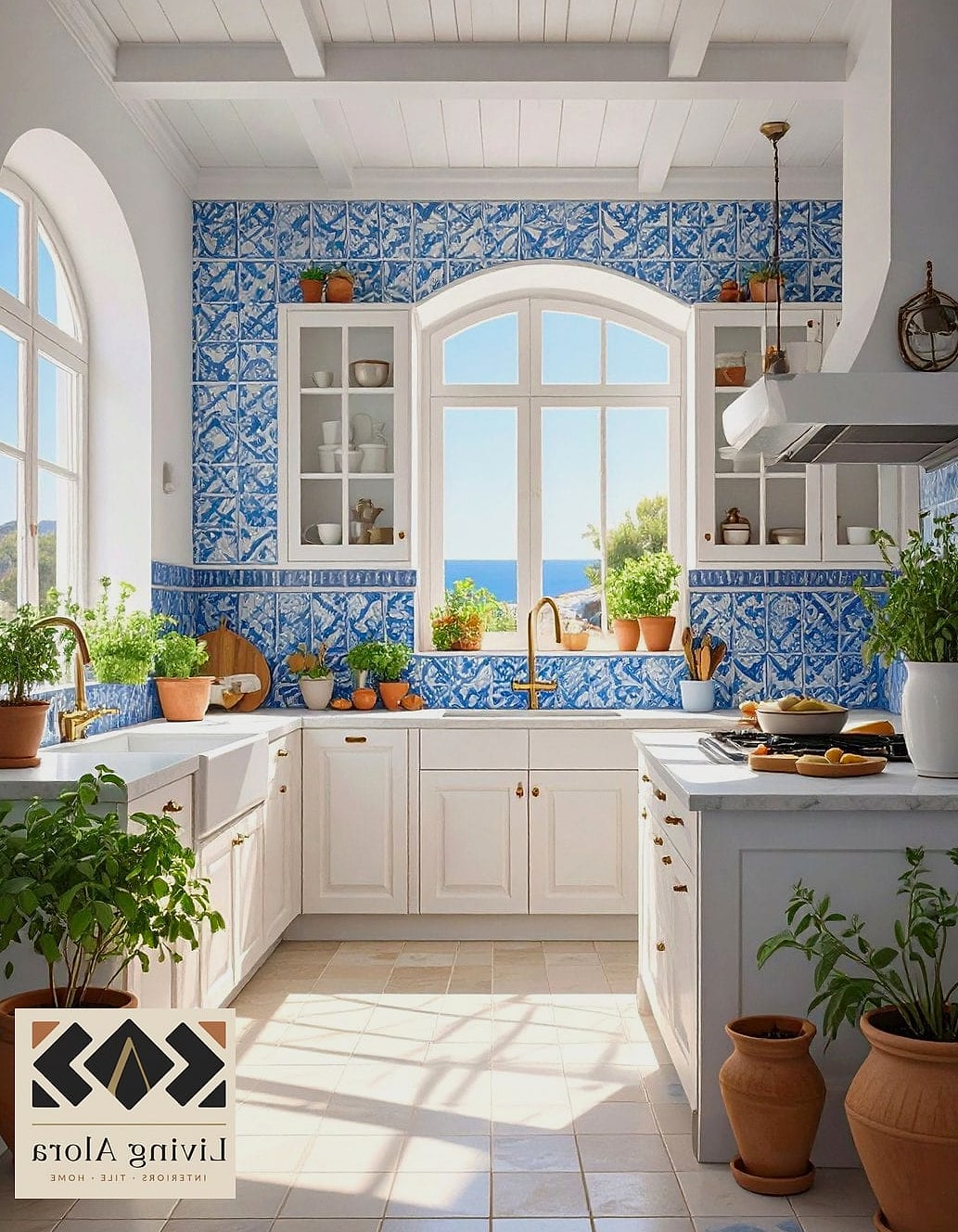
Blue and White Talavera-Inspired Tile
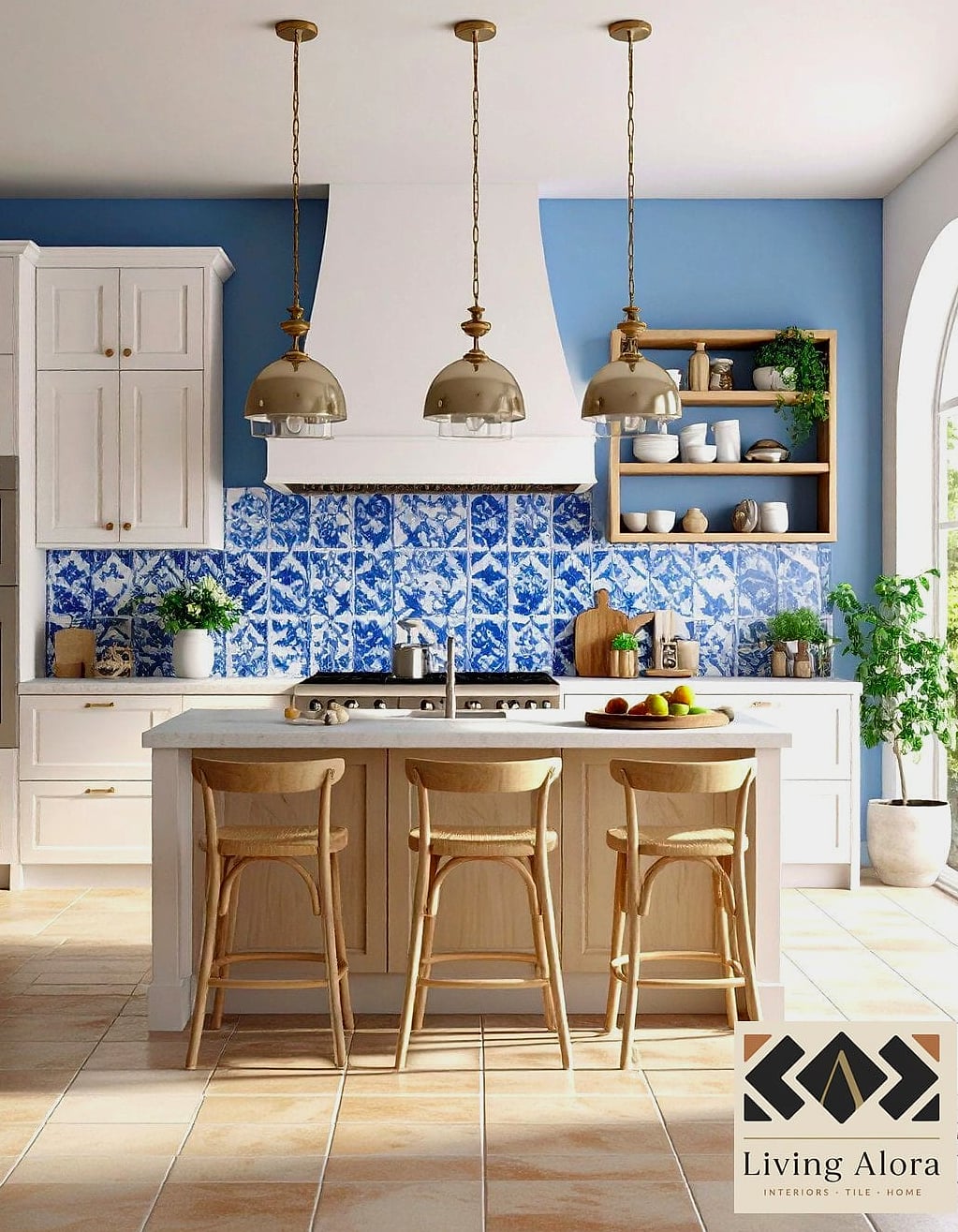
Talavera tile brings in that Spanish colonial energy with hand-painted patterns in cobalt blue, white, and sometimes yellow accents. It’s a bolder choice, and honestly one of my favorites for kitchens that want personality without going full maximalist everywhere else. A little goes a long way here, so consider using it as a framed accent behind the stove rather than covering every inch of wall. Pair it with simple white countertops and neutral cabinets so the pattern gets to be the star. Budget-friendly versions exist as printed ceramic tile, while hand-painted Talavera from Mexico or Spain sits at the higher end.
Herringbone Marble Mosaic
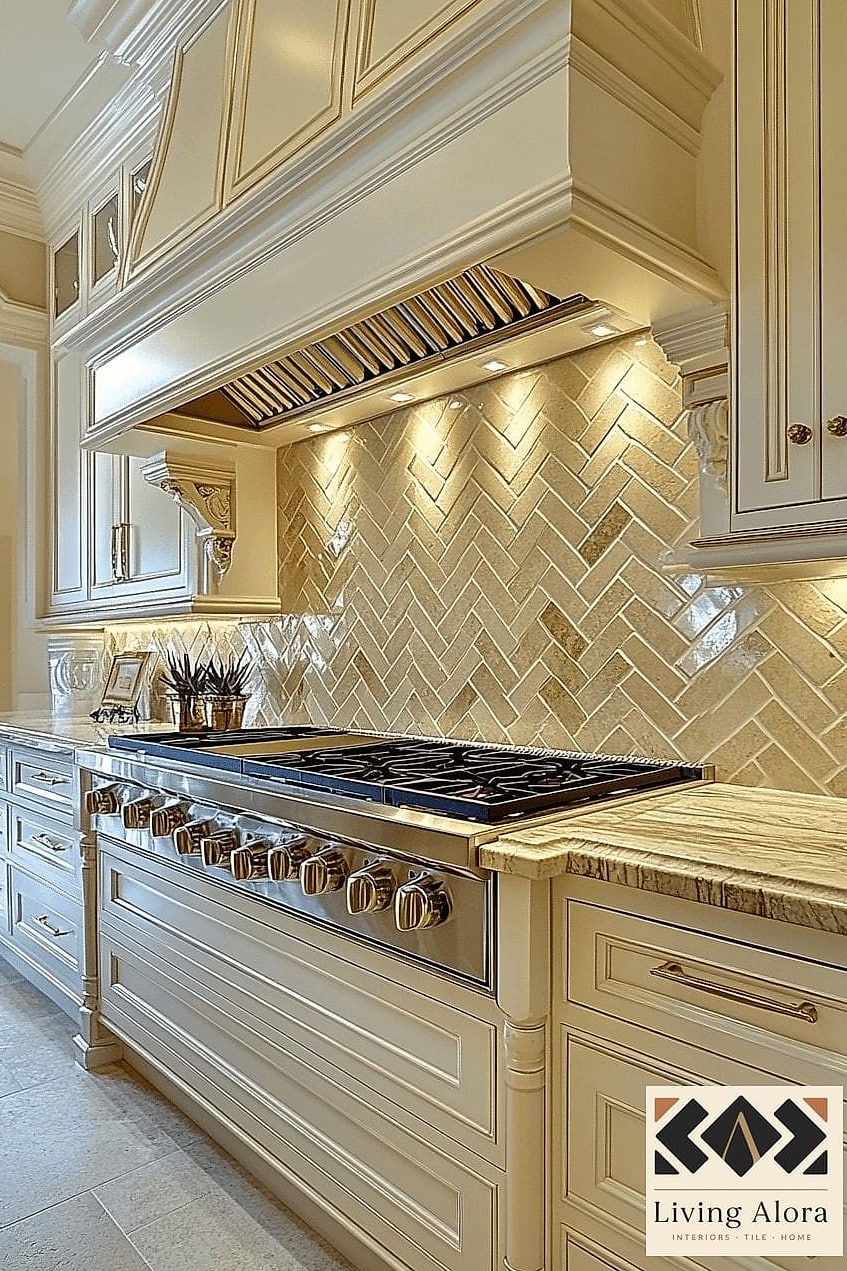
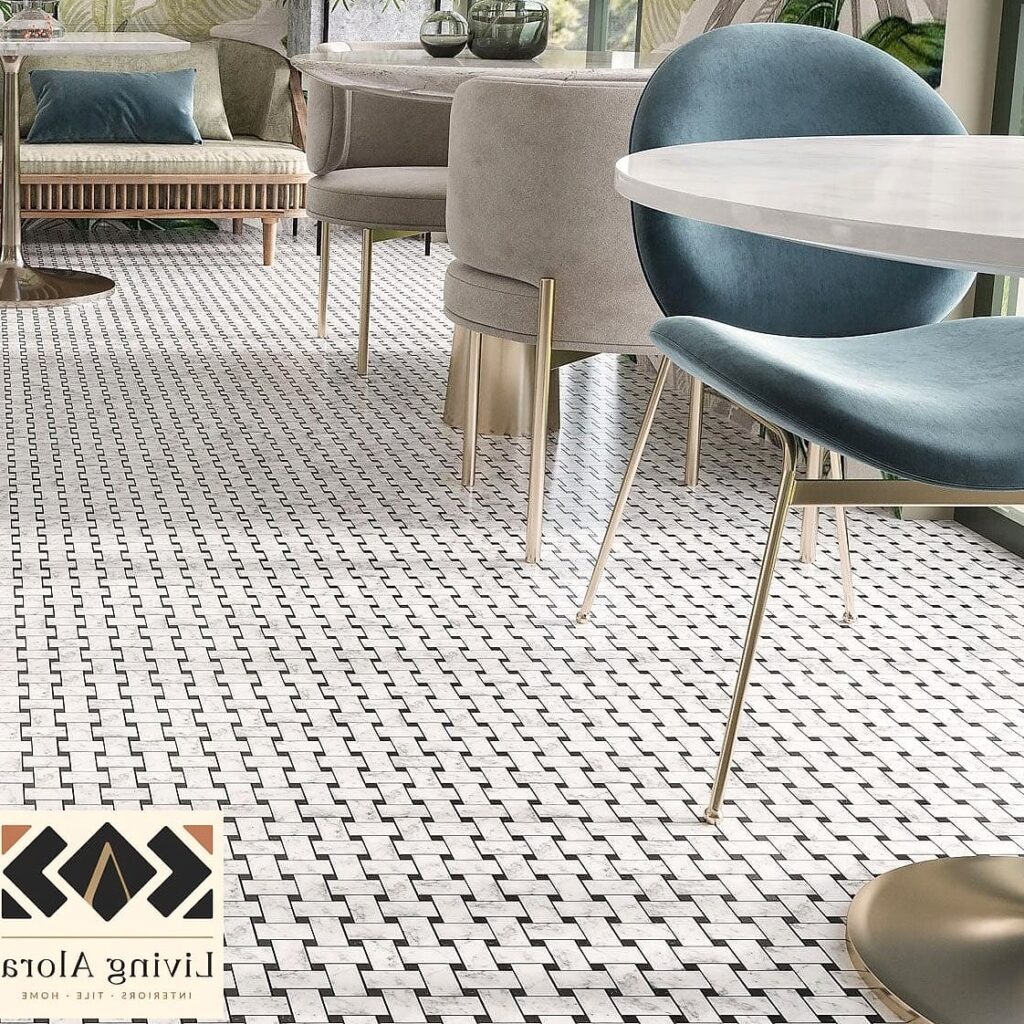
If you want Mediterranean warmth with a little more polish, a herringbone marble mosaic splits the difference nicely. The zigzag layout adds movement and visual interest, while the marble itself keeps things feeling elevated and classic. This pairs well in kitchens leaning more Italian coastal than Moroccan bazaar, especially with brushed brass fixtures and warm white cabinets. Marble does require sealing and isn’t the most forgiving with acidic spills like wine or lemon juice, so it’s worth knowing that going in. For a lower-maintenance option, look for herringbone-patterned porcelain that replicates the veining without the babysitting.
Moroccan Fish Scale Tile
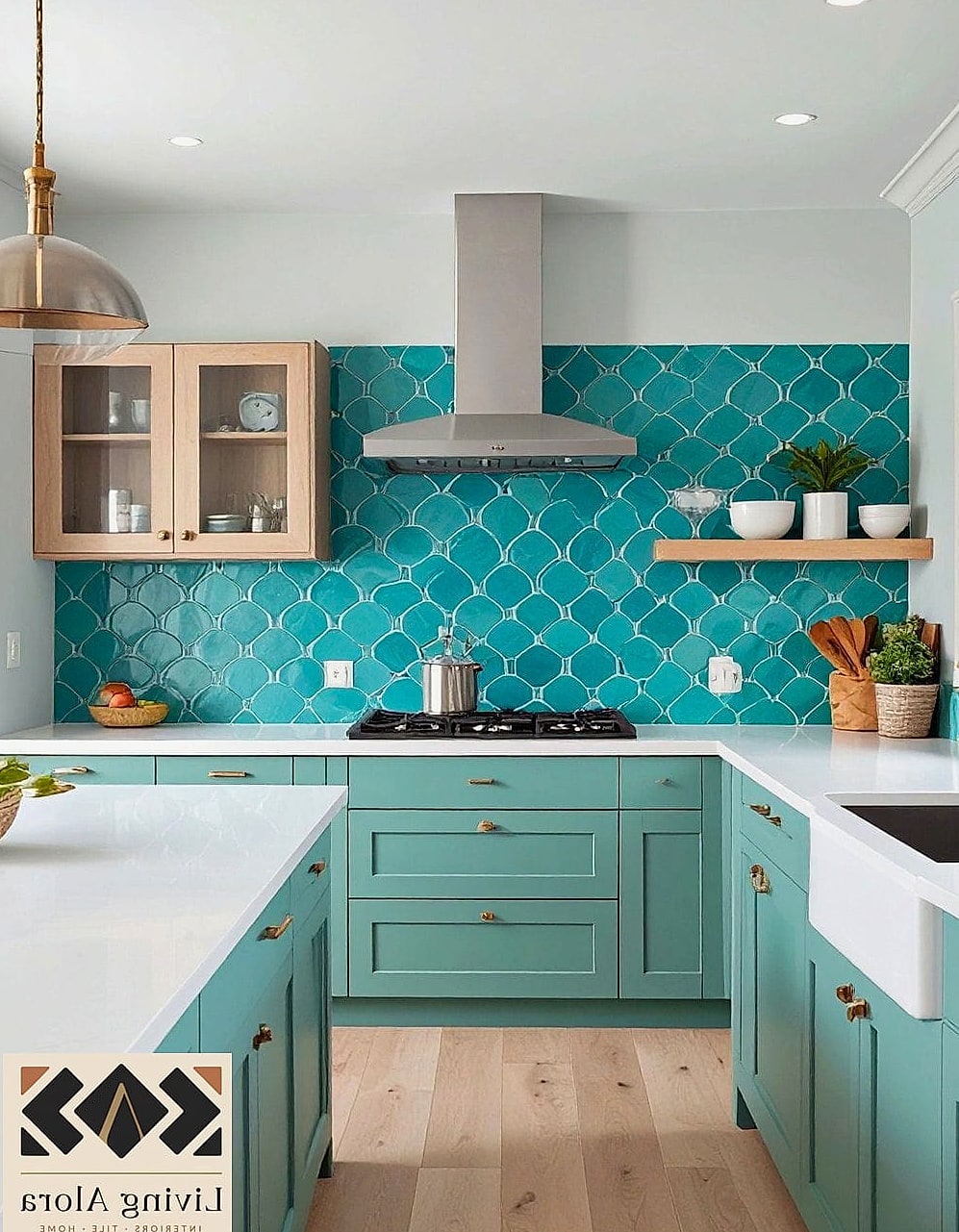
Fish scale, sometimes called mermaid or scalloped tile, gives you that layered, textural look that photographs beautifully and holds up in real life too. It’s a fun way to add curves into a kitchen that’s otherwise full of straight lines and hard edges. This style tends to shine in smaller kitchens or as an accent wall since the pattern is busy enough to carry a space on its own. Glazed ceramic versions are pretty budget-friendly and easy to clean with just soap and water. Handmade or dimensional versions cost more but add a sculptural quality that’s hard to replicate.
Warm Terracotta and Cream Mix
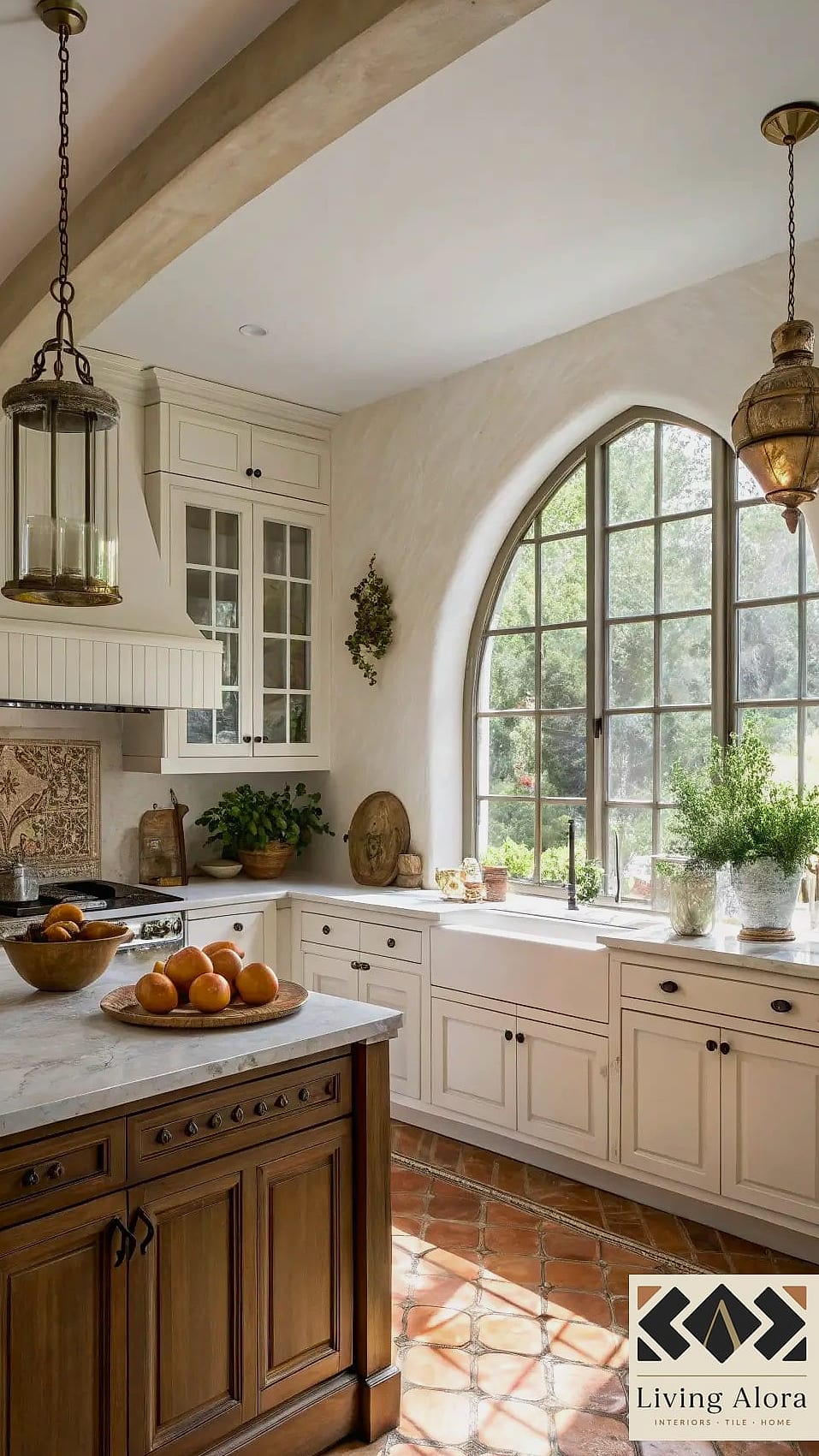
Not every Mediterranean backsplash needs to be a showstopper pattern. Mixing plain terracotta tile with cream or ivory tile in a simple grid creates a calmer, more understated version of the style. This is a great direction if you love the warmth of Mediterranean design but don’t want a busy focal point competing with open shelving or a big window. It reads especially well in kitchens with butcher block counters and matte black fixtures. Cleaning is straightforward since the tiles are typically glazed, and the neutral palette means it won’t feel dated anytime soon. It’s also one of the more renter-friendly looks if you go with peel-and-stick versions in similar tones.
Deep Blue Subway Tile with Textured Edges
Subway tile gets a Mediterranean makeover when you swap the crisp white for a deep cobalt or teal glaze with slightly irregular, handcrafted edges. It keeps the classic subway layout everyone loves but adds enough color and texture to feel distinctly coastal. This works well in smaller kitchens where you still want that clean, elongated tile shape but crave more personality than plain white offers. Stack it vertically for a more modern twist or keep the traditional running bond pattern for something more timeless. It’s fairly DIY-friendly too, since subway tile installation is one of the more approachable projects for a confident beginner.
Moorish Star and Cross Pattern
This pattern is instantly recognizable and rooted in centuries-old Islamic geometric design found throughout Spain and North Africa. It’s intricate, but modern manufacturing means you can now get the look in easy-to-install tile sheets rather than piecing it together tile by tile. This is a striking choice for a dedicated accent area, like a niche behind a stove or a small bar backsplash, since the pattern is detailed enough to hold attention on its own. Stick to a simple, quiet cabinet color so the tile doesn’t have to compete for attention. It’s not the cheapest option out there, but it delivers serious visual payoff for a relatively small tiled area.
Olive Green Ceramic Tile
Olive and sage greens have been trending in kitchens generally, but they also happen to tie beautifully into Mediterranean landscapes and olive groves. A glossy olive ceramic subway or square tile brings that connection in without leaning into any one specific pattern or culture too heavily. It’s an easy pairing with warm wood cabinets, black hardware, or even white shaker cabinets if you want more contrast. This is a solid pick for anyone who wants Mediterranean warmth but prefers a more contemporary overall kitchen. Glossy glazed tile is also one of the easier surfaces to wipe down after cooking, which matters more than people expect once you’re living with a backsplash daily.
Natural Stone Mosaic in Warm Tones
For a more organic, textured take, a mosaic mixing travertine, limestone, and other warm-toned natural stones brings in that old-world Mediterranean villa feeling. The irregular shapes and tonal variation mean the wall never looks flat or mass-produced. This works especially well in kitchens that already lean into natural materials, like wood beams, woven pendant lights, or open shelving with ceramic dishware on display. Natural stone does need periodic sealing to prevent staining and etching, so it’s a bit more of a commitment than glazed tile. If upkeep isn’t your thing, stone-look porcelain mosaics give a similar organic feel with much less maintenance.
Yellow and Blue Patterned Accent Strip
If a full pattern feels like too much, try using a patterned tile as a narrow accent strip along the top or bottom of an otherwise plain backsplash. Yellow and blue combinations feel particularly Mediterranean and add a cheerful pop without overwhelming the room. This is a great budget-conscious option since you’re only buying pattern tile for a small linear section rather than the whole wall. It also works well for renters or anyone hesitant to commit to a bold pattern long-term. Pair it with simple white or cream field tile so the accent strip really gets to shine.
Peel-and-Stick Mediterranean Tile Panels
Not everyone is ready for a full tile installation, and that’s completely fair. Peel-and-stick backsplash panels now come in surprisingly convincing Mediterranean-inspired patterns, from faux zellige to Talavera-style prints. These are ideal for renters, first apartments, or anyone who wants to test out a bold look before committing to real tile. Installation usually takes an afternoon and requires no grout, no tile saw, and no professional help. Just know that these panels won’t hold up to direct heat the way ceramic or stone will, so keep them a reasonable distance from your stovetop or use a metal panel guard behind the range.
Whichever direction you go, Mediterranean backsplash ideas are really about texture, warmth, and a little bit of imperfection that makes a space feel collected rather than showroom-perfect. You don’t need to commit to every element at once. Start with the tile, let the rest of your kitchen’s colors and materials follow its lead, and it’ll come together more naturally than you’d expect.