18 White Brick Backsplash Ideas You Haven’t Seen Before

- Limewashed Brick with Visible Trowel Marks
- Brick Laid in a Herringbone Pattern
- Thin Brick Veneer in a Vertical Stack
- Whitewashed Brick with Exposed Red Peeking Through
- Glossy White Brick for a Reflective Finish
- Brick with Black Mortar Instead of White
- Reclaimed White Brick with Chips and Imperfections
- Brick Backsplash That Wraps Around a Window
- Painted Brick with a Soft Warm Undertone
- Brick Extended Floor to Ceiling on One Wall
- Mini Brick Mosaic Tiles
- White Brick Paired with Open Wood Shelving
- Brick with a Distressed, Aged Patina
- Brick Accent Behind a Range Hood Only
- White Brick with Colorful Grout Lines
- Peel-and-Stick Brick Panels for Renters
- Curved Brick Backsplash Around a Range Alcove
- Brick with Integrated Floating Shelving Niches
18 White Brick Backsplash Ideas You Haven’t Seen Before
White brick backsplashes have been having a moment for a while now, but most of what you see online looks pretty much the same: a plain whitewashed wall behind a stove and not much else. There’s actually a ton of room to make this material feel fresh, textured, and personal to your kitchen. Below are eighteen ways to use white brick that go beyond the basic farmhouse look you’ve probably scrolled past a hundred times.
Limewashed Brick with Visible Trowel Marks

Instead of a flat white paint job, limewash creates that chalky, uneven texture where you can actually see the movement of the brush or trowel underneath. It reads more like plaster than paint, which gives the wall a handmade, almost European feel. This works beautifully in kitchens with warm wood cabinetry since the texture softens the contrast. Limewash needs to be sealed properly near cooking areas, so plan on a matte sealant that won’t yellow over time.
Brick Laid in a Herringbone Pattern

Most brick backsplashes run in a standard horizontal stack, so flipping the bricks into a herringbone layout instantly sets your kitchen apart. The angled lines add movement to a wall that would otherwise be pretty static. It’s a great choice behind a range where you want a focal point without adding color. Keep in mind herringbone takes longer to install and wastes more material on cuts, so budget a little extra for both labor and brick.
Thin Brick Veneer in a Vertical Stack
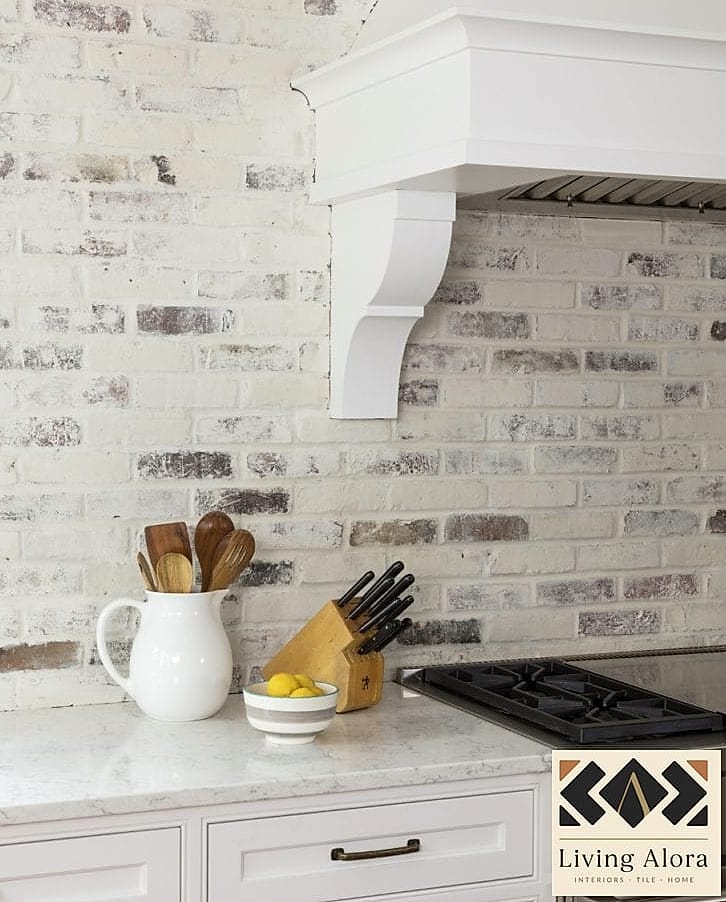
Turning the brick on its end rather than laying it horizontally changes the whole visual rhythm of a wall. Vertical stacking draws the eye upward, which is a nice trick in kitchens with lower ceilings. Thin brick veneer is lightweight enough to install over existing drywall, making it a friendlier DIY option than full brick. Pair it with open shelving on either side so the vertical lines have room to breathe.
Whitewashed Brick with Exposed Red Peeking Through
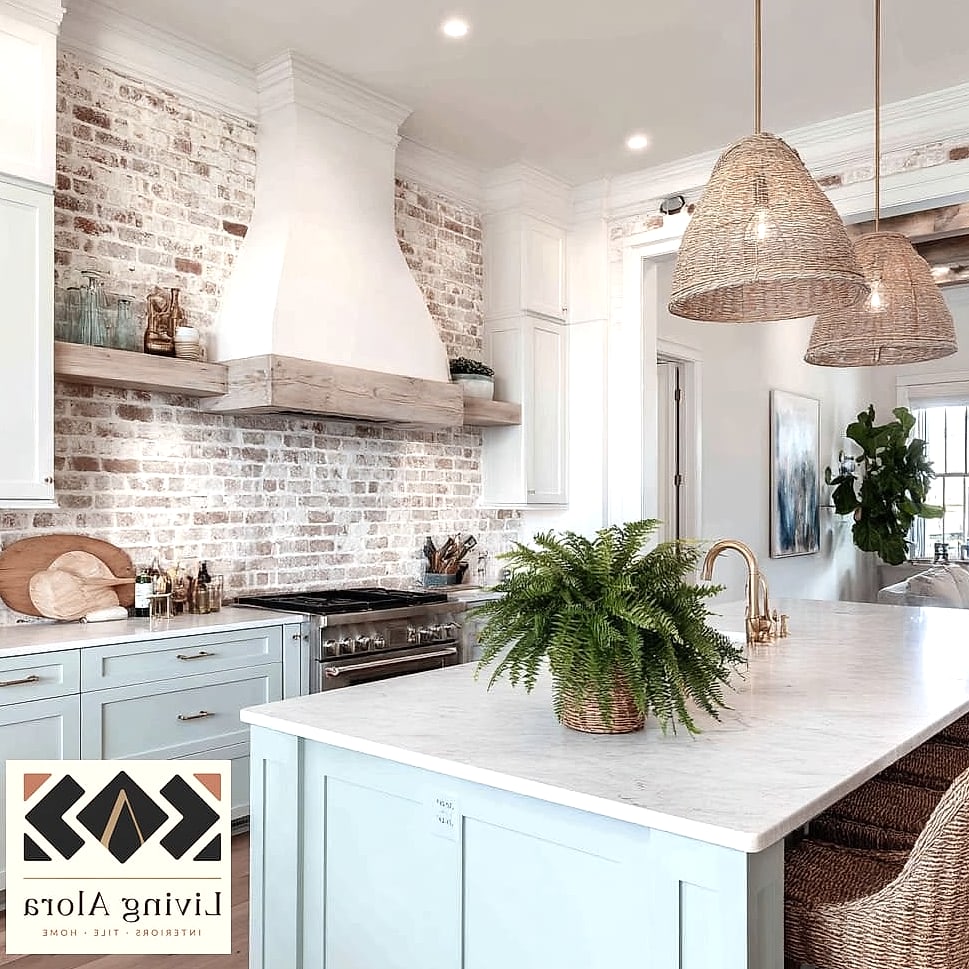
Rather than fully covering the brick, a light whitewash lets some of the original red or orange tone show through in patches. It’s an easy way to add warmth and history to a kitchen that might otherwise feel too crisp or new. This look works especially well in older homes or loft-style spaces where exposed brick already exists elsewhere. Homeowners who love this ideas often say it feels like the wall has always been there, even in a brand new build.
Glossy White Brick for a Reflective Finish

Most white brick leans matte, but a glossy or semi-gloss finish bounces light around a kitchen in a completely different way. This works well in smaller or darker kitchens that need help feeling brighter. Glossy brick also wipes clean more easily, which makes it more practical near a stovetop than you might expect. Just know that gloss shows imperfections in the mortar lines, so installation needs to be fairly precise.
Brick with Black Mortar Instead of White
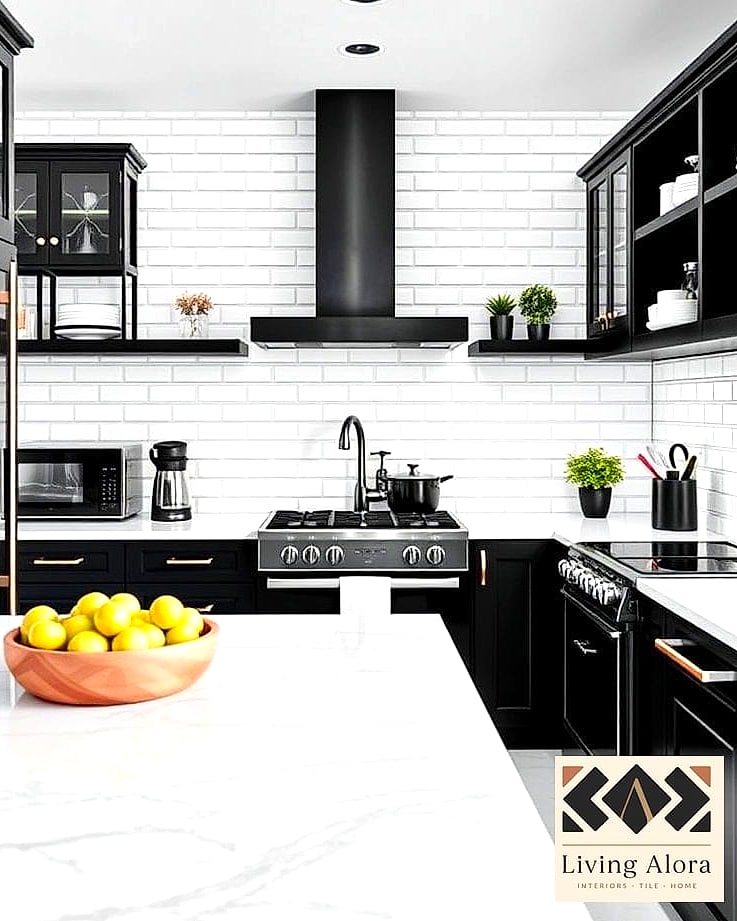
Swapping white grout for black mortar gives white brick a graphic, almost architectural edge. Each individual brick gets outlined, so the pattern itself becomes part of the design rather than fading into a solid white wall. This pairs nicely with black hardware, matte black faucets, or dark window frames for a cohesive look. It’s a bolder choice, so it tends to work best in kitchens that already lean modern or industrial.
Reclaimed White Brick with Chips and Imperfections
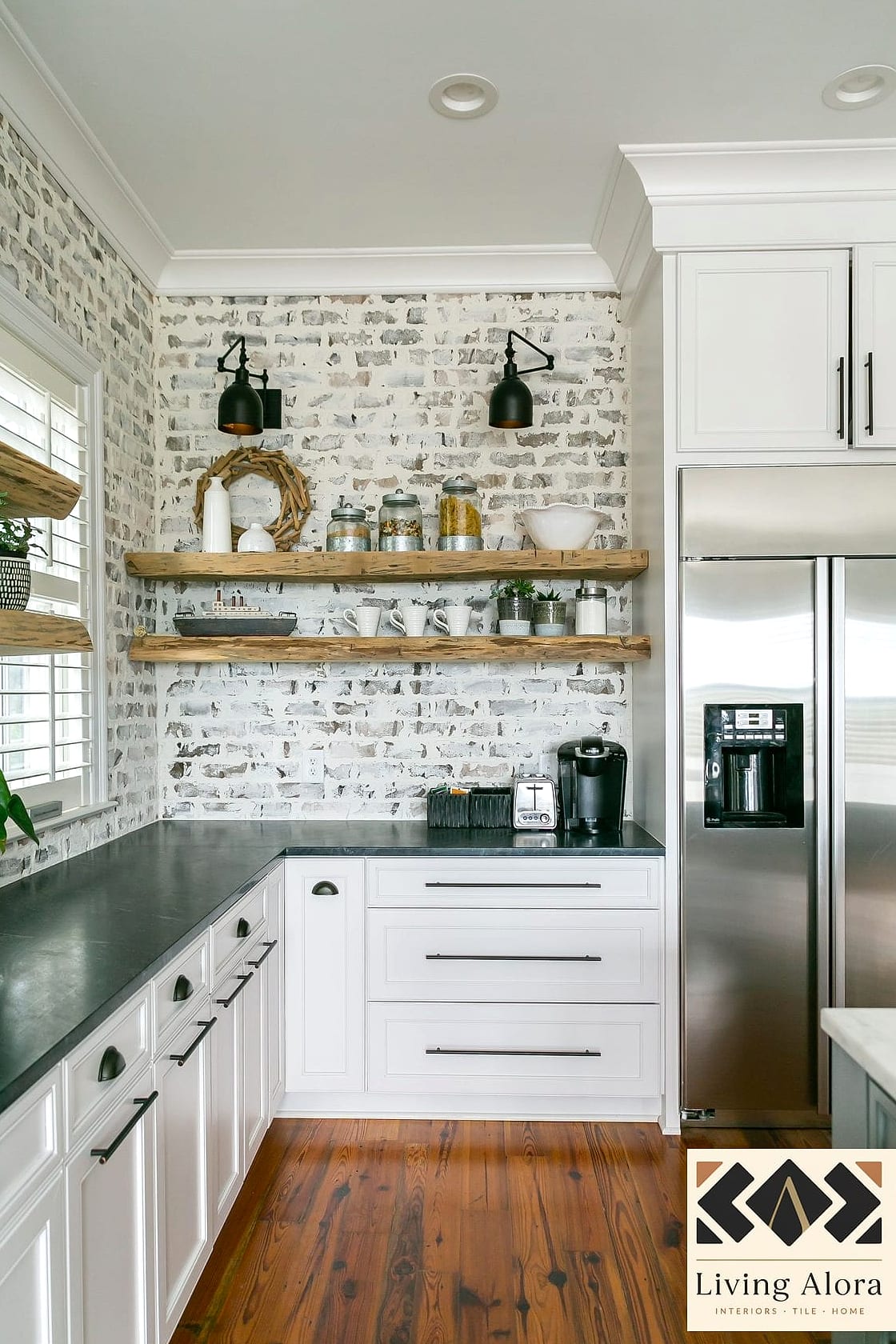
Reclaimed brick comes with dents, chips, and uneven edges that new brick simply can’t fake. Once whitewashed, those imperfections still read through, giving the wall real character and history. This is a favorite among homeowners who want a kitchen that feels collected over time rather than newly renovated. Reclaimed brick can run pricier and heavier than standard veneer, so check with your installer about structural support first.
Brick Backsplash That Wraps Around a Window
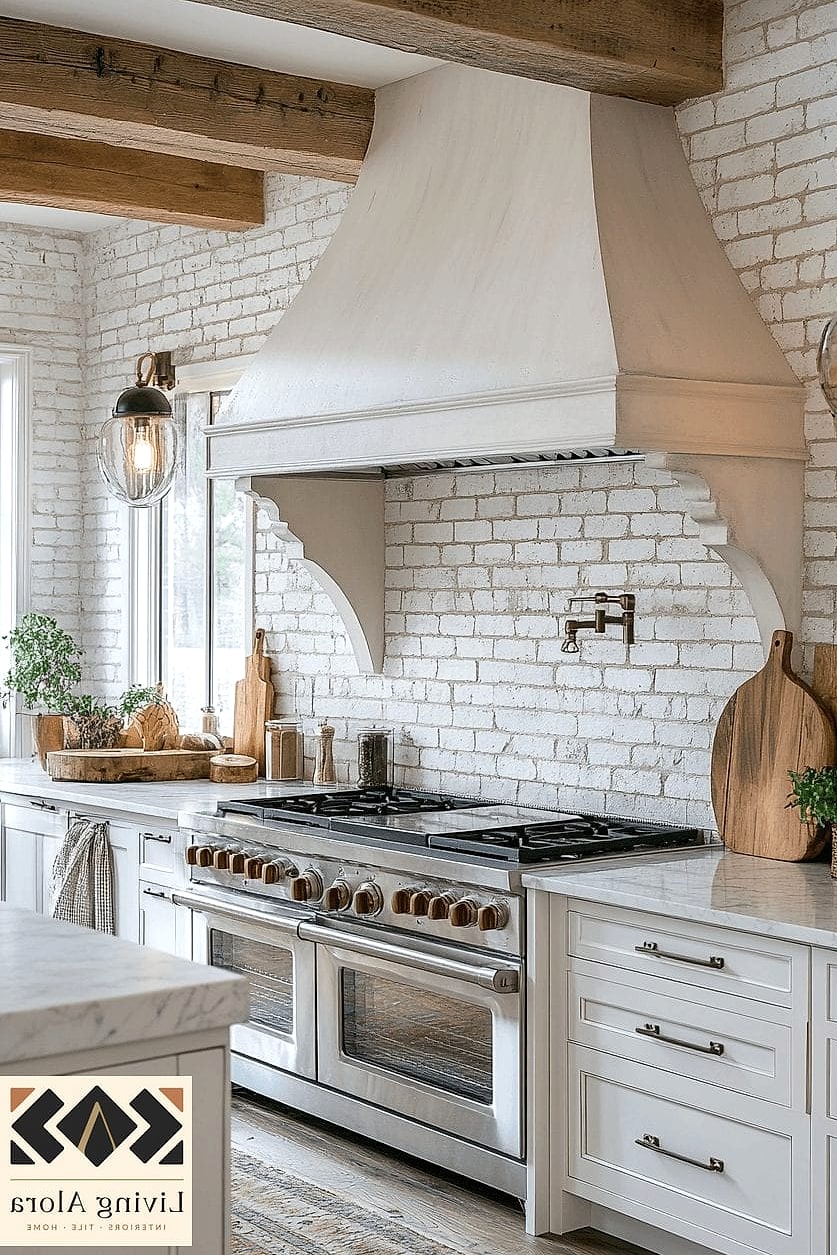
Instead of stopping the brick at the edges of the stove, let it continue up and around a kitchen window. This creates a framed effect that feels intentional and pulls the eye toward natural light. It’s particularly striking over a farmhouse sink where the window becomes part of the view while you’re doing dishes. Just make sure your installer accounts for the extra cutting and corner work involved.
Painted Brick with a Soft Warm Undertone

Pure white can sometimes feel sterile, so choosing a paint with a warm undertone, think ivory or a barely-there cream, keeps things soft instead of stark. This is a smart pick for kitchens with warm wood tones, brass hardware, or natural stone counters. It reads as white from across the room but adds subtle depth up close. Ask your paint store for a few warm-white swatches to compare directly against your cabinetry before committing.
Brick Extended Floor to Ceiling on One Wall

Rather than limiting brick to the space behind the stove, running it the full height of one wall turns it into a statement feature. This works especially well in open-concept kitchens where that wall is visible from the living or dining area. It gives the eye a clear focal point and adds texture to a space that might otherwise rely entirely on cabinetry for visual interest. Full-height brick is a bigger investment, so it’s worth mocking up the wall with painter’s tape first to see the scale.
Mini Brick Mosaic Tiles

Mini brick, sometimes called brick-look mosaic tile, comes on mesh sheets in tiny individual pieces instead of full-size brick. It gives you that same layered texture at a smaller scale, which suits compact kitchens or apartment galley kitchens where oversized brick might feel heavy. These mosaics are also more DIY-friendly since the sheets install similarly to standard tile. It’s a good middle ground if you love the look but aren’t ready for a full brick veneer project.
White Brick Paired with Open Wood Shelving

Swapping upper cabinets for floating wood shelves against a white brick wall creates a nice contrast between rustic texture and clean lines. The wood warms up the white brick, while the brick keeps the shelving from feeling too sparse or plain. This combo is popular in farmhouse and modern country kitchens for good reason. Just keep styling on the shelves fairly simple, a few bowls, some greenery, so the wall itself stays the star.
Brick with a Distressed, Aged Patina
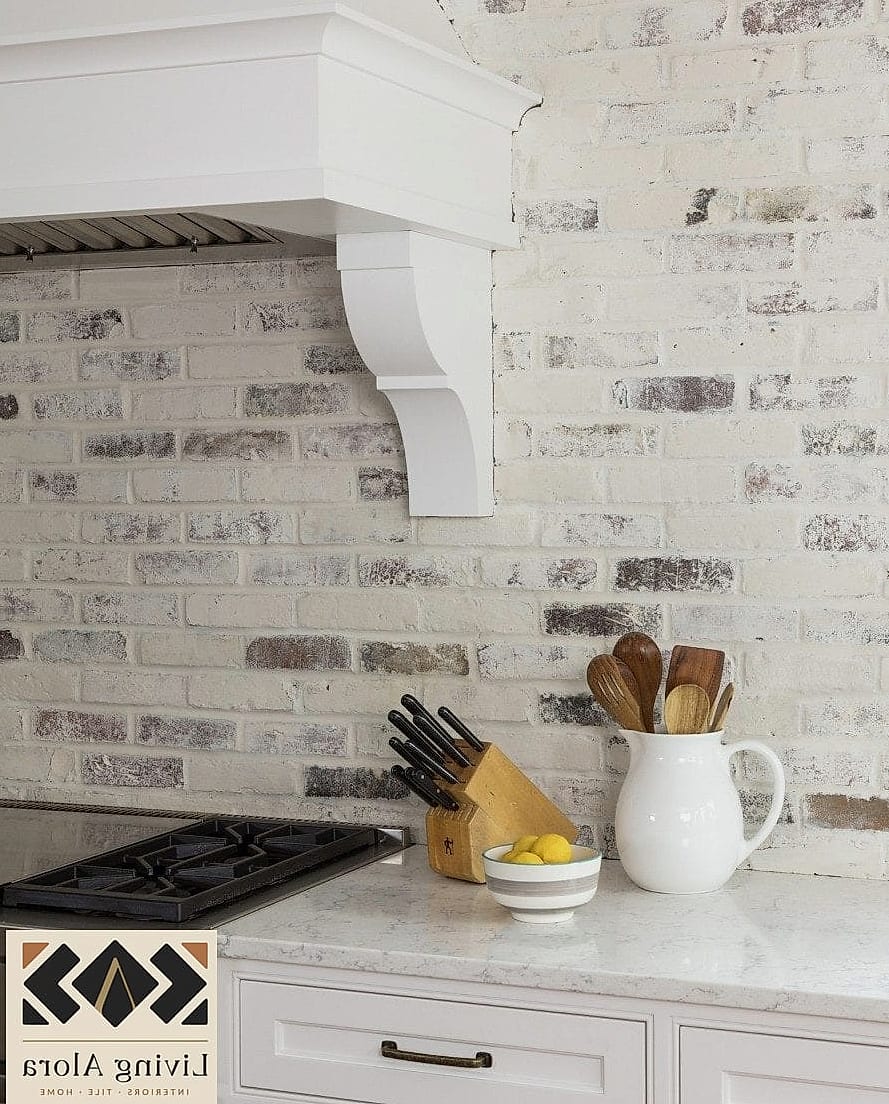
Beyond a simple whitewash, some finishes are applied specifically to mimic decades of wear, with subtle streaks, shadows, and tonal variation baked right in. This gives new construction a sense of age without needing actual reclaimed material. It’s an especially good option for anyone who loves the reclaimed brick look but wants a lighter, easier installation. Ask your tile supplier about faux-aged finishes if this catches your eye.
Brick Accent Behind a Range Hood Only

Rather than covering the entire backsplash, some kitchens use white brick as a focused accent directly behind and around the range hood, with standard tile or paint everywhere else. This keeps the texture concentrated where it has the most visual impact. It’s also a more budget-friendly way to get the look without covering an entire kitchen’s worth of wall space. This approach works especially well when your range hood itself has some architectural presence, like a plaster or wood hood.
White Brick with Colorful Grout Lines

Instead of white or black mortar, a soft colored grout, think sage, dusty blue, or blush, adds a surprising pop without overwhelming the space. Because the grout lines are thin, the color reads more as a subtle wash than a bold statement. This works well for homeowners who want personality in their kitchen but aren’t ready to commit to colorful cabinets or tile. It’s also an easy way to tie the backsplash into other colors already in the room.
Peel-and-Stick Brick Panels for Renters

For anyone who can’t do permanent renovations, peel-and-stick brick panels have come a long way and now look surprisingly convincing from a few feet back. They’re lightweight, removable, and a genuinely renter-friendly way to test the look before committing long term. Application is straightforward enough for a weekend afternoon, no mortar or specialty tools required. Just check that your wall surface is clean and smooth first, since texture underneath can show through the panel.
Curved Brick Backsplash Around a Range Alcove
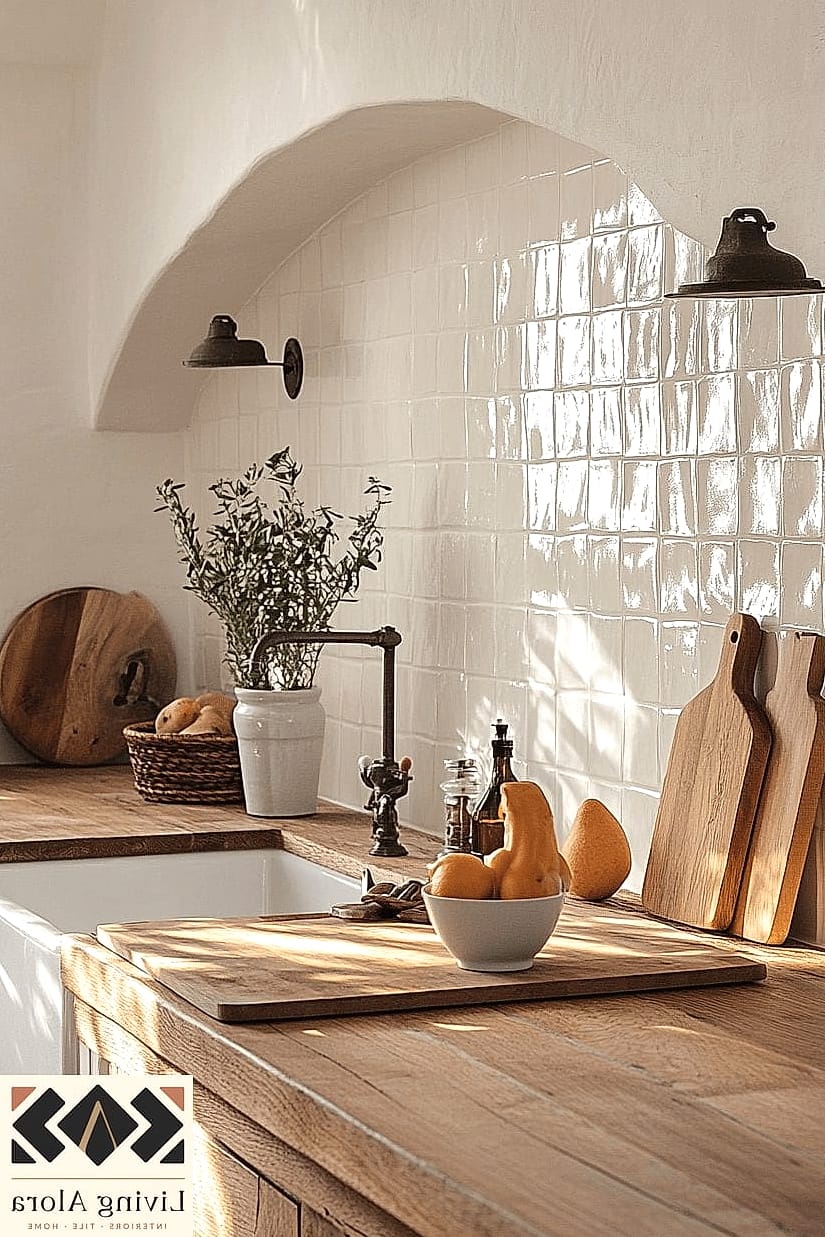
In kitchens with a built-in alcove or niche for the stove, curving the brick to follow that shape creates a soft, cocooned feel around the cooking area. It’s a detail that photographs beautifully and gives the kitchen a sense of intention, like the space was designed around that one feature. This is more of a custom installation, so it typically involves working closely with a mason or tile setter experienced in curved surfaces. It’s a splurge-worthy option for anyone doing a full kitchen remodel.
Brick with Integrated Floating Shelving Niches

Some brick installations include small recessed niches built directly into the wall for spices, oils, or a few favorite mugs. This blends storage and texture in one move, so the wall isn’t just decorative, it’s functional too. It’s a smart solution for smaller kitchens that need every inch of storage they can get. Just plan this out with your contractor early, since niches need to be built into the wall structure before the brick goes up, not added after.
Whichever direction you go, white brick is one of those materials that adapts to almost any kitchen style, from modern farmhouse to industrial loft to soft European countryside. The key is picking a variation that fits how you actually use your space, not just what looks good in a photo. Take your time picking finishes and mortar colors, since those small details end up making the biggest difference once everything’s installed.