15 Gray Backsplash Ideas You Haven’t Seen Before
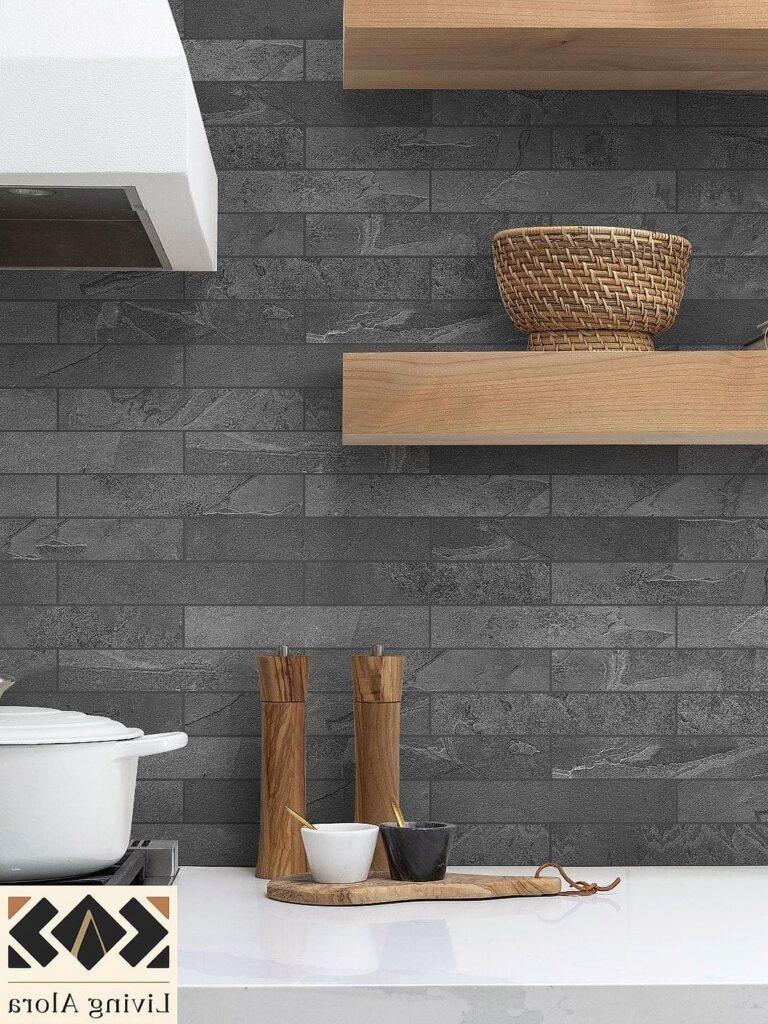
- Charcoal Zellige Tile with Visible Texture
- Graphite Herringbone with Brass Trim
- Soft Dove Gray Subway with Contrasting Grout
- Large-Format Gray Marble Slab
- Fluted Gray Tile Panels
- Warm Greige Mosaic in a Basketweave Layout
- Matte Slate Gray Vertical Stack
- Smoky Gray Hexagon Tile
- Concrete-Look Porcelain in a Board-Formed Texture
- Two-Tone Gray Blocking
- Pebbled Gray Stone Mosaic
- Scalloped Fish Scale Tile in Pale Gray
- Weathered Gray Brick-Look Tile
- Gray Tile with Inlaid Metal Accent Strips
- Soft Gray Squiggle or Wave Tile
15 Gray Backsplash Ideas You Haven’t Seen Before
Gray gets a bad reputation for being boring, but honestly, that’s only true if you’re doing it wrong. A well-designed gray backsplash can feel moody, warm, sculptural, or even a little glamorous depending on how you play with texture and shape. It’s also one of the most forgiving colors out there, working with everything from warm wood cabinets to black hardware to brass fixtures.
If you’ve scrolled through the same ten subway tile photos a hundred times, this list is for you. These are gray backsplash ideas that go beyond the basics and actually bring some personality into the kitchen.
Charcoal Zellige Tile with Visible Texture
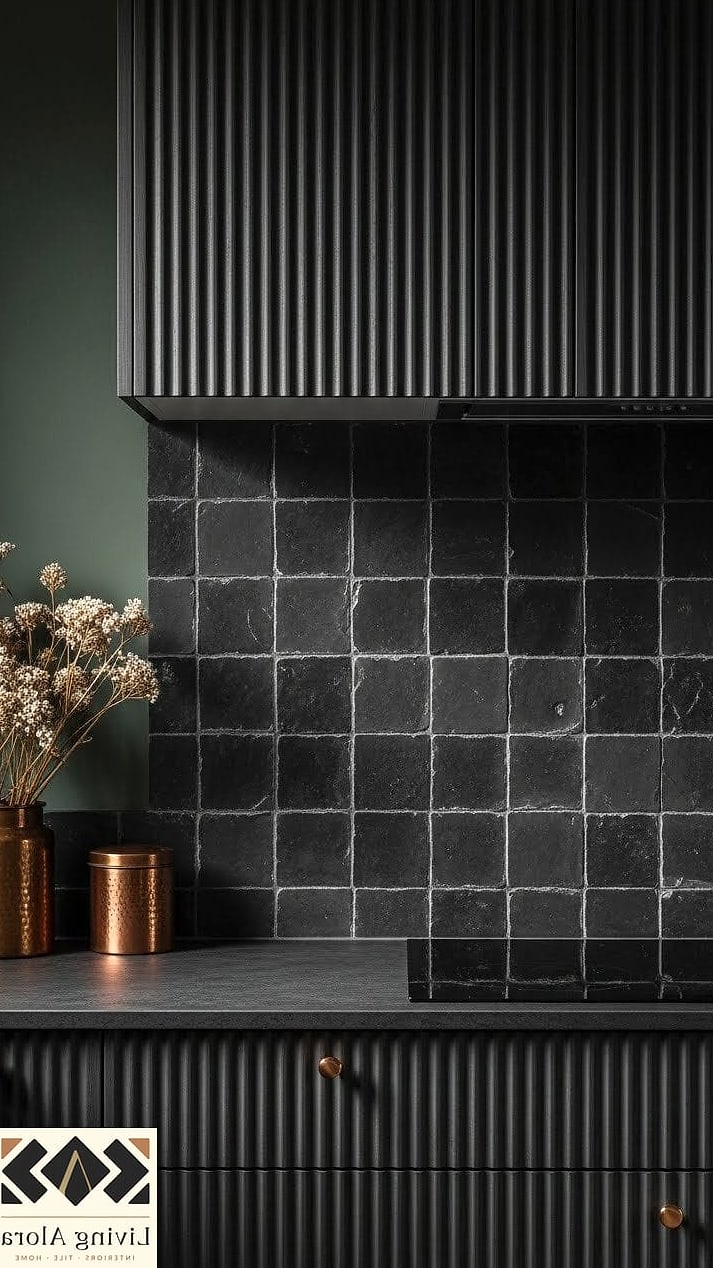
Zellige tile has that handmade, slightly imperfect look that mass-produced tile just can’t fake, and in a deep charcoal shade it reads almost like poured concrete with movement. Each tile catches light a little differently because of the natural variation in glaze thickness, so the wall never looks flat or static.
This works beautifully in kitchens with brass or unlacquered hardware since the warmth plays off the coolness of the gray. It’s pricier than standard ceramic and installation takes a more experienced hand, but the payoff is a backsplash that looks custom rather than catalog-ordered.
Graphite Herringbone with Brass Trim
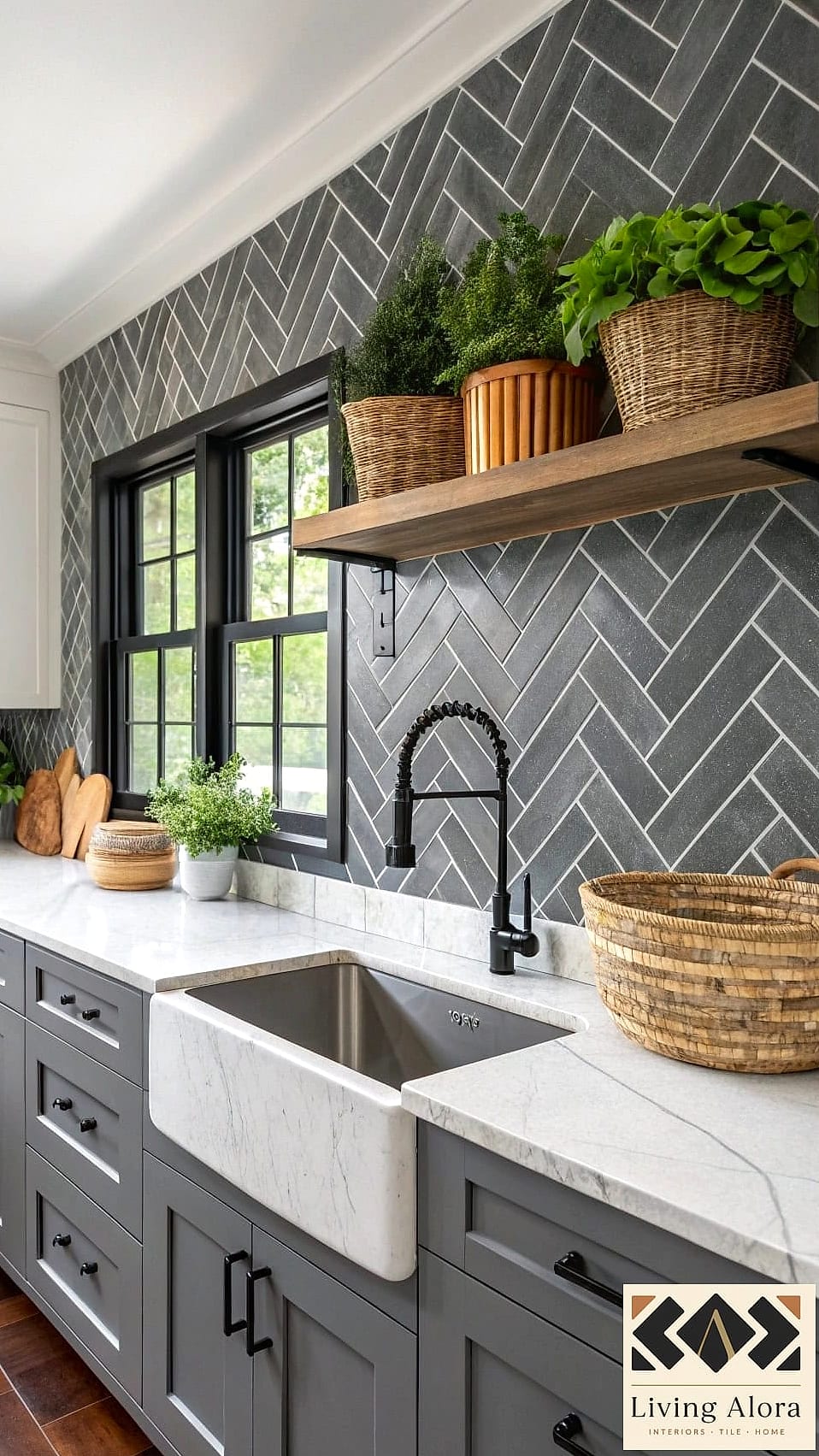
Herringbone patterns already add movement, but pairing a dark graphite gray tile with a slim brass pencil trim along the top edge gives the whole thing a finished, almost jewelry-box feel. It’s a small detail that a lot of people skip, and it’s the thing that makes guests ask who did your kitchen.
This idea works best behind a range or on a focal wall rather than wrapping the entire kitchen, since the pattern is busy enough to want some breathing room. Budget-wise, you can get a similar effect with porcelain tile that mimics the graphite look for a fraction of the cost of natural stone.
Soft Dove Gray Subway with Contrasting Grout

Subway tile isn’t going anywhere, but most people default to white with gray grout. Flipping it, using a soft dove gray tile with a darker charcoal grout, gives you that classic shape with way more depth and definition.
The contrast makes the grid pattern pop instead of disappearing into the wall, which is great in kitchens that lean minimal and need a little more visual interest. It’s also one of the more budget-friendly and DIY-friendly options on this list since standard subway tile is widely available and easy to cut.
Large-Format Gray Marble Slab
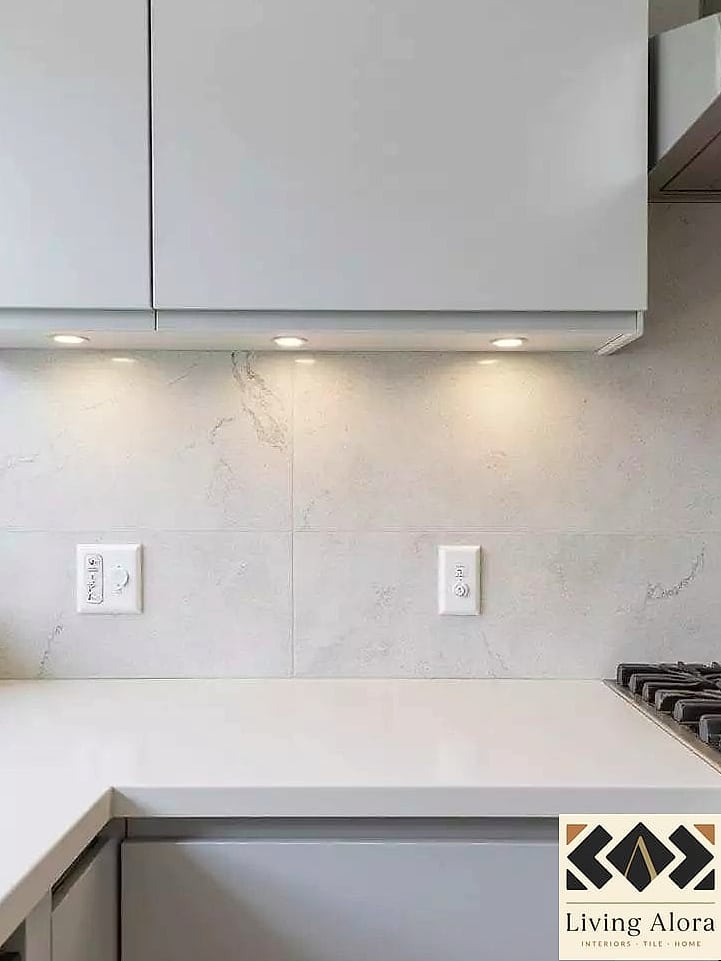
Skip the grout lines entirely and go with a single large slab of gray-veined marble for a dramatic, almost sculptural look. This is the kind of backsplash that becomes the star of the kitchen, so cabinetry and countertops usually stay simple to let it shine.
It’s a splurge, no way around it, and marble does require sealing and a bit more care around acidic spills. But for anyone who wants that quiet luxury feel without a ton of extra styling, it’s hard to beat the way natural veining moves across an uninterrupted surface.
Fluted Gray Tile Panels

Fluted or ribbed tile has been showing up more in bathrooms, but it’s starting to make its way into kitchens too, and gray is where it really shines. The vertical grooves catch shadow and light throughout the day, giving a flat wall real dimension without adding any pattern.
This is a great choice for a more contemporary or Japandi-inspired kitchen where clean lines matter. It’s a little trickier to install than flat tile because of the grooves, so it’s not the most DIY-friendly pick, but a professional installer can usually handle it without much trouble.
Warm Greige Mosaic in a Basketweave Layout

Basketweave patterns have an old-world charm that feels fresh again when done in a warm greige, that in-between shade of gray and beige. The interlocking rectangles create a woven look that adds texture without competing with busier countertops.
It pairs nicely with butcher block counters and warm wood open shelving, softening what could otherwise feel like a cold kitchen. Mosaic sheets also make this more approachable for a weekend DIY project since the pattern is pre-set on mesh backing.
Matte Slate Gray Vertical Stack
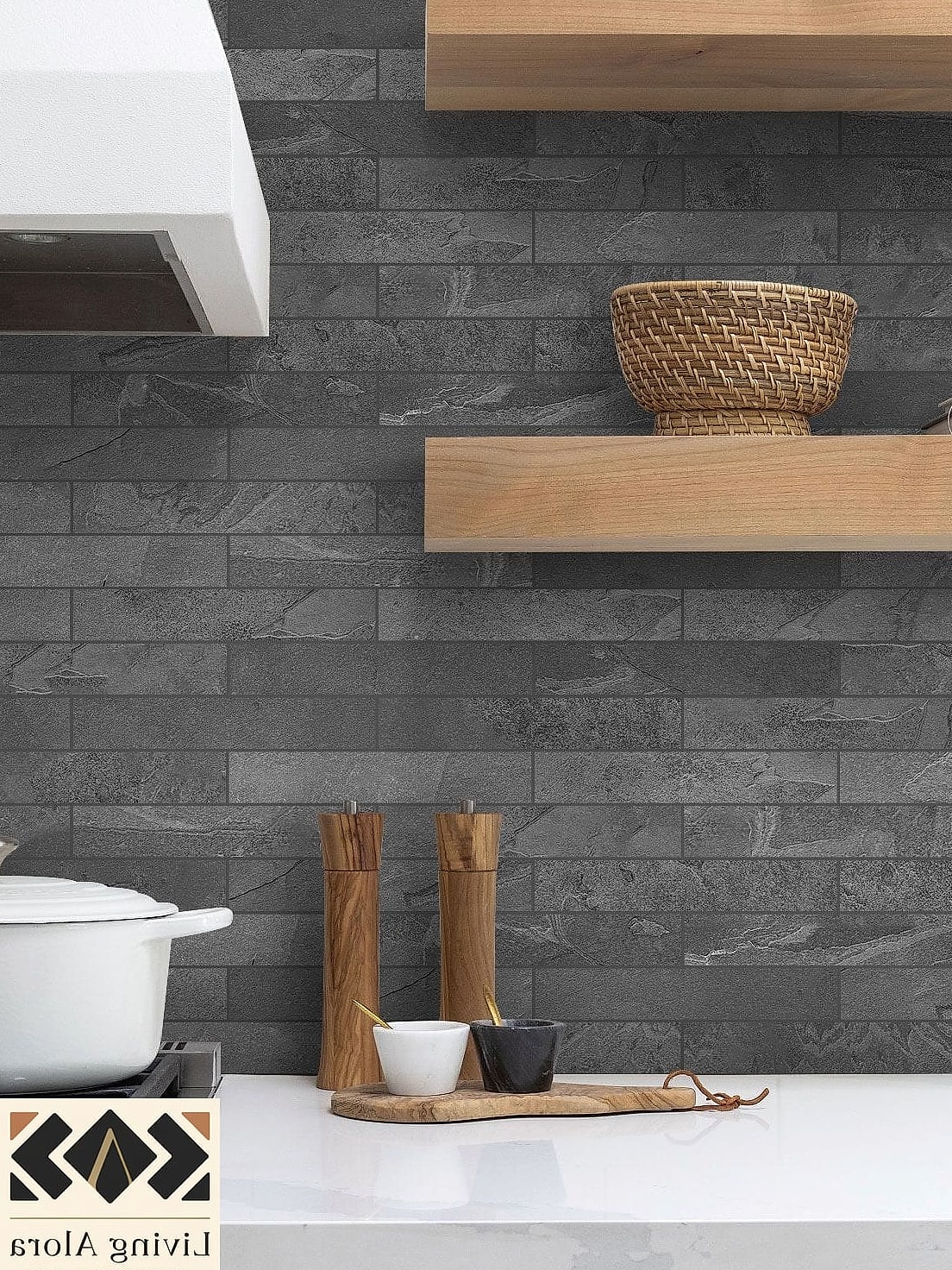
Instead of the usual horizontal brick pattern, try stacking rectangular tiles vertically in a matte slate gray. The vertical lines draw the eye upward, which is a nice trick in kitchens with lower ceilings since it creates the illusion of more height.
Matte finishes also hide water spots and fingerprints better than glossy ones, which matters a lot behind a busy prep area. This is a solid pick for anyone who wants something modern but not overly trendy, since the clean lines won’t feel dated in five years.
Smoky Gray Hexagon Tile

Hexagon tile brings a playful geometric quality, and in a smoky gray tone it feels grown-up rather than kid’s-bathroom cute. The repeating shape creates natural visual rhythm across the wall, especially when it extends up to the underside of open shelving.
Small hexagons work well behind a stove or sink as a focal detail, while larger hex tiles can cover a full wall without feeling overwhelming. Cleaning requires a bit more attention to grout lines given all the angles, so a grout sealer is worth the extra step here.
Concrete-Look Porcelain in a Board-Formed Texture

Board-formed concrete has that raw, industrial texture where you can see the faint lines from wooden forms, and porcelain tile now replicates it convincingly without the weight or maintenance of actual concrete. It’s an unexpected choice for a backsplash but adds serious character to modern farmhouse or industrial kitchens.
Porcelain is also incredibly durable and low-maintenance, resisting stains and scratches far better than real concrete would. This is a great option for anyone who wants an architectural, textural statement without worrying about sealing or cracking down the line.
Two-Tone Gray Blocking
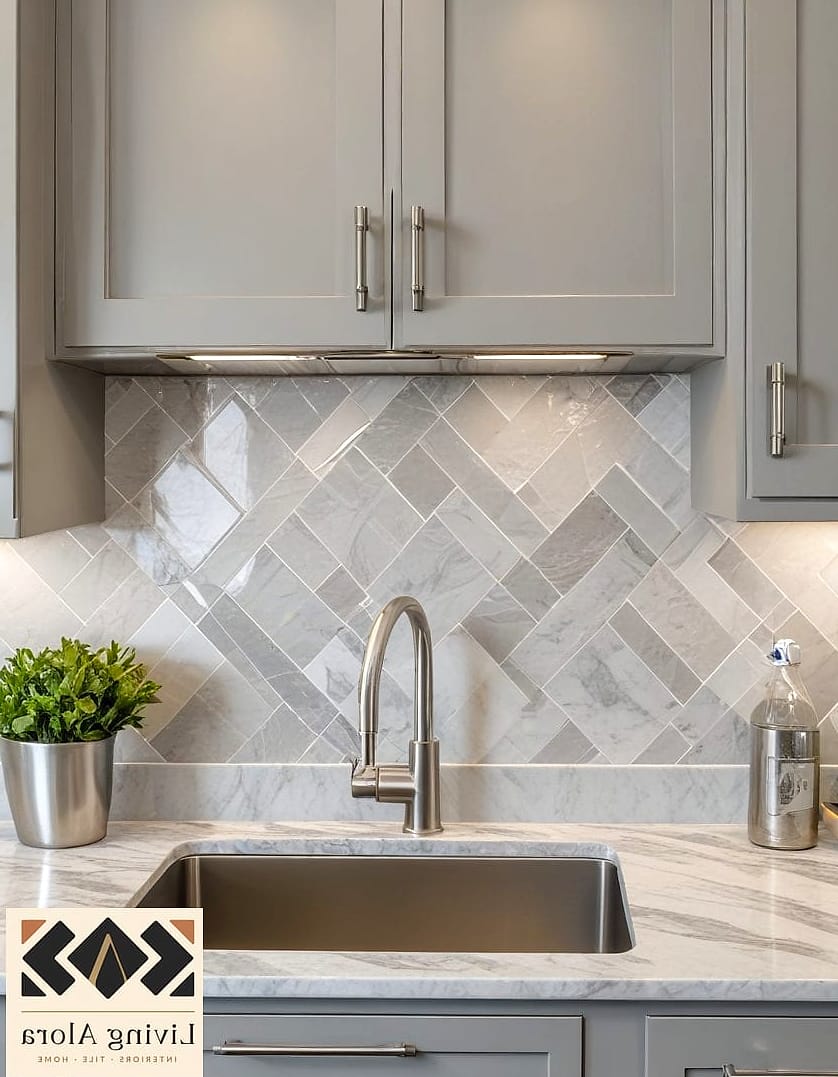
Rather than picking one shade of gray, try blocking two different tones, maybe a lighter warm gray on the lower half and a deeper charcoal above the counter line or around a range hood. This creates a built-in focal point without needing a mural or elaborate pattern.
It’s a clever way to add depth to a small kitchen where a single bold color might feel like too much. Just make sure the two tones share the same undertone, either both warm or both cool, so the transition looks intentional rather than mismatched.
Pebbled Gray Stone Mosaic

For a spa-like, organic feel, pebbled stone mosaic tile in soft gray tones brings texture that’s completely different from anything flat or glossy. It has a tactile, almost outdoorsy quality that works surprisingly well in kitchens leaning into natural materials.
This is more common in bathrooms, so using it in a kitchen backsplash feels fresh and a little unexpected. It does require sealing regularly since natural stone is porous, and the uneven surface can trap grease, so it’s better suited for lighter cooking households than a family that fries everything daily.
Scalloped Fish Scale Tile in Pale Gray

Fish scale or scalloped tile shapes add a soft, almost whimsical curve to a backsplash that’s otherwise all straight lines and hard edges. In a pale gray, it reads sophisticated rather than novelty, especially paired with brushed nickel or matte black fixtures.
This pattern works great as an accent behind open shelving or a coffee station rather than covering an entire wall, since the shape is eye-catching enough to stand on its own. It’s a fun option for renters too, since peel-and-stick versions in scalloped shapes have become much easier to find.
Weathered Gray Brick-Look Tile
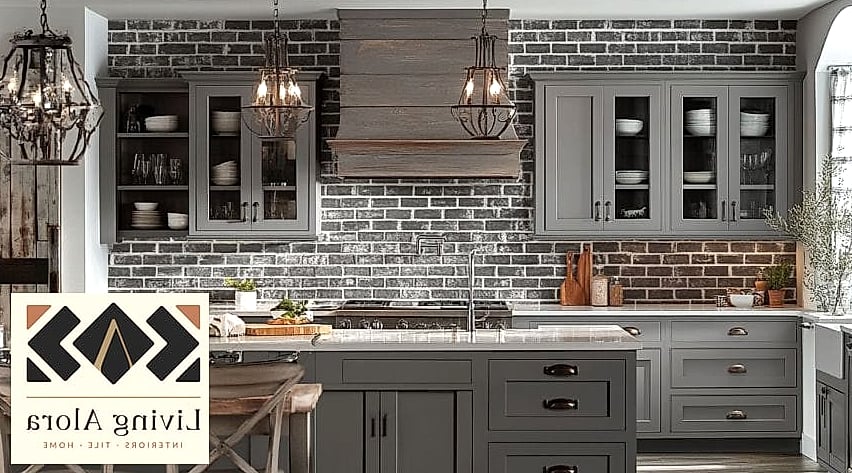
Thin brick tile in a weathered, chalky gray finish brings texture and history to a kitchen without an actual demolition project. The slightly irregular edges and tonal variation mimic reclaimed brick, which adds warmth even though the color itself is cool.
This look is especially popular in modern farmhouse and transitional kitchens, often paired with warm wood open shelving and vintage-style lighting. It’s more forgiving of imperfect installation than flat tile too, since the whole point is that slightly rustic, uneven look.
Gray Tile with Inlaid Metal Accent Strips

Adding thin metal strips, whether brushed steel or matte black, between sections of gray tile creates a custom, almost architectural detail that most tile setters don’t get asked to do very often. It’s a subtle way to break up a large wall of tile and add a linear design element.
This works particularly well behind a range as a focal detail rather than across the whole kitchen. It’s a bit more involved to plan and install since the strips need to be measured precisely, but the result feels genuinely one-of-a-kind rather than pulled from a showroom display.
Soft Gray Squiggle or Wave Tile

Wavy, squiggle-shaped tile has been popping up in more playful kitchen designs, and in a muted gray it keeps that fun shape from feeling too loud or trendy. The organic curves soften a kitchen full of straight cabinet lines and sharp counter edges.
This is a great pick for anyone who wants their backsplash to feel a little more artistic without going full color. It’s also a nice option for smaller accent areas, like behind a bar cart or coffee nook, where you want something eye-catching but contained.
Gray backsplashes have so much more range than people give them credit for. Between texture, shape, tone, and layout, there’s a version of gray tile for pretty much every kitchen style, from moody and dramatic to soft and airy. The best approach is picking one or two elements, maybe an unusual shape paired with a warm undertone, rather than trying to combine everything on this list at once. That’s really the secret to making a gray backsplash feel intentional instead of just safe.