23 Black Subway Backsplash Ideas That Work in Any Size Home
- Classic 3×6 Black Subway Tile with White Grout
- All-Black Tile with Matching Black Grout
- Herringbone Pattern in Matte Black
- Vertical Stack Installation for Small Kitchens
- Glossy Black Subway Tile for Extra Shine
- Matte Black Tile for a Moodier Feel
- Black Subway Tile Behind Open Shelving
- Full-Height Black Subway Tile to the Ceiling
- Black Subway Tile with a Contrasting Wood Shelf
- Black Zellige-Style Tile for Organic Texture
- Black Subway Tile Paired with Marble Countertops
- Black Subway Tile with Butcher Block Counters
- Extra-Large Format Black Subway Tile
- Black Subway Tile with Brass Hardware Accents
- Peel-and-Stick Black Subway Tile for Renters
- Black Subway Tile in a Basketweave Pattern
- Black Subway Tile Behind a Farmhouse Sink
- Two-Tone Black and White Subway Tile Mix
- Black Subway Tile with Under-Cabinet Lighting
- Black Subway Tile with a Pop of Greenery
- Black Subway Tile in a Small Bathroom Vanity Area
- Black Subway Tile with a Neutral Color Palette
- Black Subway Tile with Textured Accent Tile Border
23 Black Subway Backsplash Ideas That Work in Any Size Home
Black subway tile has quietly become one of the most requested kitchen upgrades I hear about, and honestly, it makes sense. It’s got the same clean lines as classic white subway tile, but with way more attitude. It works in tiny galley kitchens and sprawling open-concept spaces alike, which is rare for a design choice this bold. Below are 23 ways to bring it into your home, no matter your square footage or your budget.
Classic 3×6 Black Subway Tile with White Grout
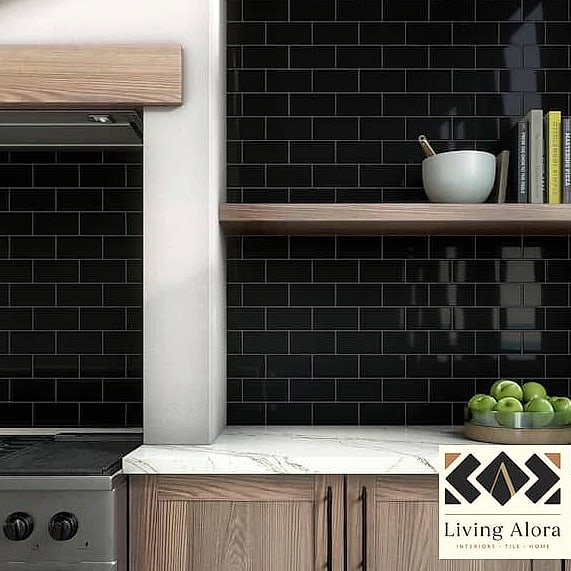
This is the gateway design for anyone nervous about going dark. The crisp white grout lines create contrast against the black tile, so the pattern really pops instead of reading as one solid slab. It works beautifully in small kitchens because the grid lines give the eye something to follow, which oddly makes a tight space feel more open. Maintenance is straightforward, though white grout will show grease over time unless you seal it well.
All-Black Tile with Matching Black Grout
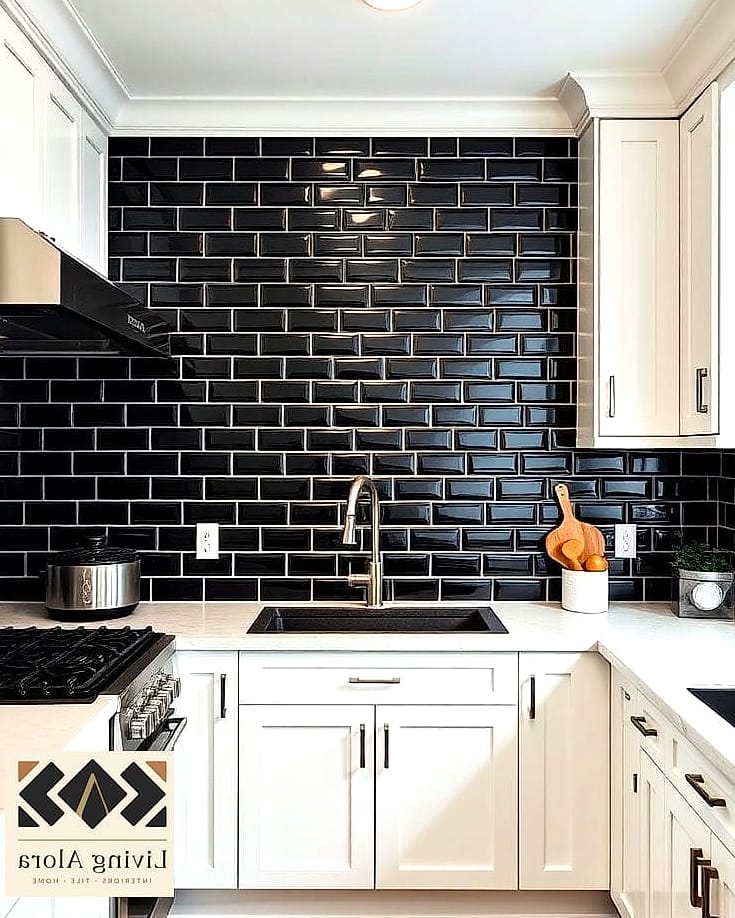
If you want a sleeker, more monolithic look, matching the grout color to the tile removes almost all visual break. The wall reads as one continuous dark surface, which feels modern and a little moody in the best way. This works well in larger kitchens where you want the backsplash to recede rather than compete with statement countertops or lighting. It’s also more forgiving when it comes to hiding stains and grime.
Herringbone Pattern in Matte Black
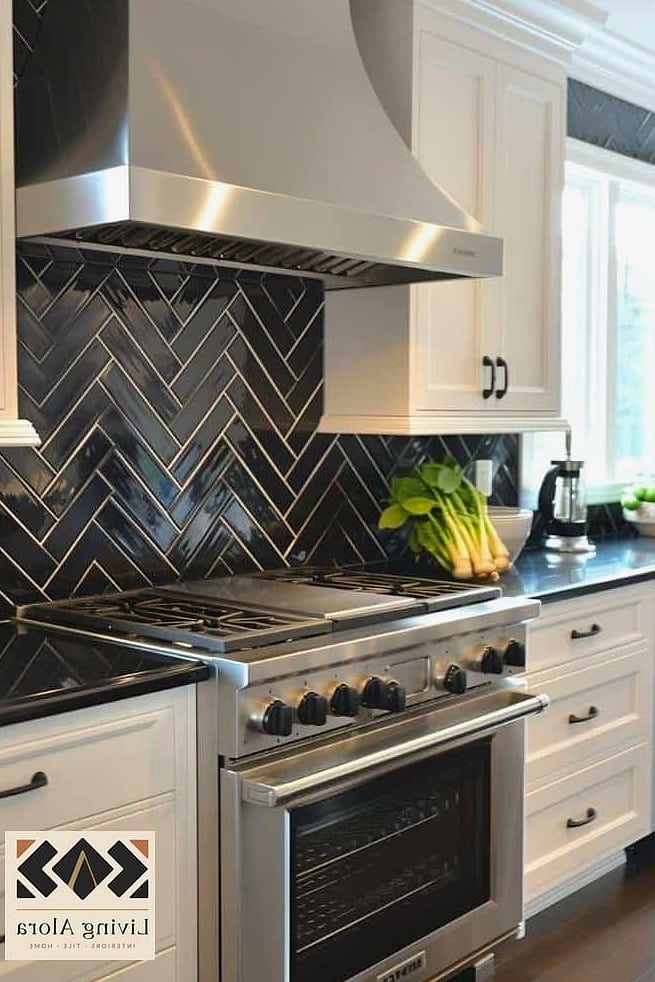
Swap the standard stacked layout for a herringbone pattern and suddenly your backsplash becomes the focal point of the room. The zigzag movement adds texture and visual interest without needing a single extra color. This is a great pick for kitchens with simple cabinetry, since the pattern does the heavy lifting. It’s more labor-intensive to install, so budget a little extra for professional help if you’re not comfortable with angled cuts.
Vertical Stack Installation for Small Kitchens
Instead of laying tiles horizontally, stacking them vertically draws the eye upward and can make low ceilings feel taller. I’ve seen this trick work wonders in narrow galley kitchens where horizontal lines tend to emphasize how tight the space really is. It’s a subtle shift but it changes the whole feel of the room. Pair it with brushed brass hardware for a warmer contrast against all that black.
Glossy Black Subway Tile for Extra Shine
Glossy tile reflects light in a way matte tile just can’t, which makes it a smart choice for kitchens that don’t get much natural sunlight. The shine also makes the black feel less heavy and more polished. It does show water spots and fingerprints more readily, so keep a microfiber cloth nearby if you’re particular about smudges. This finish tends to photograph beautifully too, if that matters to you.
Matte Black Tile for a Moodier Feel
Matte finishes soften the intensity of black and give it a more textured, grounded look. This works especially well in kitchens going for a modern farmhouse or industrial vibe. Matte tile also hides water spots and light scuffs better than glossy options, which is a nice bonus for busy households. It pairs nicely with warm wood tones and open shelving.
Black Subway Tile Behind Open Shelving
Open shelving already draws attention to a wall, so pairing it with black subway tile creates a striking backdrop for your dishes and glassware. Floating shelves in light wood look especially sharp against the dark tile. This combo works in kitchens of any size, though I’d lean toward it more in smaller spaces where you want a design moment without adding bulky cabinetry. Just know that open shelving requires a bit more upkeep since everything’s on display.
Full-Height Black Subway Tile to the Ceiling
Running the tile all the way up to the ceiling instead of stopping at a standard height creates serious drama. It’s a bolder, more expensive commitment, but the payoff is a kitchen that feels intentional and custom-built. This works particularly well in kitchens with higher ceilings, since it emphasizes the vertical space. Smaller kitchens can pull this off too, especially if the rest of the palette stays light and airy.
Black Subway Tile with a Contrasting Wood Shelf
Adding a floating wood shelf partway up the backsplash breaks up all that black and gives you a spot to display plants, cookbooks, or cutting boards. The warm wood tones soften the starkness of the tile and add a layer of coziness. This is a favorite for kitchens leaning into a Japandi or modern farmhouse aesthetic. It’s also a practical spot to stash items you reach for daily.
Black Zellige-Style Tile for Organic Texture
If you love the handmade, slightly imperfect look of zellige tile but want it in black, there are plenty of options that mimic that irregular, textured surface. Each tile catches light a little differently, so the wall has movement and depth instead of looking flat. This is a gorgeous choice for kitchens that want something artisanal without going stark white. It’s pricier than standard ceramic, so it tends to show up more in higher-budget renovations.
Black Subway Tile Paired with Marble Countertops
The contrast between cool white or gray marble and deep black tile is one of those combinations that never really goes out of style. The veining in the marble adds softness against the tile’s crisp lines. This pairing works in kitchens of any size, though it does lean toward a more upscale, curated look. Just remember marble countertops need regular sealing to stay stain-resistant.
Black Subway Tile with Butcher Block Counters
For a warmer, more rustic take, pair your black tile with butcher block counters instead of stone. The wood tones balance out the coolness of the black and bring in a lived-in, cottage-core kind of charm. This combo is especially popular in smaller kitchens and cabins where a cozy feel matters more than high-end polish. Keep in mind butcher block needs regular oiling to prevent water damage.
Extra-Large Format Black Subway Tile
Instead of the traditional small 3×6 size, larger subway-style tiles (think 4×12 or bigger) mean fewer grout lines and a cleaner, more streamlined look. This is a great option for anyone who finds grout maintenance tedious, since there’s simply less of it. Bigger tiles also make small kitchens feel less busy visually. It’s worth noting that larger tiles can be trickier to install on uneven walls, so a skilled installer helps here.
Black Subway Tile with Brass Hardware Accents
Brushed brass hardware against black tile is a pairing that photographs incredibly well and adds warmth to what could otherwise feel like a cold color scheme. Cabinet pulls, faucet fixtures, and even pendant lighting in brass tones create a cohesive, intentional look. This works in kitchens big and small since hardware swaps are relatively low-cost and low-commitment. It’s a great way to test the black tile trend without fully committing to an expensive renovation.
Peel-and-Stick Black Subway Tile for Renters
If you’re renting or just not ready for a permanent tile job, peel-and-stick options have come a long way and now mimic the look of real subway tile surprisingly well. They’re budget-friendly, renter-friendly, and can usually be removed without damaging the wall underneath. This is a smart pick for apartment kitchens or rental properties where a full remodel isn’t in the cards. Just double check your landlord’s policy before installing anything permanent-looking.
Black Subway Tile in a Basketweave Pattern
Basketweave patterns add subtle texture and visual complexity without relying on color to do the work. It’s less common than herringbone, which makes it feel a bit more unique if you want something your neighbor probably doesn’t have. This pattern works especially well in smaller accent areas, like behind a stove or a wet bar. It does require more precise cutting, so factor that into your installation timeline.
Black Subway Tile Behind a Farmhouse Sink
Framing a classic farmhouse sink with black subway tile creates a striking focal point right where you spend most of your kitchen time. The dark backdrop makes stainless steel or matte black fixtures stand out even more. This works in kitchens of any size since it’s a contained area rather than a full wall commitment. It’s also one of the easier spots to DIY if you’re testing out tile installation for the first time.
Two-Tone Black and White Subway Tile Mix
Mixing black and white subway tiles in a checkerboard or striped pattern gives you the boldness of black without going all in. This is a fun, playful option for kitchens that want personality but aren’t ready to commit to a fully dark backsplash. It works particularly well in retro or vintage-inspired kitchens. The mixed pattern also hides everyday grime a little better than an all-white version would.
Black Subway Tile with Under-Cabinet Lighting
Layered lighting changes everything when it comes to dark tile, since black can look flat under harsh overhead lights alone. Adding LED strips under your cabinets highlights the texture and sheen of the tile while also making food prep easier to see. This upgrade works in kitchens of every size and is relatively simple to install yourself. It’s one of those small changes that makes a noticeably big difference.
Black Subway Tile with a Pop of Greenery
A little greenery goes a long way against a dark backsplash. Trailing plants, potted herbs on a windowsill, or a simple vase on open shelving all add life and softness to what could otherwise feel like a heavy design choice. This works in kitchens of any size and costs next to nothing. It’s an easy way to keep the space feeling fresh without touching the tile itself.
Black Subway Tile in a Small Bathroom Vanity Area
While this list leans kitchen-heavy, black subway tile works just as well behind a bathroom vanity. It adds a spa-like, moody feel that pairs nicely with brass or matte black fixtures. This is a great option for small powder rooms where you want a dramatic look without covering a huge surface area. Just make sure your grout is properly sealed given the higher moisture levels in bathrooms.
Black Subway Tile with a Neutral Color Palette
Keeping the rest of your kitchen in soft whites, warm beiges, or muted grays lets the black tile take center stage without the whole room feeling dark or closed in. This is probably the safest and most versatile approach if you’re nervous about going too bold. It works in small kitchens especially well, since the light palette balances out the tile’s intensity. Neutral palettes also tend to age well, so you won’t feel like you need to redo everything in five years.
Black Subway Tile with Textured Accent Tile Border
Adding a thin border of textured or patterned tile along the top or edges of your black subway tile gives the wall a finished, custom look. It’s a small detail, but it elevates the whole design without much extra cost. This works well in kitchens that want a designer touch without a full tile overhaul. It’s also a nice way to sneak in a secondary color or pattern if you’re craving a bit more variety.
Black subway tile isn’t just a trend that’ll fade in a couple years. It’s flexible enough to fit whatever style you’re already working with, from cozy farmhouse to sleek modern, and it scales up or down depending on your budget and how much of a commitment you’re ready to make. Start small if you’re unsure, maybe with a peel-and-stick option or a single accent wall, and see how you feel living with it before going bigger.