7 Marble Subway Tile Ideas Worth Bookmarking Before You Renovate
7 Marble Subway Tile Ideas Worth Bookmarking Before You Renovate
There’s a reason marble subway tile keeps showing up in every renovation inspiration folder. It’s got that classic subway shape everyone loves, but the veining and shine take it somewhere way more elevated than the standard ceramic version. If you’re planning a kitchen or bathroom refresh and keep gravitating toward marble every time you scroll through design photos, you’re definitely not alone.
The tricky part is that marble subway tile isn’t just one look. It comes in different finishes, sizes, and layout patterns that completely change the vibe of a space. Some options lean traditional and clean, others feel more organic and high-end. Before you commit to tile and start pulling permits, it helps to know which direction actually fits your space, your budget, and how much upkeep you’re realistically willing to do.
Here are seven marble subway tile ideas worth saving before you start your renovation.
Classic White Carrara in a Straight Layout
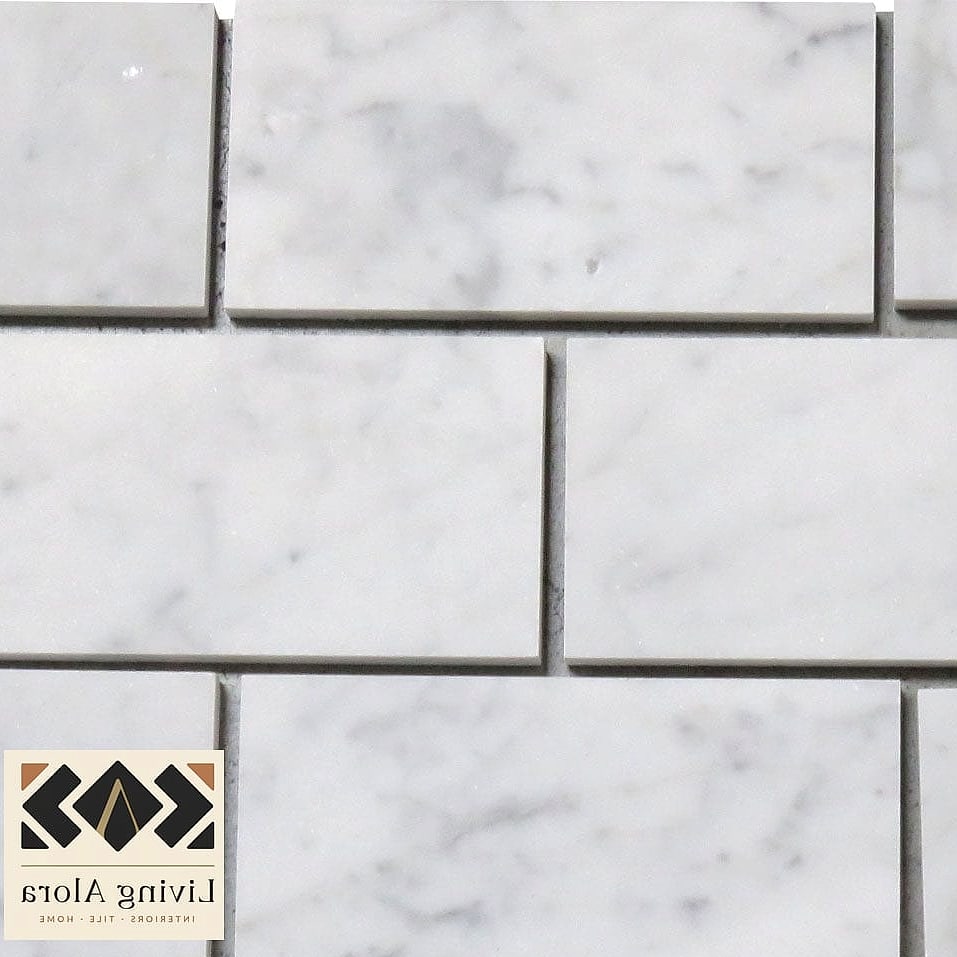
This is the one most people picture when they think marble subway tile. White Carrara has that soft gray veining on a bright white background, and when it’s laid in a simple straight, brick-style pattern, it reads clean and timeless without trying too hard.
It works beautifully as a kitchen backsplash, especially behind a range where you want something that draws the eye without competing with your cabinets or countertops. It also holds up well in bathrooms as a shower surround, since the pattern doesn’t get busy or distracting.
The reason people keep coming back to this combo is that it plays well with pretty much any color palette. Warm wood tones, black fixtures, brushed brass hardware, it all works. Just know that Carrara marble is porous, so it’ll need to be sealed regularly to resist staining, especially near a stove or sink.
Herringbone Pattern for a Custom Look
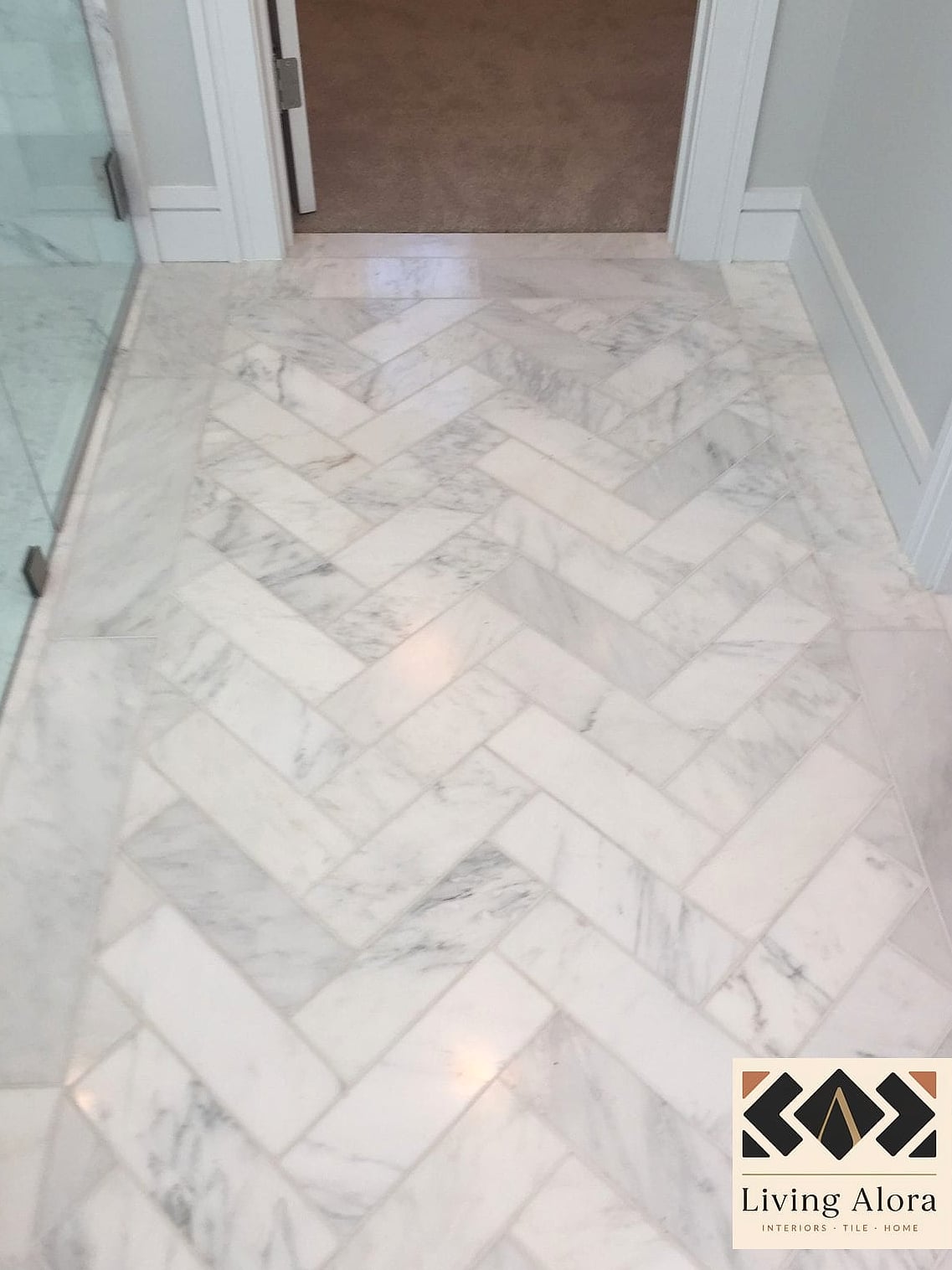
If a straight layout feels a little too expected for your taste, laying marble subway tile in a herringbone pattern instantly makes the whole installation feel more custom. The zigzag movement adds visual interest even before you factor in the natural veining of the stone.
This idea shines in smaller spaces like a powder room or a compact kitchen backsplash, where the pattern becomes the focal point rather than getting lost. It also tends to make a small area feel a little larger because your eye keeps traveling along the diagonal lines.
Keep in mind that herringbone installation takes more skill and more tile cuts than a straight layout, so labor costs and installation time usually go up. It’s not the easiest DIY project, but if you’re hiring a tile setter anyway, it’s worth asking what the upcharge would be.
Stacked Vertical Installation
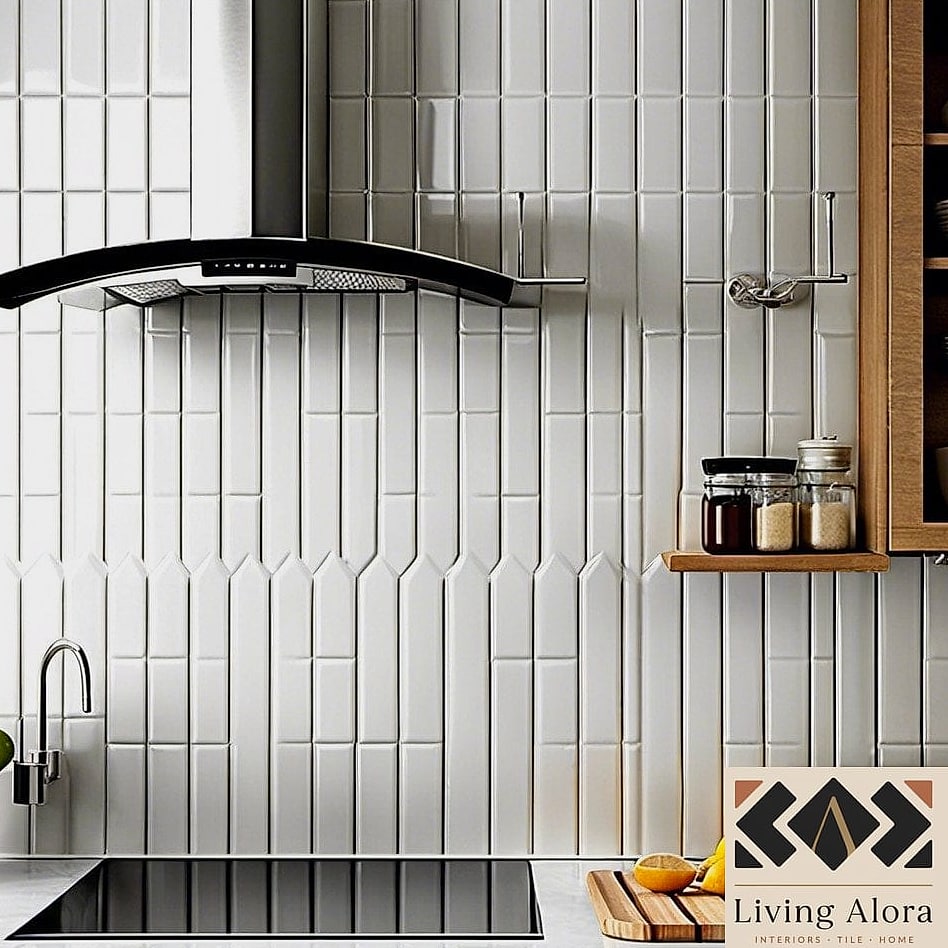
Instead of the traditional offset brick pattern, stacking marble subway tile in clean vertical columns gives a more modern, architectural feel. The grout lines line up in a grid instead of staggering, which creates a more structured, almost tailored look.
This layout works really well in contemporary kitchens and bathrooms where you’re going for a minimalist aesthetic. It pairs nicely with matte black fixtures, flat-panel cabinetry, and simple hardware since everything about the look leans toward clean lines.
One thing to mention here: a stacked layout shows off any inconsistency in tile size more than a staggered pattern does, so it’s worth spending a little more on quality tile with consistent dimensions. It’s a small detail, but it makes a noticeable difference once it’s installed.
Bold Statement Wall with Dark Marble
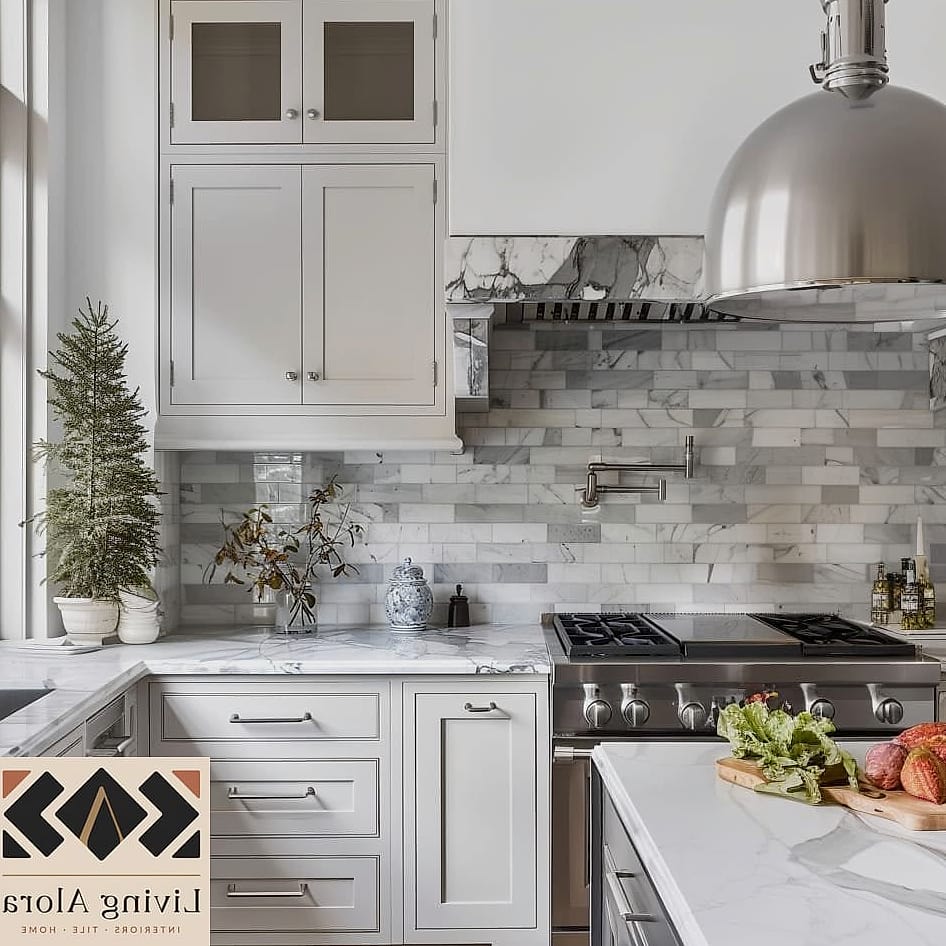
Not every marble subway tile idea has to be white and soft. Using a darker marble, like a deep gray, green, or even a black-and-white marbled variety, in subway format creates a much more dramatic statement.
This works especially well as an accent wall behind open shelving, in a wet bar area, or as a shower feature wall paired with lighter tile everywhere else. It gives the space some contrast and depth instead of everything blending into one neutral tone.
Darker marble tends to hide water spots and minor staining a little better than white marble, which is a nice practical bonus. Pair it with warm lighting and brushed brass or unlacquered brass fixtures, and the whole space starts to feel more like a boutique hotel bathroom than a builder-grade renovation.
Mixed Marble and Wood Accent Combo
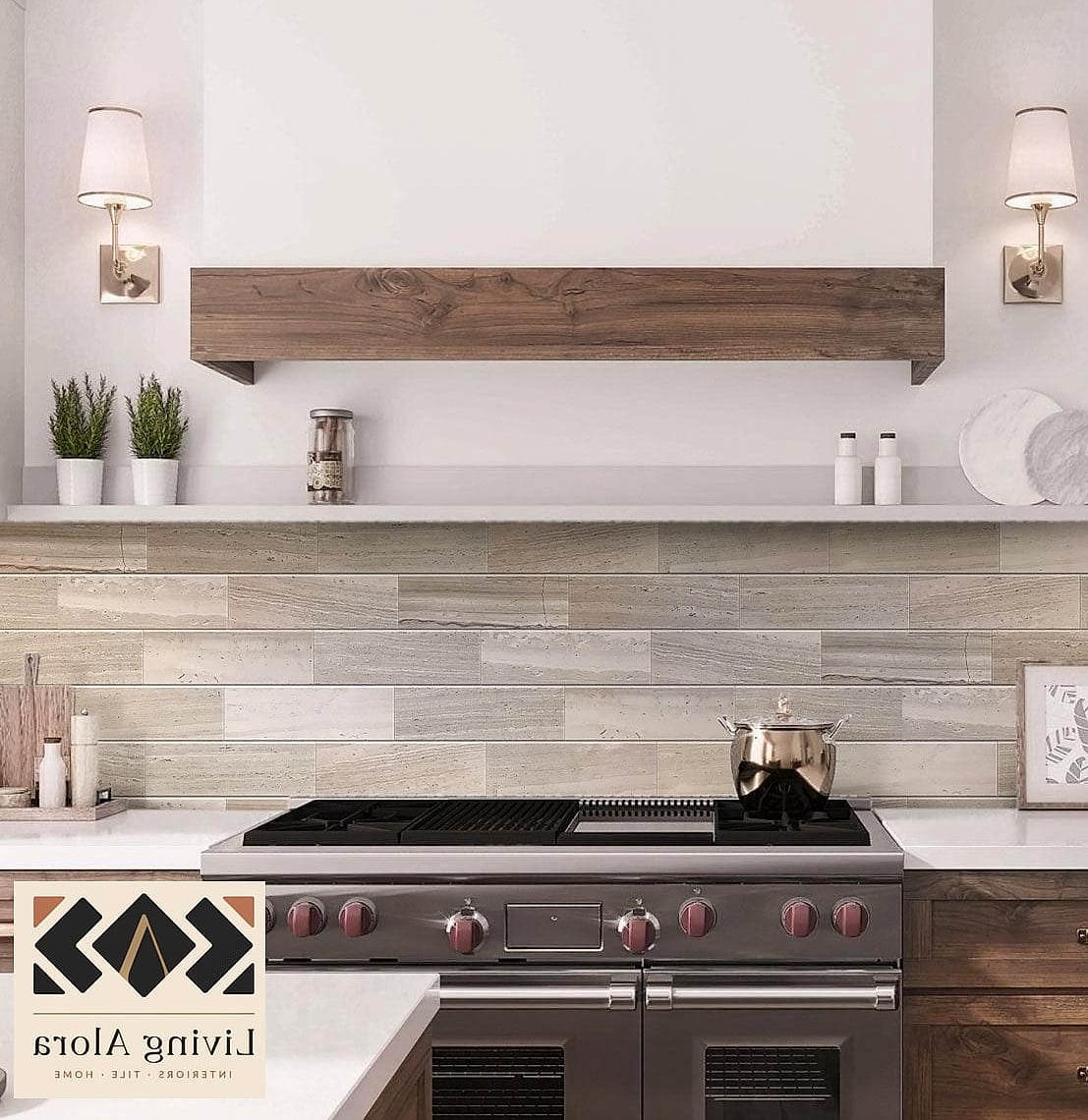
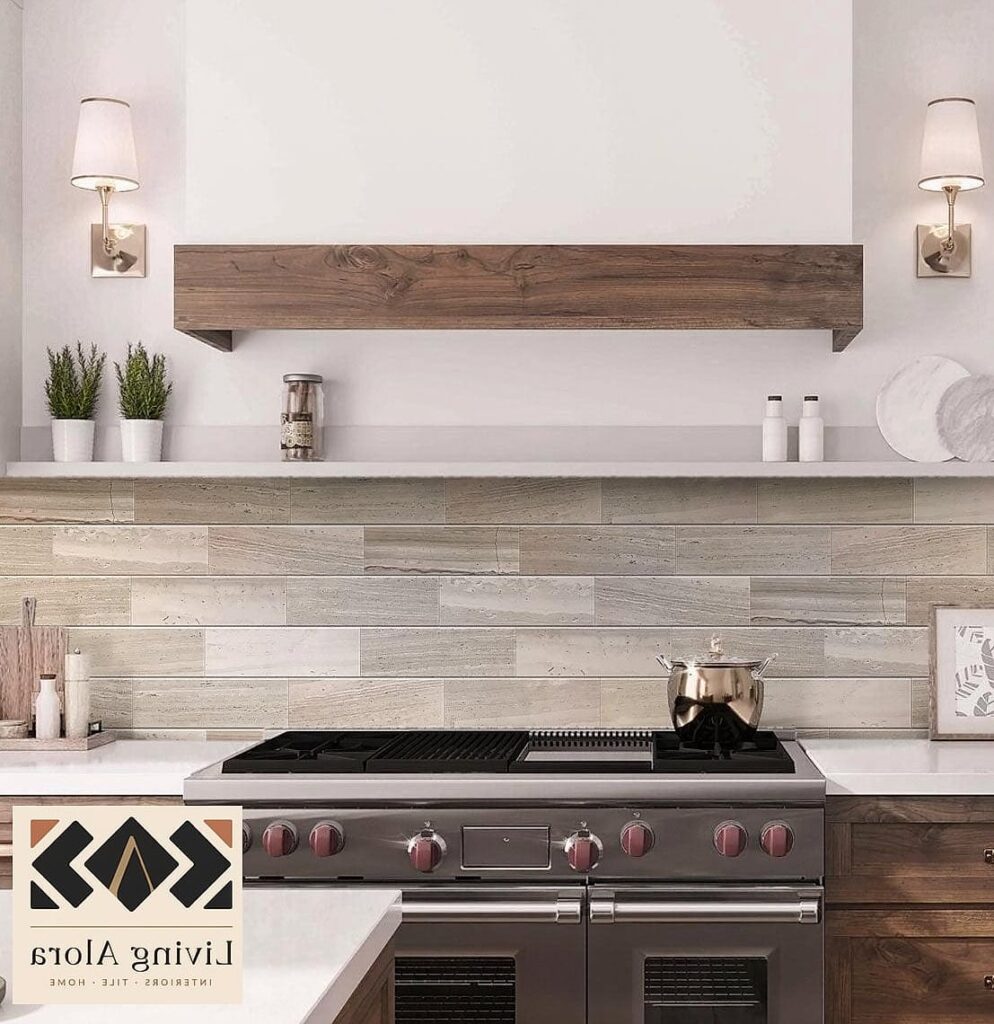
Pairing marble subway tile with warm wood accents is one of those combinations that softens the coolness of stone and keeps a space from feeling too formal. Think open wood shelving mounted against a marble backsplash, or a wood range hood surrounded by subway tile.
This idea works particularly well in kitchens that want a mix of classic and organic, modern farmhouse feels. The marble brings the polish, and the wood brings warmth, so neither element feels too cold or too rustic on its own.
If you’re working with a smaller budget, you don’t need wood cabinetry throughout the whole kitchen to pull this off. A single floating wood shelf or a wood-topped island next to a marble subway tile backsplash can get you most of the way there without a full remodel.
Marble Subway Tile with Contrasting Grout
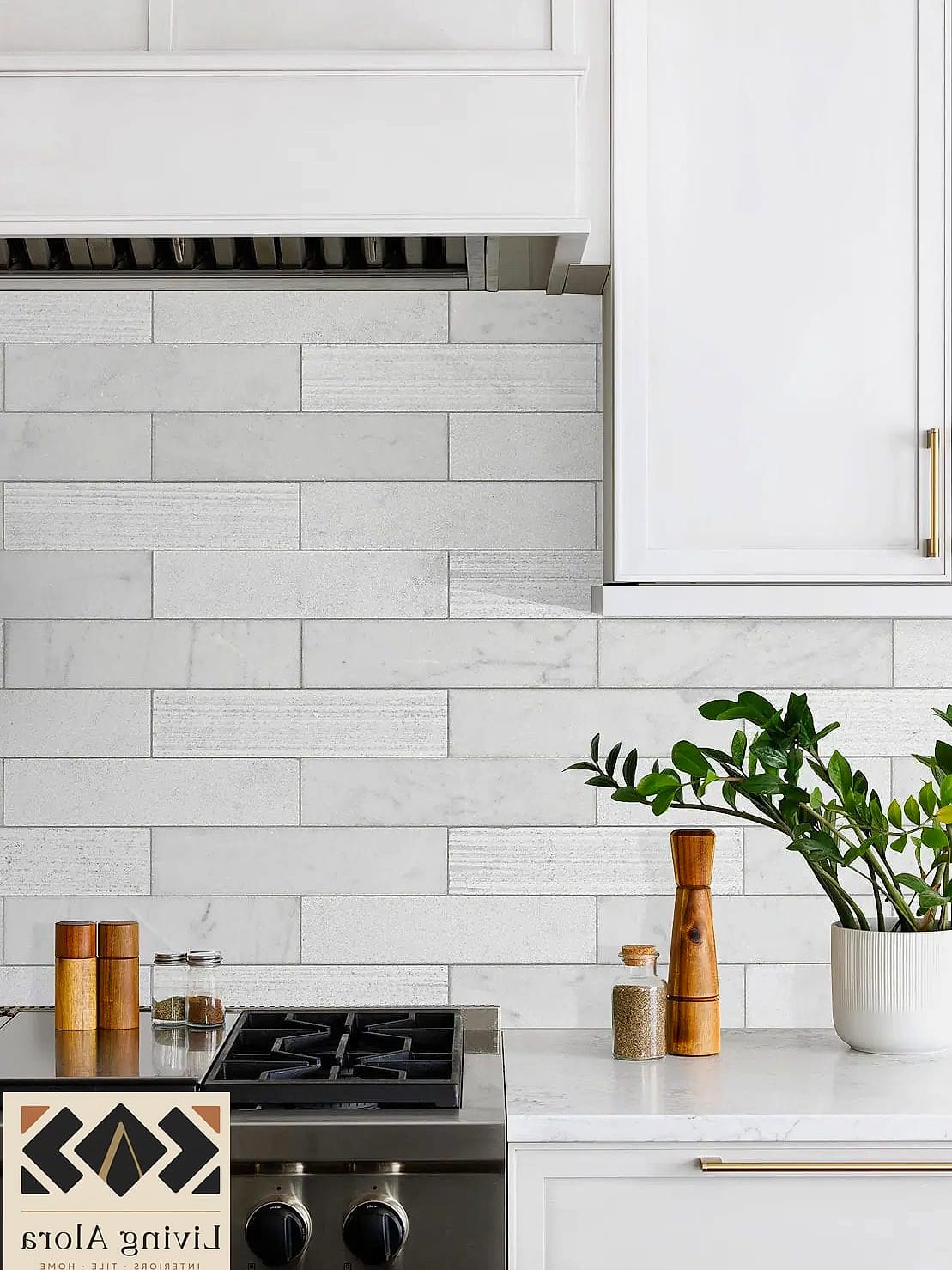
Swapping out the expected white grout for a charcoal, black, or deep gray grout completely changes how marble subway tile reads. Instead of blending together into one soft surface, each individual tile gets outlined and defined.
This idea tends to look best with white or light gray marble, since the contrast is what makes the pattern pop. It’s a great option if you love the marble look but also want something a little more graphic and modern feeling in the space.
There’s a practical upside here too. Dark grout hides dirt and minor discoloration far better than white grout does, which matters a lot in high-traffic kitchens or family bathrooms. If you’ve ever scrubbed grimy white grout lines at 11pm before guests arrive, you already know why this matters.
Mini Marble Subway Tile for Detail Work
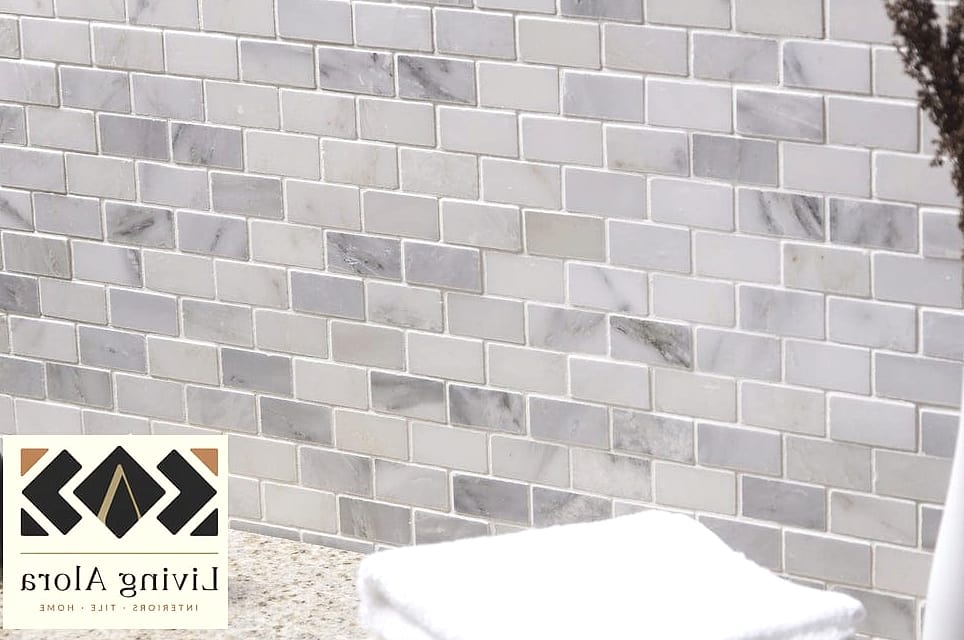
Marble subway tile doesn’t have to be the standard 3×6 inch size. Going smaller, sometimes down to 1×3 or 2×4 inches, creates a more delicate, detailed look that works especially well in accent applications rather than covering an entire wall.
This size shows up beautifully around a fireplace surround, as a border detail on a larger tile installation, or lining a niche inside a shower. Because the tiles are smaller, there are more grout lines, which actually shows off the marble veining in a different, more intricate way.
It’s worth noting that smaller tile means more individual pieces and more cuts, so labor costs can run higher even though the material itself might be similar in price. If you love the look but want to manage cost, using mini marble subway tile as an accent rather than throughout the whole space is a smart middle ground.
Marble subway tile earns its popularity because it manages to feel both classic and current at the same time. Whether you go with a simple straight layout in Carrara white or get more adventurous with a dark statement wall, the key is picking a version that actually fits how you live in the space, not just what looks good in photos.
Before your renovation gets underway, think through the maintenance side too. Marble needs sealing, and depending on the finish, it can show etching from acidic spills like lemon juice or vinegar. That doesn’t mean it’s not worth it, plenty of homeowners find the upkeep totally manageable, but going in with realistic expectations makes the whole process smoother.
If you’re still narrowing things down, pulling a few tile samples and living with them in your space for a week or two, in both daylight and evening light, can save you from a costly do-over. Marble subway tile is a bit of an investment, but done right, it’s one of those choices that makes a kitchen or bathroom feel noticeably more polished for years to come.