7 Marble Look Glass Tile Ideas Worth Stealing From Interior Designers
7 Marble Look Glass Tile Ideas Worth Stealing From Interior Designers
Marble is gorgeous, no argument there. But it’s also porous, pricey, and honestly kind of high-maintenance for a lot of homeowners. That’s exactly why marble look glass tile has become such a favorite workaround among designers who want the veined, luxe appearance without the sealing schedule or the sticker shock.
Glass tile with a marble finish gives you that soft, glossy movement — the swirls, the depth, the way light bounces off it — but it’s non-porous, easier to clean, and often more budget-friendly than the real thing. Designers have been using it in some genuinely clever ways lately, and I wanted to round up the ones that keep showing up in the nicest kitchens and bathrooms I come across.
Here are seven marble look glass tile ideas worth borrowing for your own space.
A Full Shower Wall That Feels Like a Spa
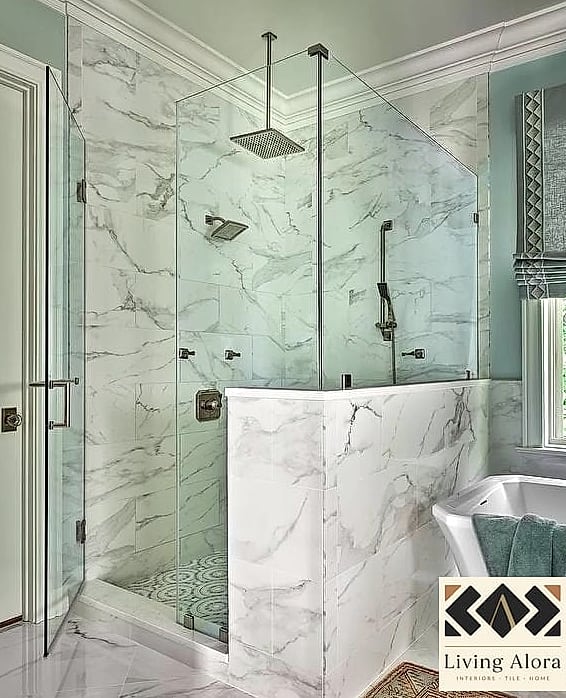
One of the biggest trends right now is skipping the mix-and-match approach in showers and just running marble look glass tile floor to ceiling on one or all walls. It reads as a single, continuous slab of stone, even though it’s made up of tiles.
This works especially well in smaller bathrooms because the uninterrupted surface visually stretches the space. There’s no grout line chaos breaking things up, no busy pattern competing for attention.
Designers usually lean toward large-format glass tiles here — think 12×24 or bigger — to minimize grout lines even further. Pair it with a matte black or brushed brass shower fixture and you’ve got something that looks like it belongs in a boutique hotel. Maintenance-wise, glass doesn’t stain or etch the way natural marble can, so soap scum wipes away without any special sealant worries.
A Herringbone Backsplash Behind the Range
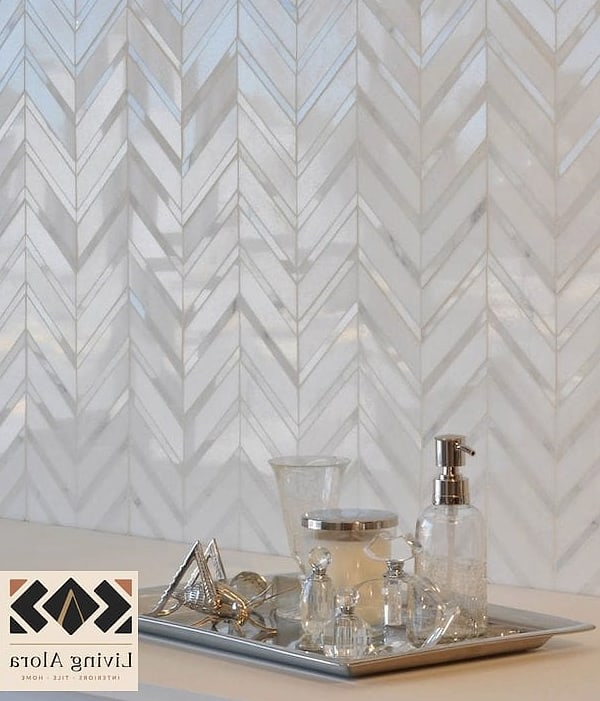
Herringbone patterns have stuck around for a reason — they add movement and visual interest without feeling loud. When you use marble look glass tile in a herringbone layout behind your stove or range, you get all that classic elegance plus a surface that shrugs off grease splatters.
This is a favorite among kitchen designers because it draws the eye upward and gives an otherwise plain wall some personality. It works beautifully with white or navy cabinetry and looks especially sharp with brushed brass or matte black hardware pulling everything together.
If you’re handy, herringbone is more labor-intensive to install than a straight-set pattern, so budget extra time or hire it out if you’re not confident with tile spacing. The payoff is worth it, though — it’s one of those details that makes a kitchen look custom-designed rather than builder-grade.
Small Mosaic Accents in a Powder Room
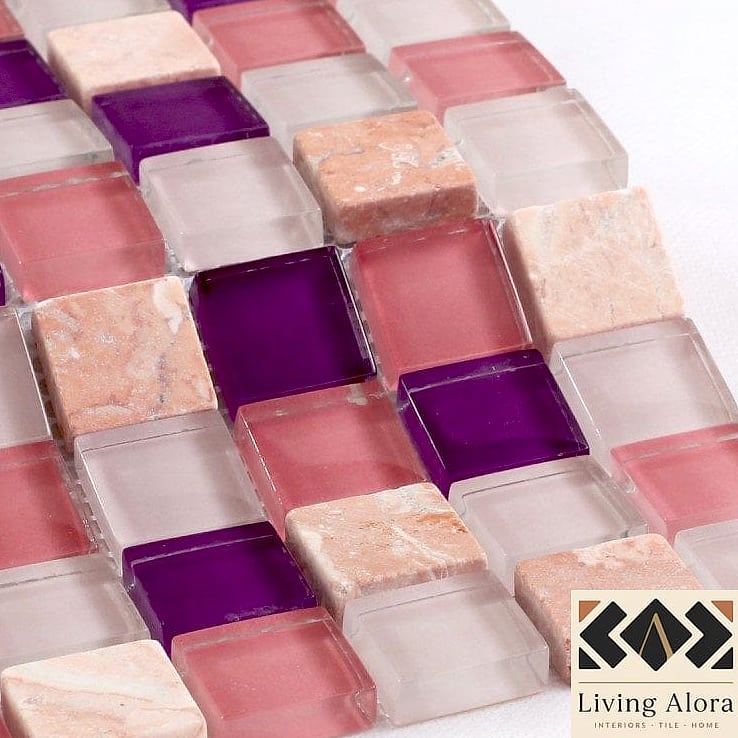
Not every room needs a full wall of tile to make an impact. In smaller spaces like powder rooms, designers often use marble look glass mosaic tile as an accent — maybe as a chair rail, a framed inset, or a small feature wall behind the vanity mirror.
Because powder rooms are low-traffic and compact, this is a great spot to experiment with a pattern or finish that might feel like too much in a larger room. The glass mosaic catches light in a way that makes a small, often windowless room feel brighter and more dimensional.
This is also a fairly renter-friendly-adjacent idea if you’re working with peel-and-stick marble look tile for a temporary refresh, though for a permanent installation, real glass tile will give you a more convincing depth and shine.
A Kitchen Island Waterfall Edge
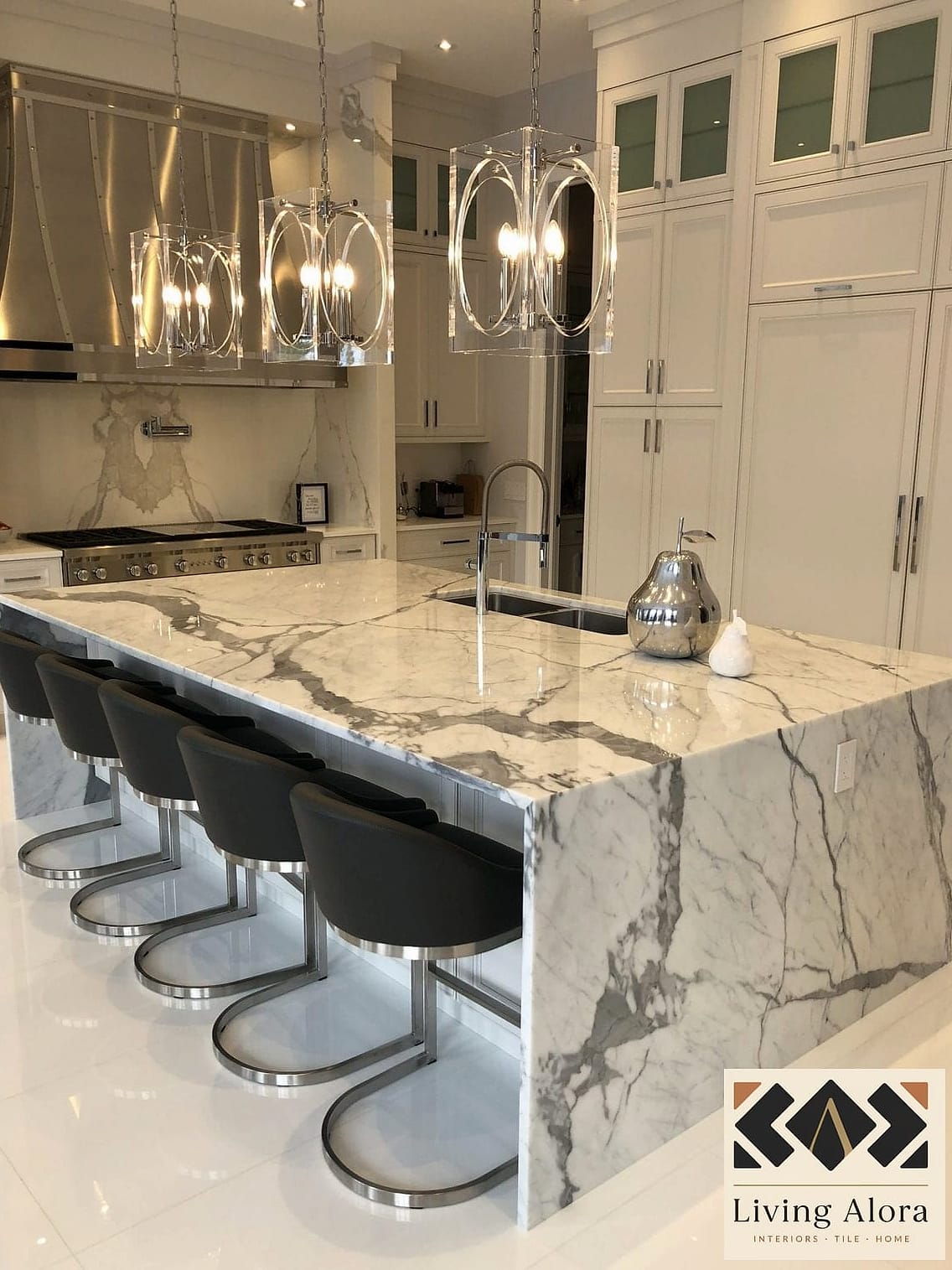
Waterfall countertops made from actual marble slabs are stunning but can run into serious money fast. Some designers have started experimenting with marble look glass tile as cladding on island sides instead — not a true waterfall in the traditional slab sense, but a tiled panel that mimics the look.
This is more of an unconventional, design-forward choice, and it works particularly well in modern or transitional kitchens where the island is meant to be a statement piece. It pairs nicely with quartz countertops on top, since you get the durability of quartz where you’re working and the marble-inspired visual where you’re not.
It’s a more involved installation, so this one’s best left to a professional tile setter who can handle the edges and corners cleanly. But the result is a showstopper island for a fraction of what full marble slab cladding would cost.
Vertical Stacked Tile in a Walk-In Shower Niche
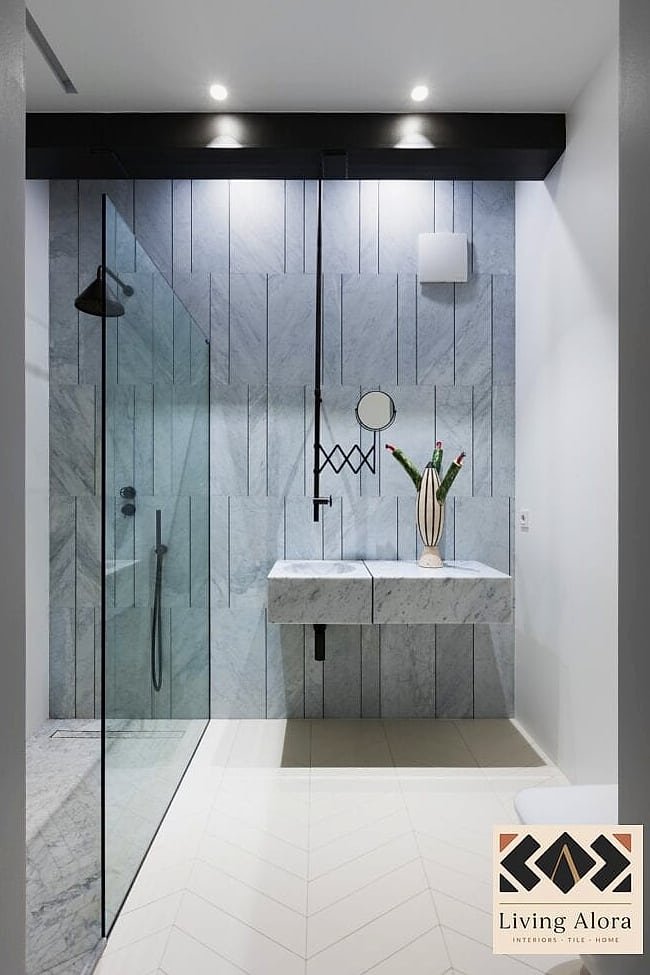
Shower niches are one of those small details that get overlooked until you’re standing there wondering where to put your shampoo. Lining a niche with marble look glass tile in a vertical stacked layout turns a purely functional feature into a little design moment.
Designers like this because it lets you introduce the marble look in a contained way if you’re not ready to commit to full walls. The vertical stack also elongates the niche visually, which is a nice trick in a shower that’s on the smaller side.
Glass tile is a smart material choice here too, since niches deal with constant water exposure and soap residue. It cleans up with a simple wipe-down rather than requiring the periodic resealing real marble would need in a wet environment.
A Fireplace Surround That Doesn’t Need Sealing
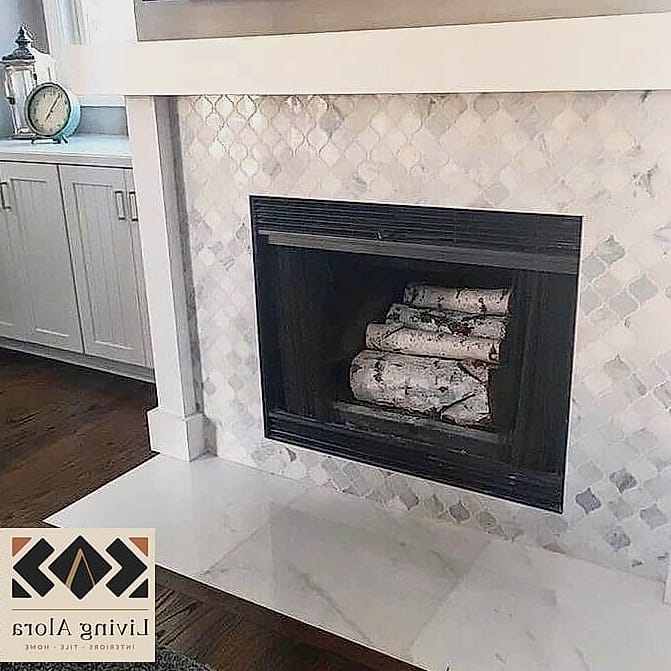
Fireplace surrounds are another spot where real marble has traditionally been the go-to, but it comes with real upkeep — sealing, staining risk near soot, the works. Marble look glass tile has been popping up as a substitute that gives living rooms that same elevated, cool-toned focal point without the fuss.
This works well floor to ceiling for a dramatic statement wall, or just as cladding on the surround itself if you want to keep things more understated. Designers often pair it with a wood mantel to soften the glossy finish with some warm wood tones, which keeps the whole thing from feeling too cold or slick.
Since glass doesn’t absorb odors or moisture the way natural stone can, it also handles the occasional smoke exposure from a wood-burning fireplace better over time. Just double check your tile’s heat rating if it’s going near a firebox opening, since not all glass tile is rated for high heat exposure.
A Laundry Room Accent Wall
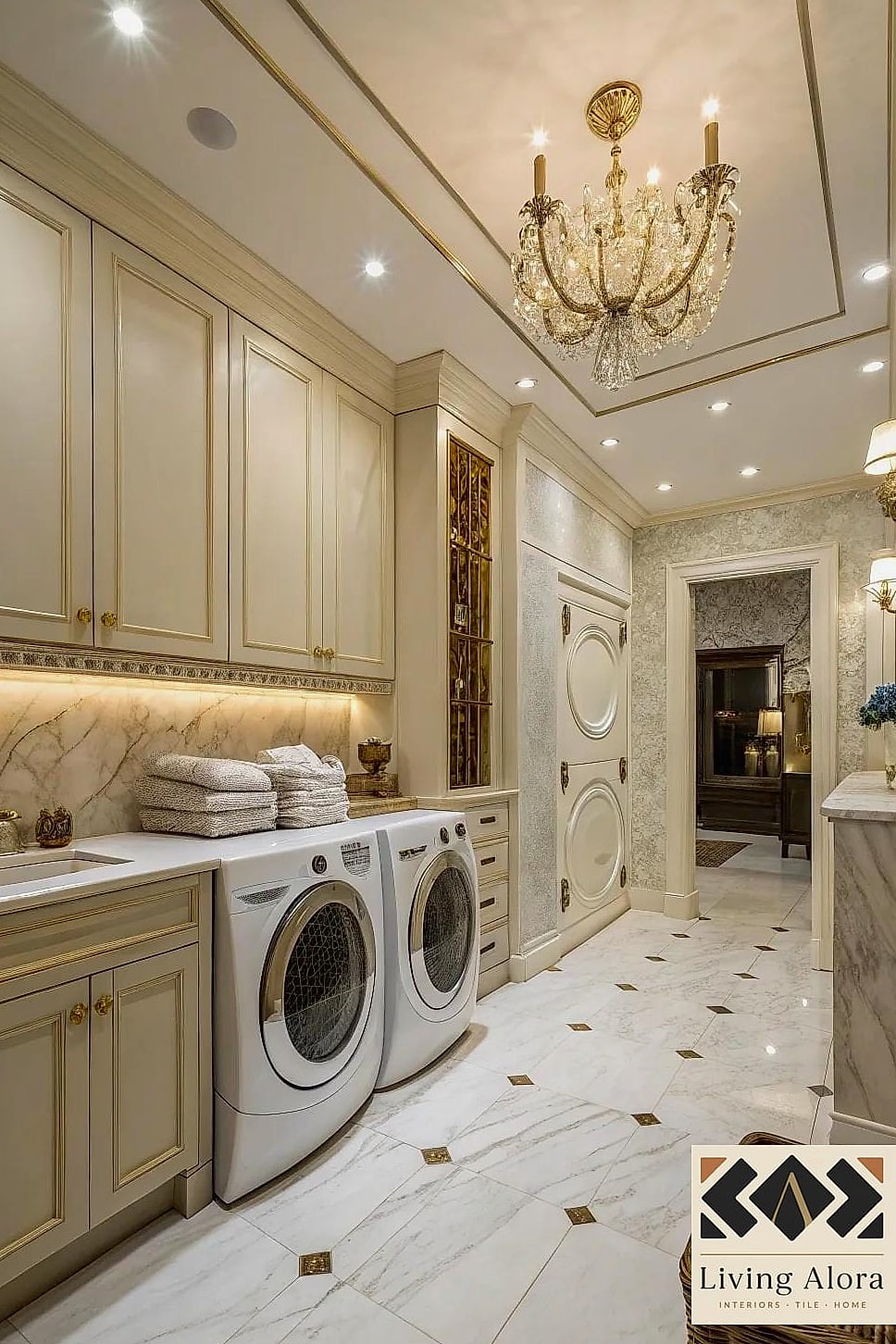
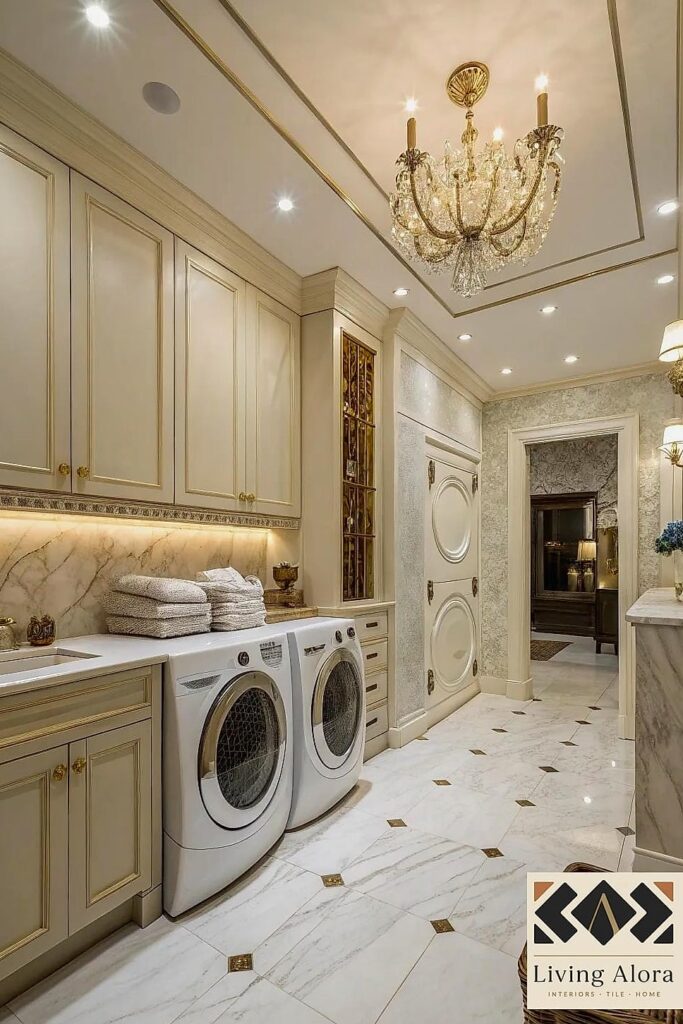
Laundry rooms are getting the design attention they deserve lately, and marble look glass tile as an accent wall behind the washer and dryer is one way designers are dressing up a space that’s usually purely functional.
It’s a fun spot to go a little bolder with pattern or color, since you’re not living in this room the way you would a kitchen or bathroom. A subtle gray-veined glass tile against white cabinetry and open shelving keeps things airy, while a moodier charcoal-veined option can make the space feel more intentional and less like an afterthought.
Because laundry rooms deal with humidity and occasional water splashes, glass tile’s non-porous surface is genuinely practical here, not just decorative. It also makes the space feel more like an extension of your home’s design rather than a hidden utility closet, which matters more than people expect when you’re doing laundry every week.
Final Thoughts
What I like about marble look glass tile is that it lets you chase that high-end, veined stone aesthetic in places where real marble might not make practical sense — wet areas, high-traffic zones, or budget-conscious renovations. It photographs beautifully, reflects light in a way porcelain often can’t quite match, and skips the sealing and staining concerns that come with natural stone.
If you’re planning a renovation, even picking one or two of these ideas — a statement shower wall, a herringbone backsplash, a dressed-up laundry room — can shift a space from builder-basic to something that looks genuinely designed. And that’s really the whole appeal of marble look glass tile ideas like these: they let you steal the look interior designers love without needing their budget to pull it off.